When silence becomes embodied: Remembering Jardi Dzor
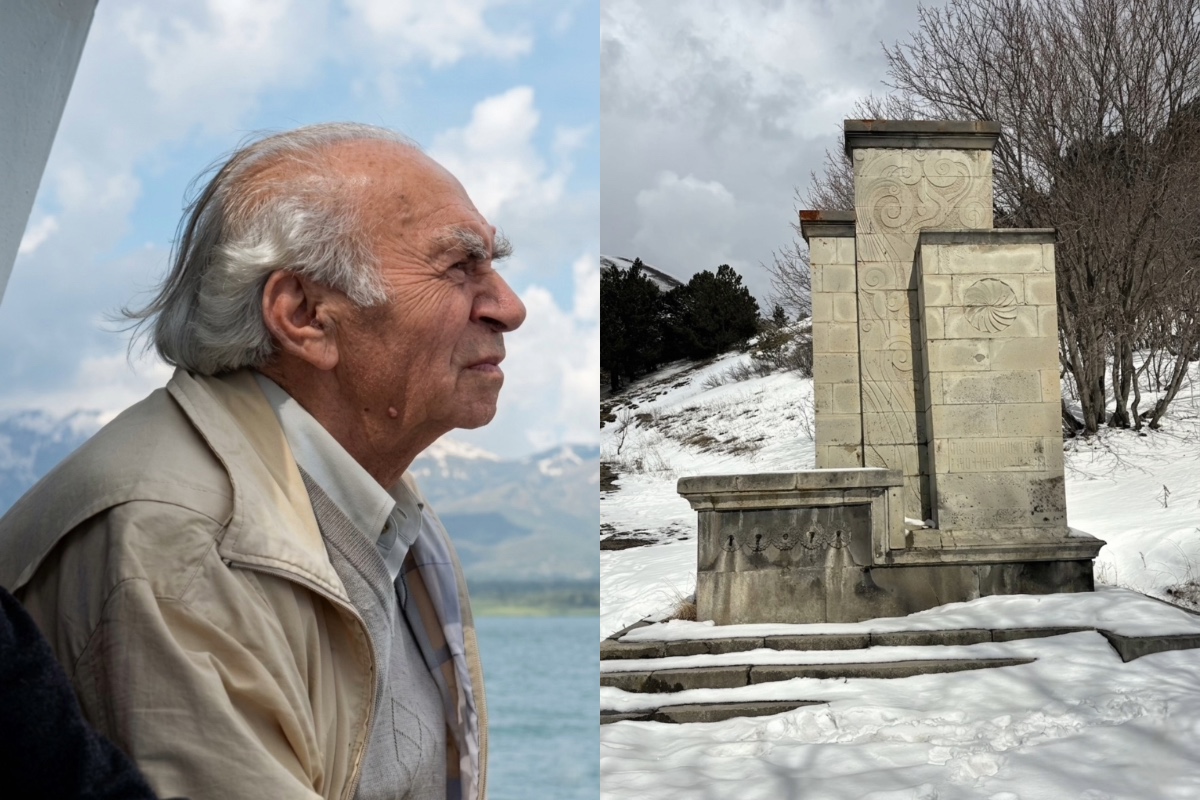
“At first glance, it was an emptiness that said nothing — nothing but a single unhewn stone, without any inscription”
— Rafik Yegoyan
But what appears as emptiness is often only silence waiting to be heard.
In the 1960s, when architect Rafik Yegoyan first visited Jardi Dzor with Varazdat Harutyunyan, he encountered not merely a site, but a void shaped by silence — an absence of markers, recognition and public memory. And yet, beneath that silence lay a history that had never disappeared, only retreated into the fragile realm of oral transmission.
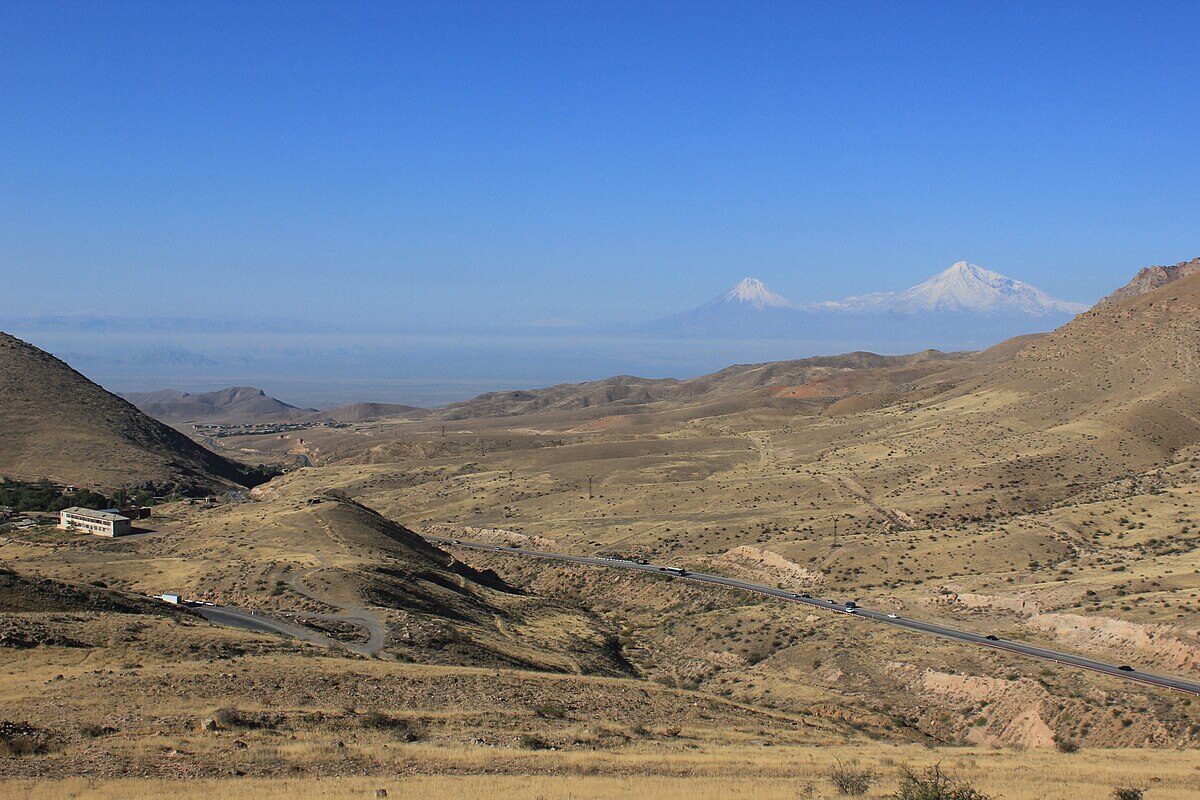
Located at the Jajur mountain pass, on the border between Lori and Shirak, Jardi Dzor — known among locals as “Hzazi Dzor” — carries within its very name the memory of massacres committed during the 1920 Turkish-Armenian War. For decades, these events remained excluded from official narratives, surviving instead in whispered stories, in inherited grief, in the quiet persistence of those who remembered.
I first encountered this story not only as a researcher, but as someone engaged with questions of memory, silence, and the ways in which landscapes themselves become archives. Jardi Dzor is not simply a geographic location, but a space where memory was both suppressed and preserved, where silence itself became a form of presence.


Yegoyan’s connection to this place began not as an architect, but as a child. Accompanying his mother on pilgrimages to Surb Hovhannes Chapel in present-day Hartagyugh, he unknowingly walked through a landscape marked by past violence. It was only years later, through a chance conversation with a local trader, that he learned the truth.
He recalled this place years later, when, as an architect in Leninakan, he became involved in a project to commemorate the victims of the Armenian Genocide. His proposal — to build the memorial in Jardi Dzor — was not simply architectural. It was an act of recognition.
At a time when many designs leaned toward monumentality and even aggression, Yegoyan chose restraint. Rejecting overt religious symbolism under Soviet constraints, he instead turned to the form of a memorial-spring, inspired by the work of his teacher Raphael Israyelyan. The result was subtle yet deeply evocative: a structure that gestures toward the khachkar, or cross-stone, tradition without replicating it. Its geometric form, cornices, and flame-like ornaments speak in a language that is both coded and legible.
The flames, replacing the cross, carry layered meanings — destruction, memory and endurance.
Yegoyan had envisioned more. A domed, chapel-like structure was meant to stand nearby, where the sound of flowing water would merge with the ringing of bells, creating what he described as a voice rising from beneath the earth — a protest echoing through time. That vision remained unrealized. Yet, even in its incomplete form, the memorial carries a powerful presence.
Construction began in 1964 and concluded in 1965. During excavation, human remains were discovered. The memorial was thus built not only in memory of the dead, but quite literally upon them.
There was no official opening. Instead, one night, Yegoyan was quietly taken to the site. There, local taxi drivers had gathered around small fires, preparing a barbecue. In this intimate and unceremonious act, they marked the memorial’s “opening,” transforming it into a communal ritual that echoed the tradition of memorial meals. It was not sanctioned, but it was deeply meaningful.
The memorial-spring did something remarkable: It gave form to what had long remained unspoken, allowing a silenced history to surface — not through grand gestures, but through presence.
Over time, additional monuments reshaped the landscape, layering new meanings onto the site. But Yegoyan’s intervention remains foundational. It was the first to inscribe memory into this space, transforming Jardi Dzor into a place of recognition — a localized Der Zor within Shirak.
Yet despite its significance, the site remains little known.
To write about it, then, is not merely to document the past. It is also a personal and scholarly insistence that silence has a history, that landscapes remember, and that even the most unmarked places can become powerful sites of memory — if we choose to see them.
This text is written with the awareness that the architect who shared his story with me, and to whom I remain deeply grateful, is no longer with us. This op-ed is based on ongoing research that will be developed in a forthcoming academic publication.