



Genocide education progress, gaps and the power of story
Each month, I search for a topic that feels both timely and meaningful. This April, I kept returning to the question of genocide education and how it is making a difference.
To answer that, I spoke with three leaders working on the front lines: Lizzy Carroll of Facing History and Ourselves; Kerry Flynn of The Genocide Education Project; and Pauline Getzoyan of the Rhode Island Holocaust and Genocide Education Commission. Their perspectives, spanning classrooms, nonprofits and state-level initiatives, reveal a field that has made significant progress but still faces real challenges.
How genocide education began
Genocide education in the United States did not emerge all at once. It developed in pockets, often driven by passionate individuals and communities determined to ensure these histories were not forgotten.
At Facing History and Ourselves, the work began in 1976 with a focus on Holocaust education. The founding belief was simple yet profound: Young people are already grappling with moral questions, and shielding them from difficult histories does them a disservice. Instead, these stories can help shape who they become.
The organization’s guiding principle, “People make choices. Choices make history,” frames genocide education not just as learning about the past, but as preparation for ethical decision-making in the present and future.

On the West Coast, the Genocide Education Project (GenEd) grew out of a different realization. After California passed legislation in 2005 requiring instruction on the Armenian Genocide, educators discovered that many teachers lacked both the materials and the confidence to teach it. What began as curriculum development in San Francisco evolved into nationwide professional development workshops and a growing network of trained educators.
In Rhode Island, genocide education has similarly been shaped by grassroots efforts. After a 2000 law mandated Armenian Genocide curriculum, local advocates, including Pauline Getzoyan, worked to build resources, train teachers and ensure implementation. Their efforts culminated in a statewide curriculum, educator symposiums and the integration of materials into official Department of Education platforms.
These stories share a common thread: Though legislation is important, it is not enough. Education requires infrastructure, training and sustained commitment.
Teaching the unthinkable
One of the most striking takeaways from these conversations is how intentional educators must be in their teaching.
Facing History’s model centers on three elements: combining intellectual rigor, emotional engagement and ethical reflection is essential. This approach recognizes that genocide education is not purely academic. Students must be supported in processing difficult material while being guided toward critical thinking and personal responsibility.
Equally important is the integration of social-emotional learning. As Carroll emphasized, students are “brought safely in and safely out” of these histories. This is especially critical in classrooms where students may carry personal or intergenerational trauma.
GenEd takes a complementary approach by prioritizing accessibility and scalability. Their philosophy is straightforward yet effective: If you reach one teacher, you can impact hundreds of students year after year. Their Teacher Fellowship Program, which now spans nearly 40 states, embodies this multiplier effect.
Meanwhile, Rhode Island’s work demonstrates the power of localization, grounding genocide education in personal narratives, such as family survival stories, to make history tangible and meaningful.
There is real momentum in genocide education today.
- Approximately 30 states now mandate some form of genocide education, and 17 states have established genocide education commissions, according to Echoes & Reflections.
- Programs like Massachusetts’ 2021 mandate are supported by state funding, allowing districts to apply for grants and partner with organizations like the Armenian Museum of America, Facing History, GenEd and NAASR.
- California has emerged as another leader in curricular and funding resources, particularly in Armenian Genocide education.
- GenEd’s fellowship program has trained 75 educators nationwide, creating exponential classroom impact.
Across these approaches, humanization is the one theme that stands out. Genocide is taught through individual lives, choices and consequences.
Despite this progress, significant challenges remain
Time is perhaps the most universal constraint. In many classrooms, genocide education is reduced to a few days, far from the depth these subjects require.
Funding disparities also shape outcomes. Massachusetts and California, with dedicated funding, have seen stronger implementation. Rhode Island, by contrast, lacks similar financial support, making sustained programming more difficult.
Teacher preparation is another critical factor. Educators must navigate complex, emotionally charged topics with care and confidence. Without proper training, there is a risk of oversimplification or avoidance altogether.
And then there is the complexity of today’s political and social climate. Teaching about genocide inevitably raises questions about current global events, placing additional pressure on educators to guide nuanced discussions without stepping into controversy.
Finally, there is the challenge of prioritization. While awareness of the Armenian Genocide is growing, it still competes for limited space in already crowded curricula.
Why it matters
At its core, genocide education is not only about the past. It is about shaping the future.
It asks students to examine human behavior, understand how societies divide into “us” and “them,” and consider how those divisions can lead to devastating consequences. It challenges them to consider their own roles as participants in their communities.
And perhaps most importantly, it offers something often overlooked in discussions of genocide: hope.
As educators across these organizations emphasized, the goal is not to leave students in despair, but to empower them to foster empathy, awareness and a sense of responsibility.
A personal reflection
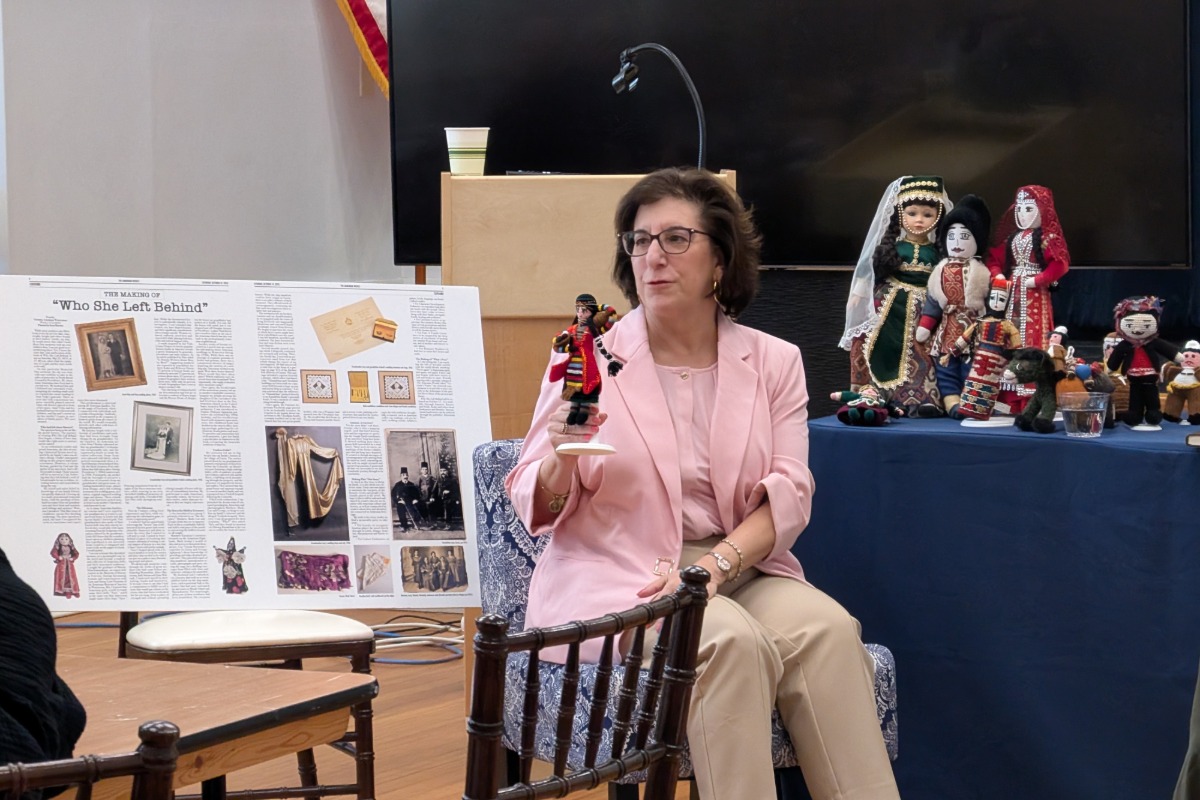
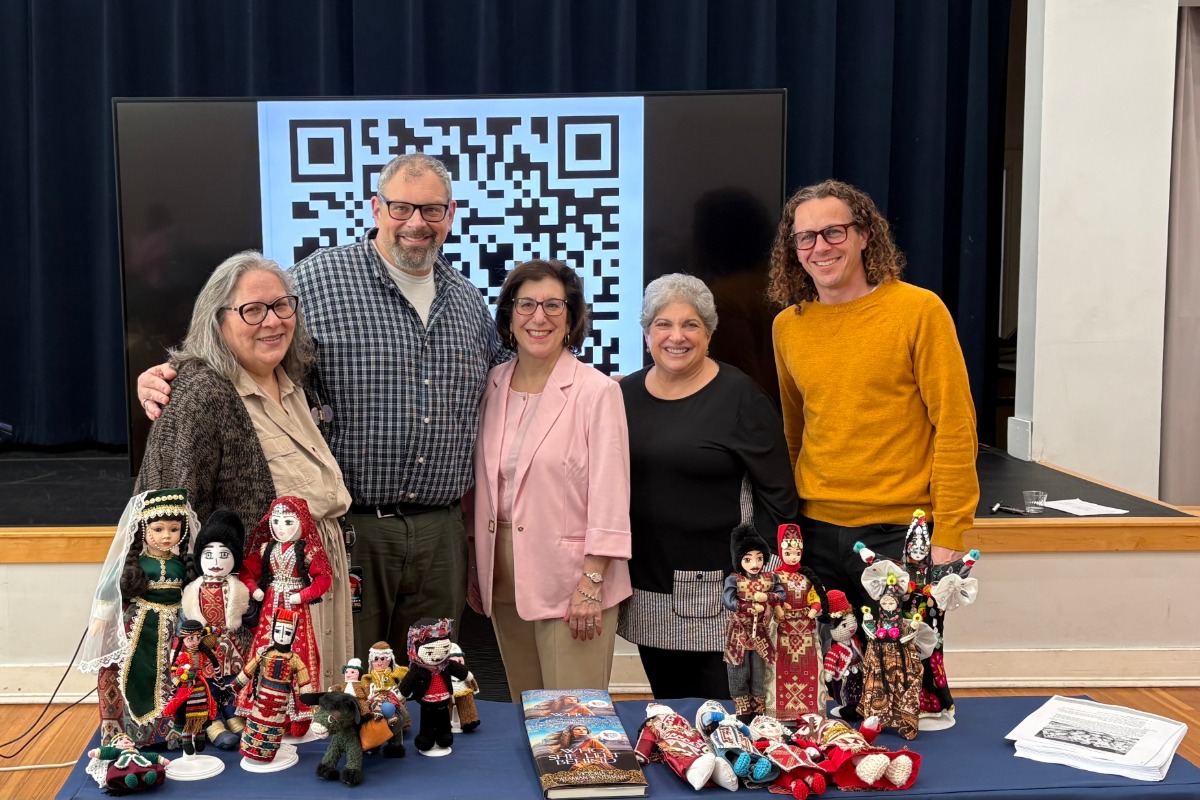
I was honored to witness this firsthand at a recent teacher professional development event held at Essex North Shore Agricultural & Technical School in collaboration with the GenEd Project and Salem State University Center for Holocaust and Genocide Studies. Teachers and Gen Ed Fellows Jason Stark and Justin Bilton guided participants in creating a replica of an Armenian doll, dignik, to teach concepts of cultural preservation and resistance, promoting empathy and cultural awareness, especially in the context of genocide. To enhance this learning, I was invited to discuss my novel, “Who She Left Behind,” and the deeper meaning of the dolls that helped tell the story of the Armenian genocide, as well as their healing power.
So, where do we stand?
Genocide education in the United States is growing, expanding in reach, deepening in approach and gaining institutional support. But it is still uneven, still under-resourced and still dependent on the dedication of individuals who believe this work matters.
The progress is real. So is the work ahead.
If there is one lesson that echoes across every conversation, it is that education is not just about remembering history. It is about shaping decisions and the responsibility for what comes next.


We should all have immense respect for the quiet hero educators who toil away at teaching a new generation the most fundamental of human values.
Perhaps , they will become the leaders of tomorrow
who will choose respect over bullying… dialogue over conflict and understand that the stain of genocide
reflects on all humanity. Great work. Thanks for sharing.
Thank you, Stepan. Wouldn’t that be a wonderful outcome!