



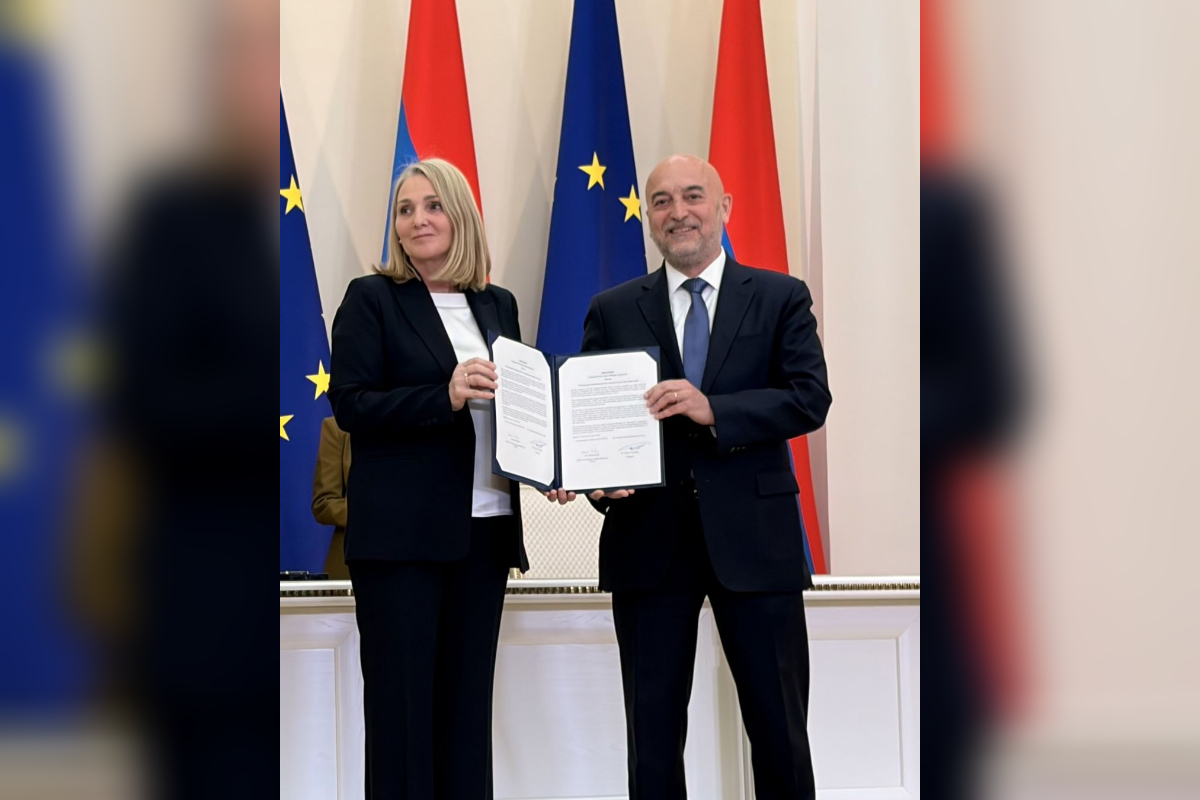
Finally, some good news from Armenia. In a positive development, the European Commission signed the first-of-their-kind “Letters of Intent” with six Armenian organizations during the EU-Armenia Summit in Yerevan on May 5. The document was titled “Cooperation for People-to-People Connectivity.”
The signing ceremony was held at the Armenian Presidential Palace in the presence of President Vahagn Khachaturyan, Prime Minister Nikol Pashinyan, European Commission President Ursula von der Leyen and European Council President Antonio Costa.




This is indeed good news and a constructive development for Armenia.
The Letters of Intent signed during the EU-Armenia Summit show how Armenia’s relationship with Europe can move beyond formal diplomacy into practical cooperation in investment, technology, education, culture, diaspora engagement, and people-to-people connectivity.
Vasken Yacoubian’s point is especially important. Working with the Armenian state does not mean agreeing with every action of any government. Honest criticism, grounded in facts, evidence, and reason, is necessary. But refusing to cooperate with the state because of political disagreement is not a serious national strategy.
Governments come and go. Leaders change. The Republic of Armenia remains.
Armenians may strongly disagree with Nikol Pashinyan or any future prime minister. That is legitimate. But opposition to one person should not become opposition to the state, its institutions, its diplomacy, or its efforts to build economic and international partnerships.
AGBU’s approach – supporting statehood while maintaining independent judgment – is the right balance. Armenia needs accountability and criticism where justified, but it also needs constructive engagement, investment, expertise, and unity around the state.
The EU-Armenia partnership, especially in technology, education, digital connectivity, entrepreneurship, and cultural exchange, can help Armenia become more resilient, connected, and sovereign.
That is the kind of diaspora-state cooperation Armenia needs for 2050 and beyond.
Berge Jololian
Yerevan, Armenia
(Watertown, Massachusetts)