



Golden Apricot 2026: A cinematic map of memory and borders
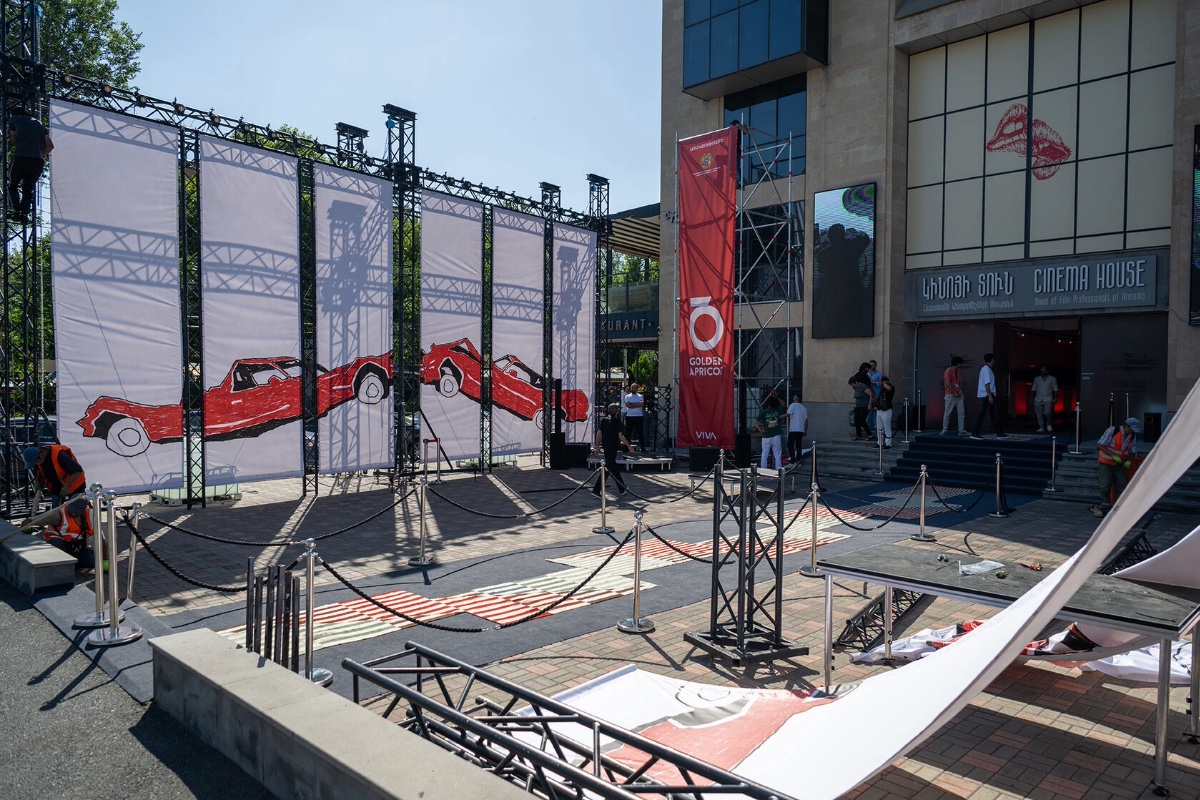
When the 23rd Golden Apricot Yerevan International Film Festival opens this July, it will arrive with newly secured international standing. Accredited by the International Federation of Film Producers (FIAPF), the event gives Yerevan a clearer position within the international festival circuit. It confirms the festival’s growing role as a platform for cinema from the Caucasus and Western Asia.
Running from July 12 to 19, the 2026 edition steps away from red-carpet spectacle. Looking at the schedule, the program maps the pressures shaping the region today. The selections lean heavily into themes of displacement, censorship, family rupture and the fragile work of keeping history intact.
Here is how the 2026 lineup takes shape across its key regions and sections.
Armenia
The local selections naturally carry the weight of recent history, particularly the 1990s and the 2020 war. Armenian filmmakers anchor the lineup with works that look directly at the aftermath of national trauma.
The opening and closing film, Tamara Stepanyan’s France-Armenia production “In the Land of Arto,” follows Céline, a woman arriving in Armenia to handle the paperwork for her husband’s death. She soon uncovers a hidden life marked by desertion and war. Featuring Camille Cottin, Zar Amir Ebrahimi and Denis Lavant, the film appears to explore the quiet devastation of private grief within a larger historical landscape.

Inna Sahakyan and Ruben Ghazaryan’s “Outliving Shakespeare” captures elderly residents in a Soviet-era retirement home rehearsing a play to fight off isolation. The documentary frames speech and performance as basic tools for survival.
The recent wounds of the region take a central focus in Comes Chahbazian’s “Here, Elsewhere,” which brings viewers into the reality of the 2023 siege of Artsakh to trace the moments a home is lost to forced departure.
Iran
The Iranian selection centers on physical and internal exile, observing the weight of distance and survival under public restriction.
Morteza Ahmadvand and Firouzeh Khosrovani explore caregiving from afar in “Past Future Continuous,” tracking a daughter who installs CCTV cameras in her family’s Tehran home to maintain a visual lifeline to her aging parents.
Amir Azizi’s “Inside Amir” captures the paralyzing limbo of migration. The film focuses on the suspended days of a young man in Tehran who is physically at home but psychologically preparing to leave.
Looking backward, Gilda Pourjabar’s “The Westoxicateds” uses personal autobiography and forbidden post-1979 rock music to show how youth and private rebellion survived behind closed doors.
Palestine and Afghanistan
In zones of severe political rupture, several films focus on archives and the physical spaces of cinema as sites of preservation.
Kamal Aljafari’s “With Hasan in Gaza” is built entirely around rediscovered MiniDV tapes from 2001, presenting everyday Gazan life recorded long before the current devastation.
In the West Bank, Alex Bakri’s “Habibi Hussein” observes a movie theater as a critical site of public memory. It follows a Palestinian projectionist’s battle to restore an old projector alongside a German NGO.
Sanaz Sohrabi’s “An Incomplete Calendar” treats archival material as a political field. Triggered by a forgotten 1980 vinyl record, the documentary unearths complex histories of Palestinian liberation, pan-Arab solidarity and the global politics of oil.
Further east, Shahrbanoo Sadat’s “No Good Men” captures a society on the edge of closing. Set in Kabul just before the Taliban’s 2021 takeover, the film follows Naru, the only female camerawoman at a major TV station, documenting the final moments of public life.
Georgia
The Georgian films frequently feature missing people, crumbling architecture and the chaotic early days of independence.
George Ovashvili’s “The Moon Is a Father of Mine” ties the fracture of a family to the fracture of a nation. Set in the autumn of 1991, it follows a father and his sons forced out of their home during the political upheaval of newly independent Georgia.
The trauma of sudden disappearance drives Alexandre Koberidze’s “Dry Leaf,” where a couple is left reeling after their daughter vanishes, leaving behind only a letter asking not to be found.
Irene Bartolomé’s “Dream of Another Summer” looks at how urban ruins absorb trauma, beginning with a woman’s collapse among the city’s crumbling buildings.
On the quieter southern border, Marlene Edoyan’s “A Fire There” observes the resilient routines of an ethnic Armenian community in Gandzani navigating language and belonging.
Egypt and the Mediterranean
The North African and Mediterranean entries filter social and religious pressures through tight, focused narratives.
Mohammed Hammad’s “Safe Exit” distills Egypt’s intense class divides and religious friction into a single location, observing the daily shifts of Samaan, a 23-year-old Coptic Christian security guard in a Cairo residential building.
In Cyprus, Tonia Mishiali’s “The Lion at My Back” tackles the domestic pressures and gendered silences prevalent across the broader region.
Europe and the international lens
The European features in the International Competition focus heavily on domestic breakdowns and the systems surrounding them.
Germany’s “Babystar,” directed by Joscha Bongard, examines the modern economy of visibility. It follows 16-year-old Luca, who realizes her entire life has been weaponized as an online brand for her parents’ influencer empire once they plan for a second child.
“Father,” a Slovakia-Czech Republic-Poland production directed by Tereza Nvotová, studies the devastating social and psychological fallout after a man unintentionally leaves his infant daughter in a hot car.
 This focus continues in the Swiss entry “Tristan Forever,” directed by Tobias Nölle and Loran Bonnardot, and in the Swiss-Argentine psychological drama “The Currents,” directed by Milagros Mumenthaler, which follows a successful fashion designer as she returns to Argentina and undergoes a quiet, internal collapse.
The international lineup also makes room for rigorous systemic critiques. Canadian director Hubert Caron-Guay examines the physical reality of migration in “The Mechanics of Borders,” treating the border as a literal sorting machine.
On a quieter note, Austrian filmmaker Sebastian Brameshuber’s “London” and the Vietnam-France-Belgium co-production “Hair, Paper, Water…” use patient, observational documentary techniques to record vanishing ways of life and invisible labor systems.
A regional meeting point
Anchored by the Regional Panorama and the Apricot Stone short film sections, the 2026 Golden Apricot operates with a clear, unvarnished focus. By placing stories of Artsakh, Gaza, Kabul and Tehran on the same screens, the festival highlights how filmmakers across the region are searching for a shared cinematic language to process displacement, historical memory and survival. For audiences in Yerevan, and the Armenian diaspora watching the coverage from afar, the festival offers a rare chance to see how neighboring histories continue to shape one another.
For more information about the festival and its full program, visit the official Golden Apricot website at https://gaiff.am/.


I wonder if any of Jim Jarmusch’s movies have gotten shown in Armenia.