Book Review: ‘Defeat: Documenting the Karabagh War of 2020’
Confronting the Anatomy of Catastrophe
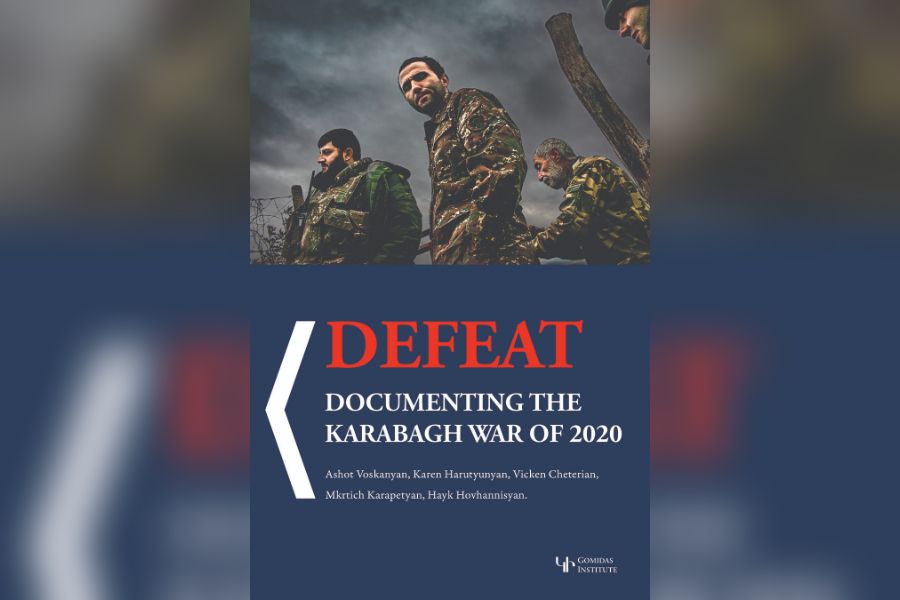
The Second Karabakh (Artsakh) War of 2020 (commonly known as the 44-Day War) and the subsequent ethnic cleansing and agonizing collapse of Artsakh in 2023 remain deeply open wounds in the modern Armenian psyche. In the wake of such existential trauma, domestic discourse frequently fractures into toxic binaries, trapped between reductionist narratives of betrayal, paralyzing grief or state-sanctioned political amnesia. Defeat: Documenting the Karabagh War of 2020, published by the Gomidas Institute, serves as a clinical, courageous and indispensable antidote to this polarization. By steering clear of emotional rhetoric, this collaborative volume offers a rigorous, interview-based autopsy of the structural, institutional and geopolitical failures that led to a catastrophic military defeat.
Before diving into the analytical merits of the text, a significant measure of praise must be directed toward its patron. It is relatively easy for cultural institutions to fund sentimental memorials or romanticized histories that soothe national pride. It takes genuine institutional courage and visionary leadership, however, to finance a project that looks directly into the mirror of military and societal failure.
The Calouste Gulbenkian Foundation deserves immense credit for initiating and supporting this serious piece of independent, unbiased scholarship. This volume is a direct output of the Foundation’s Diasporan Perspectives initiative. Under this single institutional umbrella, the Foundation has anchored a series of rigorous, bilingual academic projects analyzing post-2020 realities—an essential research portfolio that includes Cheterian’s other vital volumes, such as The 44-Day War: Armenia, Azerbaijan, and the Struggle for Nagorno-Karabakh, published by Bloomsbury Publishing (Կոտրված վահան, հրատ.՝ NewMag). By prioritizing academic integrity over ideological comfort, the Foundation has provided the Armenian world and global geopolitical analysts with an objective baseline of information.
Originally published in Armenian (44 Պարտություն, 2020-ի Արցախյան պատերազմը՝ իրողություններ և հետևություններ, հրատ.՝ Հումանիտար հետազոտությունների հայկական կենտրոն ՀԿ), Defeat flows beautifully into English under the care of British-Armenian historian and publisher Ara Sarafian; while a few minor spacing quirks and occasionally formal transliterations slip through, they do not disrupt the reading experience, ensuring that these vital regional lessons are accessible to a global audience grappling with modern warfare and state fragility.
At the core of this 148-page book is a formidable methodological achievement consisting of 35 structured interviews conducted with 31 senior political and military figures, alongside civilian analysts who directly shaped or witnessed the conflict. The list of interviewees is extraordinarily high-profile, remarkably bringing together fierce political rivals under the same investigative lens. Readers are presented with perspectives from Armenian Prime Minister Nikol Pashinyan, former President Serzh Sargsyan, former Defense Minister Seyran Ohanyan, former Foreign Affairs Minister Zohrab Mnatsakanyan and former Commander of the Artsakh Defense Army Samvel Babayan. Armed with 80 open-ended questions, the research team systematically examines everything from pre-war procurement strategies and the July 2020 Tavush clashes to weapon system efficiencies and tactical decision-making in the field.
Analyzed and woven together masterfully by political scientist Vicken Cheterian, these first-hand accounts expose a systemic leadership gap and a fatal misreading of regional shifts. Cheterian frames the catastrophe in terms of challenges that ultimately isolated Armenia on the global stage. First, the leadership overlooked Azerbaijan’s modern, oil-funded military transformation, failing to anticipate Baku’s integration of Turkish drone technology and a shift toward high-tech warfare. Second, the political elite treated the conflict as a localized post-Soviet dispute, drastically underestimating Ankara’s direct military, drone and mercenary intervention. Finally, Armenia’s absolute reliance on a traditional Russian security umbrella proved untenable when Moscow chose to act as an aloof mediator rather than a protective ally.
What makes Defeat stand out as a premier piece of documentation is how perfectly its supporting components enhance Cheterian’s central analysis, creating a seamless polytext. Karen Harutyunyan’s opening essay raises urgent, unresolved questions about the leadership’s political accountability, setting an investigative tone that demands transparency. Conversely, Ashot Voskanyan’s philosophical and sociological afterword, titled ‘Military Defeat or Social Crisis?’, elevates the book from a mere military critique into a profound cultural mirror. Voskanyan rightly asks whether the military defeat was simply an extension of a deeper societal crisis characterized by populism, unchecked machismo and an inability to tolerate rigorous self-criticism.
To ensure the book serves as a permanent reference for future historians, Mkrtich Karapetyan contributes a meticulous, day-by-day chronology of the 44-day campaign. This timeline effectively contrasts the evolving, grim realities on the ground with the overly optimistic domestic propaganda fed to the public at the time. Complemented by Hayk Hovhannisyan’s clean, illuminating tactical maps, the reader is given an unvarnished geographic layout of the military engagements as they unfolded.
Ultimately, Defeat: Documenting the Karabagh War of 2020 is a landmark contribution to contemporary Armenian history, Caucasian historiography and the specialized scholarship surrounding the 2020 Artsakh War. It proves that Armenia’s future survival depends not on ideological rhetoric or nostalgic escapism, but on cold, institutional competence and ruthless honesty. By documenting the testimonies of those who held the reins of power during the disaster, this book preserves a crucial historical record before it can be rewritten by political opportunism. It stands as a vital piece of scholarship for statesmen, historians and anyone who wishes to understand the brutal realities of 21st-century warfare.
Title: ‘Defeat: Documenting the Karabagh War of 2020’
By Ashot Voskanyan, Karen Harutyunyan, Vicken Cheterian, Mkrtich Karapetyan and Hayk Hovhannisyan
Translator: Ara Sarafian
Publisher: Gomidas Institute (London)
Publication Year: 2026
Format: Paperback, 148 pages (with color maps)
ISBN: 978-1-909382-91-6
Where to purchase: On NAASR’s website at https://naasr.org/products/defeat-documenting-the-karabagh-war-of-2020