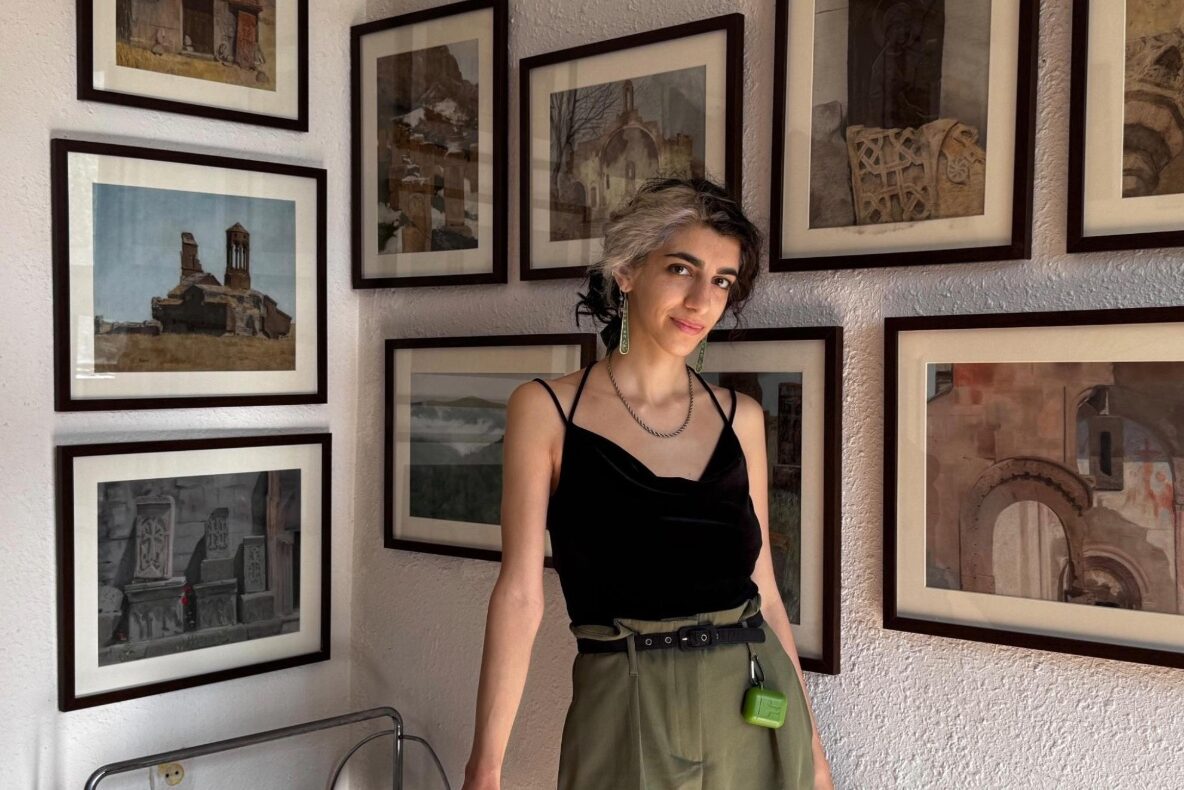



I recognize it before I see it
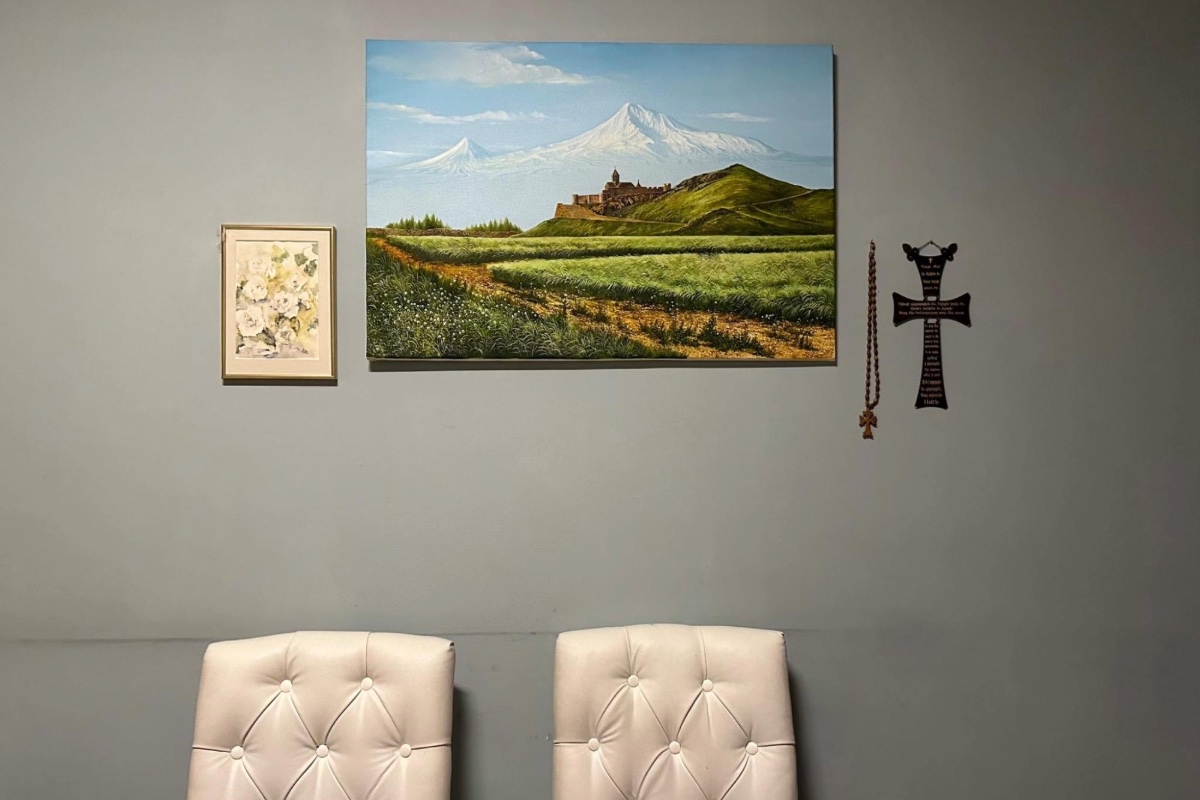
A view of Mount Ararat appears in the Dutch town of Roosendaal. It is one of the best-known depictions of Ararat, with Khor Virap in the foreground.
Whenever the host has had a little too much to drink, or simply becomes more open than usual, he inevitably remembers his grandmother’s stories about the genocide. She was still a small child when her younger brother was beheaded in front of her. He knows her stories by heart and remembers how, until the end of her life, she cried like a child every time she told them. Now, when he tells her story to others, he cries like a child too — sometimes with a smile.
And just like that, Ararat and Khor Virap become portals to our own realities and contexts, where we know what happened to us and to those who came before us. In these spaces, stories are usually told with either tears or smiles because memory has a way of returning in extremes.
Every act of remembrance is also an act of selection. We choose which stories to tell, which photographs to publish and which memories to bring into the present. Those choices are never neutral.
A few days ago, the Israeli Cabinet recognized the Armenian Genocide. Israel — the state facing accusations of committing genocide against Palestinians — has now recognized the Armenian Genocide.
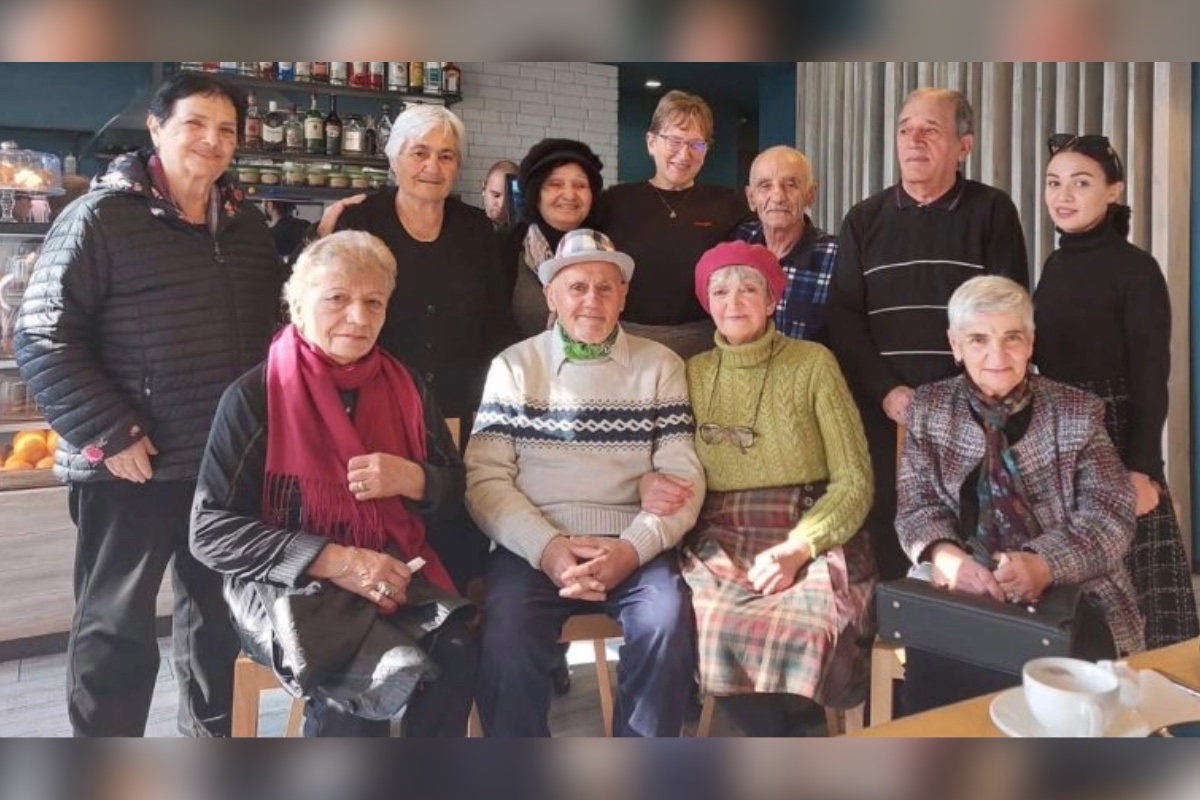
To illustrate what was presented as this “exceptional” news, Israel’s Foreign Ministry and several media outlets chose a documentary photograph from the Armenian Genocide. The image depicts a mother bending over the body of her starving child in the desert as another child stands behind her. It is one of the best-known documentary photographs of the Armenian Genocide — one of the first images to appear whenever the genocide is mentioned.
Those who have never seen the photograph will probably feel at least some discomfort in imagining it. Those who have seen it, however, have likely encountered it countless times. Sadly, they may no longer feel anything at all.
Every time the Armenian Genocide is invoked — whether appropriately or opportunistically and, in this case, by Israel in pursuit of its own political interests — these starving, exhausted and suffering people once again find themselves on the front pages of the world’s media.
This photograph, along with several others like it, has gradually lost its tragic singularity. Instead, the images have become symbols standing in for the unimaginable suffering of the people they depict.
This time, the international media was strikingly active. Yet, as Mahmoud Darwish once observed, “Palestinians are famous because of them. The interest in Palestinians stems from the Jewish question.” Sadly, I find myself believing something similar: People spoke about the Armenian Genocide this time because Israel, once again, was the speaker — not Armenians or the Armenian cause itself. Media headlines emphasize that “Israel recognized” the genocide; the rest becomes secondary. And photographs of genocide are exploited again.
Susan Sontag, who wrote extensively about how we encounter the suffering of others through images, observed that written testimony reaches a broader or narrower readership depending on the complexity of its ideas, references and language. A photograph, by contrast, speaks in a single language and is, in principle, meant for everyone. At least for me, this is where the problem begins.
What frightens me is what this endless reuse has done to these photographs — and to me as a viewer. The media has exploited these people’s suffering so many times that I no longer look at the photograph itself. I recognize it before I see it. Instead of a mother and her children, I see a symbol that tells me instantly: “Armenian Genocide.”
I have become accustomed to it. The image no longer stops me. It functions as a visual shortcut, and I move on. I wonder how many others do the same.
Whenever I tell the story of this man, his grandmother and the beheaded boy, I think I will always choose this photograph of Mount Ararat in the small Dutch town of Roosendaal rather than an image of the boy’s body. I do so because I do not want something essential to be lost.