



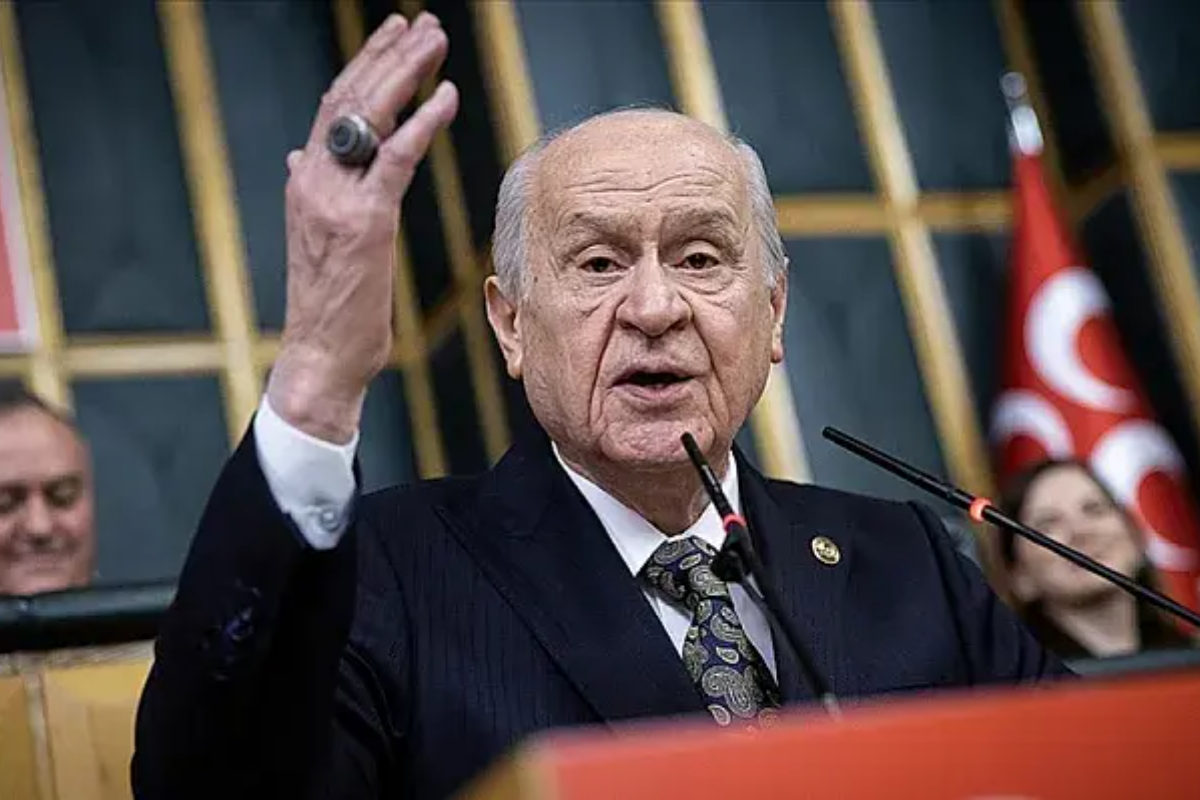
Turkish Nationalist Movement Party leader Devlet Bahçeli has framed the so-called “Zangezur Corridor” not merely as a transport route, but as part of a broader Turkic geopolitical project extending across Armenia’s sovereign territory.
Bahçeli described the route as a “historic line” that would strengthen Nakhichevan’s connection with Azerbaijan and link Turkey to the Caspian Sea through “brotherly Azerbaijan,” and from there to Central Asia.
“This corridor will create a strategically important environment for spreading the spirit of ‘one nation, two states’ across the entire Turkic world,” Bahçeli said, adding that the line is, “in fact, the Turan Corridor.”
By calling the route a “Turan Corridor” stretching “from Kars to the borders of Turkestan,” Bahçeli cast Armenia not as an equal sovereign state in a regional connectivity project, but as a geographic obstacle to a larger Turkic strategic space.
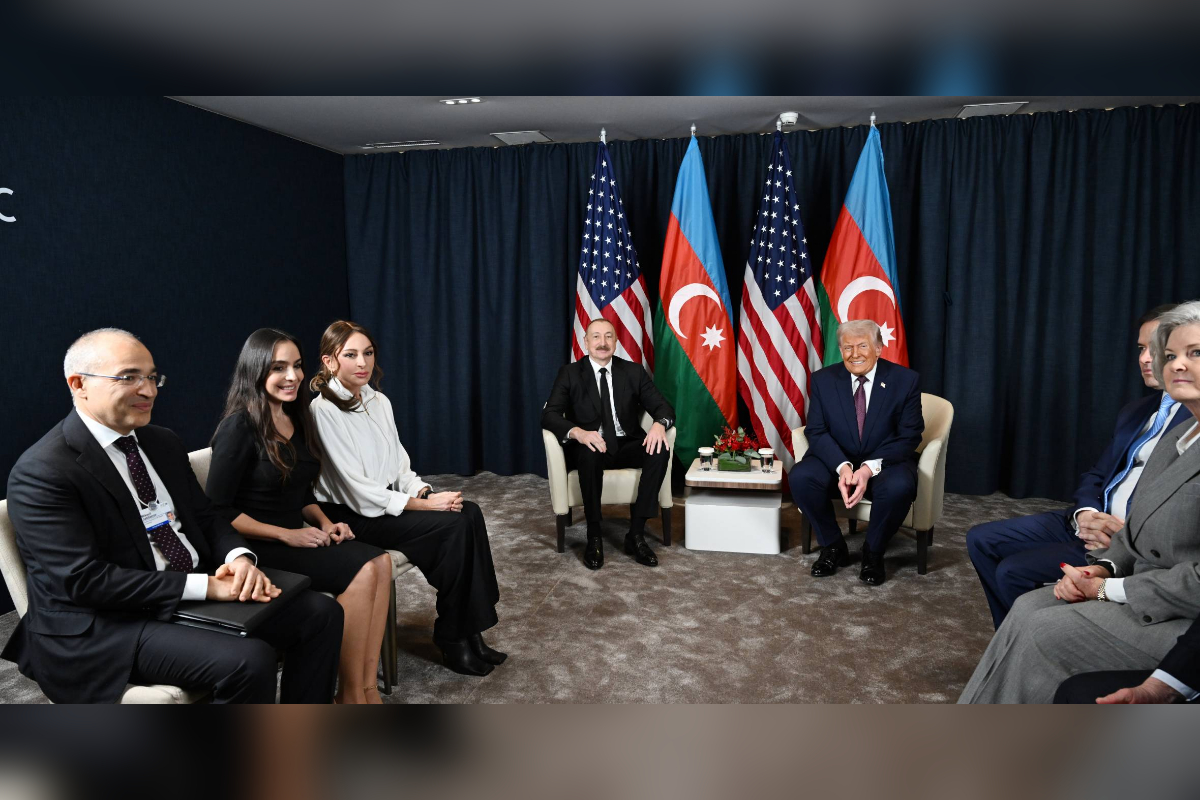
His remarks come as Azerbaijani President Ilham Aliyev has again referred to the U.S.-backed TRIPP transport route as the “Zangezur Corridor,” a term that continues to raise concerns over Baku’s interpretation of regional connectivity agreements.

In a message to participants in the international conference “Regional Contribution to Global Security: Peacebuilding in the South Caucasus,” Aliyev said Azerbaijan is pursuing a “determined policy” aimed at establishing and preserving long-term peace and stability in the region.
Aliyev said last year’s signing of a joint declaration in Washington by the leaders of Armenia and Azerbaijan, along with the initialing of a peace agreement, had “completely changed the situation in the South Caucasus.” In that context, he said the “Zangezur Corridor” would connect mainland Azerbaijan with Nakhichevan and become one of the key segments of the Middle Corridor.
The wording is notable because Armenia has repeatedly rejected any extraterritorial “corridor” through its sovereign territory, while the TRIPP framework has been presented as a transport and connectivity initiative rather than a corridor outside Armenian control.
Together, Bahçeli’s and Aliyev’s remarks underscore how Turkish and Azerbaijani officials continue to present the proposed route through Armenia’s Syunik region in pan-Turkic and geopolitical terms, as Yerevan’s confidence that any regional transport links will operate under Armenia’s sovereignty and jurisdiction appears increasingly questionable.
“This corridor will create a strategically important environment for spreading the spirit of ‘one nation, two states’ across the entire Turkic world,” Bahçeli said, adding that the line is, “in fact, the Turan Corridor.”

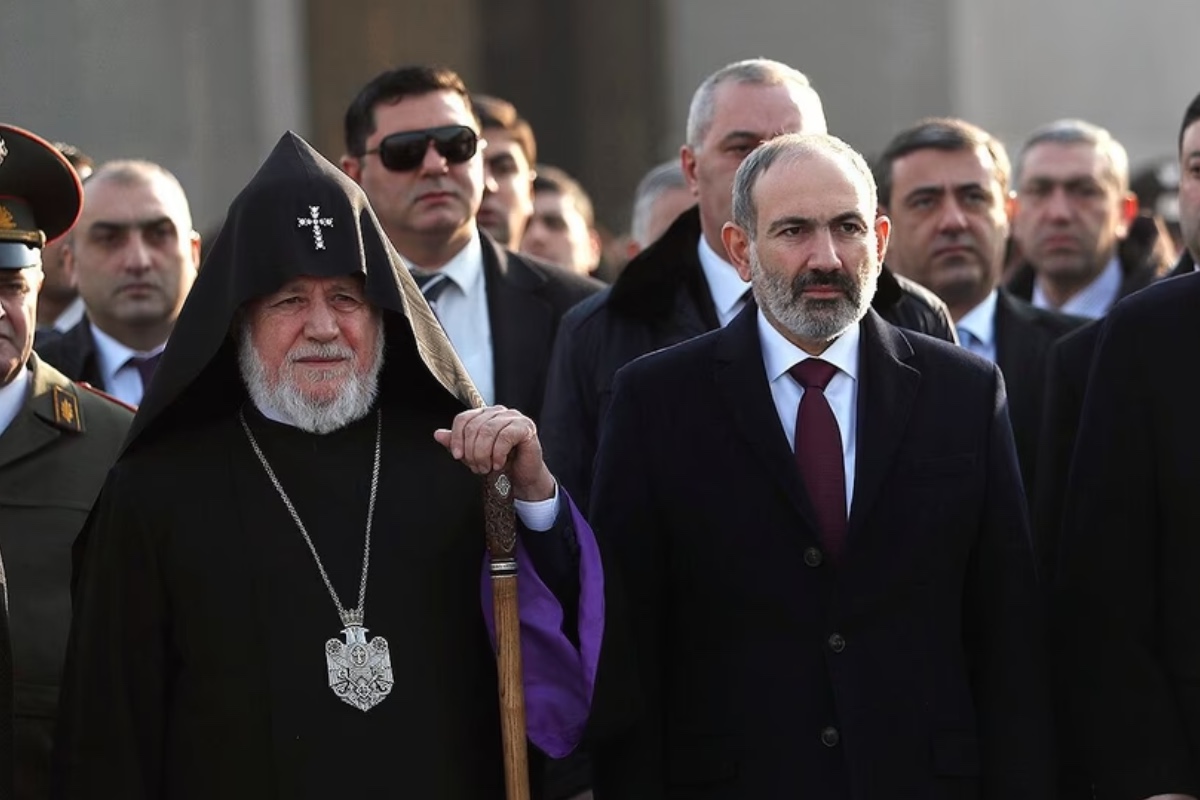
And these are the people that the fool Pashinyan is in a hurry to make “peace” with!
How on earth is peace possible with the likes of Bahceli, his boss Erdogan, and the latter’s sidekick Aliyev, whose bellicosity and irredentism are on hyper-drive?
Can the supporters of the so-called “peace treaty” and of Pashinyan explain, how on earth is peace possible with such a vile criminal gang, who wishes nothing but harm for Armenia and for its emasculation and subjugation?
I support Civil Contract’s policy of crossroad for peace initiative.
The consequences of Armenia not achieving a peace deal with “such a vile criminal gang, who wishes nothing but harm for Armenia and for its emasculation and subjugation” is much worst in the long run than having a peace deal, which is always with an enemy.
A one-sided “peace” from a position weakness is not a real peace, especially with these guys who never change their malevolent rhetoric, mentality, and intentions towards Armenia and Armenians. No matter how much Pashinyan tries to ingratiate himself with them and tries to appease them, the danger for Armenia and Armenians has not diminished one bit, because these greedy aggressive lot won’t be satisfied. They are bellicose, irredendist and emboldened as ever, because they got away with their crimes against Armenians with no repercussions whatsoever. Expecting them to change is like expecting a predator to change and become tame.
I read your reply. I stand by my statement.
Just remember the saying, “Divide and Conquer”.
There is an old American expression that is quite befitting of our Turkish and pseudo-Turkish enemies next door and that is to say you can take a monkey out of the jungle but you can never take the jungle out of the monkey. These opportunist hyenas have not changed in a thousand years and they never will. It is in their DNA. Their Central Asian terrorist forefathers invaded and occupied Christian territories and subjugated their native populations under the banner of Islam and Turkish fascism. After nearly a millennium of behaving this way and having nothing to show for in terms of any benevolent and positive contribution to humanity to this day, every time Er-dog-an wants to feel proud of his Turkishness he makes references to terrorist Turkish conquests of 11th and 15th centuries and he lives in the 21st century! To gain more popularity at home he converts Byzantine era 6th century cathedral of St. Sophia, the seat of Eastern Orthodoxy in occupied Constantinople renamed to Istanbul, into a Turkish grand mosque.
You can’t negotiate with them from a position of weakness because they won’t relent until they get all that they want from you and more. They live by the laws of the jungle. To them the might makes right. That is how they operated in centuries past and that is how they operate today. Incompetent sheepish Pashinyan is not the right man to negotiate peace with these Turkish hyenas because his method of negotiation is like a farmer who constantly kept losing part of his herd to blood-thirsty wolves so he decided to sacrifice some of his herd to the wolves to save the rest without realizing that it is in wolf’s DNA to spill blood and kill all the herd even if a few will suffice to satisfy its insatiable appetite. You need to talk to these Turkish hyenas from a position of power and only then you will have their attention. If you pay careful attention to the way these Turkish hyenas treat their adversaries, you will realize that if they are faced with much weaker adversary, they will talk down to them and denigrate them, but when they are faced with much stronger adversary, they become more diplomatic and conciliatory to the point that loud-mouth barking dogs like Er-dog-an would go as far as laying down their prayer rugs and ask for forgiveness to save face.
Unpatriotic and dysfunctional Pashinyan is our embarrassment and he is not up to the task and he has got to go. He is the symbol of weakness and that is why his biggest supporters are our enemies themselves!
Exactly!
so very true….
Did anyone really think that the Turks could ever be trusted?
And yet the attempt to seize Syunik, because that is what this will lead to, is not about Armenia at all but about Kazakhstan.
The Turks want Syunik so as to create a 3,000 mile corridor stretching all the way from Istanbul to Kazakhstan.
Armenia stands in their way.
Every time Armenia has trusted the Turks, it has ended in disaster.
I am not surprised at all. Birds of a feather flock together! Just like Er-dog-an, Devlet Bahçeli is another Turkish wolf in sheep’s clothing. They are both Turkish terrorists in suits and ties. As the leader of MHP, Bahçeli represents the political wing of the fascist Gray Wolves (Gorsh Gayler or Գորշ Գայլեր in Armenian) criminal organization one of whose members, Mehmet Ali Ağca a former hitman for the organization, attempted to assassinate the Catholic Pope John Paul II in 1981 in St. Peter’s Square in Vatican City wounding him in the process. Bahçeli replaced the MHP fascist organization’s founder and first leader Alparslan Türkeş in 1997 after his death. Bahçeli was one of the first Turkish political leaders to voice support for traitor Pashinyan and his anti-Armenian Turcophile government after the Armenian Parliament building was stormed in November 10, 2020 the day after Pashinyan’s capitulation after that disastrous war imposed on the Armenians by joint Turkish-Azerbaijani terrorist forces. These are Armenian Genocide deniers and anti-Armenian activists that given a chance will do much worse to our nation than those who came before them while Pashinyan very proudly and publically claims he is not in any way offended when some segments of the Armenian population call him a Turk. Bahçeli, Er-dog-an and the likes of these Turkish terrorists who refer to Armenians as the “remnants of the sword” should be buried deep in their imaginary “Turan Corridor” to feel close to all those other Turkish terrorists before them our brave patriots sent to hell during the 1920s Operation Nemesis.
What value are “peace agreements” with such barbaric people?
https://share.google/6rsN9rgXQYdooZFI0
Indeed! Their barbarities must be regularly posted with links in the comment sections, especially to remind the utterly naive and historically impaired Pashinyan supporters – when it comes to history involving these barbarians and who think that unconditional peace is possible with them!
Until Armenia possesses weapons and missiles of mass destruction the Sword of Turkey will hover over our ancestral homeland. Erdogan and Aliyev are simply waiting for the opportunity that their forefathers started over 130 years ago and Pashinyan is falling right into their trap.
Not to mention that the Trump Administration’s only consideration is what is in it for his family and his cronies. Don’t forget the Trump family’s relationship with Aliyev, dating back to the Miss Universe pageant years ago, and their efforts to build in Azerbaijan, Serbia, Albania, and other former socialist countries. Armenia will be in a vice of its own making, between a now-hostile Russia, an unreliable and rapacious US, and an historically hostile Turkey and Azerbaijan. With absolutely no protection from Russia or now anyone else, the old Turkification dream will take hold, and tiny Armenia will become, at best, a vassal state, a virtual colony for all to take advantage of. Soon, Trump will demand a US military and intelligence presence, not to protect Armenia, but to use against Iran. To see Armenia smack dab in the crosshairs of global powers at the most unstable time in post-WWII history, with no protection, is the most disturbing thing I can think of.
Without my referencing any particular supporter here of Pashinyan, I am always amazed that they ignore his nuttiness:
1. Pashinyan and Civil Contract denigrate the Genocide.
2. He disparages Artsakh & its refugees.
3. He arrests his opponents and even regular citizens.
4. He mocks Armenian symbols and history.
The man is crazy and anti-patriotic.
As for the “Zangezur Corridor”:
Why must it be a SPECIAL road?
Why can’t it be just a NORMAL road like everywhere else in the Caucasus and the world?
No Pashinyan supporter will answer that because they can’t.
Moreover, Azerbaijan has always used (and still does) TWO fine ways to get to Nakhichevan AND Turkey:
Northwest Iran
Georgia
No need for a “corridor” (pan-Turkic or otherwise) or any Azerbaijan route through Armenia for that matter.
The whole thing is so nutty.
Well said. As one who once aligned my sympathies with NATO and the West against Soviet expansion; since the fall of the Soviet Union and the illegal metamorphosis of that organization (NATO) into the spearhead of empire expansion into the Balkans by Clinton, I have lost all trust in the leadership of the West. In that lawless occupation of Serbia by the West, Armenia foolishly allowed itself to be drawn in to aid and abet Clinton’s folly as “peace keepers”. Is it any wonder that Armenia was then abandoned and later left to “twist in the wind” by the same?
Without my referencing any particular supporter here of Pashinyan, I am always amazed that they ignore his nuttiness:
1. Pashinyan and Civil Contract denigrate the Genocide.
2. He disparages Artsakh & its refugees.
3. He arrests his opponents and even regular citizens.
4. He mocks Armenian symbols and history.
The man is crazy and anti-patriotic.
As for the “Zangezur Corridor”:
Why must it be a SPECIAL road?
Why can’t it be just a NORMAL road like everywhere else in the Caucasus and the world?
No Pashinyan supporter will answer that because they can’t.
Moreover, Azerbaijan has always used (and still does) TWO fine ways to get to Nakhichevan AND Turkey:
Northwest Iran
Georgia
No need for a “corridor” (pan-Turkic or otherwise) or any Azerbaijan route through Armenia for that matter.
The whole thing is so nutty.
The response should be both similar and greater. We need to strengthen the Indo-European brotherly route that stretches from Europe to India, that includes Kurds and Persians. Turkey is a mixture of non-homogeneous group of people that are forced into believing they are turks. They are not and that’s the Achilles’ heel.
The article treats Turkish nationalist rhetoric about a “Turan Corridor” as if it reveals some unstoppable geopolitical threat. But the entire conversation becomes more realistic once we acknowledge a simple truth: every nation in this region has a version of “Greater Something,” and none of them are about to launch wars to recreate it.
Armenians included.
Armenians speak about Greater Armenia, but it’s cultural memory, not a war plan
Armenians have maps of historical Armenia that stretch into what is now Turkey, Azerbaijan, Iran, and Georgia. These maps appear in textbooks, diaspora centres, cultural institutions, and family homes.
But here’s the key point:
Just because Armenians talk about Greater Armenia doesn’t mean Armenia is preparing to invade four neighbouring states.
No Armenian government, past or present has ever mobilised troops to reclaim Van, Kars, Ani, Nakhichevan, or Javakhk.
No Armenian political party is drafting plans to redraw borders by force.
No Armenian military doctrine includes “liberating” historical lands.
It’s heritage. It’s memory. It’s identity.
Not militarism.
And Armenians aren’t unique, everyone in the region does the same thing
If historical maps were a sign of imminent aggression, then:
• Turkey would be preparing to retake the Balkans and the Middle East.
• Iran would be marching to recreate the Persian Empire.
• Georgia would be reclaiming its medieval kingdom.
• Azerbaijan would be annexing northern Iran under the banner of “Greater Azerbaijan.”
But none of these states are doing that.
So why is it only Armenian historical memory that gets treated as a threat?
Turkish nationalist rhetoric is loud but not a prophecy
Bahçeli’s talk of a “Turan Corridor” is classic nationalist theatre.
It plays well to his base.
It fits a long‑standing ideological narrative.
But it does not mean Turkey is about to bulldoze its way through Syunik.
Downplaying this rhetoric isn’t naïve, it’s realistic.
Turkey has strategic interests, economic interests, NATO constraints, and regional relationships.
Bahçeli’s slogans don’t override all of that.
The real issue is perspective, not panic
The article frames Armenia as a passive victim and Turkey/Azerbaijan as unstoppable expansionists. But the truth is more balanced:
• Armenians talk about Greater Armenia.
• Turks talk about Turan.
• Azerbaijanis talk about Western Azerbaijan.
• Iranians talk about ancient Persia.
• Georgians talk about their medieval kingdom.
Everyone has a story about a larger past.
Almost no one is trying to turn it into a war.
Armenia’s position is actually the most modest in the region
Armenia isn’t demanding land.
Armenia isn’t threatening neighbours.
Armenia isn’t invoking ancient empires to justify modern borders.
Armenia’s stance is simple:
• Connectivity? Yes.
• Sovereignty? Non‑negotiable.
• Historical memory? Not a military doctrine.
If Armenians speaking about Greater Armenia doesn’t mean Armenia is preparing to invade Turkey, Iran, Georgia, or Azerbaijan, and it doesn’t then Turkish nationalist talk about “Turan” should also be understood in context.
Historical imagination is universal.
Expansionist wars are not.
The article would be far more balanced if it acknowledged that Armenians, like everyone else, carry the memory of a larger past and that this memory does not translate into territorial aggression.
Turkish Nationalist Movement Party leader Devlet Bahçeli said something? So what? What did you expect him to say? He is just doing his job of promoting his party’s agenda. There is no evidence that’s the state’s agenda. Erdogan and Fidan say something quite different. Aliyev used the phrase “Zangezur corridor” again? Don’t give a damn. Focus on more important things: he signed the peace document and promised to the president of the USA to follow its directives. Hence, USA has become the guarantor of the TRIPP and hence the peace in South Caucasus, no matter what a Turkish demented nationalist said. This is serious, as confirmed by JD Vance’s and Rubio’s visits to Yerevan. Do the Armenian nationalists, including party leaders, not say they will re-establish Tigranes the Great’s Armenia? Yes, they do, which stirs emotions in Turkey just like this. Ignore the populist/nationalists’ narratives and fucus on real stuff, and stop blaming the ruling party on every occasion, including the barking of an ultranationalist.
This is what happens when you try to make peace with an unrepentant genocide perpetrator of your own people. They see you as weak and push to take as much advantage as then can, ultimately wanting to finish what they started in 1915.
Of course all they have to do is give pashoglu a few billion more dollars and make the takeover easy and complete
Armenia handed its security to America, which is half a world away, just lost a war with Iran and is on tbe brink if financial collapse. Let that sink in. Dont downplay the talk coming out of Azerbaijan and turkey. They would like nothing more than to make quick work of what is left of Armenia.
Pashoglu apologists like to downplay this danger but make no mistake. Armenia has not been in this much danger since 1915