



Glendale’s earliest known Armenian settler
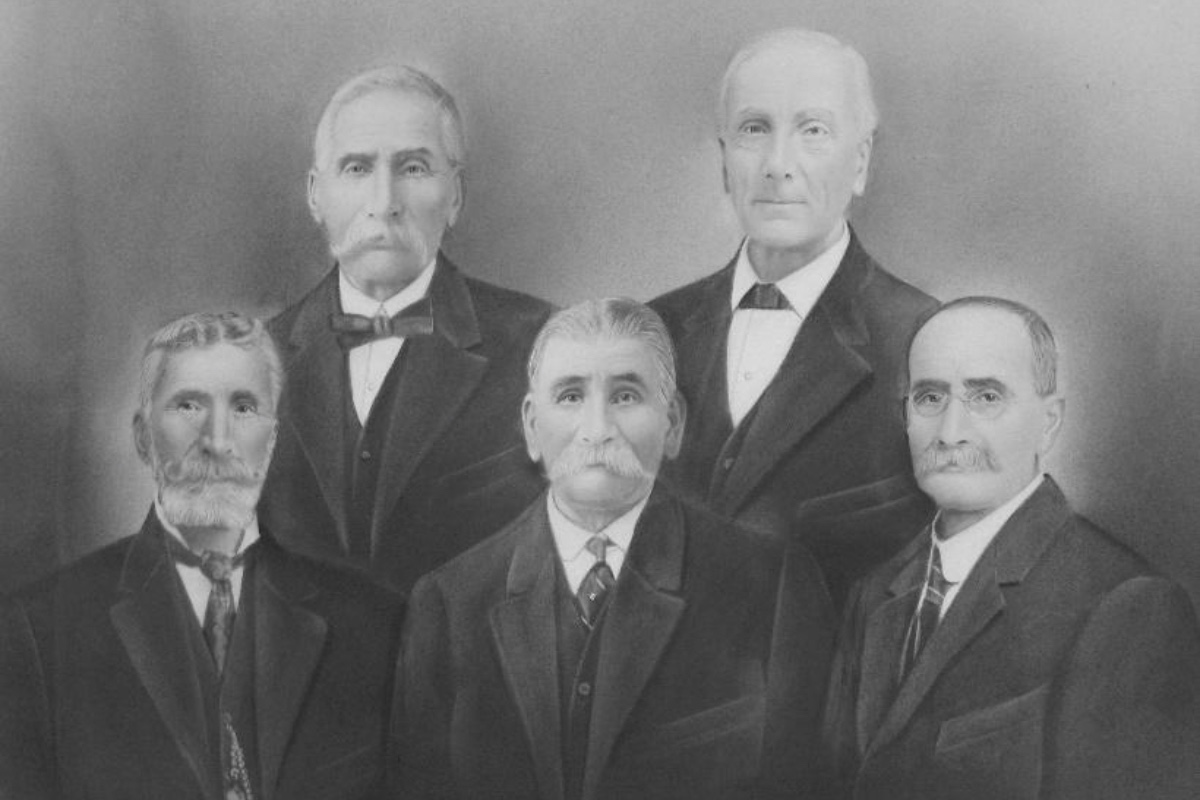
Archival records reveal the story of Megerdich James Normart, who arrived in Tropico 130 years ago and whose brother became Fresno’s earliest known Armenian visitor.
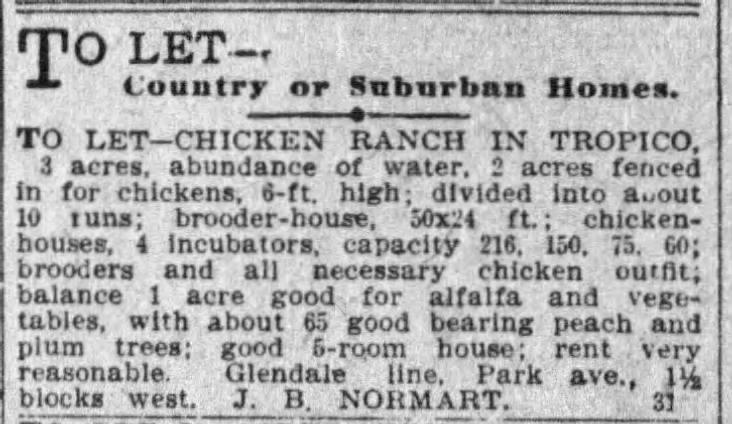
Los Angeles-area newspaper archives reveal that a forgotten figure, Megerdich James B. Normart (originally Yanikian), bought 10 acres of land in Tropico, today’s south Glendale, on Monday, May 25, 1896, and lived there for 24 years before moving to Long Beach.1“Real Estate Transfers.” Los Angeles Times, May 26, 1896, 9. The transaction is listed under Normart’s wife, Eliza G. Normart; “Locals and Personals,” Glendale Evening News, Aug. 6, 1921, p. 3. This ostensibly made him the first Armenian in Glendale, the modern “capital” of the Armenian diaspora, settling there 15 years before the previously identified record holders, the Ignatosian and Jamgochian families, ancestors of the late Paul Ignatius.2Monika Machowska, “Los Angeles: The Capital of the Armenian Immigrant Community in the Twenty-First Century.” Migration Studies – Review of Polish Diaspora 47, no. 3 (181) (2021): 57–78; Katherine Yamada, “Verdugo Views: Distinguished Alum Has Armenian Heritage,” Los Angeles Times, Jan. 29, 2014.
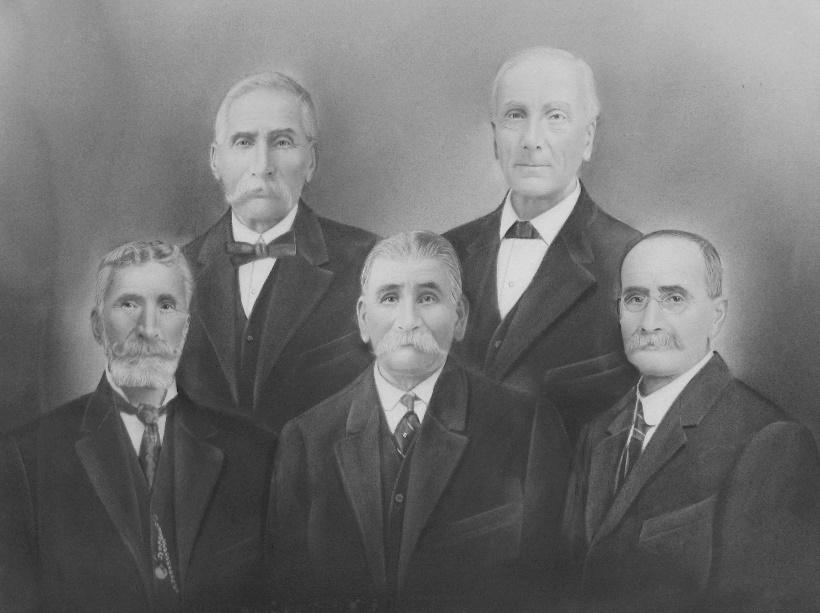
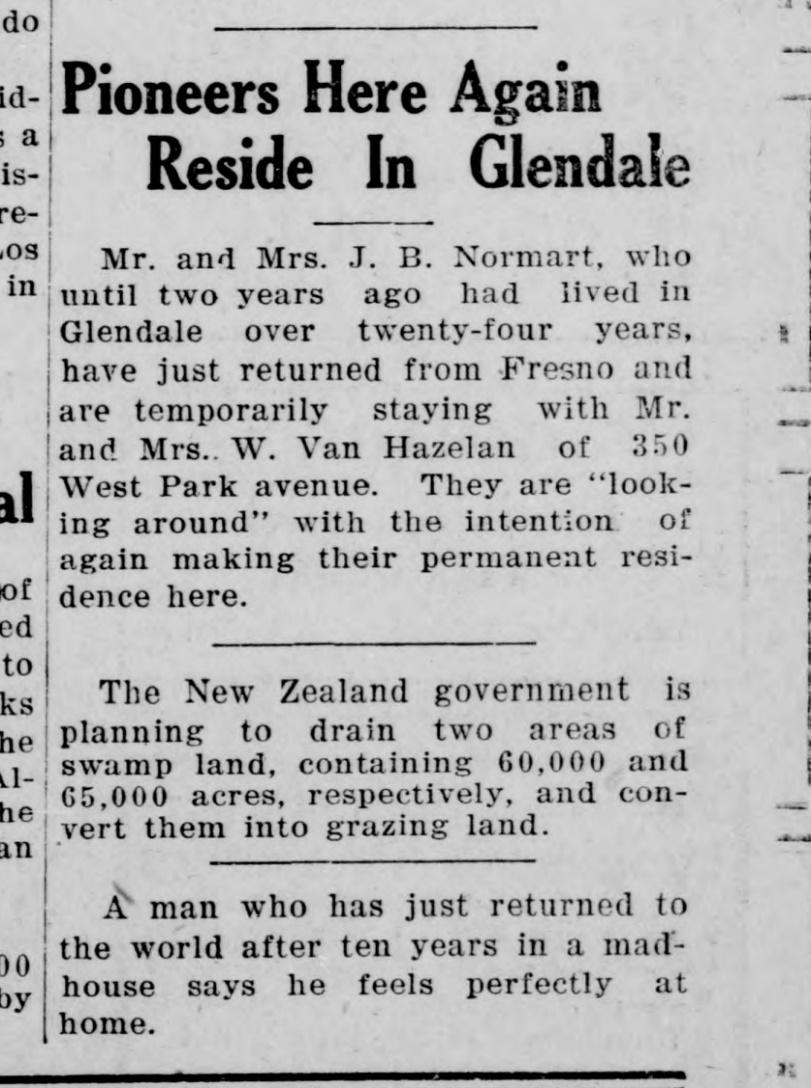
Megerdich James and his wife, Eliza Gardiner Normart, were recognized as among Tropico’s early settlers and local pioneers in Glendale-area newspaper entries from 1918 and 1921, respectively.3“Old Settlers: Mrs. Marsh Hostess to Ladies Long in This Vicinity,” Glendale Evening News, Aug. 10, 1918, 1; “Pioneers Here Again Reside in Glendale,” Glendale Evening News, July 26, 1921, p. 5. Part of their originally purchased tract still bears their name, “Normart’s Tract,” at the corner of Columbus Avenue and Chevy Chase Drive.4Los Angeles County Department of Public Works, Tract Map Book 8, Page 107A. Los Angeles County Land Records, https://pw.lacounty.gov/sur/nas/landrecords/tract/MB0008/TR0008-107A.pdf. Accessed 27 May 2026.
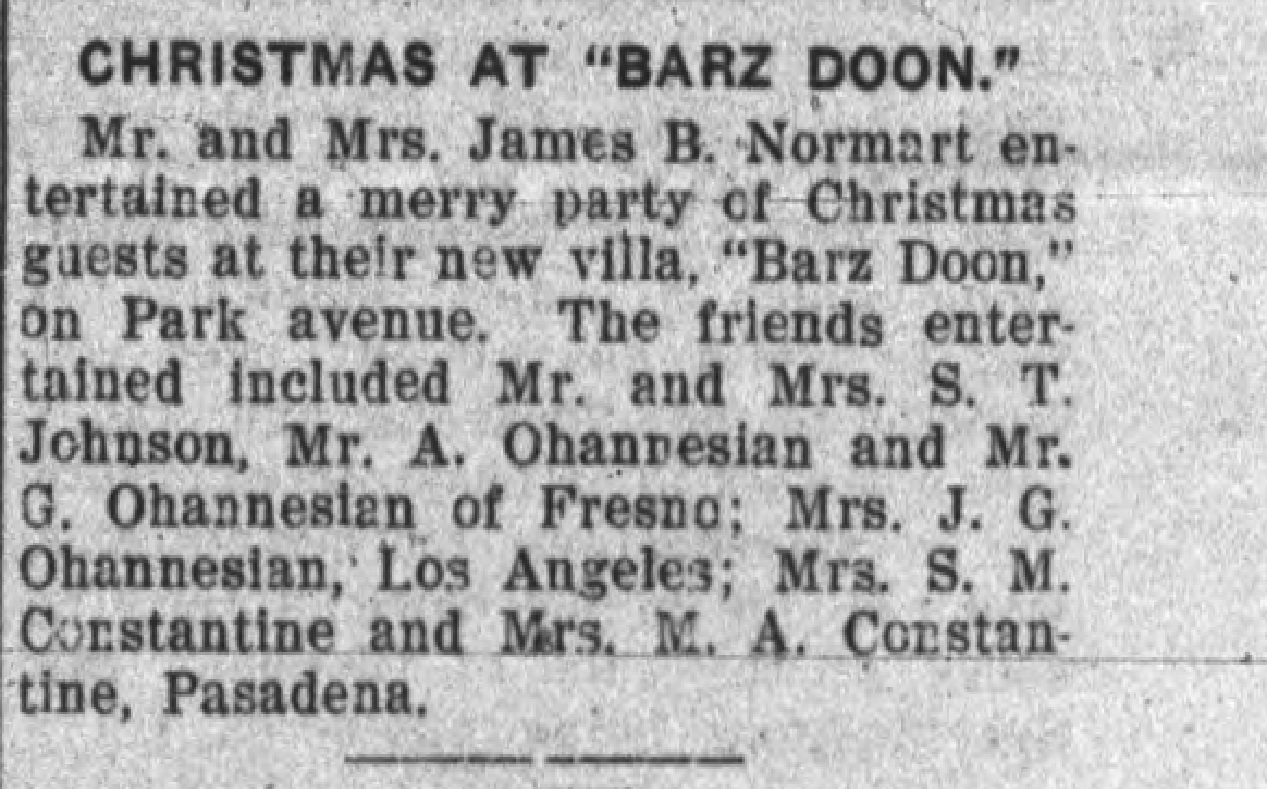
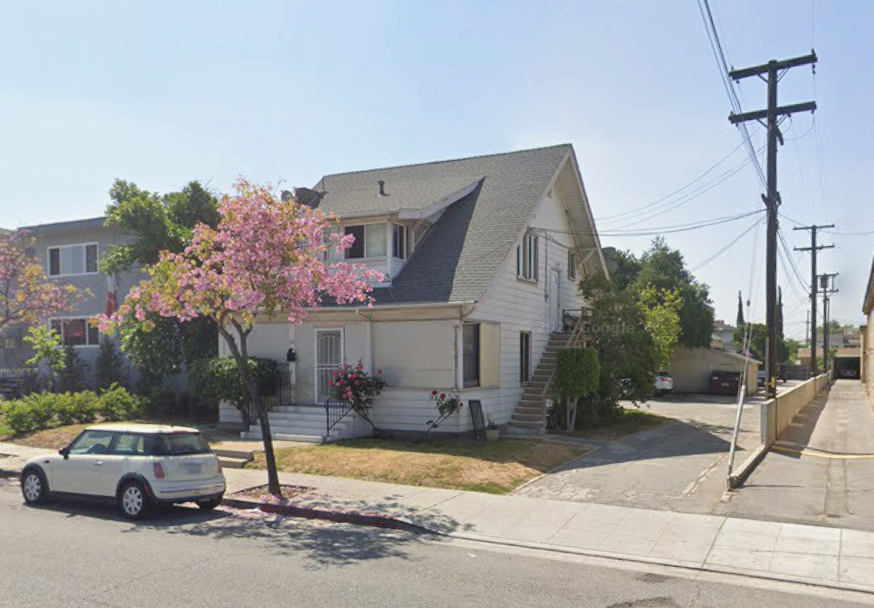
The couple were Quakers who led several agricultural and real estate enterprises in the area. At least three of their original homes are still standing. The most prominent, built in 1906, was referred to at the time as the “pretty new villa ‘Barz Doon’” (“simple house” in Armenian).5“Tropico: Mr. and Mrs. J. B. Normart have taken possession of their pretty new villa, ‘Barzdoon,’ recently erected in Park avenue,” Glendale News, Nov. 2, 1907, p. 8. Located at 352 W. Chevy Chase Drive, it hosted several events such as a Christmas party in 1907, attended by guests from Pasadena, Los Angeles and Fresno.6“Local Happenings: Christmas at ‘Barz Doon,’” Glendale News, Dec. 28, 1907, p. 4. Megerdich James was also a foreman at Pacific Art Tile Works, a well-known local tile factory, which is today a Costco on Los Feliz Boulevard near Glendale.7“Art Tile Industry Reborn at Tropico. Corner-Stone of New Factory Laid with Ceremony: Rejoicing by Officers of the Company–Pioneer Tile Works for Territory West of Mississippi River,” Los Angeles Times, July 25, 1902, p. 17.
An address where he sold chickens in 1911 corresponds to the present-day Garfield Campus of Glendale Community College.8“Additional Locals: For Sale–Three pullets, one rooster. Prize winners White Rock chickens, few days over six months old, laying. JAS. B. NORMART. 1128 10th street,” Interurban Sentinel, May 13, 1911, p. 5.

He was a neighbor and friend of Nelson C. Burch, an attorney, newspaper editor and city clerk who had also served as a bodyguard for President Lincoln during the Civil War.9“Tropico: Mr. James B. Normart having sold his property on Park avenue to Mr. J. S. Flint, of L.A., has begun the erection of a fine residence adjoining N. C. Burch’s home, ‘Twin Pines,’ on Park avenue.” Glendale News, June 29, 1907, p. 6; “Lawyer, On Lincoln’s Bodyguard, Passes: N. C. Burch Had Also Been a Publisher in Tropico and City Clerk.” Los Angeles Times, Aug. 10, 1919, p. 16.
The Normarts hosted prominent Armenian-American guests including Alexander and Lily Alchian of Fresno, parents of famed UCLA economist Armen Alchian; Serope Yotnelpire Parney, an early settler in Pasadena and La Cañada, California, a forest ranger and inspector for the U.S. Forestry Service west of the Rocky Mountains; and Sarkis Mihran Minasian of New York, an early Armenian immigrant to the United States who arrived in 1845.10Tropico: Mr. and Mrs. Alexander Alchian of Fresno, whose marriage occurred recently are the guests of Mrs. Alchian’s uncle and aunt, Mr. and Mrs. James B. Normart of “Barz-Doon,” Glendale News, Jan. 8, 1910, p. 4; Tropico: News Brevities. Serope Parney of La Cañada was the guest of Mr. and Mrs. J. B. Normart this week,” Los Angeles Times, Aug. 8, 1902, p. 19; “Able Botanist Passes Away: Serope Y. Parnay, Whose Recent Death Here Is Loss to Civilization of World,” Pasadena Star-News, Jan. 6, 1922, p. 24.
He was a neighbor and friend of Nelson C. Burch, an attorney, newspaper editor and city clerk who had also served as a bodyguard for President Lincoln during the Civil War.
Minasian was a millionaire philanthropist involved in the sale of American household goods in Constantinople, a sponsor of Armenian settlement in California and one of the first Armenian visitors to Los Angeles in 1883.11“The Armenians in New York: Representatives in This City of a Nation 3,900 Years Old,” Evening Sun, Jan. 17, 1890; “Tropico: Armenian Philanthropist,” Los Angeles Times, March 1, 1903, p. 11; “At The Hotels: Riverside,” Los Angeles Times, April 01, 1883, p. 4. S. M. Minasian is listed here as among the guests of Glenwood Cottage, which is now the historic Mission Inn Hotel and Spa in Riverside, CA.
In the absence of an available extant biography, there are around 200 Los Angeles-area newspaper entries, six Glendale city directories and other official documents that help shed more light on the elusive life of Megerdich James Normart. Together, they allow a partial reconstruction of his time in Tropico through land and home sales, visitors received, travels made and general life events. Among those events were a 1901 social excursion with the Tropico Outing Club to the ruins of the San Fernando Mission, where he reportedly met two supercentenarian Native Americans; acknowledgment in 1913 as one of Tropico’s “most wide-awake and faithful citizens” for being the first patron of the community’s new U.S. Post office and thus helping in the “competition with the Wells-Fargo company monopolies”; and recognition in 1911 as one of 40 heirs to a whopping $85,000,000 unclaimed will ($3 billion today) held by the Bank of England.12“Out-of-Town Society: Tropico,” Los Angeles Times, Sept. 08, 1901, p. 26; “Local and Personal: The first to patronize the parcels post business upon which your Uncle Samuel has ventured in competition with the Wells-Fargo company monopolies, was Mr. James B. Normart, 202 East Tenth street, one of Tropico’s most wide-awake and faithful citizens, and will have the honor of leading locally in one of our U. S. most important jobs.” Tropico Interurban Sentinel, Jan. 21, 1913, p. 4; “Our old Armenian friend James B. Normart, of 10th street, Tropico, with several other old country relatives has fallen heir to a large fortune, mostly of the money in the bank of England. We congratulate a very worthy citizen on this fine streak of luck,” Tropico Sentinel, April 8, 1911, p. 1; “Visalia Man Among 42 Who Are Endeavoring to Claim $85,000,000 Estate Lain in Trust for About 127 Years,” Visalia Times-Delta, February 4, 1912, p. 1. He also suffered setbacks such as sustaining injuries from being trampled on by a horse in 1902 and after falling from a tree while trimming it in 1917.13“Tropico Brevities: J. B. Normart, who was severely injured Sunday evening by being trampled by a horse, is much improved in condition, but will be confined to his room some time,” Los Angeles Times, July 24, 1902, p. 19; “Personals: Mr. J. B. Normart, of San Fernando road, Tropico, is still in bed from the effects of the injuries he sustained when he fell while trimming trees last week,” Glendale Evening News, Dec. 6, 1917, p. 3.
In addition to receiving visitors from different parts of Los Angeles, Fresno, Tucson, Arizona, Wyoming and Philadelphia, the Normarts traveled extensively, making many trips to Pasadena, La Cañada, Santa Monica, Long Beach, Fresno, Philadelphia and Washington, D.C.14“Out-of-Town Society: Tropico. Mr. and Mrs. J. B. Normart returned Tuesday from Washington, D. C.” Los Angeles Herald, July 8, 1906, p. 13.
Megerdich James B. Normart was born in Erzurum, Ottoman Armenia, in 1843 to Markar and Yakout Yanikian. He was one of nine children, with six brothers and three sisters.15Normart, Michael.“From Sole to Somm – The Normart Family Tree,” https://vino-rater.com/from-sole-to-somm-the-normart-family-tree/. Accessed 27 May 2026. He immigrated to the United States in 1887, spending a year in Philadelphia before moving to Fresno.16“United States, Census, 1900,” FamilySearch (https://www.familysearch.org/ark:/61903/1:1:M9PK-J57 : Sun Oct 19 09:24:10 UTC 2025), Entry for James B Normart and Eliza G Normart, 1900.
His older brother, Mardiros Frank Normart, is the earliest known Armenian visitor to Fresno, arriving in either 1874 or 1876. He later returned to Philadelphia before moving back to settle in Fresno in the mid-1880s inviting the rest of his family from abroad. Upon arriving in the United States in 1871, Mardiros Frank changed the family surname to “Normart,” meaning “new man” in Armenian, because he felt like a new man upon his arrival. The rest of the family subsequently adopted the name.
In 1895, Mardiros Frank opened the famous Normart merchandise store in Visalia, near Fresno. The business sold and repaired bicycles and hunting equipment and also offered taxidermy, gunsmithing, locksmithing, tanning and furs.17Bulbulian, Berge. The Fresno Armenians: History of a Diaspora Community. Sanger, CA: Word Dancer Press, 2001, p. 16-17.
 In 1893, Megerdich James was naturalized as a U.S. citizen in Fresno.18“California County Naturalizations, 1831-1985,” FamilySearch (https://www.familysearch.org/ark:/61903/1:1:QGG3-HL9L : Fri Mar 08 19:16:54 UTC 2024), Entry for James B Normart, 1893. In 1895, he married Eliza Gardiner, the sister of his sister-in-law (Frank’s wife’s, Mary G. Normart’s sister). Eliza was born in New Jersey in 1853 to a family with roots in New England. At the time of their marriage, he was 51 and she was 42.19“California, County Marriages, 1849-1957,” FamilySearch (https://www.familysearch.org/ark:/61903/1:1:KZ3P-4NF : Fri Mar 08 23:10:29 UTC 2024), Entry for James B. Normart and Eliza Gardiner, 1895. The couple had no children.
The 1910 U.S. census reports that this was Megerdich James’s second marriage and Eliza’s first. A brief Normart family history corroborates the earlier marriage, indicating that his first wife died under unknown circumstances. The same family history states that he had a daughter from that marriage, although her fate remains unknown.20“United States, Census, 1910,” FamilySearch (https://www.familysearch.org/ark:/61903/1:1:MV2L-L16 : Wed Aug 13 15:29:34 UTC 2025), Entry for James B Normart and Eliza G Normart, 1910. After living in Tropico and Glendale for 24 years, from 1896 to 1920, the Normarts moved to Long Beach in 1921. Megerdich James died there in 1927 at age 83, and Eliza died in 1940 at age 87.21“California, County Birth and Death Records, 1800-1994,” FamilySearch (https://www.familysearch.org/ark:/61903/1:1:QGYV-LZJ1 : Sat Mar 09 11:53:30 UTC 2024), Entry for James B Normart and Eliza G Normart, 6 September 1927; “California, County Birth and Death Records, 1800-1994,” FamilySearch (https://www.familysearch.org/ark:/61903/1:1:QGKK-SFRZ : Fri May 01 23:13:05 UTC 2026), Entry for Eliza G Normart and Joseph Gardner, 18 December 1940. They are buried at Westminster Memorial Park in Orange County, in graves that lack tombstones, possibly reflecting Quaker traditions, emphasizing humility in death.22“James B. Normart,” memorial page, Find A Grave (https://www.findagrave.com/memorial/195552020/james_b-normart), memorial ID 195552020, citing Westminster Memorial Park, maintained by Paul S. (contributor 18204635), accessed May 27, 2026.
Upon arriving in the United States in 1871, Mardiros Frank changed the family surname to “Normart,” meaning “new man” in Armenian, because he felt like a new man upon his arrival.
There are several possible reasons for why Megerdich James has been largely absent from local and modern history accounts. Interestingly, he is mentioned in a unique 2014 historic resources report prepared for the city of Glendale on the history of south Glendale, but only in passing.23Historic Resources Group. City of Glendale South Glendale Historic Context Statement. Prepared for the City of Glendale, Sept. 30, 2014, 21. https://www.ci.glendale.ca.us/government/council_packets/Reports_071216/CC_SpMtg_Item1_071216.pdf. Accessed May 27, 2026. This is the only reference to Normart that I have found in any body of research regarding early Armenian immigration in Glendale. One explanation is the passage of time between the earliest Armenian immigrants and the later, larger waves of arrivals, leading to a gap in diasporic communal or institutional memory. Another is that Megerdich and Eliza had no direct descendants to preserve their story. Their move from the Glendale area to Long Beach may also have contributed to their gradual disappearance from local historical narratives. There is also the difficulty, as articulated by historian of Armenian-American diaspora Benjamin F. Alexander, which is common to diasporan communities, namely, the maintenance of robust archives outside institutions such as churches, schools, clubs and political organizations.
It was research into the early Armenian history of Fresno and the family history of its first Armenian visitor, Mardiros Frank Normart, that led to the discovery of Megerdich James Normart and his ties to early Glendale. The recent digitalization of many Los Angeles- and Glendale-area newspaper archives helped uncover the trove of microfilm copies of newspaper entries related to the Normart couple. This research hopes to shed light on an earlier, pre-Genocide period of diasporan Armenian life in the United States, particularly in Southern California, and to provide a stronger sense of grounding for Armenian-American diasporic identity in the region. Today, the concentration of Armenians in the greater Los Angeles area has led many to describe it as the “capital” of the modern Armenian diaspora.25Abrahamian, Levon. Armenian Identity in a Changing World. Costa Mesa, CA: Mazda Publishers, 2006. See “pioneer complex,” p. 402.
The lives of Megerdich James B. and Eliza G. Normart suggest that they were not only the earliest known Armenian-related residents of Glendale, but also among the area’s early pioneers and long-term settlers, recognized as such during their own lifetimes. They witnessed a fascinating period in Southern California history, as Los Angeles evolved from a largely agricultural and ranching region of orange groves and railroads into a modern metropolis shaped by electric streetcars, oil production and automobiles.
Allen “Dish” Dishigrikyan will present his research on Megerdich James B. and Eliza Normart on June 14, 2026 at 5:00 p.m. at the Center for Armenian Arts, 250 N. Orange St., Glendale, California. Admission is free. For more information, visit the event webpage.

Wow, amazing!
I always love to see research into the early Armenian-Americans and commend your work! Newspaper digitization has indeed created a treasure trove that had previously been so much less accessible. However I do counter the notion in this article that James Normart has “discovered.” For example the family has always known about him, and as a researcher of early Philadelphia- of which Frank Normart was an early pioneer- I’ve known about his brother James and their marriage to sisters for at least 15 years, and I’m sure other researchers knew about him before for. A decade ago traced James to Long Beach and his burial there, as detailed in this article. People don’t do much get discovered as re-remembered. However the Glendale chapter is a new and interesting revelation for me. I’ll also point out another early Glendalian who I don’t know is much known about or not- Helene Jenanyan Handjian died in Glendale in 1917, she was married to two Armenian Protestant ministers but not far as I know part of the pioneer families mentioned. I don’t know what had her in Glendale at her death but I always found it funny nobody would have known at the time what it would become to Armenians. I hope all Armenian-Americans take into in these kinds of stories and we keep researching, there’s more to find!
Thank you Allen for the article, I saw when you mentioned about this in the city council meeting, I had no idea nor ever heard about this, and Glendale has been in my life for 24 years. Really appreciate community members such as yourself who share important values about our culture. Hope you succeed in your future endeavors, you are quite an intelligent man.