


Armenians at the U.N. reunite in New York City
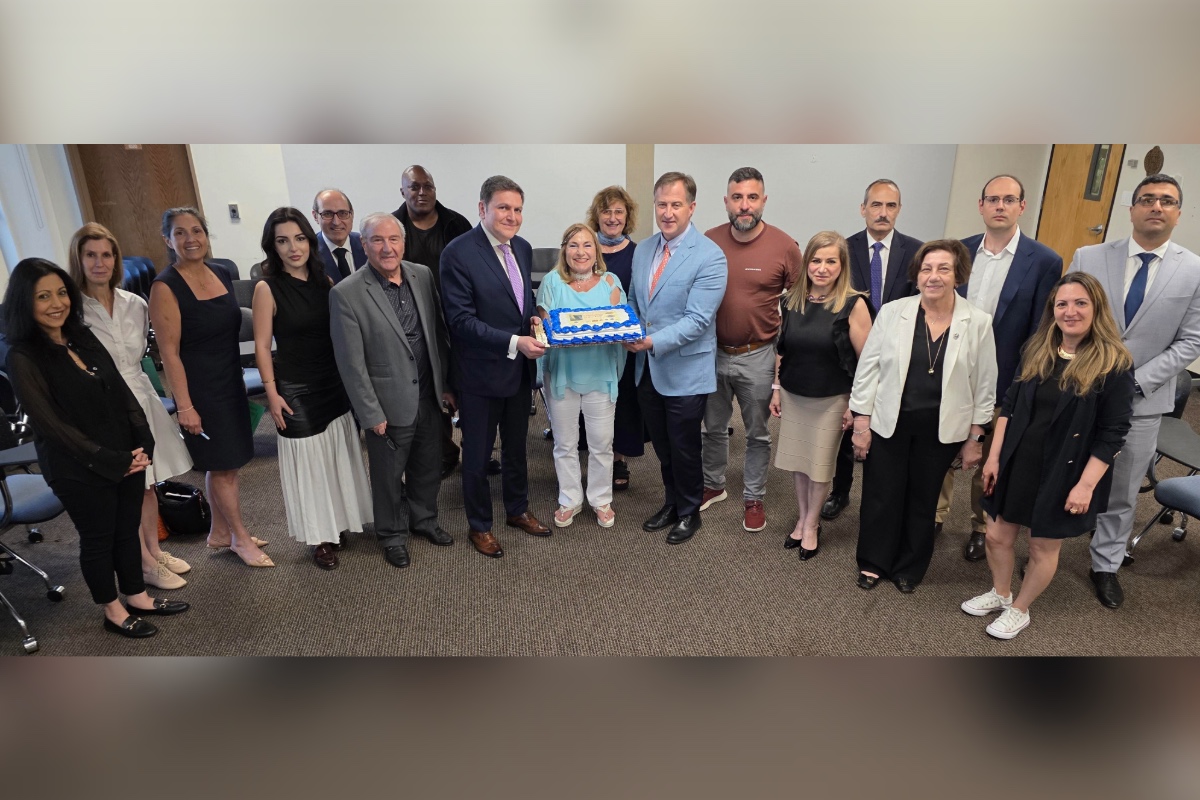
“How are Armenians involved with the United Nations today?” This question was the focus of an unusual forum held May 15, 2026, at Fordham University in New York City, with 30 Armenians who serve in diverse parts of the United Nations.
Based on this, 25 Armenians met for forum No. 2 on June 15 to address a follow-up question: “How can Armenians become more involved with the U.N.?” The U.N. itself benefits from a diaspora of talented Armenian professionals scattered throughout the global U.N. system who have little contact with each other. Forum No. 2 was divided into three parts.
First, two community leaders spoke. His Excellency Paruyr Hovhannisyan spoke about the Armenian Mission to the U.N. As Armenia’s ambassador, he noted that these are challenging times for the U.N. itself as well as the Republic of Armenia, yet his small, high-energy Armenian Mission is fully involved in U.N. projects, such as the COP17 Biodiversity Conference in Yerevan this October. He welcomed more contact with the “diaspora” of talented Armenians scattered throughout the U.N. system. Bryan D. Ardouny, long-time executive director of the Armenian Assembly of America in Washington, D.C., noted the Assembly’s new role in 2026 as the first elected Armenian board member of CoNGO, the Conference of NGOs in Consultative Relationship with the United Nations. Ardouny also welcomed more cooperation with other U.N. Armenians during his four-year term with CoNGO, from 2026 to 2030.
Second, a one-hour roundtable discussion raised several possible ways for Armenians to become more involved in important U.N. activities. First, individuals. Compile a global roster of Armenian professionals scattered throughout the U.N. system. There is currently a partial list of 115 professionals, primarily in New York. Second, NGOs. Compile a roster of Armenian NGOs registered with the U.N. There is currently a list of only seven Armenian NGOs out of the 24,000 NGOs registered with ECOSOC. Third, Coalition. A coalition of existing Armenian NGOs at the U.N. could be formed to work more closely with CoNGO and others. Fourth, workshop. Organizers could offer a workshop for Armenian NGOs, such as the Armenian Jewelers Association, on how they can register with U.N. ECOSOC, a long process that typically takes about one year. Fifth, articles. Students could help write a series of brief articles for the Armenian media profiling the remarkable work of specific Armenians within U.N. agencies, NGOs or the Mission. Sixth, coping. Participants discussed how best to cope with unfriendly behavior by a few nations. Seventh, gatherings. Participants agreed to continue hosting quarterly gatherings of U.N. Armenians in the New York area.
Third, some participants lingered for another hour to enjoy one-on-one conversations over refreshments at a reception sponsored by the Armenian Assembly.
Based on this, a team will meet in July to arrange forum No. 3 this fall and further plans to promote Armenians at the U.N. The experienced team includes Emma Arakelyan, Houry Geudelekian, Souren A. Israelyan, Ani Kalayjian, Arpine Korekyan and Harold Takooshian.
This forum was organized by seven community associations: the Armenian Assembly of America, Armenian Bar Association, Armenian Behavioral Science Association, Armenian International Women’s Association, Armenian Relief Society, Meaningful World and Orion Worldwide Innovations. For inquiries or suggestions, contact takoosh@aol.com