


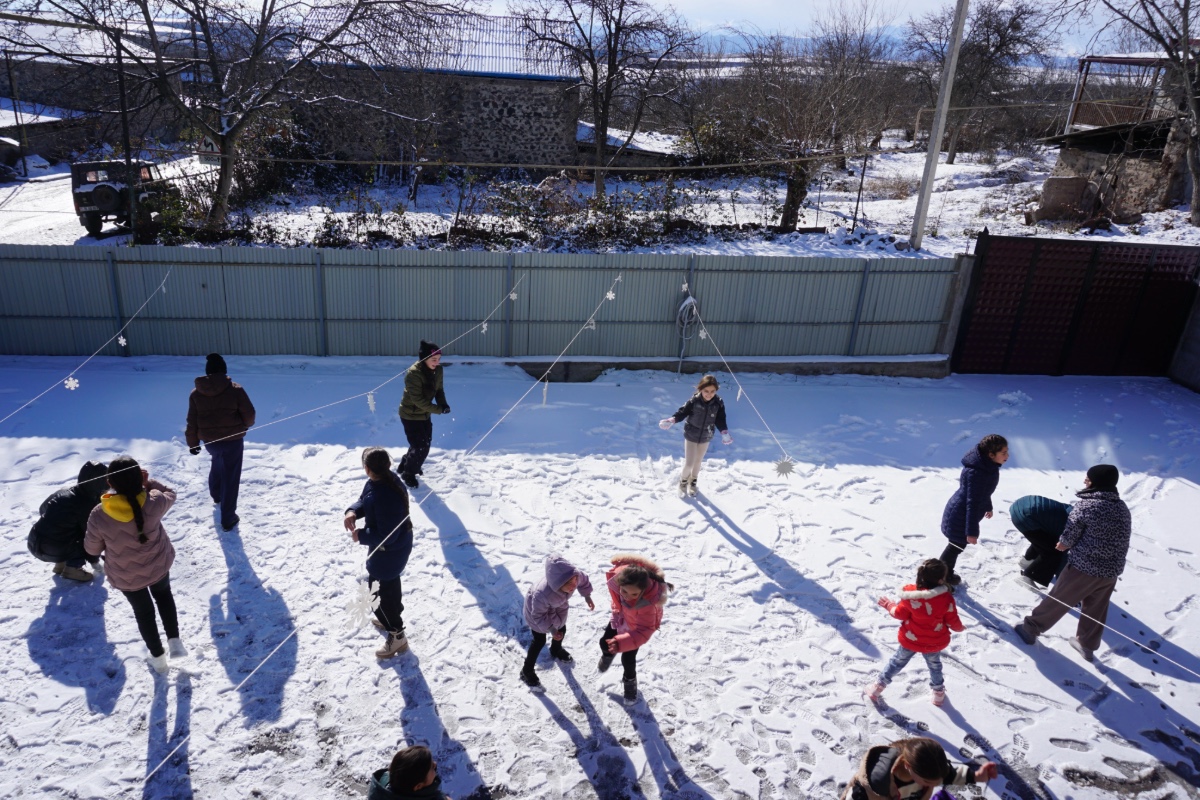
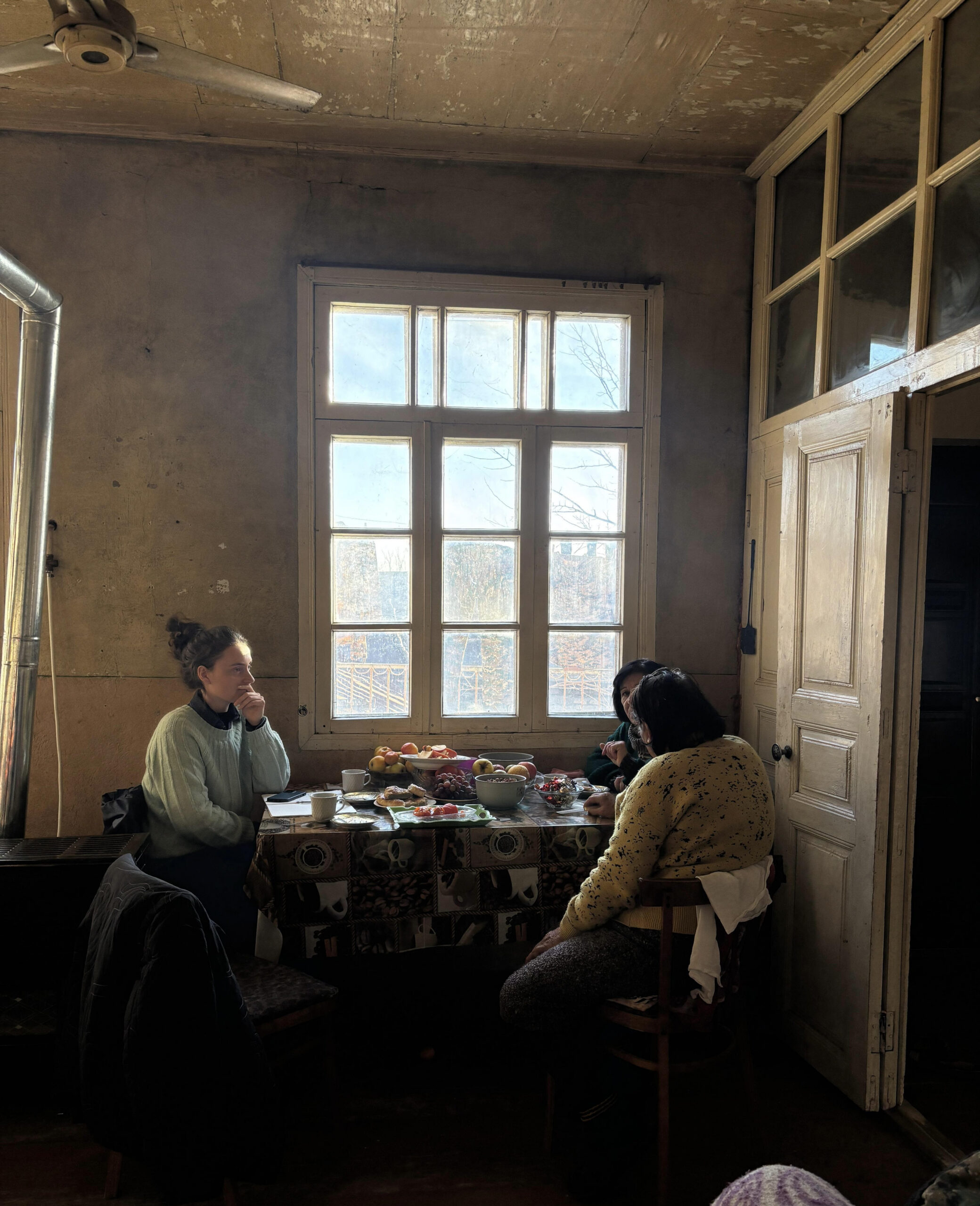
I am sitting in Kornidzor, observing the February sun slowly withdraw. A flock of sparrows takes to the air, breaking the silence. On the dining table, a constellation of dried mulberries rests, and I think of the parting moment drawing near. How things grow more beautiful as they leave us. How easily new habits have taken hold. The watching at the window. The tilted nod. The pausing mid-street to crack open a sunflower seed. The widespread comma Senc e (“It’s like this”) to surrender to what is.
Four months have passed since I settled in the village I once referred to as kaghak (city) in my rudimentary Armenian. Gyugh, gyugh (Village, village) a handful of residents would correct me vividly. They tell me to come back in the summertime, when valleys bloom again with poppies, but I find myself marveling at how naked the mountains are, mirroring the moon’s blank face.
“An easterly wind is blowing against the windows. Aveli dzyun a galis (More snow is coming our way)”, I remember telling my Dad on the phone yesterday, curling the last syllable.
“It sounds like your Armenian has turned easterly too,” he replied lightly.
I grew up on flat, humid land south of Brussels, in a melting pot of languages that bears no resemblance to the “Language of the Gods.” For the longest time, my Armenian heritage was not spoken of, nor was it something I knew how to speak of. Instead, it moved through me like a rare maqam — deep and lofty — leaving me with the sense of a land I would one day have to go and find. It was in September last year that I felt ready to explore that dream. Rather like splitting a pomegranate open, I negotiated a sabbatical from work, said goodbye in the arms of family and friends, and flew east without knowing what I would find.
Kornidzor. Gornitsor.
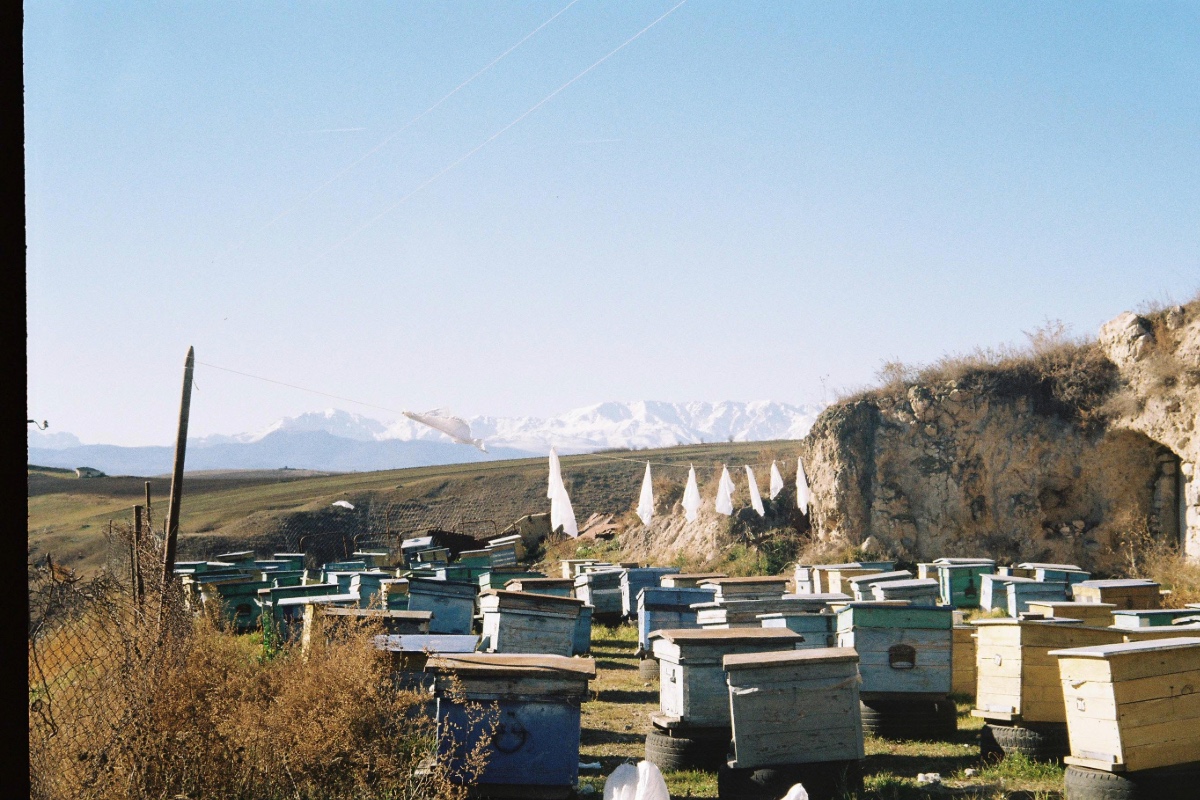
Where do I begin to tell the story… of that far-swooping piece of earth? Perhaps I should turn to the thousand or so souls who live there. Fierce. Large-hearted. Watchful. They will speak for it. In the black soil tilled by hardworking fathers. In the soft matnakash laid atop wood-burning stoves by loving mothers. In the stacks of salty cheese and fresh herbs — cilantro, parsley, chervil, green onions, you name it — found in the villagers’ car trunks to sell in Goris, the nearby town. In the voices of young soldiers blaring Hovhannes Shiraz’s poem, Mer Sahmannere (Our Borders), after dark. And admittedly, in the way “we” is spoken before “I.”
For the longest time, my Armenian heritage was not spoken of, nor was it something I knew how to speak of.
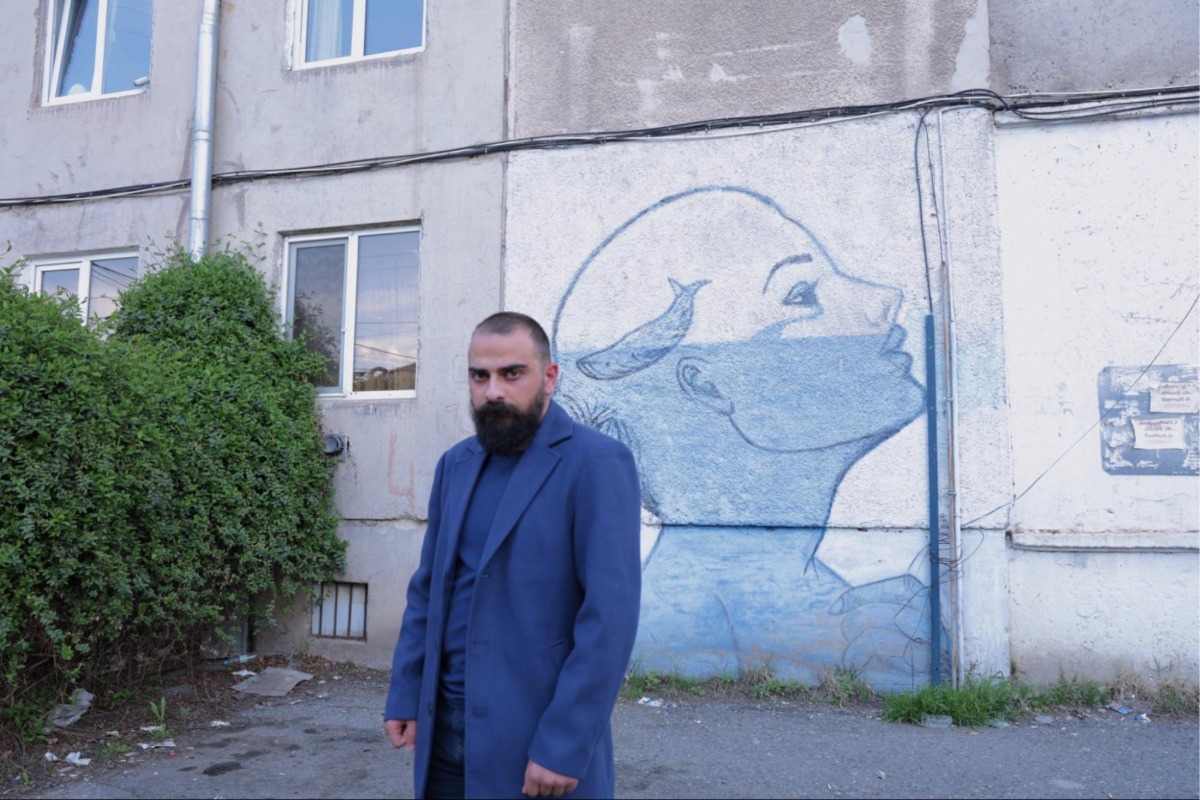
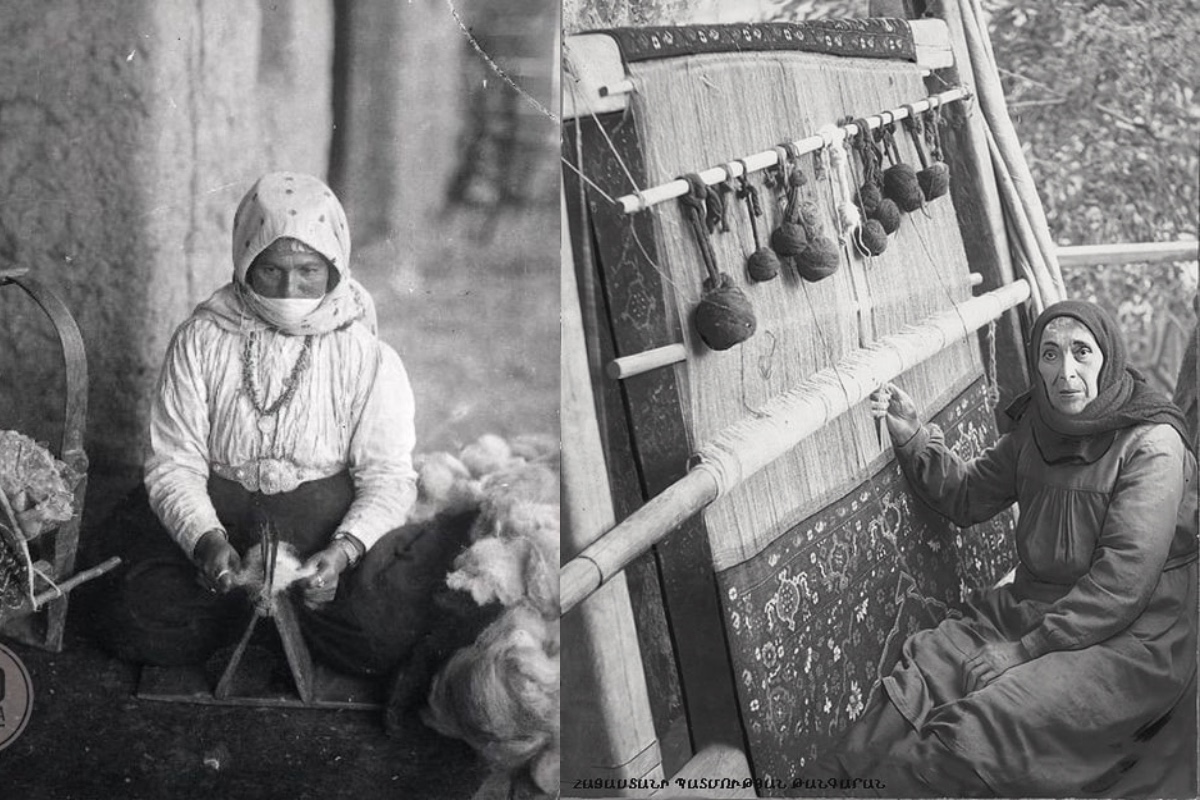
I noted, in the routine way you note the color of a person’s eyes, that Kornidzor is, at its core, a place woven together by women. As I glide through the village’s nine streets, I pass my next-door neighbor vertically rocking her tornig (grandchild) through power cuts; rolling out dough for jingalov hats. Further up, my 70-year old Armenian teacher, Miss S., craftily repairs her frozen water pipes before breaking into dance like a dove rising out of an unsettled past. Two streets away, Arpiné’s husky voice lingers in the air as she recounts her time in the war as a sniper, her fingers stained crimson with beetroot. These are only a few of the Armenian women I will forever look up to. To me, they embody resourcefulness and bravery; they are the village’s vital artery. Yet that artery, I found, can be fickle under an ongoing “no war, no peace” cycle.
The idea of laying roots far outside of Yerevan, in a village pulsing through the biblical mountains of Artsakh, first appealed to the part of me that always looks back. I wanted to follow in the footsteps of the many volunteers who, in the aftermath of the 44-Day War, stood at the doorstep of the Lachin corridor to assist and protect the mass of families displaced by ethnic cleansing. I wanted to bring some color into the children’s lives while bearing witness to lasting scars. Such scars, I discovered, are everywhere. In the eyes of grieving mothers. In the vacant stone houses, unlit at night. In the cultural center turned to ruins three decades ago. In the poetic, albeit somber words of an old lady who looked me in the eye and said “The mouth of my luckiness is closed” while raising a shot glass of locally distilled oghi (vodka). Taken together, they broke the deceptive normality with which life in the village carries on.
I noted, in the routine way you note the color of a person’s eyes, that Kornidzor is, at its core, a place woven together by women.
While there, at the source, I weighed how much our presence at the border matters for Armenia’s future, and how challenging it is, all the same, to sustain life within such compressed, militarized geography. Against this background, All For Armenia’s community center, KorniTun, acts as a powerful steam dome at the heart of the village. The words “agency” and “wonder,” emblazoned across its educational initiatives, read to me as an invitation to carry the scars of conflict with equanimity. Proof that it takes everyone and anyone to keep the community alive with new ideas and shared enjoyment. Perhaps I, too, could be that person, I thought. Otherwise, nothing happens…
“The mouth of my luckiness is closed.”
Most weeks, I sat in people’s homes in heavy silence, listening to stories of irreparable loss that I have yet to untangle. In the same breath, I watched kids rushing through KorniTun’s squeaky door, each one adding to a creative continuo of resilience. They showed me their dreams in paint. Braided my hair as theirs. Held my hands as I gracelessly learned the Kochari. The most motivated joined the Saturday English classes I insisted on. Et voilà… In small ways, we pushed each other right up to an edge, spread our arms as if they were wings, and embraced a world of possibilities. I am grateful to All For Armenia for making me feel welcome into that world. For turning a land that lived only in my mind into a home.
It is pitch dark now and the mulberries on the table are gone. All that remains is a crescent of faces trying to make sense of me, and I of them. Frowns slowly morphing into a sentence, then a conversation. In the scheme of things, I like to think that we learned something worthwhile from each other. What I am left certain of, is that the inhabitants of Kornidzor softened the distance between the Promise of being Armenian and the lived reality of it. “And that has made all the difference,” as Robert Frost once said.
In small ways, we pushed each other right up to an edge, spread our arms as if they were wings, and embraced a world of possibilities


Thank you for your evocative description of life in Kornidzor. You captured how living in a border village, while presenting great challenges, can also open to a “world of possibilities” and beauty.