


Armenia’s media crisis: Declining press freedom and political polarization
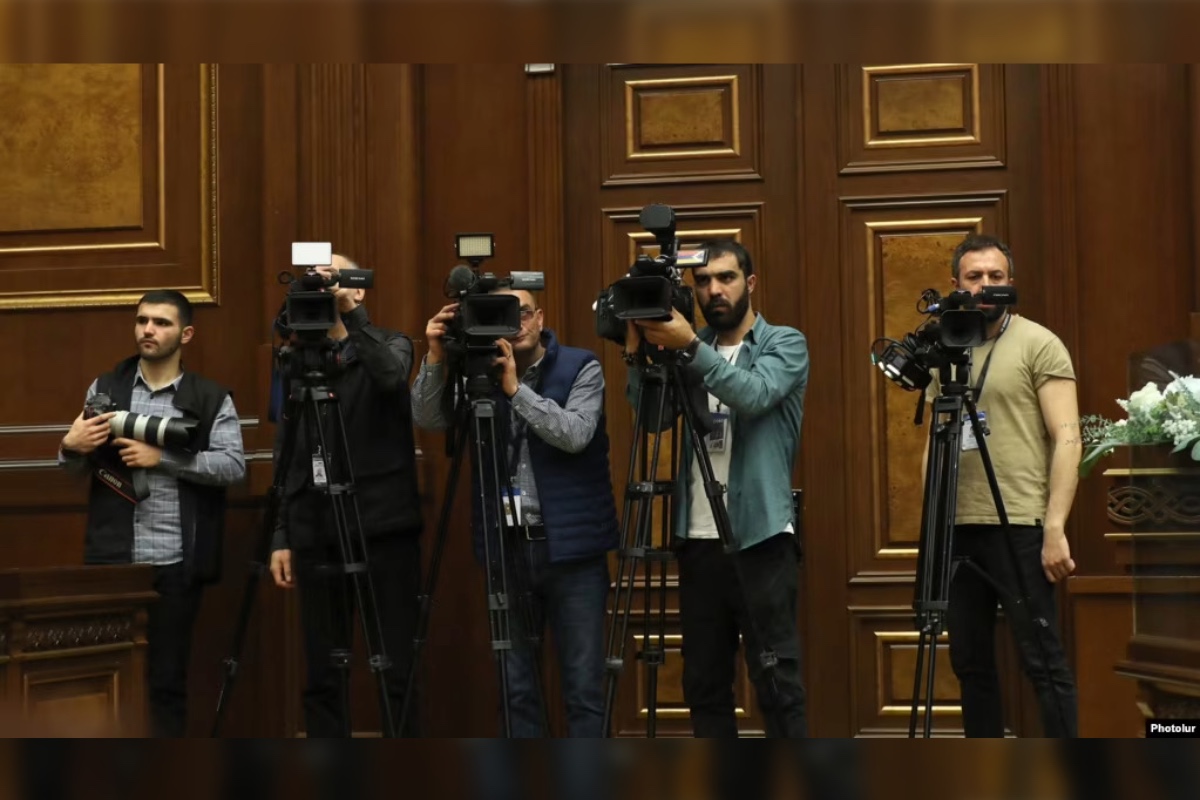
In recent years, Armenia has registered noticeable progress in the global press freedom index. The country ranked 51st in 2022, 49th in 2023 and rose to 34th in 2024. The latest assessment, however, records a regression, with Armenia falling back to 50th place.
This shift is taking place against the backdrop of active domestic political developments, growing polarization and a pre-election atmosphere. Although the authorities continue to claim that the press in Armenia has never been freer, reports by international organizations and assessments by media experts paint a more complex and contradictory picture.
Observations by Artur Papyan, president of the Yerevan Press Club; Suren Deheryan, founder of the Ampop Media platform and president of the Journalists for the Future NGO; and Ashot Melikyan, chairman of the Committee to Protect Freedom of Expression, show that the issue extends beyond direct pressure on journalists. The decline in press freedom is shaped by several political, social, economic and technological factors.
Main reasons behind the decline in the international ranking
International assessments of press freedom are compiled based on various indicators, ranging from the political environment and journalists’ safety to the economic independence of the media. According to Papyan, Armenia’s decline over the past year has been particularly noticeable in the political and security components. This refers to threats against journalists, harsh rhetoric, obstacles to obtaining information and the rise of hate speech online.
Accordingly, public discourse has become more aggressive over the past year. Political struggles often move not only into media outlets but also onto social networks, where journalists become targets regardless of the quality of their professional work.
In Deheryan’s view, an atmosphere has emerged, particularly on social networks, in which journalists are quickly labeled based on their political positions. As a result, public distrust is generated not only toward individual journalists but also toward the media system as a whole.
Media outlets as tools of political influence
One of the main characteristics of Armenia’s media landscape is political polarization, which has led many members of the public to perceive media outlets as platforms associated with one political force or another. This seriously undermines trust in news reporting.
Papyan notes that any critical publication is often no longer perceived as journalism, but rather as an expression of a political position. Under these conditions, the journalist ceases to be viewed as a conveyor of information and begins to be seen as a political opponent or ally.
According to Melikyan, the starting conditions for political forces are not equal in the current situation, particularly in terms of financial and media resources. He emphasized that Armenia’s media sphere is heavily polarized and that media outlets frequently function as tools of political influence. Melikyan argues that, as a result, certain forces constantly remain in the public spotlight, while others, deprived of resources, remain in the shadows.
This phenomenon is especially noticeable during pre-election periods, when political actors attempt to exert maximum influence on public opinion. Melikyan says that in today’s political struggle, no discrimination is made regarding the means deployed: “There is a concept in the information field called disinformation. It is, of course, one of the most serious challenges facing our media landscape. In a political struggle, no means are disregarded, and there is no selectivity among those means. If it is necessary to ‘destroy’ a political adversary — an opponent — disinformation, fake news, the manipulative use of facts and all methods of propaganda are used.”
Deheryan also believes this situation is dangerous for the public, as society begins to evaluate information based on political sympathies rather than facts.
Pressure shifts to the digital domain
While pressure on journalists in the past was mainly physical or administrative, a significant portion has now moved into the digital sphere. Insults, coordinated attacks and hate speech directed at journalists on social networks have become almost daily occurrences. Moreover, they often originate from both pro-government and opposition circles.
Deheryan notes that in such an environment, journalists constantly work under psychological pressure. He emphasizes that when public discourse is flooded with aggressive speech, a generally hostile attitude toward the media forms within society. This, in turn, reduces public solidarity with journalists. Today, it is difficult to imagine a situation in which the public would turn out en masse to protect journalists’ rights, because trust in the media is deeply polarized.
When discussing press freedom, the focus is often on political pressures and the importance of the economic component. According to Papyan, financial stability is key to the existence of an independent press. However, many Armenian media outlets today operate with limited resources.
The small size of the advertising market, the lack of a subscription culture and the dominance of digital platforms leave media outlets financially vulnerable. As a result, many editorial offices are forced to rely on political or other interest-driven funding sources. According to experts, this can limit editorial independence even in the absence of direct political interference. Papyan also notes that while the state implements policies to support various sectors, the media is often left out of these priorities despite its crucial public role.
Deficit of professionalism and media literacy
Despite existing problems, experts note that Armenia has editorial offices, investigative platforms and fact-checking media outlets that operate with high professional standards. However, the issue is not merely the existence of quality content, but also the extent to which the public is prepared to distinguish professional journalism from manipulative or sensationalist content.
According to Deheryan, people in the digital environment often fall under the influence of algorithms and begin consuming only information that corresponds to their preconceived views. This deepens polarization and reduces the perception of pluralism. In his view, the lack of media literacy has become no less important than political pressure.
Media experts also emphasize the role of public television, which is funded by state resources and must therefore ensure pluralism and balanced coverage. In Papyan’s assessment, discussions continue around public television regarding the representation of political forces and content balance. If a media outlet is publicly funded, the standards applied to it must be higher, both in terms of transparency and professionalism.
All the experts agree that the upcoming pre-election period could further exacerbate tensions. The intense political struggle is usually accompanied by increased tension in the information field, mutual accusations, aggressive rhetoric and violations of ethical boundaries. Under these conditions, preserving professional and ethical principles by both political actors and journalists becomes paramount.
The observations of media experts show that press freedom is not confined to journalists’ rights alone. It is directly linked to political culture, social behavior, economic conditions and the technological environment.
The decline in press freedom is not merely a change in an international ranking. It is also an indicator of the extent to which a society is ready to tolerate pluralism, protect journalists’ work and distinguish reliable information from a political struggle fought blindly.