


The HomelandCulture

Learning the craft of winemaking at Sebastatsi School
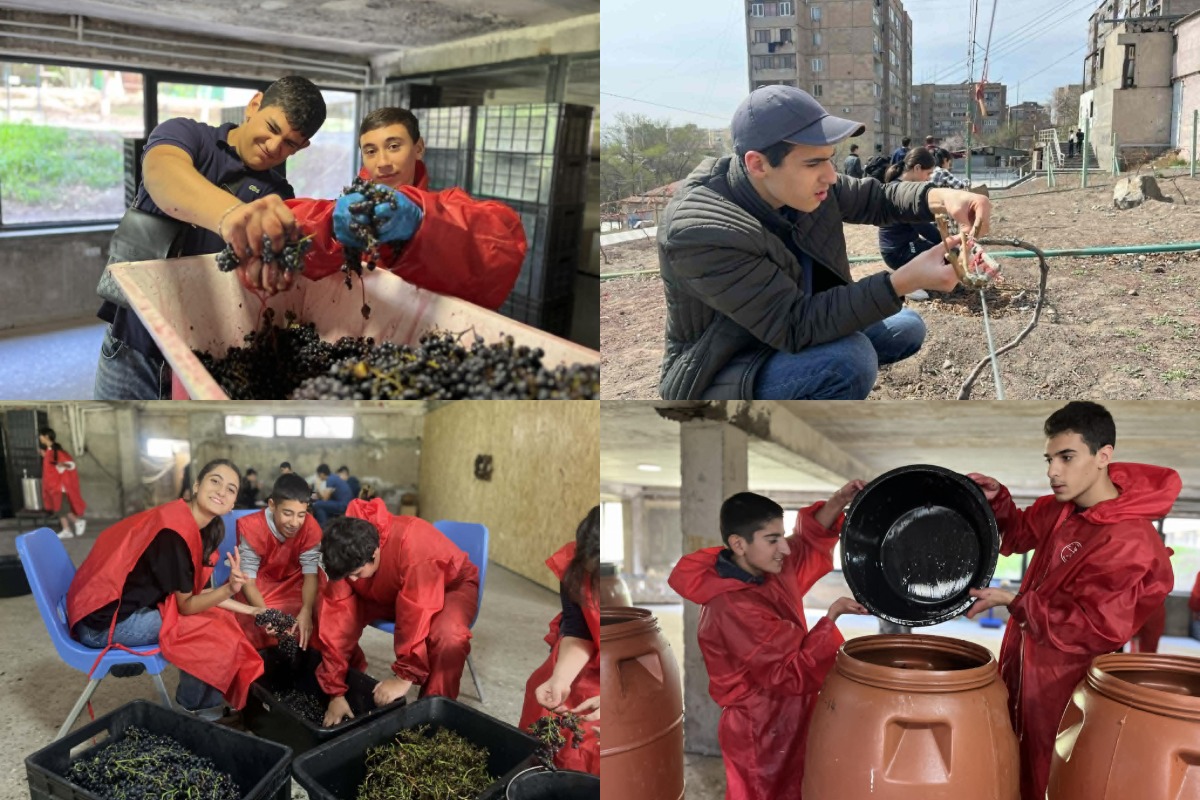
When walking through the large campus of Sebastatsi School in Yerevan, one unusual sight may stand out: grapevines peacefully soaking in the sun. Although grapes are common across Yerevan, even to the naked eye, it is clear that every vineyard here was deliberately planted. They did not appear by chance. 

At Sebastatsi, children make their own wine, which can now be found in many specialized stores in Yerevan and in the provinces. Mariana Gevorgyan, head and instructor of the Grape and Wine School at the Mkhitar Sebastatsi Educational Complex College, welcomes me inside the school’s winery and wine cellar. Vazgen Nersesyan, a second-year student in fermentation production technology and winemaking, and Hovhannes Altunyan, a first-year student, begin showing me their “workplace,” explaining every detail. 

The Grape and Wine School of the Mkhitar Sebastatsi Educational Complex has been operating since 2018, with the goal of combining vocational, production-based education with the culture of winemaking. Students participate in the full process of grape cultivation, winemaking and bottling, and, for more than four years, the entire sales process, gaining both theoretical knowledge and practical skills.

“The winemaking specialization includes the study of grape varieties, fermentation technologies, quality control and aging processes,” Gevorgyan told the Weekly. “Students take part in projects and develop their own, visit historic vineyards and sites to explore Armenia’s winemaking heritage, and tour factories.”

Students of Sebastatsi School work in a vineyard.

The school hosts successful professionals from the field and participates in festivals and media programs, where they present wines produced through their vocational education. Their first signature product, Sebastatsi wine, was made from Charents and Haghtanak grape varieties grown in Voskehat village in Armenia’s Armavir region and aged in Artsakh oak barrels, resulting in a refined taste and structure.

Advertisement

“The school also produces experimental wines made exclusively by students, without direct supervision from professional winemakers.” Gevorgyan said. “The grapes for these wines are harvested from small vineyards owned by the educational complex and maintained entirely by students.”

The aim of this specialization is to provide professional education and preserve and advance Armenian winemaking traditions while cultivating knowledgeable and responsible wine consumers. At the educational complex, winemaking is both a profession and a living cultural practice.

Students mainly work in the winery during class hours, but when the process requires it, they stay longer. During the harvest or fermentation stages, they don’t stick to class schedules because the work cannot be postponed.

Students of Sebastatsi School showcase and sell wine.

“Our work starts right in the vineyard. We harvest the grapes ourselves, which helps us better understand the value of the raw material,” Nersesyan recalled. “Then we bring the grapes to the winery, sort them, crush them and start the fermentation process. Later, the wine is clarified, aged and finally bottled. Since we are involved in the entire process, we see the ‘life’ of wine from beginning to end.”

When they first started working in the winery, the students had no experience with the equipment. Now, they understand how everything works, and as Altunyan confirmed, he can even troubleshoot issues with batteries and electricity.

“In production work, we learn how to produce and how to properly present our products to consumers,” Altunyan explained. “After graduation, we won’t need an internship because we are already working alongside our studies and gaining real work experience.”

Although techniques and skills are important, Nersesyan believes a good wine also needs its own story. He says quality wine is not only technically well-made, with balanced taste and aroma, but also made with care and purpose. “You definitely feel it when drinking. The story matters,” Nersesyan said.

The learning process is both enjoyable and challenging because students make mistakes and learn from them. Both Nersesyan and Altunyan said they have learned to understand wine as a value and a product, not just a drink. They said it is important to treat it responsibly and in moderation. During this time, they have learned not only the secrets of winemaking, but also important skills such as teamwork, responsibility, product presentation and attention to detail.

“When my relatives buy wine now, I try to explain what to choose, how to choose it and what details to pay attention to,” Nersesyan said. “That is difficult in Armenian families because elders tend to prefer the wine they had decades ago, which sometimes is not about quality but probably about memory and nostalgia.”

Students explore the rich history of Armenian wine. They visit different regions of Armenia, research grapes on the ground and meet people who encourage them through their experience. Nersesyan and Altunyan said that whether they become winemakers or not, the knowledge they gain at the college is valuable.

Students of Sebastatsi School plant and cultivate grapes.

Altunyan highlighted the hands-on nature of the program with equal enthusiasm, stressing that students make wine and learn to use professional equipment, solve technical problems and understand the broader cultural heritage of Armenian winemaking. He viewed the work as both an art and a profession, shaped by history, skill and passion.

Together, their experiences reflect a model of education in which students are not passive learners but active producers who develop professional skills, cultural understanding and confidence through direct participation in Armenia’s winemaking tradition.

And the moment you buy a bottle of wine and uncover the story behind it, you understand that inside it is far more than taste. It holds the labor of careful hands, the patience of seasons, the discipline of craft and the living heritage of those who turned grapes into something meaningful.

Kushane Chobanyan

Kushane Chobanyan is a journalist and podcaster based in Armenia, with over a decade of experience covering human-centered stories related to conflict, displacement, inclusion and education. She collaborates with UNICEF Armenia and is the sound producer of the Armav AAC educational app, which supports children with communication challenges. Chobanyan is also the creator of an animated podcast series that explores the taste memories of displaced people, combining storytelling with audio-visual art to amplify underrepresented voices.

Leave a Reply

Your email address will not be published. Required fields are marked *


Back to top button