


Armenian language textbooks in the United States before the 1950s
Evidence from the Mardigian Library Collection
Editor’s note: This article appeared in the Armenian Weekly’s March 2026 special magazine issue, “America at 250: An Armenian American Retrospective,” guest edited by former Weekly editor Dr. Khatchig Mouradian and dedicated to the 250th anniversary of Declaration of Independence and the history of Armenian American life.
Introduction
The foundation of the Edward and Helen Mardigian Library at NAASR rests upon donations. This origin defines both the character and distinctiveness of the institution. The library represents, in effect, a “collection of collections,” the intellectual legacy of individuals, families, educators, clergy, and once-active community libraries. Today, the holdings exceed 39,900 titles and include books, periodicals, maps, posters, and audiovisual materials such as records and 78 rpm discs. Each item entered the collection through a particular historical trajectory, bearing traces of prior ownership, use, and meaning.
This collection-based study examines Armenian-language textbooks and educational tools published or produced in the United States before the 1950s and currently preserved in the Mardigian Library. Through bibliographic analysis and material evidence, the collection reveals the evolution of Armenian-language education in the United States and offers insight into the pedagogical, cultural, and communal strategies of the early Armenian diaspora.
Early Armenian language textbooks in the United States
Armenian-language education emerged as an immediate priority following Armenian settlement in the United States. As Robert Mirak observes:
“Armenian schools were founded as soon as colonies formed in the New World, for the parents feared that children would forget the ancestral language and become lost to the nation. The first Armenian-language school started in New York in the late 1880s; by World War I, the schools, as adjuncts of the Apostolic or Protestant churches, appeared in every Armenian community in the United States.”1Robert Mirak, Torn Between Two Lands, Armenians in America to World War I (Cambridge: Harvard University Press, 1983), 275–276.
In the earliest decades, Armenian schools relied heavily on textbooks published abroad. Evidence from the Mardigian Library confirms that imported works from Constantinople, Venice, Paris, and Tiflis circulated widely among American Armenian communities. As Mirak further notes,
“Most textbooks came from abroad.”2Ibid., 276.
The significant number of copies of such works found across multiple donations suggests sustained demand and active circulation. Physical traces, bookstore stamps, inscriptions, distribution notices attest to transnational networks linking Armenian publishing centers abroad with diaspora communities in the United States. These books illuminate a dynamic relationship between overseas printing houses, local Armenian bookstores, clergy, and community schools.
Among the early examples preserved in the library are:
- Hamarod Tasakirk‘ Ěnthanur Badmut‘ean by H. Hagovp Diroyean (1863-1933) (Venice: Mkhitarist Press, 1897)
- Tʿankaran by Hrant Asadur (1862-1928) and Zabel Asadur (1863-1934) (Constantinople, 1908)
- Meghraked by Ruben Zartarian (1874-1915) (Constantinople, 1908)
- Oshagan Nor K‘eragan (Constantinople, 1914)
- Osgekedag: Hayerēn Lezui Nor Tasěntʿatsʿkʿ by Aregnaz Tarsayich (Constantinople, 1915)
- Ararad Ěntʻertsʻran by Mgrdich Barsamian (1886-1965) (Paris 1930s)
Many such volumes exhibit heavy signs of classroom use like worn bindings, marginal annotations, repairs, and repeated handling. Rather than diminishing their scholarly value, this wear enhances their interpretive significance. These textbooks were not symbolic artifacts, but pedagogical instruments actively employed across generations. Their physical condition constitutes historical testimony to sustained communal investment in linguistic preservation.
By the early twentieth century, Armenian educators in the United States began producing textbooks adapted to diaspora realities. A comparison between imported works and American-published editions reveals notable differences. Textbooks produced in the United States often contain fewer pages, shorter reading passages, and simplified structures. These adaptations suggest responsiveness to the conditions of immigrant life, where Armenian instruction occurred alongside full immersion in English-language schooling.
The evolving format reflects shifting educational priorities: maintaining cultural continuity while acknowledging the bilingual and time-constrained realities of Armenian-American children. As Anny Bakalian later observed:
“There seems to be a consensus among educators of children of Armenian descent in the United States that the available textbooks in Armenian are for the most part unsatisfactory…”3Anny Bakalian, Armenian-Americans from Being to Feeling Armenian (New Brunswick: Transaction Publishers,1993), 278.
Notably, these concerns were articulated explicitly in the introductions of many locally produced textbooks prior to the 1950s, where authors frequently addressed issues of pedagogical method, linguistic adaptation, aesthetic presentation, and the particular needs of Armenian-American students. Although Bakalian refers to a later period, the concerns she identifies — aesthetic appeal, pedagogical adaptation, and engagement — were already evident in the pre-1950 decades, as demonstrated by the self-conscious reflections of earlier textbook authors.
The following list includes elementary-level Armenian language textbooks published in the United States and preserved in the Mardigian Library collection. While printed volumes constitute the most visible evidence of Armenian language instruction in the diaspora, handwritten instructional materials prepared by local educators and clergy may also have circulated in the early years of Armenian settlement. The existence of such manuscript textbooks remains open to further archival research.
The frequency of revised editions further suggests the success and popularity of certain locally produced textbooks. Multiple printings indicate responsiveness to community demand and reflect authors’ understanding of the pedagogical needs of Armenian-American students. These works sought not merely to replicate models imported from the Ottoman or Venetian contexts, but to develop materials that were pedagogically effective and culturally resonant within the American setting.
Haygirk: Amerikahay Manukneru Hamar (Boston, 1917)
Published in Boston in 1917 by the Eran Printing House, Haygirk (Armenian Book) was authored by Gulenia Nazar (Mrs. K. A.) (1877–1962) and appeared in two levels, designated “First Year” and “Second Year”. An educator and writer, she developed the book specifically for Armenian-American children. In her introduction to the second-grade edition, she emphasized two pedagogical principles: simplicity and repetition. The method combined familiar vocabulary with proverbs and repeated structures in varied forms to reinforce retention without inducing boredom.
Particular attention was devoted to visual presentation, paper quality, and printing aesthetics, an explicit attempt to create a pleasurable learning experience for children accustomed to American schoolbooks. The library holds the fifth printing (1934), indicating sustained use over many years.
Petak: Entertsaran Hay Manugneru (New York, 1929)
Compiled by H. K. Nikoghosian, an experienced educator who had served as principal of the National School of Beria (Aleppo), principal of the Surp Prgich Orphanage Workshop, and founder and principal of the Nikoghosean School/College in Constantinople, and published in New York in 1929, the Petak (Beehive) series included stories, poems, songs, and plays and appeared in three volumes— Book A, Book B, and Book G (Book C). Approved by the Educational Board of the Armenian Prelacy of America, the books were reprinted in the 1930s and 1940s, suggesting wide circulation and institutional endorsement.
Paros: Keragan ew Entertsaran Mayreni Lezui (Detroit, 1932)
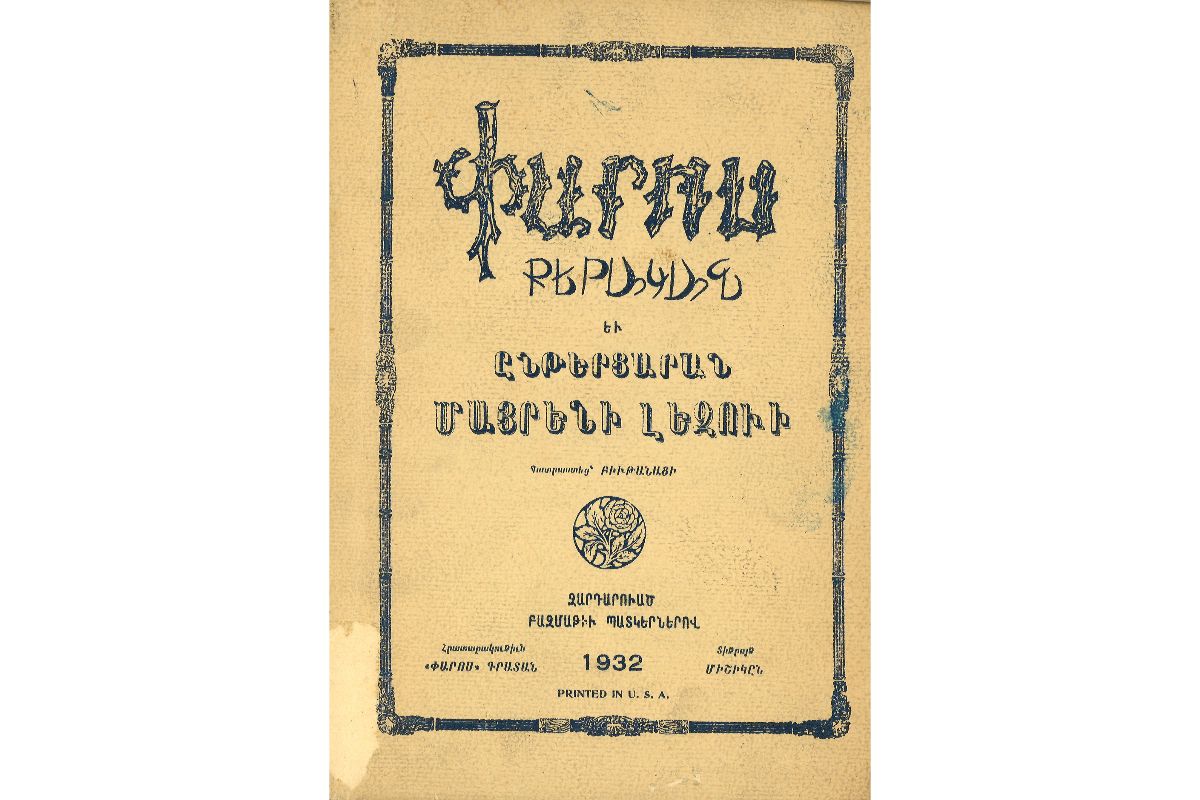
Published in Detroit in 1932, The Paros (Lighthouse) illustrated primer contains exercises designed for early readers to learn and practice letters, words, syllables, and simple sentences. The volume emphasizes foundational literacy and reflects the growing regional diversification of Armenian publishing in the United States. The cover page is inscribed “Prepared by Biwtanatsi,” although no further information about this individual has been located.
Hrazdan (Boston, 1934)
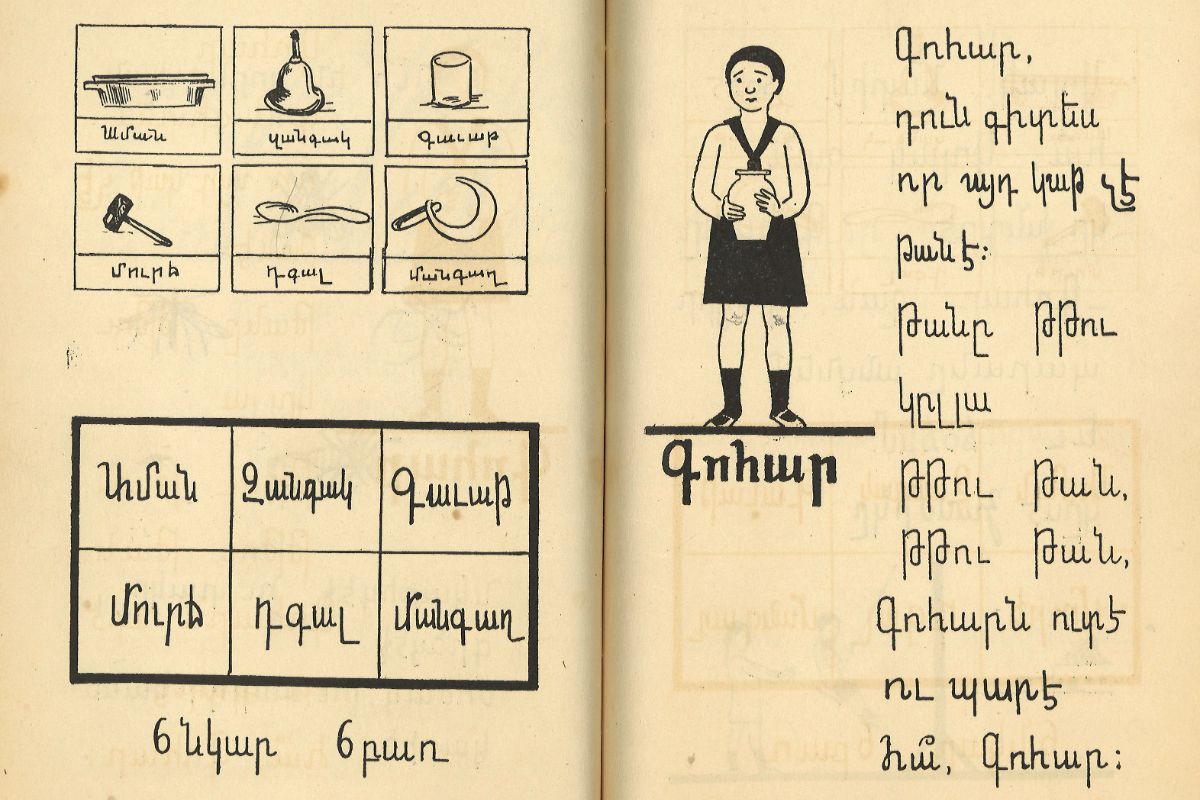
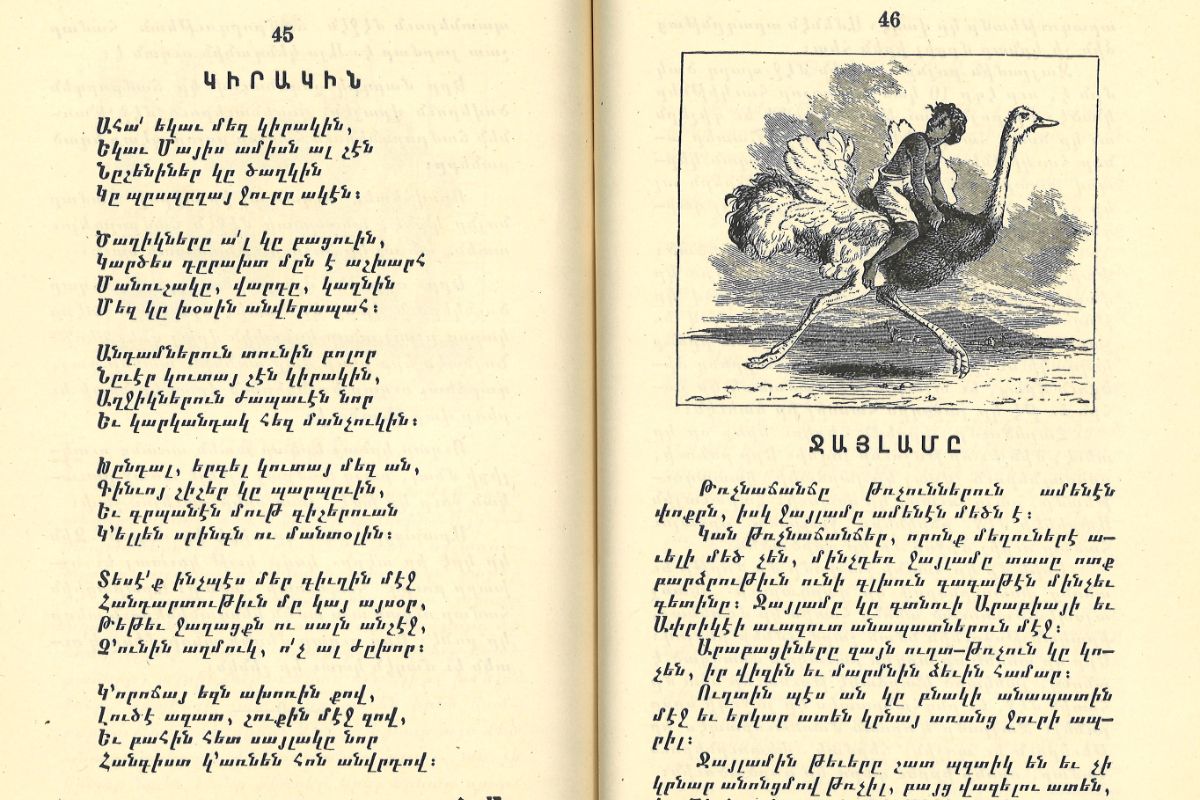
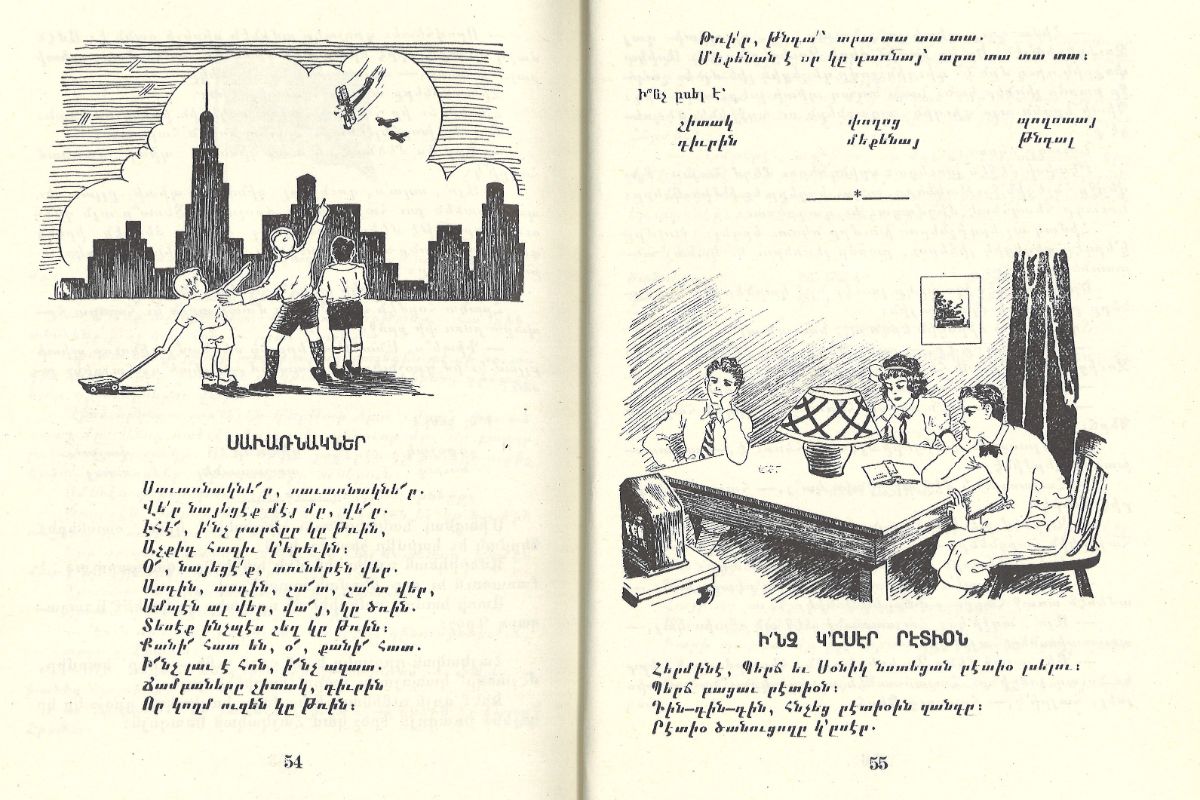
Compiled by Vardges Aharonian (1888–1965) and Armenuhi Tigranian Aharonian (1888–1962) in the 1930s, the Hrazdan (named after a major river in Armenia) textbooks became among the most influential Armenian-American pedagogical works of the period. Issued in four graded levels, with illustrations by D. Poyachean of Boston and cover designs by M. Minasian of New York, the series was reprinted numerous times, indicating sustained demand and broad adoption within Armenian community schools. The success of the first volume led to the publication of the subsequent three levels. Conceived as a “bridge” between Armenian and American educational systems, the authors explicitly addressed the bilingual realities of Armenian-American students. In the forewords, they observed that in Armenia textbook materials were drawn primarily from village life, images of the ox and the yoke, the plow and the sickle, sowing and harvesting, being familiar to the Armenian child, whereas in America Armenian children encountered a different social and cultural environment. Accordingly, they incorporated images and stories from the daily life of the American Armenian child, ensuring that the selected texts would be meaningful and engaging. In the third and fourth volumes, authors’ names were introduced to familiarize students with literary figures, and the narratives became more complex while remaining a natural continuation of the earlier books. The inclusion of culturally resonant material, such as David of Sasoun in the fourth level, further demonstrates their effort to integrate national literary heritage into language instruction, offering cultural material comparable to works prevalent in the surrounding environment, such as Beowulf or The Song of Hiawatha, as noted in the two forewords to that volume. The fourth edition of the first volume introduced expanded linguistic appendices in French and Spanish, signaling the textbook’s transnational circulation beyond the United States and Canada, particularly in South America and France.
Arpi: Entertsaran (Boston, 1935)
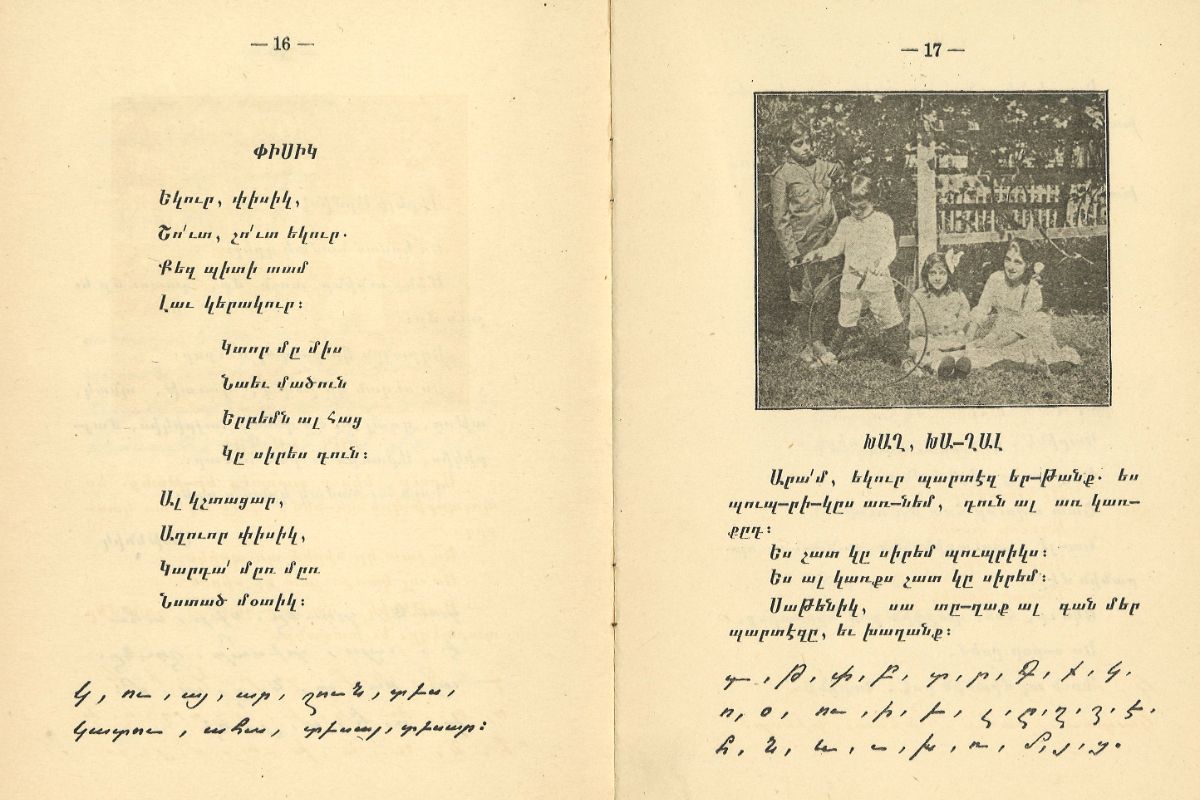
Published by Armenak Barseghian (listed on the cover as Dr. Armenak Barseghian), Arpi (Sun) emphasized ten pedagogical principles, including the simultaneous teaching of reading and writing and the prioritization of the word as the basis of instruction rather than isolated letters or syllables. Reflecting this approach, the opening pages were printed in handwritten script so that children could begin writing immediately. The textbook also advocated progressing from the familiar to the unfamiliar, avoiding unnecessarily complex vocabulary, and refraining from teaching material that would later need to be corrected or declared inaccurate. In addition, the editor outlined practical guidance for teachers and parents, encouraging, among other recommendations, frequent repetition of new words and early instruction in writing one’s own name. Its methodological clarity reflects awareness of contemporary American educational approaches. The illustrations of the textbook were prepared by Dr. M. H. Ekserdjian of New York, an otolaryngologist, whose involvement further demonstrates the participation of educated Armenian-American professionals in community educational initiatives.
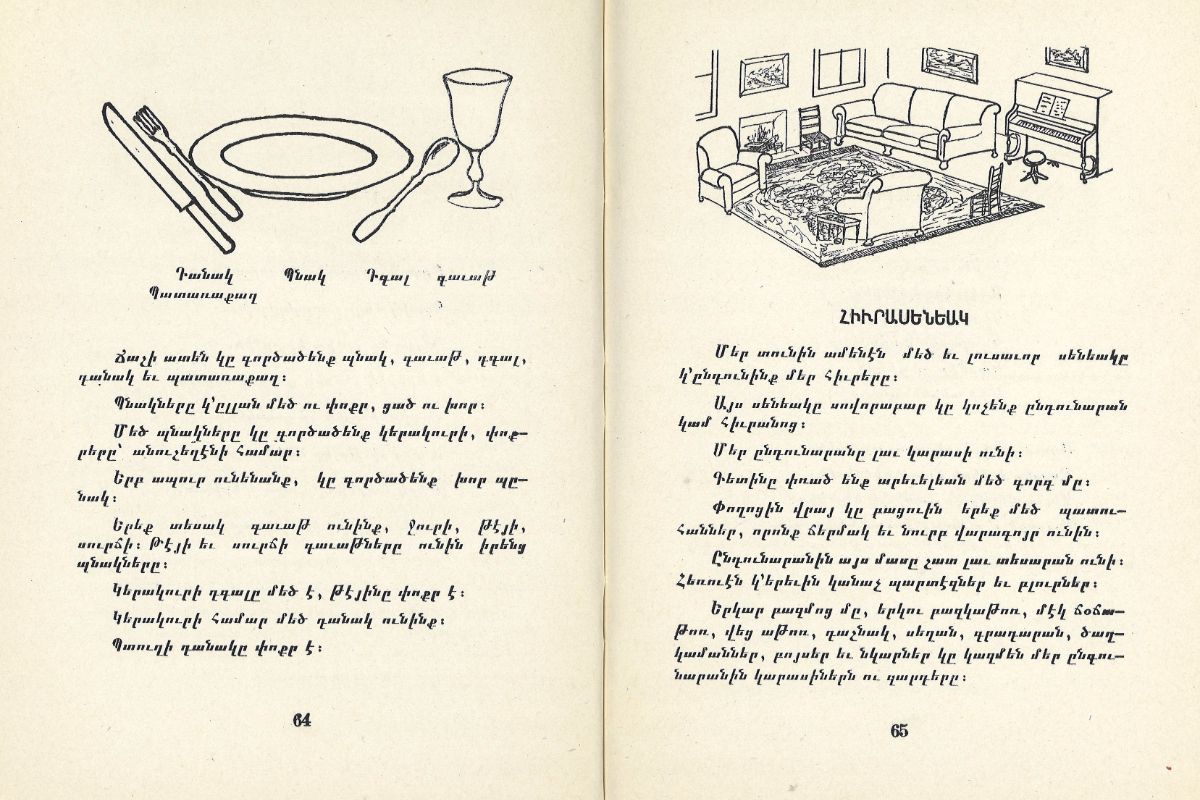
Arpi first appeared as a periodical before becoming a textbook. The Arpi magazine was published from 1932 to 1936, initially as a bimonthly of sixteen pages and, beginning in July 1932, as a monthly of twenty-four pages. In its final issue (Vol. V, No. 12 [66], December), titled “A Five-Year Plan,” the editor announced the cessation of publication, explaining: “It is not possible to continue in the same way, because the editor cannot permanently satisfy administrative duties, especially the pursuit of treasures; for this reason this issue will be the last.” The transition from periodical to textbook reflects an effort to preserve and systematize educational content developed through the magazine format, even as financial and administrative challenges limited its continued publication.
Das ew Ashkhatank (New York, 1935, 2 vols., A. Tari and B. Tari); Khagh ew Ashkhatank (2nd ed., New York, n.d.)
Compiled by Z. Achemian and published by New York Community Schools, the textbooks reflect the ideological currents of the period. The cover identifies the author as “Z. Achemian.” Although the National Library of Armenia catalogue lists several textbooks under that name, one of which expands it as Zaruhi Achemian, the available evidence does not permit definitive identification of the compiler of the New York editions. While both Khagh ew Ashkhatank (Play and Work) and Das ew Ashkhatank (Lesson and Work) contain references to Soviet Armenia, only Das ew Ashkhatank includes a poem dedicated to Lenin, revealing how educational materials could participate in broader political narratives within diaspora communities.
The illustrations further reinforce this orientation: images of Armenian village life and depictions of Soviet children’s collective activities stand in marked contrast to the lived experience of Armenian children in the United States. While Hrazdan, with its strong patriotic tone and geographically evocative portrayals of the homeland, cultivated attachment to Armenia and sought to adapt elements of its content to the American Armenian child’s environment, these volumes visually and textually anchor the student more exclusively within a Soviet Armenian cultural framework.
Educational tools beyond the textbook
Among the materials preserved in the Mardigian Library are two Armenian-language board games that further expand our understanding of diaspora pedagogy beyond printed textbooks. One example, Work Is Play: Educational Board Game, incorporates Armenian letters and reflects the adaptation of interactive learning methods to language instruction. It draws conceptually from the popular letter-based toy developed in 1906 by Harbert Cress of Troy, Ohio, who designed movable alphabet pieces to teach word formation and literacy skills through play. The presence of an Armenian-language version suggests the appropriation of American educational innovations for diaspora language preservation.
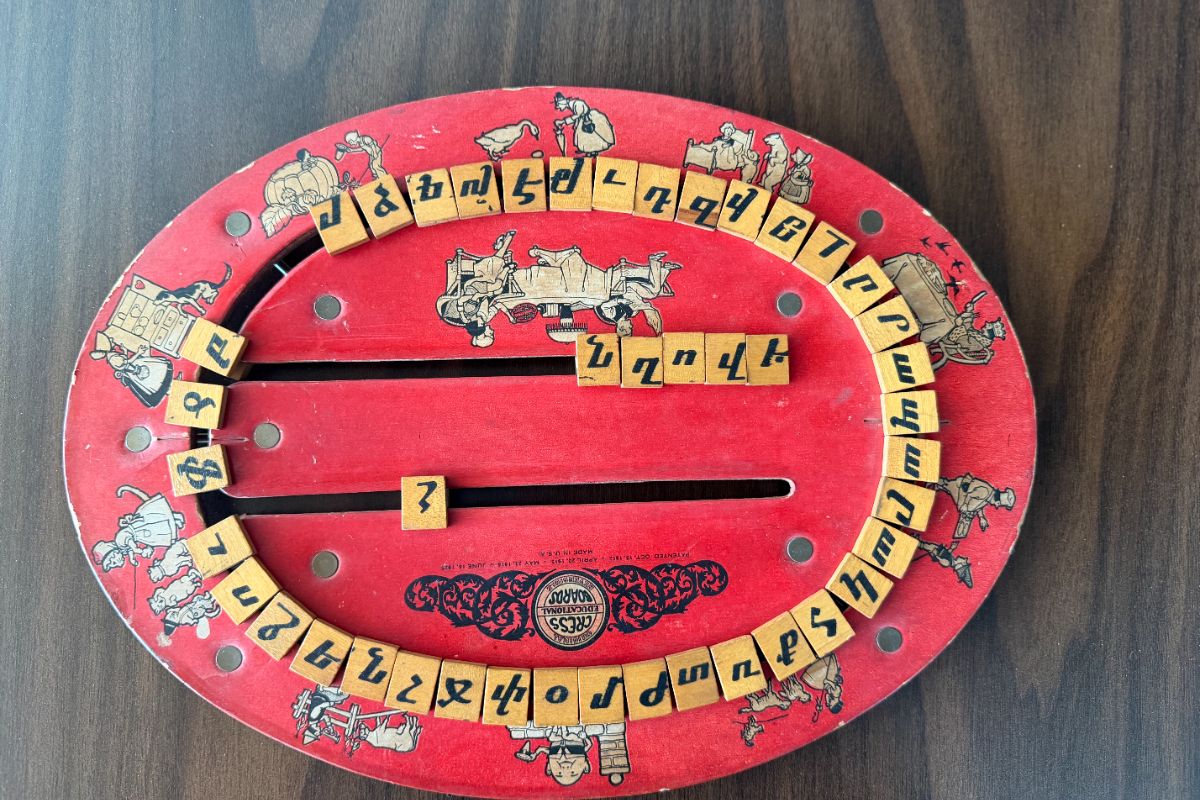
A second object, an Armenian Alphabet Board produced by Karekin and Aghavne (Agnes) Mardirosian for the instruction of their four children within a family setting, illustrates the intimate, domestic dimension of Armenian-language transmission. Together, these materials demonstrate that Armenian educational efforts in the United States extended beyond formal schoolbooks to include tactile, play-based, and home-centered pedagogical tools.
Conclusion
These Armenian-language textbooks are more than instructional manuals; they are artifacts of migration, adaptation, and communal resilience. Their material features — publisher imprints, marginalia, inscriptions, and patterns of wear — provide evidence of educational networks, generational continuity, and transnational exchange.
Through these works, one can trace a clear trajectory: from early reliance on imported textbooks to the development of locally authored, pedagogically adapted literature responsive to Armenian-American realities. Collectively, they offer a substantial documentary foundation for future research into diaspora education, cultural preservation, and the formation of Armenian-American identity.
“For Armenians living in the diaspora, language has never been merely a means of communication; it functions as a cohesive symbol of identity and belonging.”4Ibid., 267.
These educational materials stand as enduring witnesses to that commitment.