HistorySpecial Reports

Venezuela’s forgotten Armenian community
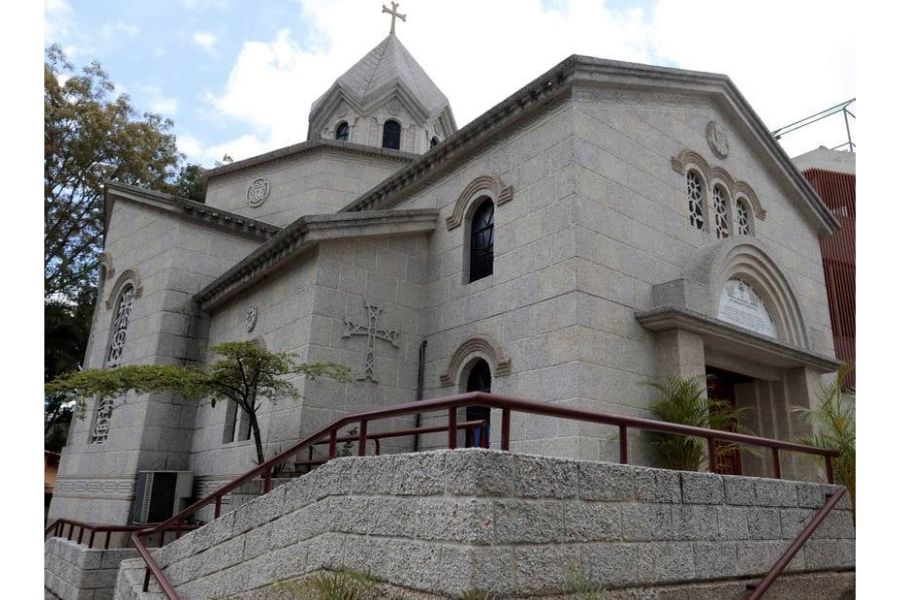
Political turmoil, socioeconomic woes, massive emigration, and high crime rates have lately dominated media coverage of Venezuela. But beyond recent headlines about the country’s political earthquake, a potential recalibration of its alignment with Russia, and speculation over the retraction of its recognition of Abkhazia and South Ossetia lies a far lesser-known but no less intriguing story: Venezuela’s small but vibrant and entrepreneurial Armenian community. Numerically modest compared to South America’s larger Armenian diasporas in Brazil and the Southern Cone, the Armenians of Venezuela have nonetheless maintained remarkable cohesion and made persistent efforts to preserve their culture, identity and collective memory amid the country’s broader upheavals.

Decades before the first wave of Armenian immigration to Venezuela, a Venezuelan with no Armenian roots became one of the most important eyewitnesses to the greatest catastrophe to befall the Armenian people: the Armenian Genocide. Rafael de Nogales Méndez, known to his erstwhile Ottoman comrades as Nogales bey, is often remembered in the Spanish-speaking world as “nuestro Lawrence de Arabia hispano” (“our Hispanic Lawrence of Arabia”). Yet his brief and largely inconsequential encounter with T. E. Lawrence during an Ottoman campaign in the Levant was far from the most significant episode of his wartime experience. 

A self-described soldier of fortune — Memorias de un soldado de fortuna (Memories of a Soldier of Fortune) is the title of one of his two memoirs — de Nogales fought in no fewer than half a dozen wars across several continents over a military career spanning four decades. Born in 1877 into an affluent family in San Cristóbal, on Venezuela’s border with Colombia, he was educated in Western Europe and reportedly spoke eight languages. Having participated in the Spanish-American War, the Russo-Japanese War, the early stages of the Mexican Revolution, and a failed coup in his native Venezuela, de Nogales traveled back to Europe following the outbreak of the First World War. After failing to enlist in the French army after refusing to renounce his Venezuelan citizenship, he ultimately joined the Ottoman army, serving under German commanders and later being dispatched to the Caucasus front.1Rafael de Nogales Méndez, Cuatro años bajo la media luna: su diario e impresiones durante la guerra mundial en los diversos frentes de Europa y Asia (Caracas: Fundación Editorial el perro y la rana, 2006), 139–141 A practicing Christian, he was tasked with leading tens of thousands of Muslim Ottoman troops against Armenian insurgents in Armenian-populated regions, including Erzurum, Van, and Diyarbakir (Dikranagert/Tigranakert), where, as he later wrote, he witnessed firsthand the systematic mass murder of Armenian civilians carried out under orders from the Ottoman high command. Distinguished and decorated, de Nogales continued to serve in the Ottoman gendarmerie until the empire’s defeat, rising to the rank of general. A decade later, he published Cuatro años bajo la media luna (Four Years beneath the Crescent), a memoir that documented the massacres and deportations he had witnessed and remains one of the rare first-hand accounts of the Armenian Genocide by a non-Armenian officer in Ottoman service.

In the first half of the 1930s, more than a decade after the dispersal of survivors of the Armenian Genocide, the first wave of Armenian immigration to Venezuela began during the third and final presidency of Juan Vicente Gómez, whose fiscal policies had largely insulated the country from the worst effects of the Great Depression. In subsequent decades, more Armenian migrants arrived from the Middle East alongside much larger numbers of Arab Christian and Druze immigrants from Iraq and the Levant, drawn by Venezuela’s expanding oil economy. Like many Arab Christian newcomers, Armenians settled across cities along Venezuela’s densely populated Caribbean coastline, with smaller numbers reaching hinterland cities such as San Cristóbal. 

Beyond major urban centers like Caracas, Valencia, and Maracay, Armenian families also established themselves in oil-linked cities such as Puerto La Cruz and Lechería. Many became business owners, while others worked in the service sector. As with Arab Venezuelans, Armenians developed a visible presence in jewelry retail, small-scale import and export of consumer goods, construction, and hotels and hospitality.

Advertisement

According to Kevork Dikijian, a Syrian-born active member of the Armenian community in Maracay interviewed for this article, many Armenians in Venezuela cultivated close business, social and personal ties with Venezuelans of Arab background, owing to their widespread fluency in Arabic and their cultural and religious proximity to Arab Christian communities, whose institutional life was older, larger and better resourced. By the 2010s, Dikijian recalled, this proximity had led some younger Armenians to identify socially as Arab, while Spanish and Arabic increasingly dominated everyday communication in many families. 

At the same time, influential figures sought to preserve Armenian religious and cultural life. In the mid-1960s, funding from wealthier community members enabled the construction of Venezuela’s first Armenian church. Two decades later, the St. Gregory the Illuminator Church (Iglesia de San Gregorio el Iluminador) was inaugurated in Caracas, where it continues to function as both a spiritual and secular center through Western Armenian-language liturgy and activities organized by the affiliated Centro Armenio. Armenian presence also became visible in public space: in 2002, funding provided by Marco Zarikián, owner of the Eurobuilding hotel chain, made possible the unveiling of an Armenian Genocide monument in the Caracas district of Chacao. Modeled on the Tsitsernakaberd memorial in Yerevan, the monument remains the focal point of annual April 24 commemorations. 

Three years later, following sustained advocacy by Bishop Padre (Srpazan) Gomidás Ohanián, Venezuela’s parliament adopted a resolution recognizing the Armenian Genocide, later endorsed by Hugo Chávez. In the early 2010s, to reinforce the Armenian identity among the younger generations, Padre Gomidás began leading youth delegations to continental sporting and cultural events, most notably the Navasartián, held annually by the Armenian scouts organization Homenetmen across Southern Cone countries and Brazil. According to members of the Armenian community in Venezuela, it is thanks to their participation in these events that many young Armenian-Venezuelans have begun to embrace their Armenian heritage and establish ties with members of the larger, more vibrant Armenian communities in Argentina and Uruguay. Parallel efforts by Zarikián helped open Armenian community centers in smaller cities such as Puerto La Cruz and Maracay.

Although the size and vibrancy of the Armenian community in Venezuela have been sharply diminished by the country’s ongoing economic crisis since 2013, the community has survived.

Published estimates often place Venezuela’s Armenian population between roughly 3,000 and 6,000 individuals, though some recent community sources suggest an even smaller active population.2Published estimates vary. Armenian government-linked and Armenian-language sources have often placed the community at around 4,000 people, while SOAR’s Caracas chapter gives a lower recent estimate of approximately 1,930. See also “Արամ Ա կաթողիկոսը ծանոթացել է Վենեսուելայի հայ համայնքի խնդիրներին,” Armenpress, May 22, 2017 Nevertheless, Dikijian recalled a much broader pre-crisis network of up to 50,000 families of Armenian origin nationwide, with the important caveat that many maintained only weak or symbolic ties to Armenian institutions. Since 2013, he estimated, mass emigration has reduced this broader Armenian-Venezuelan network to roughly one-third of its former size, leaving approximately 15,000 families in the country. Armenian church sources likewise reported in 2017 that Venezuela’s crisis had significantly reduced the number of Armenian families in the country, as many emigrated after obtaining U.S. or European visas. Among those who remain, active participation in church life and communal events continues, while many who have left maintain Armenian-Venezuelan networks abroad. Today, communities in Los Angeles, Miami, Santiago de Chile, Panama City, and Madrid regularly host gatherings that reflect the persistence of social ties first forged in Venezuela, now reconstituted across borders.

Despite the community’s modest size, Armenians have left discernible footprints across Venezuela’s cultural, intellectual, and economic landscape. Besides the Zarikián family, whose Eurobuilding hotel empire has expanded beyond Venezuela to places as far as the vicinity of the Miami International Airport, other notable Venezuelans of Armenian descent include the internationally renowned conductor Domingo Hindoyan, the Aleppo-born political scientist Elie Habalián, the celebrity chef George Durán (Kevork Gudalián), the singer and entertainer Thalía Samardjián, the political activist Georgette Topalián, the Chile-based actress Mariana Derderián, the Mexico-based actress Diana Aboujian, and the romantic novelist Eliana Habalián. 

Moreover, Armenian culture in Venezuela has transcended boundaries. In 2007, Lucía Fernández de Devletián, a Venezuelan woman married to an Armenian, published a book on the history of Venezuela’s Armenian Community, titled Del Ararat al Ávila (From the Ararat to the Ávila; the Ávila is a hill that overlooks Caracas). In 2017, Venezuelan director Miguel Ángel Nieto premiered La sombra de Ararat (The Shadow of Ararat), a documentary that traces Armenian diaspora communities across continents and highlights their emotional attachment to their ancestral homeland. One of the world’s most prominent virtuosos of the Armenian duduk is the Venezuelan musician Pedro Eustache, whose performances, sometimes in traditional Armenian taraz (ethnic costume), have helped introduce Armenian musical traditions to global audiences.

The Armenian story in Venezuela is not one of demographic weight or political influence, but one of resilience and cohesion. As the community has contracted at home and reassembled abroad, its legacy remains embedded in Venezuela’s social fabric long after the country itself ceased to be a destination for Armenian migration. As a new political reality begins to unravel in Venezuela, some Armenian-Venezuelans dispersed abroad are considering returning, according to community members in Los Angeles and Santiago de Chile interviewed for this article. If they do, their commercial experience, mobility and communal networks may again contribute to the country’s reconstruction.

Diego Benning Wang

Diego Benning Wang is a historian of Armenia and the Caucasus currently affiliated with Harvard University.

One Comment

  1. Interesting article. As someone who has studied the community from a distance, it seems that there is confusion in the statement that there was a “pre-crisis network of up to 50,000 families of Armenian origin nationwide,” reduced since 2013 to “roughly one-third … leaving approximately 15,000 families in the country.” This would assume that there was up to 200,000 Venezuelan Armenians (family of four), reduced to 60,000 nowadays. Neither figure is credible. A community of 50,000 families with one church and one single organization historically recorded? The published estimates of 3,000 to 6,000 are much more reliable.

Leave a Reply

Your email address will not be published. Required fields are marked *


Back to top button