Hahaha LA designs playful, toxin‑free children’s clothing
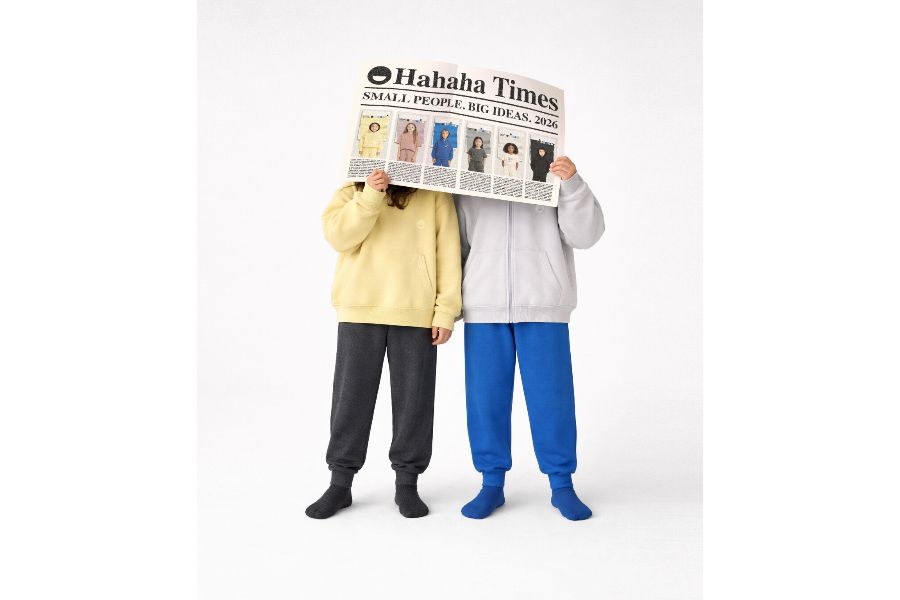
Gev Balyan, founder of Hahaha LA, brings fashion forward with passion. A native of Armenia, his early days were spent dreaming of clothing that made him feel like himself. Hahaha LA carries this sense of nostalgia for the comfort and autonomy he found in streetwear — a freedom that allowed him to imagine styles and identities beyond what childhood typically permits. Drawing from that early spark, Balyan has elevated children’s clothing to meet the sensibilities of modern parents who want to support their children’s self‑expression without compromising their health.

Hahaha LA designs toxin‑free and sustainable clothing for children and invites them to discover identity through play. The brand offers hoodies and T‑shirts that can be customized with interchangeable patches ranging from cultural symbols to everyday interests. Children can attach and remove patches using a hook‑and‑loop system built into the garment, allowing them to change their look as their interests evolve.
I spoke with Balyan about the inspiration behind Hahaha LA, the values shaping the brand and his future plans.
Melineh Yemenidjian: “Before we dive in, I have to ask — what was the very first piece of clothing you remember being obsessed with as a kid?”
Gev Balyan: This was the most important topic for Hahaha’s core team, to relive memories from childhood. The first piece of clothing that I was obsessed with was a pair of longer, leisurely, torn shorts. I was living in Armenia at the time and my father was concerned that people would think I found them on the street. Regardless, I wasn’t wearing them the way I wanted and it stuck with me.
Yemenidjian.: Can you share a bit about how Hahaha LA began for you?
Balyan: In 2021, while living in Armenia, my team and I started an online e-commerce fashion store sourcing standout Asian designer streetwear. We marketed to clients in the United States with the means and inclination toward the specific style. Within three months of launching, the store produced over $50,000 in sales.
Eventually, I had to stop the business because of health issues and could not meet the demands. All the while, however, I told myself this venture was a good dry run because I had a vision to start my own fashion brand. Fast forward five years later, I moved to the U.S. and decided to simultaneously engage in technology product management and driving innovation and to follow my childhood dream. I chose to start a children’s clothing brand because the market is less competitive. My goal was to solve a common problem that I share with many parents: for our children to wear stylish clothing that is not toxic. I am that kind of parent. Kids, at the same time, want playful clothing. I wanted to bridge the gap between what the parents and kids want.
Yemenidjian: I love your mission of “infusing laughter with DNA.” Was there a specific moment or a single conversation where those two elements finally fused together for you?
Balyan: One of the cofounders was looking for a good name that represented self expression and was easy to remember and he came up with the idea of naming it after laughter: “Hahaha.” People will see the kids wearing the clothes with different patches and think it’s cool. We all liked it then asked our friends and got a great response. Then we did reverse-engineering from there and envisioned the brand name with different symbols. We are a team of five professionals in different disciplines. The brand strategist came up with the idea to put the smile icon in DNA superimposed on the mouth of a child.
Yemenidjian: You’ve mentioned that most kids’ clothes are either “boring” but sustainable, or fun but poorly made. How did seeing that gap lead to the first Hahaha design?
Balyan: I am opposed to fast fashion. I don’t want my kids to wear fast fashion because the dangerous dyes used in its manufacturing get absorbed into their bloodstream. We partnered with an LA-based producer and started the brand with GOTS-certified organic material, which is what the parents want. We used the dyeing techniques and procedures to be sustainable too. On top of that, we added the round Velcro area used to attach different patches.
Yemenidjian: How did you choose specific symbols like Tork Angegh, the khachkar, and Mount Ararat?
Balyan: We prioritized style and fun. I wanted the kids to enjoy it as well as the parents and chose well-known symbols like Ararat, historical motifs, and mythical themes that are attractive.
Yemenidjian: How have you seen children interact with that hook-and-loop feature so far?
Balyan: The other day a mom of twins, who has a sustainability blog, purchased a set of items from the store. She did an extensive review and ranked Hahaha as the #1 kids’ brand in the U.S. As a show of appreciation, we sent a few collections as a gift and she reported that one of her kids really enjoyed the patches and couldn’t wait to open them. The other didn’t connect with them but bought patches from other collections with the same hook backing. I thought this was fantastic because it means our clothing can be integrated with other products. People could even customize it with their names. This reminded me of the wonder of opening Kinder Surprise eggs.
Yemenidjian: What do you hope children feel when they are swapping patches to express their mood or culture?
Balyan: I want them to feel unique and the process to feel fun.
Yemenidjian: Why was it important for you to keep your production within Los Angeles?
Balyan: Initially it wasn’t a must. I can’t reliably talk about sustainability when I don’t know the conditions of manufacturing. That’s why I wanted to keep production in the United States due to more regulated conditions. By keeping our products local, I am able to follow up with the manufacturers multiple times a week and I know workers are making livable wages.
Yemenidjian: You’ve mentioned ideas for limited edition collaborations with local artists and design contests for kids. How do you see Hahaha LA growing from here?
Balyan: In the next 30-45 days we will be launching our advanced marketing strategy using multiple approaches to expand our reach while maintaining our slow fashion streetwear aesthetic. One avenue is through collaborations with celebrity kids and family-friendly influencers because we have built something they appreciate, love, and will share.
Yemenidjian: Is there anything we didn’t cover that you’d really like people to know about the brand or your mission?
Balyan: Kids always want to wear their parents’ clothes, so we want to produce the opposite effect: we want parents to look at kids’ clothes and really want to wear them. We get asked all the time to design clothes for adults, but I want our brand to exclusively belong to kids. Furthermore, Hahaha is designed so that these clothes can be passed down from kid to kid, generation to generation.