Greater Detroit’s Armenian community gathers to remember and resist
Speakers, dance, youth voices and a governor’s Proclamation unite Detroit community at Livonia commemoration
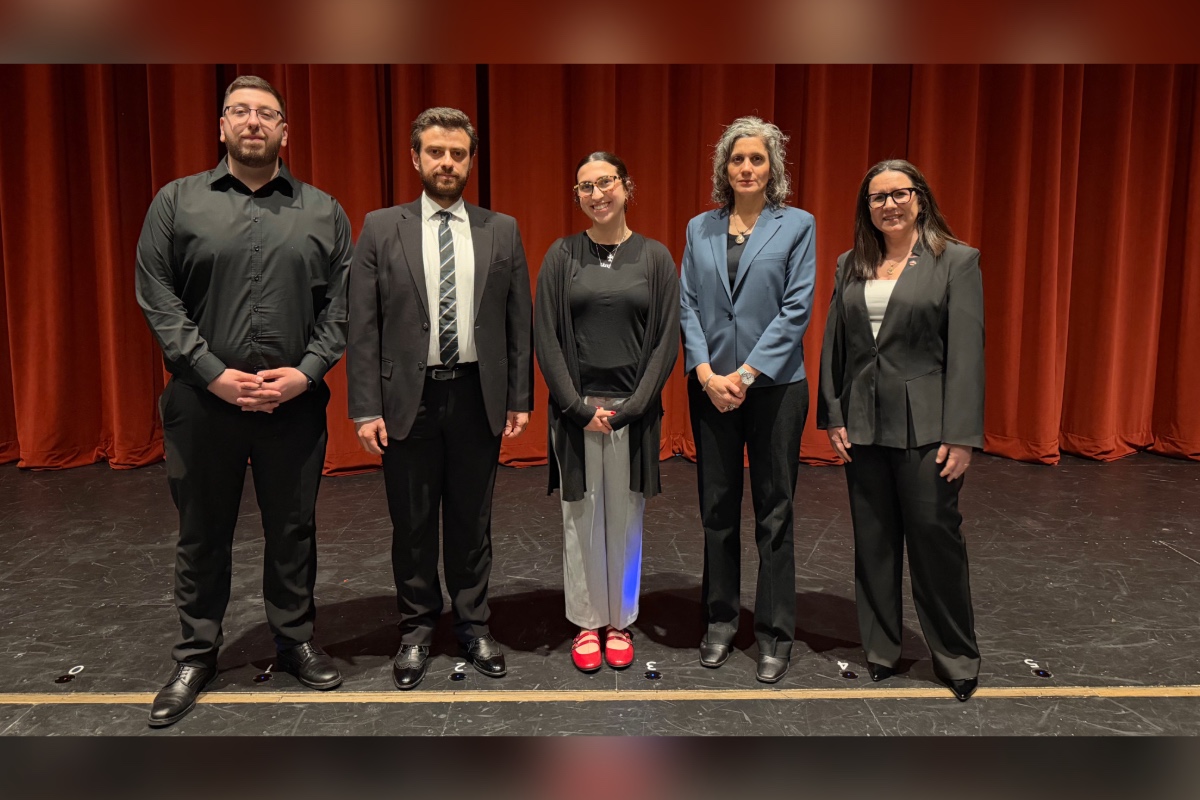
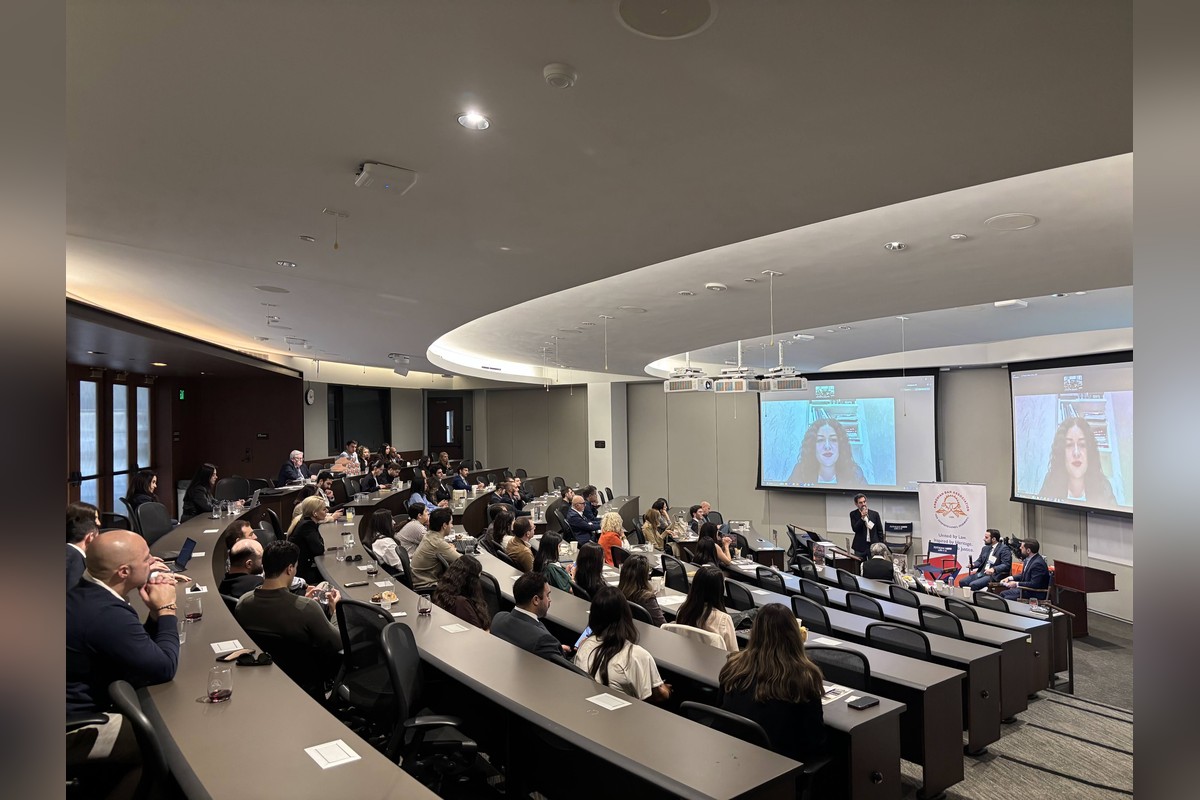
LIVONIA, Mich. — On Saturday, April 18, approximately 200 members of the greater Detroit Armenian community gathered at Franklin High School for the 111th anniversary commemoration of the Armenian Genocide. Organized by the Armenian Genocide United Committee of Greater Detroit, a coalition of 11 Armenian organizations, the evening wove together scholarship, civic advocacy, cultural performance and the voices of a new generation.

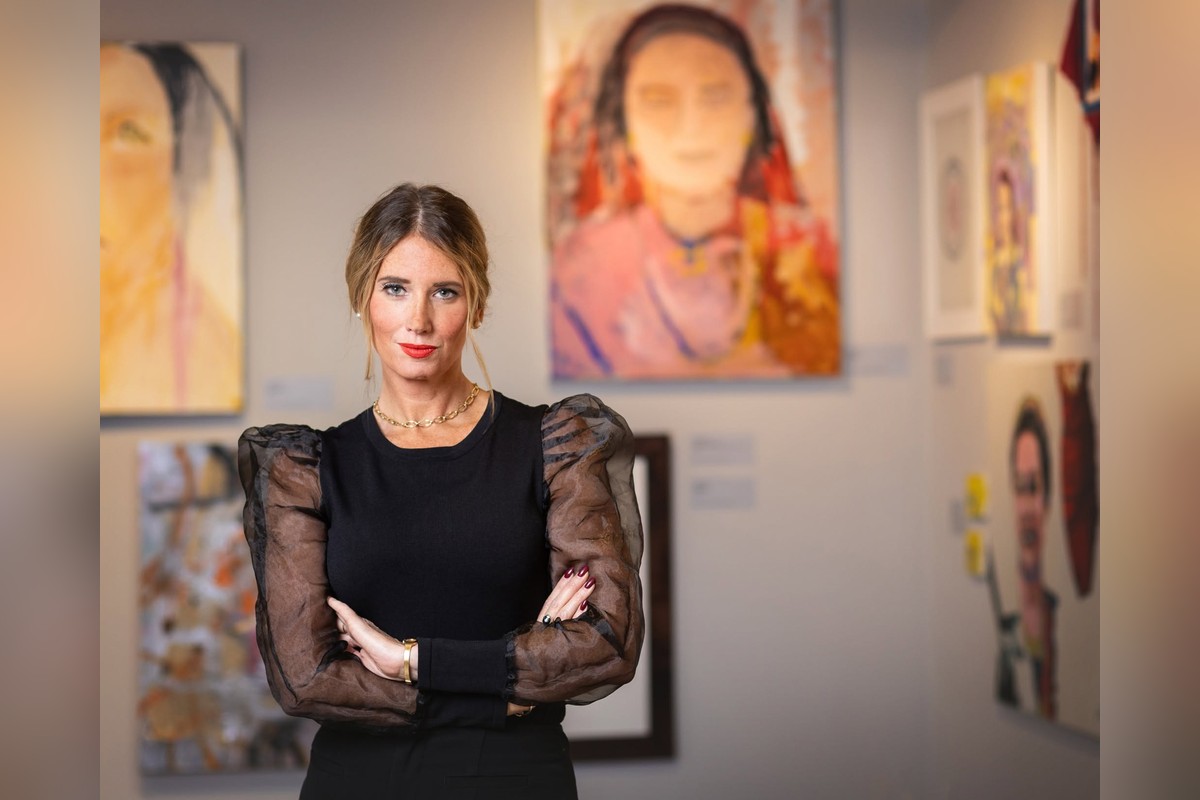
The lobby of Franklin High School featured an exhibition of original artwork. Young artists ages 8 to 25 contributed works in painting, drawing, mixed media, digital art and collage reflecting themes of remembrance, Armenian heritage and culture, survival and resilience, justice and human rights and intergenerational legacy.

The evening opened with the Homenetmen Scouts marching onto the stage, led by the drums of the Yeghpayr Kevork Hadjian Fanfar. The scouts led the national anthems of the United States, Armenia and Artsakh. It was a deliberate statement of presence: three anthems, three commitments, to the country they call home, to the homeland and to Artsakh. The message was clear before the program even began: We are still here.
Mistress of ceremonies Rayne Der-Stepanian welcomed the audience and introduced ANC of Michigan Chair Dzovinar Hatsakordzian, who took the stage to read Gov. Gretchen Whitmer’s official proclamation designating April 24, 2026, as Armenian Genocide Remembrance Day in Michigan. The proclamation recognized the 1.5 million Armenians who perished, cited Michigan’s Act 558 of 2002, enshrines April 24 as a state day of remembrance, and drew a direct line from the genocide to the 2020 Nagorno-Karabakh war and Azerbaijan’s ongoing campaign against the Armenian population of Artsakh. In a political climate where official recognition of the Armenian Genocide is never guaranteed, the state of Michigan’s continued commitment to naming and remembering stands as an important act of solidarity with the Armenian American community and a rebuke of denial.
The program’s first speaker, Manuel Cherbetjian, vice president of the AYF-YOARF Detroit Kopernik Tandourjian Senior Chapter, delivered the community youth message. Cherbetjian called on young Armenian Americans not merely to remember but to act. He framed the Armenian inheritance not as one of victimhood but of resilience, survival and strength, urging his peers to serve as storytellers, advocates and bridges between the sacrifices of the past and the hopes of the future. “Justice is not given, it is demanded,” he told the audience. “And our voices, together, are powerful.” His statement closed with a call to act by learning , teaching and standing united. .
The evening’s first keynote was delivered by Dr. Kevork Hagopjian, Esq., an attorney and human rights advocate whose work bridges international law, minority rights and community engagement. A graduate of the Karen Jeppe Armenian College in Aleppo, Hagopjian holds a doctorate in International Law from the University of Vienna and is the author of a book on the legal status of Armenian minorities in Lebanon and Turkey. A licensed attorney in California, he has held roles at KAICIID, the United Nations OHCHR and UNDP, and serves on the boards of the Armenian Legal Center for Justice and Human Rights and ANCA Western Region.
Hagopjian’s address was deeply personal and rigorously legal. He opened by invoking the canonization of St. Ignatius Maloyan, martyred during the genocide, and urged the audience to see the 1.5 million not as a number but as individual lives.
He connected 1915 directly to the ethnic cleansing of Artsakh in September 2023, Azerbaijan’s destruction of Armenian cultural heritage and the Armenian leaders who remain imprisoned in Baku. Turning inward, he warned of threats to memory from within, citing the dismissal of Edita Gzoyan from the Armenian Genocide Museum-Institute.
Hagopjian addressed the United States directly, acknowledging America’s role from Ambassador Henry Morgenthau’s documentation to the 2021 congressional recognition, which he called permanent and irreversible. But recognition must translate into policy. Noting the current administration’s avoidance of the word “genocide,” he was unsparing: the United States holds leverage that directly affects whether 150,000 displaced Armenians ever return home and whether Azerbaijan concludes that ethnic cleansing carries no cost. He asked not for charity, but consistency. And he was unequivocal: the diaspora is not an obstacle to peace — it is its guarantor.

The Detroit Hamazkayin Arax Dance Ensemble, choreographed by Nayiri Karapetian, performed two original pieces that served as the emotional centerpieces of the evening. The first, “Der Zor,” was staged under soft blue lighting, with dancers in flowing white and blue dresses moving in formations that evoked mourning, displacement and the death marches through the Syrian desert. The choreography carried a quiet weight. At one point, the dancers formed a single chain, heads bowed, arms linked overhead, their bodies rising and falling in a collective expression of endurance and grief passed down through generations.
The second keynote was a presentation by Dr. Lori Khatchadourian, associate professor of Near Eastern Studies and anthropology at Cornell University and co-founder of Caucasus Heritage Watch. Trained as an archaeologist, her research spans archaeology, social anthropology and critical heritage studies, with a particular focus on Armenia, the South Caucasus and neighboring regions. Her talk, titled “Satellites and Stones: Monitoring Endangered Armenian Monuments in the Digital Age,” detailed the work of CHW, a research program led by archaeologists at Cornell and Purdue universities that uses satellite imagery and open-source media to document threatened and damaged Armenian cultural heritage sites. Dr. Khatchadourian noted a distinction between the patterns of destruction in Nakhichevan and Karabakh. In Nakhichevan, she explained, the destruction was an end in itself — sites were razed and the land left vacant. In Karabakh, much of the damage so far is connected to development: highways, airports, power plants and housing. But she cautioned against treating this as benign, introducing the concept of “collateral benefit” — using construction as an opportunity to destroy or damage heritage sites under the cover of development. She pointed to cases, such as a church that was destroyed with no development project nearby, as evidence that the pattern is not purely incidental.
Dr. Khatchadourian and her colleagues — Dr. Adam T. Smith (Cornell), Dr. Ian Lindsay (Purdue) and Dr. Husik Ghulyan (Cornell) — have published multiple monitoring reports and testified before the U.S. Commission on International Religious Freedom. Her presentation made the case that cultural erasure is not a relic of 1915 but an ongoing, measurable reality and that in the digital age, when the evidence is visible from space, denial becomes a choice rather than a claim. Khatchadourian’s work gave empirical weight to the warnings Hagopjian had sounded minutes earlier about the destruction of Armenian heritage in Azerbaijan.

The evening closed with the Arax Dance Ensemble’s second performance, “Artsakh”. Bathed in red light, a full company of male and female dancers in bold red and black costumes performed with fierce energy and determination, their formations sharp and defiant. The choreography built toward a climax: young Homenetmen scouts entered the stage carrying Armenian flags and the dancers dropped to one knee as the flags were raised high. The stage filled with devotion and resistance, youth and history, loss and resolve and drew an emotional reaction from the audience.What distinguished the 111th anniversary commemoration in Detroit was the coherence of its vision: the way a governor’s proclamation, a young man’s call to action, a lawyer’s insistence on legal rights, a scholar’s satellite data and a dancer’s outstretched arms all pointed toward the same truth. That the Armenian Genocide happened. That its consequences are ongoing. That justice has no expiration date. And that remembering, when it is done with this much care and this much fire, is not a backward-looking act but a forward one. The event reaffirmed once again that the Armenian community in Detroit continues to thrive.

The Armenian Genocide United Committee of Greater Detroit comprises the ARF Azadamard Gomideh, Armenian Youth Federation, Armenian Relief Society, Hamazkayin Armenian Educational and Cultural Society, Cultural Society of Armenians from Istanbul, Homenetmen of Detroit, Knights and Daughters of Vartan, Armenian American Bar Association, Armenian Research Center at the University of Michigan-Dearborn, Armenian National Committee of Michigan and the Armenian Community Center of Greater Detroit.
Photos courtesy of Lori Pilibosian-Nalbandian