Genocide commemoration at Duke reunites North Carolina Armenians
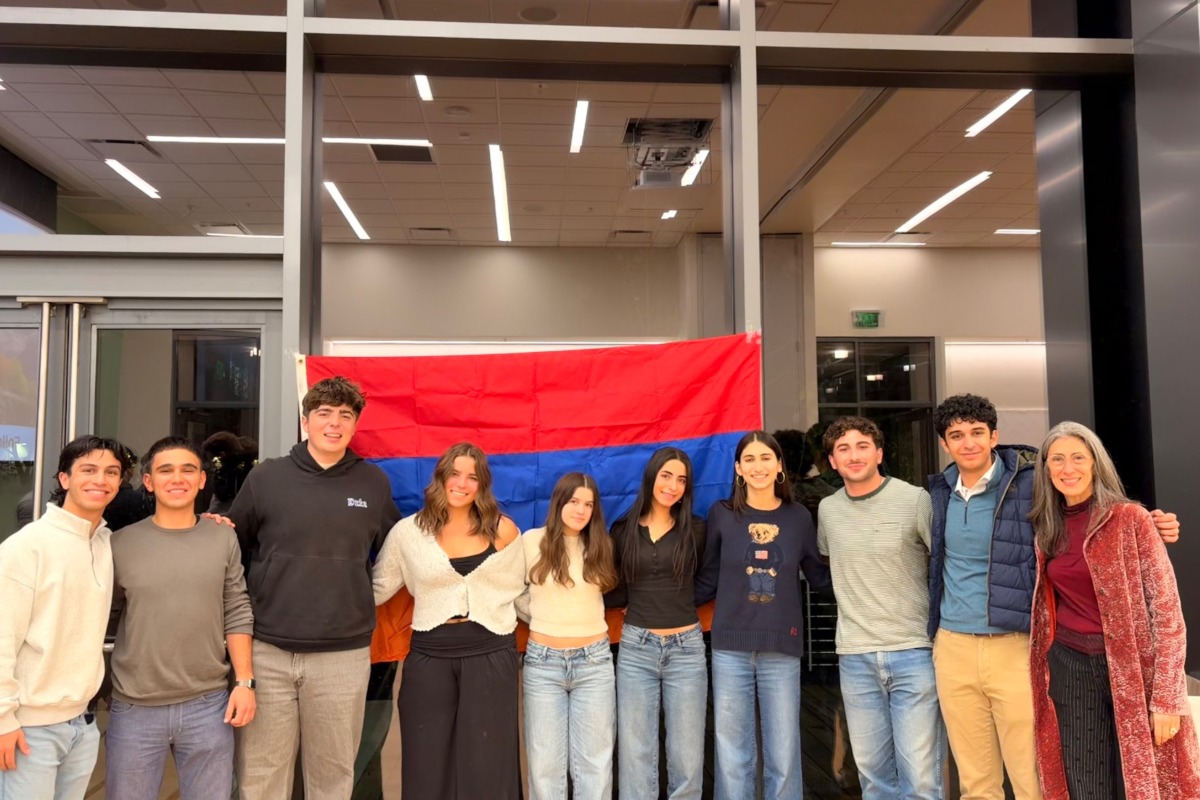
DURHAM, N.C. — It started with an idea and a lot of persistence. In 2024, Duke University undergraduate Vincent Hovsepian, now a junior from Los Angeles, set out to build a home for Armenian students at one of the country’s leading universities.
The task was not easy. For months, Hovsepian, along with sophomore Madison Mikayelyan, navigated the university’s student organization approval process, determined to establish a permanent Armenian presence on campus. In January 2026, “Armenians at Duke” was officially recognized by the university, becoming the first Armenian student organization in the institution’s history.
The newly-formed organization wasted little time making its mark. Just weeks before receiving formal recognition, Armenians at Duke hosted its inaugural event in December 2025: “Little Armenia,” a celebration of Armenian culture open to the Duke and Durham communities. More than 70 attendees explored Armenian food, music and history.
The club has since grown to nearly 30 members, and together with the North Carolina State University Armenian Student Association, it now serves as a center of Armenian student life across the Triangle.
On April 24, the 111th anniversary of the Armenian Genocide, Armenians at Duke brought together the Durham community once again — this time for a solemn evening of remembrance, testimony and advocacy. More than 45 students, faculty members and community members gathered at Goodson Chapel on Duke’s campus for a candlelight commemoration that drew prominent voices in support of Armenia.


Program highlights
Hovsepian, president of Armenians at Duke, served as the master of ceremonies. He opened the program with welcoming remarks on behalf of both student organizations, reflecting on the diaspora community’s growing presence in North Carolina and calling on attendees to embrace the spirit of remembrance and advocacy.
“Let’s demand, together, that the world not look away — that justice isn’t optional, but owed,” he said.
Davit Melikian, North Carolina state chair for the Armenian Assembly of America and a longtime advocate who moved to Durham from the Armenian city of Gyumri as a child, opened the program with a historical overview of the 1915 Armenian Genocide, which took 1.5 million lives.
Five students — Nelly Garces, Isabel Khachatryan, Jack Khachatryan, Armenians at Duke Vice President Madison Mikayelyan and North Carolina State Armenian Student Association President Victoria Danielyan — shared their families’ stories of survival.
Isabel Khachatryan, Jack Khachatryan and Mikayelyan recently traveled to Washington, D.C., as part of the Armenian National Committee of America’s Rising Leaders Program. They were among four North Carolina students who met with congressional offices to advocate for the state’s Armenian-American community.
Lisa Gennetian, Pritzker Professor of Early Learning Policy Studies and professor in the Sanford School of Public Policy at Duke, spoke about the Armenian-American experience and the legacy of resilience carried across generations. Raised in Watertown, Massachusetts, one of the earliest Armenian American communities in the country, Gennetian also serves as faculty adviser to Armenians at Duke and was instrumental in the organization’s establishment.
Former U.S. Rep. David Price, who represented North Carolina’s 4th Congressional District for more than three decades and previously served as a professor at Duke, delivered the keynote address. Price led a congressional delegation to Armenia in October 2022 and was awarded the Medal of Honor by the Armenian Parliament for his work supporting democracy and U.S.–Armenia cooperation. His remarks focused on the importance of continued advocacy for Armenia amid ongoing threats to its sovereignty.
The evening concluded with a candlelight vigil and prayer led by the Rev. Fr. Norayr Kazazian, pastor of St. Sarkis Armenian Church in Charlotte, North Carolina, as attendees passed flames from candle to candle in a moment of collective remembrance.
Reflecting on the significance of the night, Hovsepian said, “In a quieter and less-known pocket of the Armenian diaspora, we must stay united and join in spaces like these to celebrate our existence, remember our past, and advocate for our future.”
Armenians at Duke can be found on Instagram (@dukearmenians), where they share updates.