


Npatak’s initiative and architectural discourse in Armenia
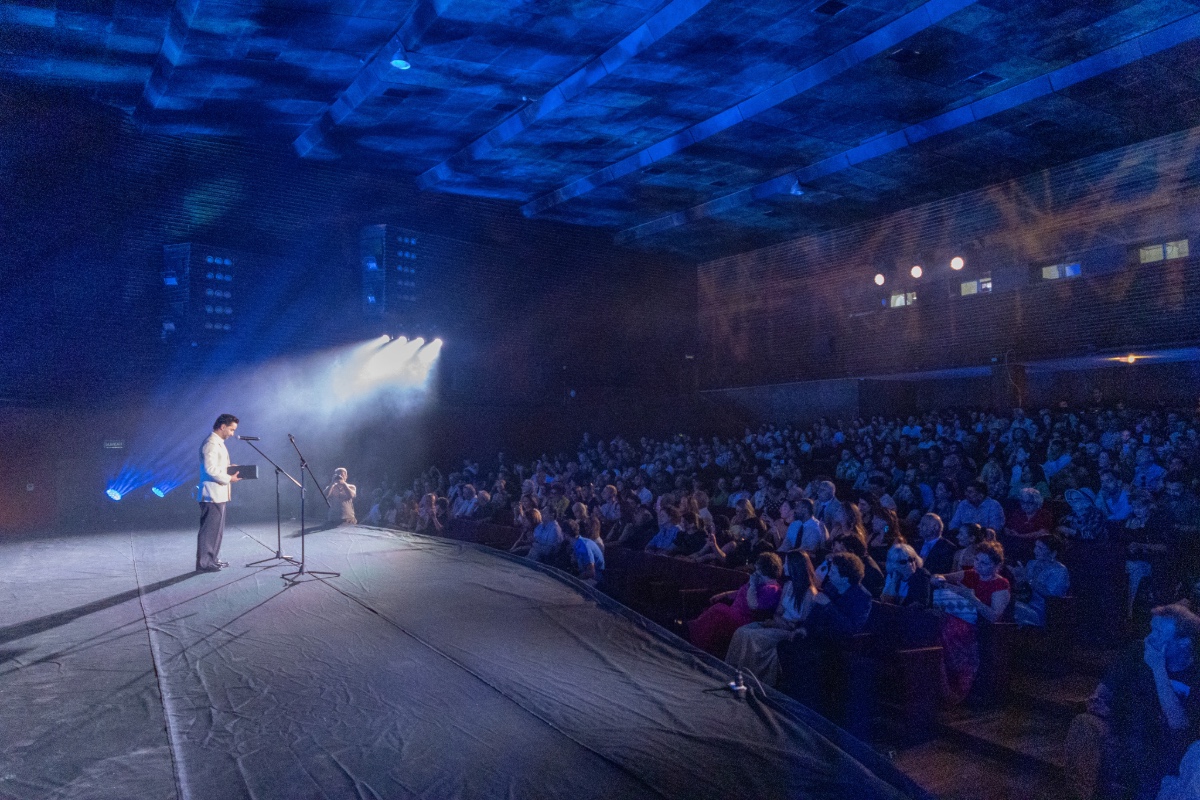
Architectural education in Armenia is limited, with professional training available at only one university. In response, a group of architects founded the Npatak Educational Foundation in 2021 to create an alternative learning platform and support professional dialogue. The initiative began with the Npatak Architecture Festival, which aims to bring contemporary architectural ideas to Armenia.
According to the foundation’s co-founder, architect Hayk Shahinyan, contemporary architecture is not defined by a single agenda; it is diverse and often shaped by the social, cultural and environmental context of each country. During the festival, lectures are not guided by specific themes; instead, the focus is on sharing the thinking, approaches and experiences of the invited architects.
“We say we want to bring architectural discourse, but there isn’t a specific topic we aim to introduce. Rather, through the festival, we want the Armenian architectural community to start listening, speaking and engaging in dialogue. The exact topics are secondary. In this sense, the festival itself tends to create and encourage dialogue,” Shahinyan said.
The foundation’s activities are gradually expanding through educational programs. Architect Arine Keshishi said that, together with members of the foundation and the Library for Architecture, they have developed a program for three-month courses aimed at architects who are currently in or have completed master’s programs. Participants will be selected based on their portfolios. The courses will be led by invited lecturers from abroad, and participants will work on specific projects. The educational program is currently being developed, while the fourth architecture festival is scheduled to take place in September.
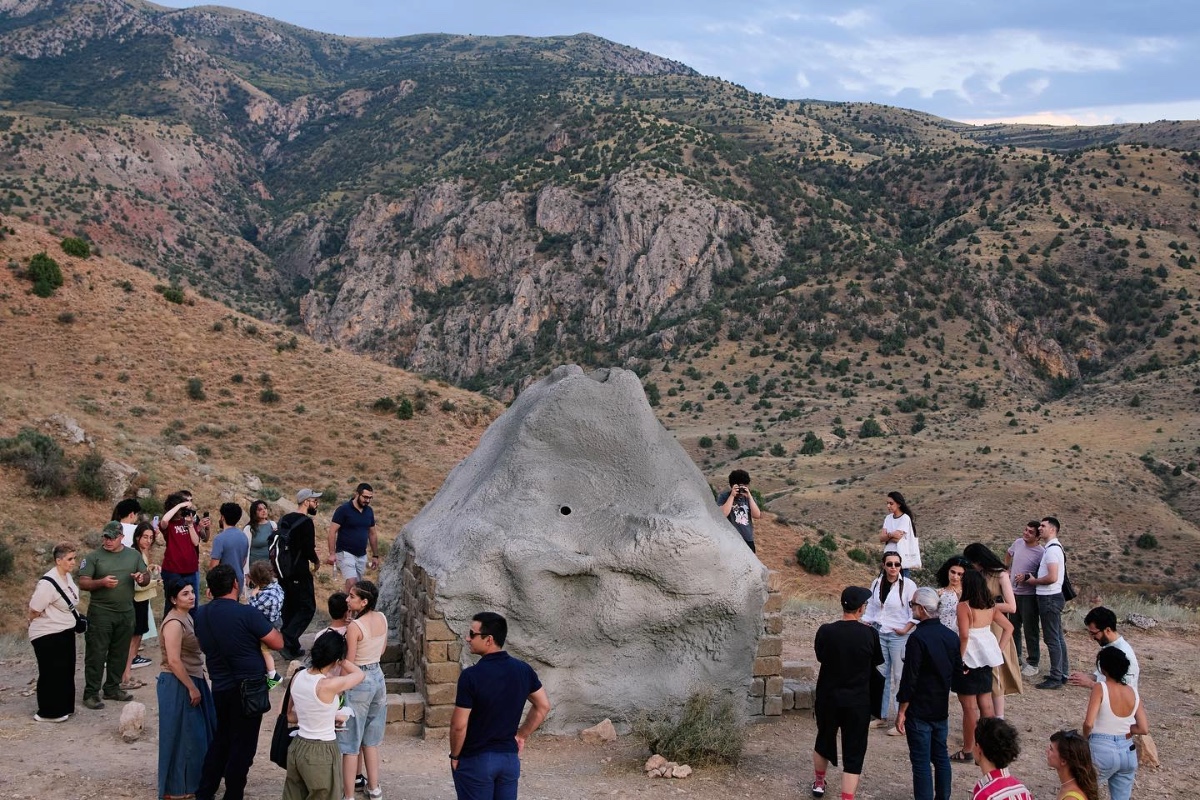
The festival has also become a platform for collaboration. In 2023, at the initiative of the Büro studio, Armenian and international students worked together to design and build a pavilion in Urtsadzor, which can still be visited today.

Arine Keshishi and Hayk Shahinyan met during one of the foundation’s programs. At the time, both were planning to open their own studio. Together, they founded the architectural studio STOHA. Initially, they worked from different locations — Arine in Yerevan and Hayk in Stockholm. Now, Hayk has moved to Armenia with his family. According to Arine Keshishi, despite the challenges, what matters most is being able to decide how, with whom and what to create, and taking full responsibility for it.
“I think we are very lucky, because the projects we are working on now are the ones I have always dreamed of. It’s not that we chose them directly — we opened up, spoke with certain people and the opportunities came our way.”
Among the studio’s projects is a branch of the Epigraph bookstore on Mashtots Avenue in Yerevan. Two additional projects are currently in development. One is the main office of the H. Hovnanian Foundation, which incorporates elements of Armenian monastic architecture. The other is a proposal for designing museum shops in Armenia, where, following the museum’s exhibition approach, the shop presents displayed items as works of art. The first project is under construction, while work on the second is expected to begin this year at the National Gallery of Armenia.
“They say the starting point of each project is its context, location and communication with the client. From there, we need to look for ways to add something that brings new life to that starting point,” said Arine Keshishi, adding that the solutions are always shaped with the client in mind.
“We also try to be honest — we don’t take ideas from one project and use them in another where they don’t fit. Each gesture is based on that specific design process and our involvement in it,” Arine Keshishi said.
They explain that, in the H. Hovnanian Foundation project, the first questions were: what is Armenianness? Is there a contemporary Armenian interior design? And how is it different?
They tried to approach this not through materials (for example, the use of tuff) but through spatial and conceptual thinking. In the office spaces where volunteers will work, they applied the idea of monastic complexes. For example, the main hall was organized around an “altar” as its central focus.
At the same time, the project is located in a historically significant building — where the Declaration of Independence was signed — of which only the outer shell has been preserved. Because of this, the architects chose not to formally restore the past but to interpret it from a contemporary perspective. They aimed to preserve the existing layers — the materials, the structure and even traces of the former layout — and integrate them into new solutions rather than erase them, Shahinyan said.
“That is, something not created 150 years ago or earlier, as in the case of temple architecture, but 20 or 30 years ago — which is already history today and is embedded in the building’s DNA. From that perspective, we tried to reinterpret what already exists, not to erase or remove it but to work with it and use it.”
As part of the architectural competition for TUMO’s Gyumri Market and Culinary School, they collaborated with SO–IL, a New York-based studio, as well as the German engineering firm Bollinger+Grohmann. Students from the festival workshop also contributed to this project. The project was ranked second among 151 participants.
The foundation’s activities also extend to publishing. For the first time, one of the key works of architectural theory, Robert Venturi’s “Complexity and Contradiction in Architecture,” has been translated into Armenian. The book was designed by German graphic designers, and the project was carried out with the support of the Gulbenkian Foundation and in collaboration with the Sargis Khachents Printinfo publishing house.