How one Armenian family defined Balkan rock and jazz
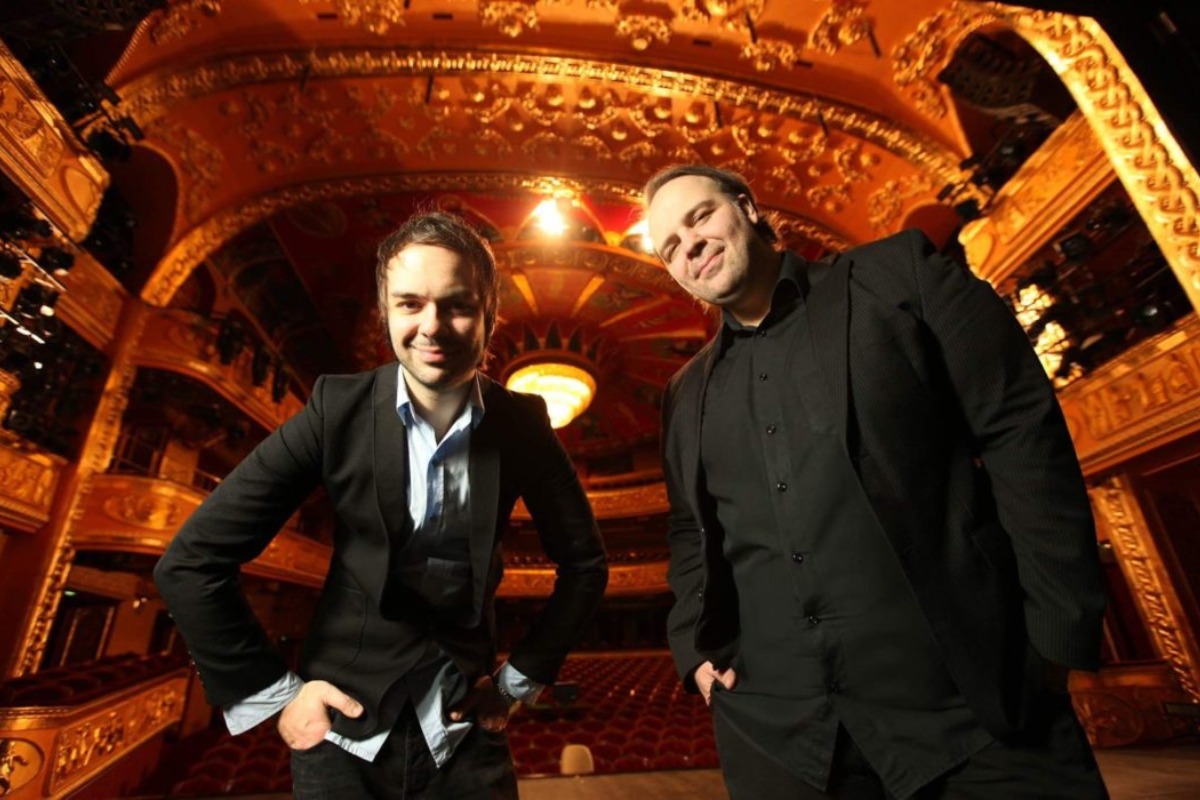
In the Balkans, few names carry as much weight in rock and jazz as Tavitjan. Descended from a family of doctors and scientists who fled the Armenian Genocide, their legacy today is written in platinum records and sold-out stadiums.
It began with Garabet Tavitjan, founder of the influential rock group Leb i Sol in Skopje, Macedonia, then part of Yugoslavia. He didn’t just play music; he helped build a scene. Today, that torch is carried by his sons, Garo and Diran Tavitjan. Recognized as pioneers of the “Balkan Beat” sound, the brothers have collaborated with Grammy-winning artists, performed at Carnegie Hall, and received numerous international awards.
Despite his success abroad, Garo Tavitjan remains deeply tethered to his Armenian identity. After five concerts in Yerevan, he is now sharing his family’s story, describing a journey of a family that didn՛t just survive history, but rose to become the musical heartbeat of an entire region.
Milena Baghdasaryan: You are known as the innovators of modern Balkan beats. How do you balance staying true to ancient folklore while making it sound “platinum” to a modern, global audience?
Garo Tavitjan: Our journey began at a young age with Paramecium, a foundational jazz-rock group where we first combined Macedonian tradition with modern styles. We later established the “Tavitjan Brothers” brand, launching global tours, winning awards, and expanding internationally after a release by Sony Music in London.

We don’t belong to a single genre. Instead, we embrace all styles, experimenting with irregular rhythms and virtuosic arrangements while always respecting and protecting the original folk melodies. Our production studio allows us to collaborate across all genres, with Macedonian folklore serving as our constant creative anchor.
We helped put jazz and fusion on the map in Macedonia, winning the first national jazz award in 2006 and staging the country’s first sold-out independent jazz concert. In 2008, we produced the monumental project Macedonian Heartbeats in 7/8, uniting Balkan legends for a bestseller that culminated in a stadium concert for 70,000 people in Skopje. Since that life-changing milestone, we have taken our music worldwide, performing at prestigious venues like Carnegie Hall and the Blue Note in New York City.
Baghdasaryan: Of all your collaborations, which one felt the most “Armenian” in spirit, regardless of the genre?
Tavitjan: We have had many interesting experiences collaborating with artists and friends, and we carry something from everyone. This ranges from guitar legends like Mike Stern, Frank Gambale, Oz Noy and Eric Marienthal, to Hollywood icons such as Rade Serbedzija (of Mission: Impossible and The Promise), to Armenian virtuosos like the leader of the Armenian State Jazz Orchestra, saxophonist Armen Hyusnunts. We’ve also worked with the Sofia Orchestra and Maestro Papazian, met with Charles Aznavour, and collaborated with the great team at Mezzo Production in Yerevan and Radio Van, who are very good friends. We look forward to more, as we feel the best Armenian collaborations are yet to come.
Baghdasaryan: Your father, Garabet Tavitjan, is credited as the founder of the modern music scene in the former Yugoslavia. Growing up in such a legendary household, was there a specific moment you realized your family’s music wasn’t just “art,” but the heartbeat of an entire region?
Tavitjan: Garabet is a true pioneer whose “living volcano” energy on the drums laid the foundation for modern rock, jazz, and irregular rhythms in the Balkans during the ’70s and ’80s. Having played in foundational Macedonian bands and collaborated with legends like Leb i Sol, he now celebrates a remarkable 60-year jubilee in music.
Growing up on tour and falling asleep backstage, our musical path was inevitable; we both started on drums and piano before each choosing our own instrument. Yet, our family never focused on being “legendary.” Instead, we were taught to prioritize making good music, honing our craft and staying humble, which are values we still carry today.
Baghdasaryan: Leb i Sol remains a household name across the Balkans. How does it feel to carry a surname that is synonymous with the birth of Balkan Rock and Fusion?
Tavitjan: It has its privileges and its challenges. It is a great honor; our father did incredible work with that group, setting the standards for this part of the world. We learned much from them in our early phases. We had to work very hard, starting over many times, to get to the level we are at today. This struggle gave us diverse skills, including writing, producing, marketing and visual design, which have benefited us immensely.
Growing up on tour and falling asleep backstage, our musical path was inevitable
Baghdasaryan: Your family’s history in the Balkans began as a flight from the genocide. How has the weight of being “survivors and scientists” influenced the discipline and emotion you put into your compositions?
Tavitjan: When our great-grandfather, Dr. Garabet Tavitjan, was sent from Constantinople to Skopje in the 1800s to heal and help people, his residence was in the center of the capital. Eventually, his house was nationalized and taken away. His father, Stepan, was a scientist and the creator of a proto-language. Our grandfather, Diran, was the firstborn in Skopje; he was a pharmacist educated at the Armenian College in Venice and the Sorbonne. He spoke seven languages and was very fond of classical music. Then came my father, Garabet, and finally us.
Those were horrible times for the Armenian people, perhaps one of the hardest challenges in human history. In today’s society, we still face injustices and life’s hardships. As artists, we have the ability to articulate these situations through our creations. Music allows us to communicate with others so they can find the “frequency” of their own burdens within it. It’s a way of acknowledging that we are all the same in essence, regardless of our situation. That is why art is so meaningful.
Baghdasaryan: You’ve performed in Yerevan five times now. When you step onto the stage at the Aram Khachaturian Concert Hall, do you feel like you are performing for a foreign audience, or is it a “homecoming”?
Tavitjan: It was a very emotional moment for us. To perform in the country of our roots was special. From the first step into the Yerevan airport to visiting Holy Etchmiadzin, Matenadaran, the Armenian Genocide Museum, the Cascade and the city’s beautiful restaurants and jazz clubs, it was all captivating.
The first time we entered the Aram Khachaturian Hall, the Armenian Big Band was rehearsing on stage. They were like a “Swiss Army” horn section, executing lines with unbelievable precision. We enjoyed their performance that night. From the moment we had our rehearsal, we knew it would be a good concert. The audience was so generous in accepting us. Later, we returned for several more concerts, including International Jazz Day at the open stage by the Cascade.
Baghdasaryan: Many Armenians in the Diaspora lose their names or language over four generations. How did you manage to maintain the Tavitjan identity in North Macedonia?
Tavitjan: Macedonia is a modern country with open-minded, friendly and peaceful people. We were born and raised as Macedonians for four generations, and we love this country. We are grateful for the respect and acceptance we receive from the Macedonian people. We have worked and sacrificed to maintain our identity as well as we could. Regardless of where someone is from, if they are loyal, hard-working and respectful, they will be respected here. The people here understand struggle because they have faced their own historical challenges and injustices, similar in some ways to those of Armenia. However, institutional and governmental management of culture is another matter entirely.
Baghdasaryan: You are currently working on a movie about protecting the heritage of Balkan rhythms. Why is it vital to document these “irregular” beats for the world right now?
Tavitjan: Macedonia has a language expressed through its rhythm. That language tells the story of the people’s history, their survival and fight for freedom. In the Balkans and across the world, many nations share similar rhythms, but the way they are performed is unique. This is information of great interest to the global music community. Given our family history, we felt it was our responsibility to contribute to this subject.
Baghdasaryan: Receiving the Medal of Honor and the support of the President is a massive achievement. What was the core message you shared with the President about why music is the best “diplomat” for a country?
Tavitjan: The Medal of Honor was awarded to our father for the highest cultural achievements in Macedonian music, along with his colleagues from Leb i Sol. His message has always been simple: quality without compromise, delivered with a true heart, recognizes no borders. He is an example of uniting different cultures through musical excellence, the universal language of the world.
Baghdasaryan: Selling out Carnegie Hall is the pinnacle for any musician. What was going through your minds as two Armenian Macedonian brothers taking a bow on that legendary stage?
Tavitjan: It was a dream come true. After an incredible debut in New York City at the Blue Note, Carnegie Hall was our next great challenge. We performed a special piano trio project alongside brilliant guests: vocalist Roseanna Vitro and Mo Pleasure (musical director for Earth, Wind & Fire, and Michael Jackson).
The performance felt natural and profound, concluding with an energetic piano and drum duo. As we took our final bow before a thrilled audience, our only thought was: “That one went well, thank God.” Only then did we finally loosen up and truly enjoy the beauty of New York.
Baghdasaryan: If you could send one message to every household in Armenia, what would it be?
Tavitjan: Hardships and corruption exist everywhere, making people feel like foreigners whether they are in the diaspora or at home. The key to prosperity is to deeply appreciate your own heritage, language and spirituality, without harboring negativity toward others. Instead, a true democracy uses the diverse qualities of different people for the common good.
Baghdasaryan: Can you tell us more about the movie you are filming? Will we see footage of your Armenian heritage or your visits to Yerevan in it?
Tavitjan: The film is about Balkan and Macedonian rhythms and the science behind them, drawing from the work of our father and ourselves. We are happy to say we will be using footage of our Armenian experiences in this biographical documentary.
Baghdasaryan: After the movie and the current world tours, what is the next “unconquered territory” for the Tavitjan Brothers?
Tavitjan: We are constantly working on music. We have several upcoming projects involving international musicians, more music videos and educational activities in our studio. We also recognize that AI will have an impact on the development of art, and we must adapt to it. Our vision remains concentrated on positive energy, love and uniting cultures through music.
Baghdasaryan: What advice would you give to young Armenian musicians in Yerevan who look at your international success and want to follow in your footsteps?
Tavitjan: Our advice would be to believe in yourself and be obsessed with your work. Go out into the world as early as you can to get on the “radar” for collaborations. Make yourself visible with quality content, both in real life and online. Spend time learning marketing and business regardless of your profession.