



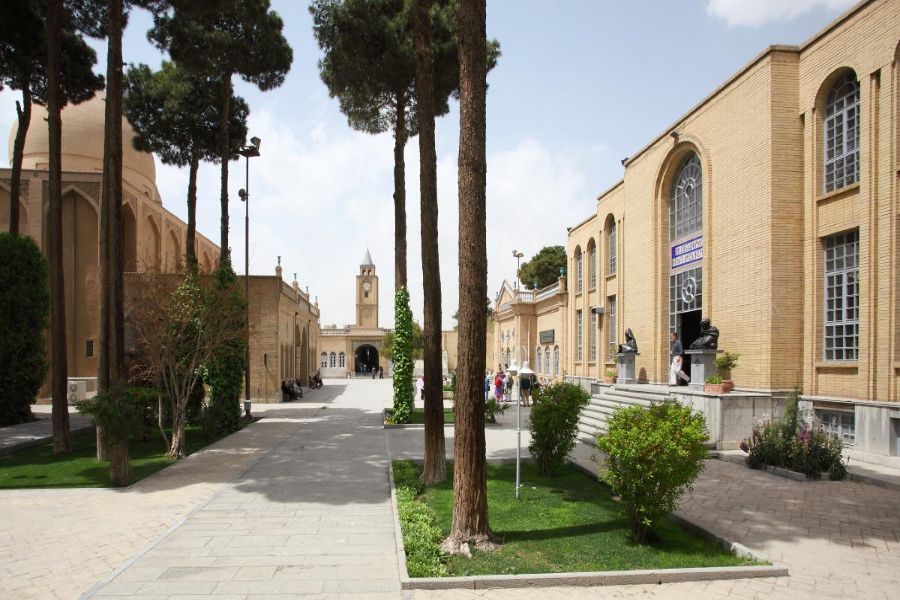
March 27 marked the first reported killing of an Armenian community member from Iran in overnight strikes on residential areas in Isfahan, along with 26 others. The Catholicosate of Cilicia reported that one Armenian national, Hovhannes Simonian, was killed in the ongoing missile bombardments targeting Isfahan. Catholicos Aram I said he remains in daily communication with the leaders of Armenian dioceses in war-affected countries. The statement added: “According to the authorities of the Tehran Diocese, both Tehran and Isfahan have come under sustained and heavy missile fire in recent days.”
For the Lebanese-Armenian community, the situation is critical. In Lebanon, tensions continue to rise both domestically and militarily as the conflict drags on, further exacerbating political divisions following a decision by Foreign Minister Youssef Rajji to declare Iran’s ambassador persona non grata and order him to leave Lebanese territory.
The Iranian ambassador to Armenia sent a message of condolences, describing Hovhannes Simonian as a martyr and praying for his relatives’ patience and spiritual comfort.
TRIPP and Armenia-Iran relations
On March 23, Armenia’s foreign minister, Ararat Mirzoyan, said Armenia has sent humanitarian aid to Iran in the form of medication. Asked why Armenia sent aid, he said: “It could not have been otherwise — not only at this moment, but for centuries, for millennia, even beyond the existence of states, the two peoples have been friends.”
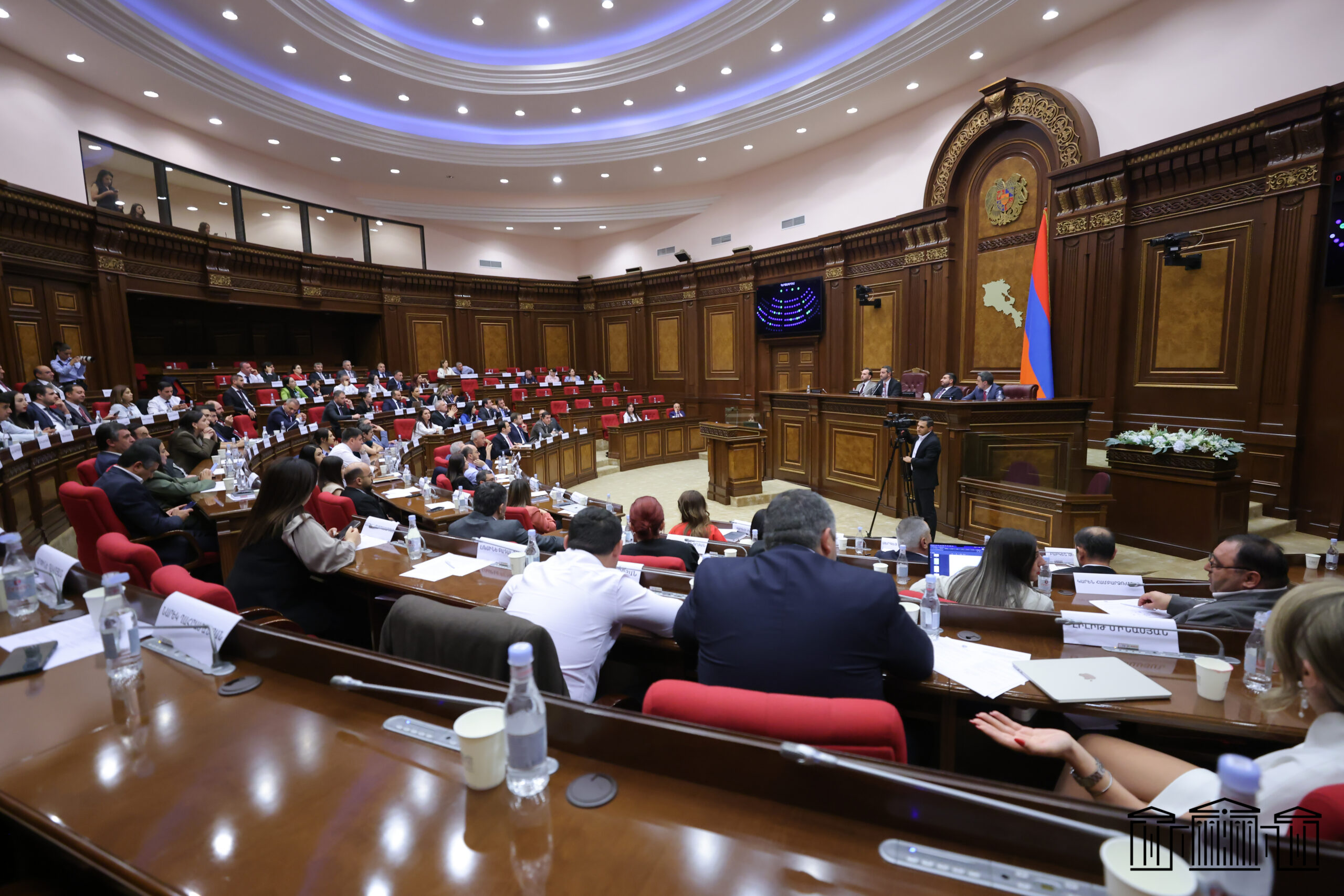
Regarding progress on the TRIPP project, he added: “I assure you that negotiations between Armenia and the United States on TRIPP have not slowed down and are proceeding normally. The first step was announced on Aug. 8, and in the second step, we negotiated and on Jan. 14 agreed to and published a comprehensive document outlining the implementation framework. The next step will be the signing of an intergovernmental agreement, which will include more legal mechanisms.”


On March 26, Iran’s foreign minister, Abbas Araghchi, expressed gratitude to Armenia and other countries, saying: “Many foreign partners have helped us with evacuations. I would like to thank the governments of Afghanistan, Turkmenistan, Azerbaijan, Armenia, Turkey and even Saudi Arabia for their cooperation. Our neighbors, including Pakistan, have also provided significant assistance.” Another message of gratitude was published on X on March 30 by Foreign Minister Abbas Araghchi, this time in Armenian, calling Armenia’s assistance “brotherly steps that will remain in the memory of the Iranian people.”
On March 28, Armenia’s foreign minister, Ararat Mirzoyan, spoke by phone with Iran’s foreign minister, Seyed Abbas Araghchi. The ministers discussed recent developments, possible paths toward resolving the conflict, and humanitarian aspects of the war. However, on March 29, Mirzoyan said discussions on the strategic partnership agreement between Armenia and Iran were suspended for the time being because of the current situation.
On March 27, during a visit to Kapan, Iran’s ambassador, Khalil Shirgholami, met with Syunik Gov. Robert Ghukasyan, highlighting the region’s strategic role as a key gateway between Iran and Armenia. Shirgholami also visited the Noravan substation, part of the third high-voltage Armenia-Iran transmission line.
On March 30, following reported Iranian threats to target American universities throughout the region, the American University of Armenia announced it was transitioning to a fully online format as a precautionary measure.
Economic indicators and continued evacuations
Economic concerns continue to rise after reports on March 24 indicated that a potential strike on Iran’s power infrastructure could trigger outages across Armenia.
Armenia may benefit economically from an influx of skilled workers, as young professionals from Tehran view Yerevan as a safe place away from the conflict. In particular, professionals in the digital sector find Armenia attractive; however, uncertainty remains as residency barriers and large influxes may create unforeseen challenges.
On March 23, Egyptian diplomats said they had evacuated their citizens from Iran through Armenia. They described the country as a transit hub and safe evacuation route, similar to Turkey, Jordan and Oman. On March 25, Indian authorities reported that a total of 1,043 Indian nationals, including 717 students, had safely left Iran or neighboring areas through Armenia. On March 28, Russia said 164 additional employees working for the state-owned nuclear corporation Rosatom in Iran had been evacuated to Armenia. The total number of Russian citizens evacuated from Iran through Armenia reached 327 as of March 28.


Inevitable.
If the International Criminal Court (ICC) could somehow have enforced its decision made in 2024 against the warmongering Israeli leaders, this Armenian man and thousands of other innocent people killed cold-bloodedly and considered as collateral damage, would have been alive today. Let’s also not forget the deadly state-of-the-art weapons that Israel, under the current and same warmongering leadership, provided our enemy recently that killed thousands more and played a major role in ethnic-cleansing of native Armenians in Artsakh. What if this ancient 17th century Vank (Monastery) Cathedral which is the symbol of the forced Armenian exodus from their native Julfa in Nakhichevan (Նախիջևան or Նախիջեվան in Armenian with the name meaning The Original Resting Place of Noah’s Ark) across the Arax River into this ancient Persian capital of Isfahan was hit which for over a century now it also houses a cultural and religious museum with extensive maps, photographs and documents related to the 1915 Armenian Genocide. Warmongers everywhere and many under false pretenses disregarding international laws and norms should not be allowed to get away with their actions with impunity and must be held responsible.