




A glimpse into the Assyrian community of Armenia
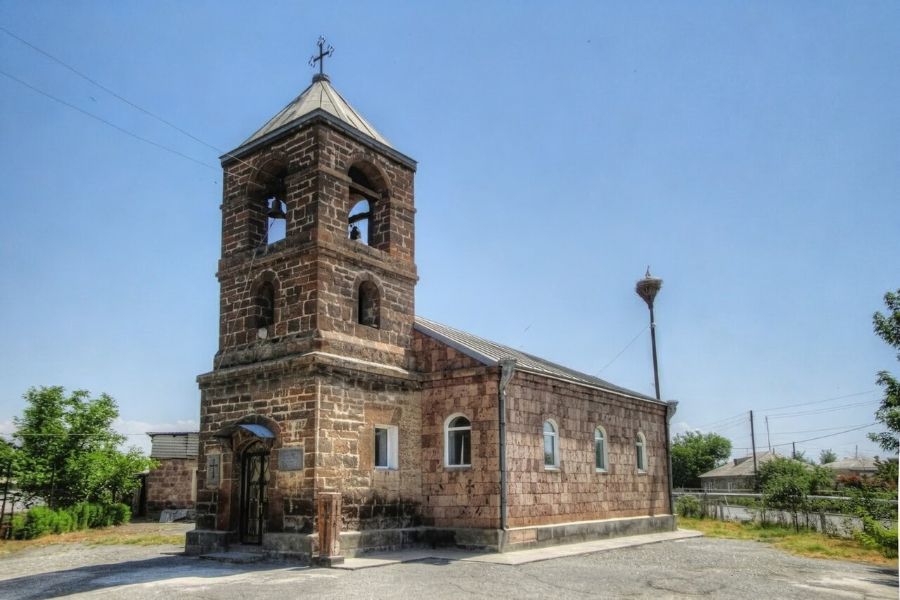
Armenia is the most homogenous country in the post-Soviet world, with 98% of its citizens identified as ethnic Armenians. Nevertheless, other ethnic groups live in the country, including Russians, Kurds, Greeks, Jews, Ukrainians and Assyrians.
Assyrians are indigenous to Mesopotamia, where they have lived for thousands of years. Historically, they were settled mostly in areas that now form modern-day Turkey, Syria and Iraq. Assyrians speak Neo-Aramaic varieties and practice Christianity; however, they are divided among several churches, including the Ancient Church of the East, the Assyrian Church of the East, the Chaldean Catholic Church, the Syriac Orthodox Church, the Syriac Catholic Church, the Assyrian Evangelical Church and the Assyrian Pentecostal Church. The group has faced persecutions and massacres throughout its history, particularly under the Ottoman Empire — which carried out a genocide known as Sayfo — and by ISIS militants.
One of the few places where Assyrians have been able to live in relative peace is Armenia. Assyrians arrived in the Caucasus during the 19th century, when the Russian Empire defeated the Persian Empire in two wars. At the time, most of present-day Armenia and Azerbaijan was part of the Caucasian khanates, semi-independent entities under the sovereignty of Persia’s Qajar dynasty. During the conflict, Assyrians living on Persian territory — mainly in Iranian Azerbaijan — assisted the Russian army and fought for St. Petersburg. As a result, Emperor Nicholas I viewed them as useful allies. After the Treaty of Turkmenchay in 1828, Russia allowed hundreds of Assyrian families to relocate from Iran to newly acquired territories. Most settled in the Armenian Oblast, later reorganized as the Yerevan Governorate.
Between the 19th and early 20th centuries, more Assyrian families — mainly from the Ottoman Empire — settled in Russian Transcaucasia after leaving their homelands. World War I brought a significant influx of refugees from Anatolia and Iran, as the Ottoman government — aided by some Kurdish tribal forces — carried out mass killings of Assyrians in what is known as the Assyrian genocide.
In 1886, there were 1,800 Assyrians in Armenia, but the number rose to 2,500 in 1914 and 3,280 in 1939. During the Soviet period, they lived in relative stability in the Armenian Soviet Socialist Republic, where their population reached 6,183, according to the 1989 census. However, the dissolution of the Soviet Union negatively affected the community. The newly independent Republic of Armenia faced severe social and economic difficulties, prompting high levels of emigration. As a result, thousands of Assyrians left the South Caucasus for Russia, Ukraine, North America and Western Europe in search of better opportunities.


The 2001 census recorded 3,409 Assyrians, a number that fell to 2,769 in the 2011 census. However, some observers have criticized these figures, saying they underestimate the community’s size. Critics argue that many Assyrians with Armenian surnames — particularly those from mixed families — were recorded as Armenians. Additionally, some Assyrians are highly assimilated and do not identify as such in census data. As a result, alternative estimates place the population between 7,000 and 10,000.
Today, the community is divided along religious lines. Under Tsarist rule, many were compelled to join the Russian Orthodox Church. After the collapse of the Soviet Union, some Assyrians joined the Armenian Apostolic Church or the Assyrian Church of the East, while those in Dimitrov maintained affiliation with the Moscow Patriarchate. Neo-Aramaic is still spoken in Armenia, but its use is declining, particularly among younger generations. Many Assyrians attend Russian-speaking schools, where they also learn Armenian and Assyrian.
Relations between Assyrians and the Armenian majority are generally peaceful, and mixed marriages are common. This coexistence is likely supported by the community’s longstanding presence in Armenia, a shared Christian faith and a common historical memory of persecutions and genocides committed by the Turks. The minority also has formal representation under provisions introduced in 2015. It holds a reserved seat in Armenia’s National Assembly, providing a direct voice in the legislative process. This reflects Armenia’s legal framework for minority representation and offers an institutional channel to preserve cultural and linguistic identity.
Today, most Assyrians live in five locations: Verin Dvin, Dimitrov, Arzni, Nor Artagers and Yerevan. Verin Dvin remains the only Assyrian-majority village in Armenia and the place where Neo-Aramaic is widely spoken. Dimitrov, Arzni and Nor Artagers had Assyrian majorities before the 1990s, but emigration and demographic changes have significantly altered their composition. In these communities, Neo-Aramaic is at risk of disappearing. In Dimitrov, it is increasingly being replaced by Russian, while in Arzni and Nor Artagers Armenian dominates among younger generations. Several Assyrian families live in Yerevan, where preserving cultural heritage is more difficult.
In the long term, demographic decline, migration and language shift are likely to remain significant challenges, threatening the community’s survival. Much will depend on its ability to balance integration with the preservation of linguistic and cultural heritage, as well as state support for minority languages.

The Assyrians are in an even more unfortunate situation than Armenians, because they lack an independent state; and being far fewer in number than Armenians, they have been decimated and thoroughly dispersed from their homeland, first by the Turks between 1915-1922 during the Assyrian Genocide, and by the Jihadists since 2003 in Iraq and since 2011 in Syria. Assyrians are even more assimilated than Diaspora Armenians, to the point that the large majority of them don’t speak or understand their native language Assyrian/Syriac/Aramaic anymore, not only in the Diaspora, but even in their original homeland of Mesopotamia. Such a hapless nation, like all nations who are still persecuted, attacked and ethnically cleansed by the Turks, Arabs and Muslims in general.
Thankyou for this comment. Many Assyrians in diaspora I would say are traitors to their own. They are very comfortable with their lives in diaspora nations and are purposefully ignorant/unconcerned to what is happening to their people in the homeland. I just want to point out something I came across written in this article that contributes to a problem within the Assyrian community that I feel should be a main concern. It’s mentioned that ‘’Additionally, some Assyrians are highly assimilated and do not identify as such in census data.’’ ,
Some of these self denying Assyrians are assyrians who label themselves by the name of their church and or the identification of their dialect/language which
Causes more confusion. What makes it worse is when assyrians identify by the name of nation that occupies their homeland, this reduces them as a ethnic group to being viewed as the name of that xyz nation and christian. Unity is something that this community struggles with, if its not lack of consistency in ethnic identification, its not agreeing on one thing and having more then 1 persons voice arguing with another to speak for the community. I hear that assyrians in armenia have their own schools where they learn to be fluent in their language so I would assume that they would know their language, although I do not know what their situation is like with what language they speak when they communicate to their parents/household.
I dont know if this is something important to bring up or mention, but ive come across and seen some people either Arabs (christian or muslim), kurds (usually commonly kurds) or indian christians on assyrian posts/content online lie about their ethnicity and identify as assyrian or armenian, either to spread false information or take advantage of the problems/atrocities that either community has experienced and I believe they do this out of pure intention to harm the community, usually due to being desensitised in empathy towards a cultural community historical injustice. falsely identifying with a ethnic label that an individual claims of, what this does is assimilate not only the ethnic group struggles/past injustice with the background of the fake identifier/identity hoaxer, while claiming ones community past and ongoing racial discrimination/abuse without having lived what the community experienced, as ‘’Appropriation of Trauma’’ . It creates a untrue narrative that manipulates the history and distorts the image of ones culture/people, such as ‘’appropriation of culture’’. I find people who do this disrespectful, insulting, arrogant and have no remorse for ones culture.
For example, on tiktok I come across a account owned by an assyrian, the post is meant to show appreciation and showcase the culture to people who dont know what assyrian culture/people is, in the comment section (that I have taken a screenshot of and deserve to be exposed) a username @aramean.777 said ‘’As a armenian – aramean I stand with the kurds’’ (aramean is an ethnic assyrian of western dialect who due to their dialect go by a different label, however, the comment on the tiktok post is made by a fraud) . A username, @D, wrote, ‘’Assyria and Assyrians are Kurds’’, an Arab (from the state iraq), @Chezburgerman G with the half moon and star symbol emoji said ‘’ As a Iraqi love my Cristian brothers’’ to which an assyrian responded saying ‘’We are Assyrians since thousands of years before christ and after him’’. I find this important to bring up as these comments made by arrogant/fake identifiers online can deform truth and portray a people past/present, along with voicing for what they support inaccurately, spreading harmful misinformation. Another example of misinformation is the media relabelling assyrians as iraqi christian, syrian christian, turkish christian or iranian christians with a heavy focus on assyrian language to reduce/dismantle assyrian identity.
I believe its important for a culture to learn their own history so confusion, misinformation and spiralling down conspiracy theory is avoided. What I have noticed and feel the need to bring up and do not appreciate nor stand for is when I see assyrians themselves who have made comments online, labelling Arab christians, indian christians or any christian, who is not assyrian ethnically but is either a member of the assyrian church, or is a believer of christianity as someone who is assyrian ethinicity, this becomes justified with pseudoscientific intelligence (junk science) of an ideology called dna testing to use for heritage/cultural tracing and something I heavily disagree with and stay far away from as its questionable in itself, its gives a reason to deny documented history and use theories as facts leading to more distortion and fabrication. What makes it worse when there are Arab nationalist who claim
From what I have discovered, assyrians have been experiencing genocide since the 18th century and or even before. In 1843, it has been documented that 10,000-15,000 assyrians had died in what is called the hakkari massacre, an american journalist/human rights activist had found another 7,000 dead in an area called tehoma within that say year. In 1918, simko shikak and his kurdish forces massacred 3,500 armenians and assyrians in khoy, iran. Today he is celebrated by kurdish nationalist as a freedom fighter, streets, songs, even billboards with his face and name.
I think assyrians want their voices to be louder and recognised more then people recognising a kurdistan occupation they need to come together and protest about it before its too late.
Ultimately, the Assyrian story stands on its own. The survival of the Assyrian people over millennia, their preservation of a distinct identity, and their continued connection to their heritage represent one of the most enduring examples of cultural continuity in the Middle East. Their history is a testament to resilience, determination, and an unwavering commitment to preserving a unique civilization that has survived against tremendous odds.
You should learn about Agha Petros, Malik Khoshaba, Malik Qambar and Malik Ismail. Assyrians who showed strenght, bravery and vengeance.
Thankyou for this comment. Many Assyrians in diaspora I would say are traitors to their own. They are very comfortable with their lives in diaspora nations and are purposefully ignorant/unconcerned to what is happening to their people in the homeland. I just want to point out something I came across written in this article that contributes to a problem within the Assyrian community that I feel should be a main concern. It’s mentioned that ‘’Additionally, some Assyrians are highly assimilated and do not identify as such in census data.’’ ,
Some of these self denying Assyrians are assyrians who label themselves by the name of their church and or the identification of their dialect/language which
Causes more confusion. What makes it worse is when assyrians identify by the name of nation that occupies their homeland, this reduces them as a ethnic group to being viewed as the name of that xyz nation and christian. Unity is something that this community struggles with, if its not lack of consistency in ethnic identification, its not agreeing on one thing and having more then 1 persons voice arguing with another to speak for the community. I hear that assyrians in armenia have their own schools where they learn to be fluent in their language so I would assume that they would know their language, although I do not know what their situation is like with what language they speak when they communicate to their parents/household.
I dont know if this is something important to bring up or mention, but ive come across and seen some people either Arabs (christian or muslim), kurds (usually commonly kurds) or indian christians on assyrian posts/content online lie about their ethnicity and identify as assyrian or armenian, either to spread false information or take advantage of the problems/atrocities that either community has experienced and I believe they do this out of pure intention to harm the community, usually due to being desensitised in empathy towards a cultural community historical injustice. falsely identifying with a ethnic label that an individual claims of, what this does is assimilate not only the ethnic group struggles/past injustice with the background of the fake identifier/identity hoaxer, while claiming ones community past and ongoing racial discrimination/abuse without having lived what the community experienced, as ‘’Appropriation of Trauma’’ . It creates a untrue narrative that manipulates the history and distorts the image of ones culture/people, such as ‘’appropriation of culture’’. I find people who do this disrespectful, insulting, arrogant and have no remorse for ones culture.
For example, on tiktok I come across a account owned by an assyrian, the post is meant to show appreciation and showcase the culture to people who dont know what assyrian culture/people is, in the comment section (that I have taken a screenshot of and deserve to be exposed) a username @aramean.777 said ‘’As a armenian – aramean I stand with the kurds’’ (aramean is an ethnic assyrian of western dialect who due to their dialect go by a different label, however, the comment on the tiktok post is made by a fraud) . A username, @D, wrote, ‘’Assyria and Assyrians are Kurds’’, an Arab (from the state iraq), @Chezburgerman G with the half moon and star symbol emoji said ‘’ As a Iraqi love my Cristian brothers’’ to which an assyrian responded saying ‘’We are Assyrians since thousands of years before christ and after him’’. I find this important to bring up as these comments made by arrogant/fake identifiers online can deform truth and portray a people past/present, along with voicing for what they support inaccurately, spreading harmful misinformation. Another example of misinformation is the media relabelling assyrians as iraqi christian, syrian christian, turkish christian or iranian christians with a heavy focus on assyrian language to reduce/dismantle assyrian identity.
I believe its important for a culture to learn their own history so confusion, misinformation and spiralling down conspiracy theory is avoided. What I have noticed and feel the need to bring up and do not appreciate nor stand for is when I see assyrians themselves who have made comments online, labelling Arab christians, indian christians or any christian, who is not assyrian ethnically but is either a member of the assyrian church, or is a believer of christianity as someone who is assyrian ethinicity, this becomes justified with pseudoscientific intelligence (junk science) of an ideology called dna testing to use for heritage/cultural tracing and something I heavily disagree with and stay far away from as its questionable in itself, its gives a reason to deny documented history and use theories as facts leading to more distortion and fabrication. What makes it worse when there are Arab nationalist who claim
From what I have discovered, assyrians have been experiencing genocide since the 18th century and or even before. In 1843, it has been documented that 10,000-15,000 assyrians had died in what is called the hakkari massacre, an american journalist/human rights activist had found another 7,000 dead in an area called tehoma within that say year. In 1918, simko shikak and his kurdish forces massacred 3,500 armenians and assyrians in khoy, iran. Today he is celebrated by kurdish nationalist as a freedom fighter, streets, songs, even billboards with his face and name.
I think assyrians want their voices to be louder and recognised more then people recognising a kurdistan occupation they need to come together and protest about it before its too late.
The Assyrians, despite facing severe disadvantages, have managed to survive due to their resilient, determined, and warrior spirit, qualities that have been observed and documented by other nations throughout history. Attempts to erase the Assyrian people have repeatedly failed over the centuries. Even before the events of 1915, Assyrians living in the mountainous regions of southeastern Turkey were taught from a young age how to defend themselves when necessary. They governed their own affairs and were widely known as fiercely independent tribal communities.
Assyrians were highly sought after for their military capabilities and earned a reputation for bravery and effectiveness in battle. At the same time, they assisted not only their own people but also other nations. Following periods of displacement, many Assyrians established new villages in northeastern Syria, opening a new chapter in their history.
Countries such as Spain, France, Ethiopia, and United Kingdom praised the Assyrians for their strength, discipline, and military skill. Assyrian forces were often called upon to fight alongside the Allies during both World War I and World War II, where they distinguished themselves in combat.
It is also worth noting that Assyrians have continued to preserve and speak their ancient language, which is commonly taught to children from an early age by their parents and communities. The claim that Assyrians have become so assimilated that “they do not speak their own language” is inaccurate and appears to be an exaggeration. Many Assyrians grow up hearing the language at home, speaking it with family members, and, in some cases, attending language classes to strengthen their fluency.
The Assyrian population is estimated to be around five million people worldwide. In their ancestral homeland of Mesopotamia, there remains a strong Assyrian presence, particularly in the region of Nineveh Plains, where several towns have predominantly Assyrian populations and where the Assyrian language continues to be spoken.
The purpose of my comment is to challenge the misconception that Assyrians are incapable of helping themselves or that their situation is as hopeless as some portray it. While they undoubtedly face significant challenges, especially given that much of their historic homeland is now under the control of others, it is misleading to suggest that they no longer understand or speak their own language.
Assyrians are among the most successful examples of cultural preservation. They have maintained their language, identity, ancestry, traditions, and Christian faith across centuries of hardship. Through their own efforts, they have kept their heritage alive while enduring persecution, conflict, and repeated attempts at displacement.
Assyrians remain deeply aware of who they are, largely because of their continued commitment to preserving their identity, whether through festivals, cultural organizations, schools, churches, community initiatives, or the strong Assyrian diaspora around the world.
Great article that very fairly and accurately describes the Assyrians and their plight. Thank you to the author!
Thank you Lorenzo, a very good & pretty accurately written article, also thank you for your interest in Assyrians & our Neverending struggle. I would like to address the woman now regarding Assyrians losing their culture, language…
While we do have Assyrians that simply aren’t patriotic enough to bother with keeping our language alive, especially not teaching their kids or using Assyrian baby names, they are not the vast majority of Assyrians who are, so it’s definitely not all ” Doom & Gloom”.
Reality is that Assyrians are thriving world wide, especially in the west, in all aspects: business, entrepreneurship, Profesional fields… many of these people are doing much to help not just preserve our culture, but share & expose it to the world.
Don’t only focus on the negative side of things. All people have their good & bad, but generally Assyrians are integrating well in this age of High Tech & Networking.
My family came from humble beginnings, worked very hard & became multi business owners whom truly lived the American Dream.
A little more insight into our ethnicity & language, while it’s more favored & popular to say “We speak Assyrian Aramaic”, I’d like to clarify that many of us don’t. While certain people of our sect do speak something closer to the Aramaic of Jesus’s time, most of Eastern or I should say Mainland Assyria, heart of Assyria, continue to speak actual Assyrian that stems from the Neo Assyrian Empire era, modernized & with loanwords, some influences here & there, yet it still is a real form of ancient Assyrian/Babylonian/Akkadian.
Growing up, in our church St. Mar Gewargis in Chicago, they always read the Bible in both Aramaic & Assyrian, I could never really understand the Aramaic, neither could any of the other kids in my class, regardless of which grade.
It still sounds like a strange form of Assyrian to me. The Assyrian language is not just ” a dialect of this or that” its well Documented by the Mesopotamians themselves as Lishanum Ashuritum, as it’s translated in the Chicago Assyrian Dictionary ( CAD ), which I’ve been studying for over 15 years, where it shows the evidence of its continuity as I’ve compared & shared hundreds of times.
Every living language has undergone change, wether slight or drastically. Assyrian is no exception, but the majority of the words we use still are rooted in ancient Assyrian, with its Akkadian, Aramaic & even Sumerian loanwords & influences here and there, but it does not make it “Aramaic” because of it, on the contrary, By the Neo Assyrian Empire era, Aramaic itself was heavily Assyrianized, & Akkadianized even before that.
Another important thing to note, which scholars/Academics choose to neglect, is that we are not “semitic” neither Linguistic wise or ethnic.
We actually share the same genetics with Armenians, both have a near 40% amount of the R1b Haplogroup marker, which originated along with the J1/2 in North Mesopotamia & Anatolia, as well as the Caucasus, & this genetic marker exists in almost all over Europe.
As for the language, the term ” semitic” was based on the judean story of creation, not the Assyrian that came thousands of years before it. Based on Shem, son of Noah, but here’s the problem, no Mesopotamian ever heard of him or knew the story of Noah & his sons, because they already had the original Noah, known by 3 names ( Assyrian, Akkadian & Sumerian ) Atra-Khasis, Utu-Napishtim & Zeusudra.
Main point being, Shem came thousands of years AFTER Assyrians & other Mesopotamians,.making it mathematically, genetically impossible to have either fathered or influenced Assyria & Assyrians., that’s considering the guy actually existed in the first place.
Why is this important? Because if we continue to regurgitate this semitic lie about our language/culture, it takes away from Assyrian validity & identity, which is proved today when kurds who attack us daily on SM, claim ” you’re Semites, you’re not Mesopotamians, your arabs…”
As Assyrians, we resent that, & are just fine with our own God Given Name, we are named after the God of Assyria after all ( Aššur ). We don’t need another name, especially one that ancient judeans created.
Sorry for the long response, but for those Assyrians that do want to preserve, Protect & Share our Assyrian culture & want us to continue to thrive, you would do a huge justice to know & share this information.
Basimeh Raba ( Thank you very much )