



Armenia marks new Day of Remembrance for fallen defenders
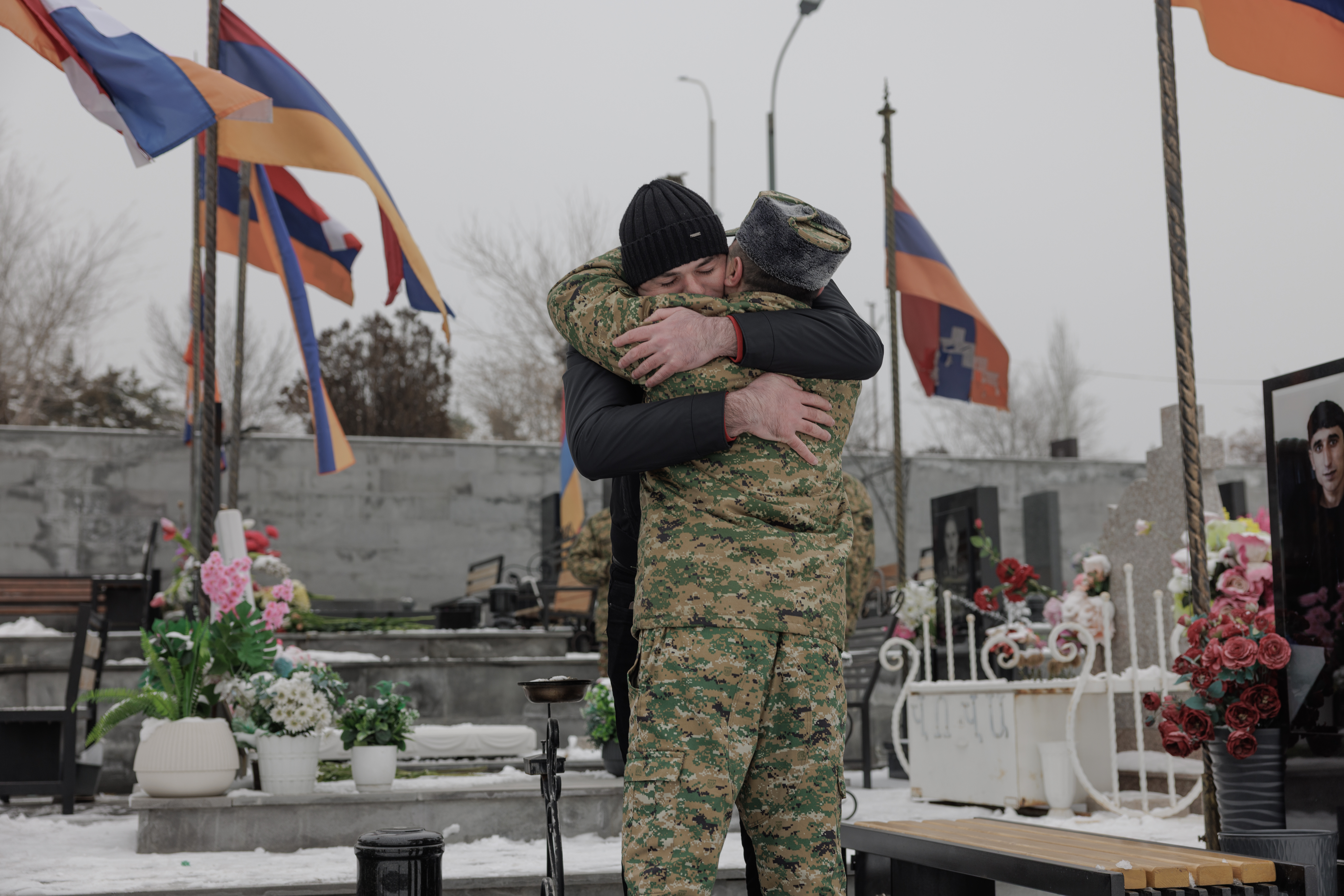
YEREVAN — Armenians gathered at Yerablur Military Cemetery on January 27 to honor the nation’s fallen, as Parliament officially designated the date as a new national day of remembrance.
The legislation, which passed with immediate effect, establishes the Day of Remembrance for Those Who Fell Defending the Homeland. The move adds a 13th non-working day to Armenia’s national calendar, strategically placed just 24 hours before the existing Army Day holiday on January 28.
Unlike commemorations tied to specific battles, officials said the designation is intended as a broad, inclusive tribute rather than one centered on a single conflict, drawing comparisons to the United Kingdom’s Remembrance Day.
“At our request, the president will sign the law as soon as possible so it enters into force this year,” stated Vice Speaker Ruben Rubinyan, who co-authored the bill alongside Independent MP Gegham Nazaryan.
The new holiday does not affect Genocide Victims Commemoration Day, which will continue to be observed annually on April 24.

Despite the solemn nature of the bill, the vote highlighted deep political divisions:
Opposition factions either abstained or voted against the measure. Secretary of the “Hayastan” faction, Artsvik Minasyan, dismissed the move as a “symbolic gesture lacking genuine substance.”
The government previously abandoned a 2024 proposal to set the remembrance date on September 27 — the anniversary of Azerbaijan’s 2020 offensive that triggered the Second Artsakh war. That proposal was never submitted to parliament.
Senior officials, including the prime minister, broke with tradition by not visiting the Yerablur Military Pantheon on the September 27 and November 9, 2025 anniversaries — a notable departure from long-standing practice amid ongoing debate over how the state memorializes recent wars.
All photos are by Weekly contributor Anthony Pizzoferrato.

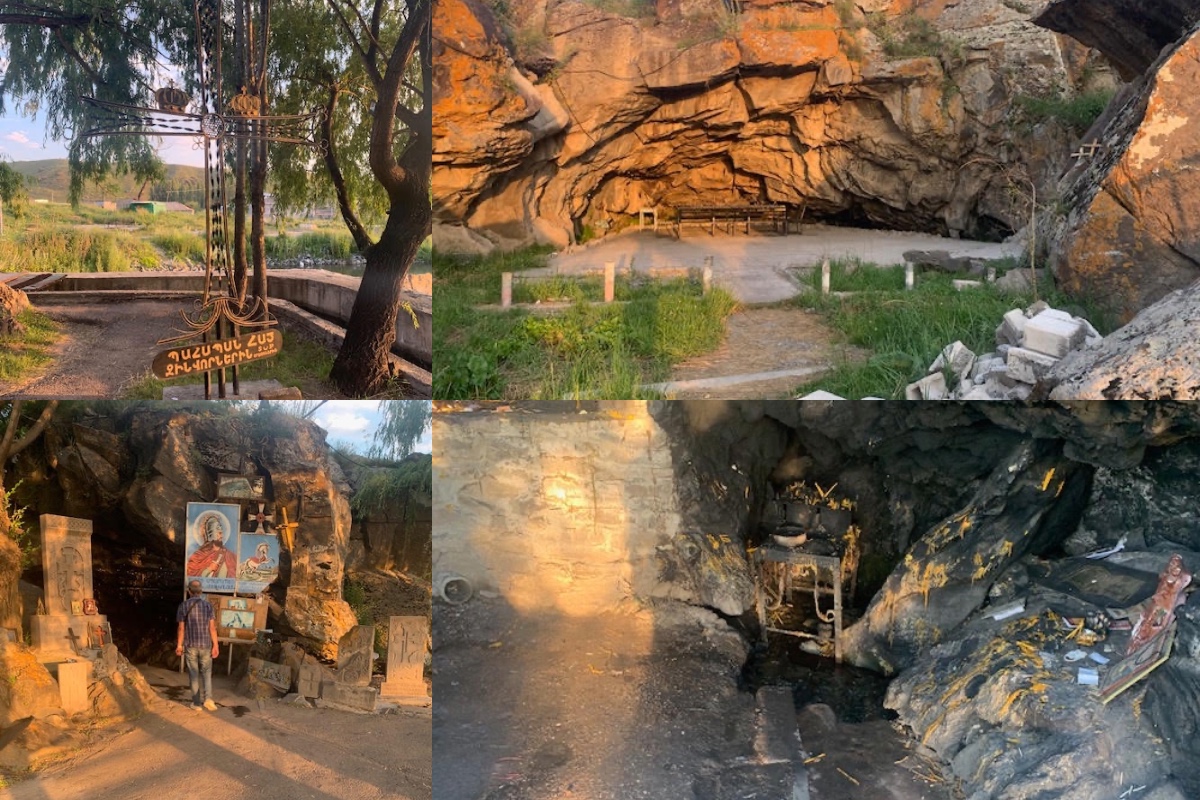
Honour and glory to all those who have given their lives for the Motherland – Hayastan!
Today we honour the brave soldiers of The Armenian Armed Forces with prayers, soul searching trips, and a deep sadness for the 5,000 soldiers who hugged martyrdom during the 44-Day War, while screaming to the enemy “Mahn imatsial Anmahoutyoun E,” eternal glory to our immortal soldiers.
5,000 Armenian warriors fought valiantly five armies on the multiple fronts of Artsakh;
Azerbaijan, Turkey, Pakistan, Israel, and Islamist mercenaries from Syria. Three Turkish Generals played a vital role in securing to Azeri troops an absolute dominance of Artsakh’s air space: Lieutenant General Sheref Ongay, Major General Bahtiyar Ersay, and Major General Goksel Kahya.
Six hundred Turkish officers/advisors were also supporting the Generals and coordinating UAV strikes, while chaperoning Azeri officers who became “busboys” and shoe shine boys complying, like obedient dogs, with every order issued by the Turkish Officers. Azeri Generals who dared to express their annoyance with the Turkish presence were dismissed from The Azeri Army, under the pretense that they were spies or incompetent fools. The most prominent example is the Azeri Colonel General Nejmeddin Sadikov.
More than two hundred Pakistani Officers were evaluating new military hardware sold to Azerbaijan’s Armed Forces, and instructing idiots about the proper use of advanced equipment that represented a serious challenge to Azeri soldiers with pea-sized brains.
Israeli Military Satellites and communication monitoring stations in Azerbaijan were securing advance intelligence about Armenian troop movements. Also passing to Baku communication intercepts, involving critical assessments of the decision making process of the political establishment in Yerevan, and the feedback relayed to the Prime Minister’s Office by Armenian field commanders in Artsakh.
Thousands of Islamist mercenaries from Syria were used as disposable cannon fodder to spearhead assaults on Armenian positions, simply because Azeri soldiers did not have the courage or the tactical skills to confront Armenian soldiers determined to defend, to the bitter end, the Fatherland.
During the final days of the war, Armenian soldiers were very close to achieving a decisive victory. On 06 Nov 2020, several high ranking officers, including Lt. Col. Artsrun Hovhannisyan, returned from Artsakh to Yerevan convinced that the Armenian Army is ready to launch a successful counter attack to liberate Shushi. For two days the counter attack was progressing extremely well despite heavy losses sustained by the Armenian Army in the process of dislodging the Azeri Army from Shushi.
Source: On Nov. 8 there was information from ministry that we were virtually “cleaning up” Shushi
01.02.2021 News AM – Armenia
A direct interference from The Office of The Prime Minister of Armenia brought the Armenian Army’s counter offensive to an abrupt end on No. 09, 2020 Nikol Pashinyan signed the “Trilateral Capitulation Agreement” declaring Aliyev as the winner of the 44-Day War.
5,000 brave Armenian soldiers were casually sacrificed by Pashinyan to save his political career.
We lost a war not because our soldiers refused to fight to the bitter end. We were betrayed by an enemy agent who hated his own nation.
Here is a statement that accurately reflects the character of Nikol Pashinyan:
“A nation can survive its fools, and even the ambitious. But it cannot survive treason from within. An enemy at the gates is less formidable, for he is known and carries his banner openly. But the traitor moves amongst those within the gate freely, his sly whispers rustling through all the alleys, heard in the very halls of government itself. For the traitor appears not a traitor; he speaks in accents familiar to his victims, and he wears their face and their arguments, he appeals to the baseness that lies deep in the hearts of all men. He rots the soul of a nation, he works secretly and unknown in the night to undermine the pillars of the city, he infects the body politic so that it can no longer resist. A murderer is less to fear.”― Taylor Caldwell, A Pillar of Iron
An here is the advice Taylor Caldwell has for Armenia:
“Wicked men are born every generation, and it is the duty of a nation to render them impotent. When you discover a man who seeks power for himself, out of hatred or contempt for his fellows, destroy him,”
― Taylor Caldwell, A Pillar of Iron: A Novel of Ancient Rome
Do you want this wicked man to stay in power beyond the elections of June 2026? You might be able to find the answer here.
Noubar,
Thanks for sharing this. in reading the responses, many are saying even if we re-took Shoushi, it ultimately would have been re-captured again by our enemies, as they simply have the greater resources. Not necessarily the will.
We will never know, as the true point you have made is there is indeed a traitor within.
Those who argue Pashinyan ultimately saved additional lives are missing the point, and I do not say this lightly, as any additional life lost is too much. But he simply caved, signed away everything, without any efforts made to protect our citizens, still living in Artsakh, and didn’t give a dam that we had many of our men in our enemies prisons.
This current leadership is bought and paid for by the west ,and if we leave him in power, more of Armenia will become our enemies.
Nobody wants Pashinyan in power after June.
The fear, though, is that Pashinyan, aided and abetted by the West, will rig the elections.
All that would have happened is that the war would have gone on for longer and Azerbaijan with greater resources would have eventually gained control the sushi counter attack is in the same as Steiner’s counter attack on Berlin 1945 , sadly for Armenia over Arktash the gig was up at least for this episode . It’s all too easy to go down to the blind alley of counterfactuals. Azerbaijan hired guns and Turkish overseeing just made it quicker.
Do not downplay the enemy’s strength and organization. Mr. Noubar Sarebian listed points leads us to conclude that Azeris were highly organized and thoroughly prepared. Armenians were fighting with 20th‑century weapons and strategy, while Azeris employed 21st‑century systems. There’s no doubt that in a true one‑on‑one conflict Armenians would have prevailed, but in reality we were outmatched and overwhelmed. “There is no greater danger than underestimating your opponent” Lao Tzu