Russian-Armenian military-technical cooperation: Current status and key developments
Russian-Armenian military-technical cooperation has undergone significant shifts since the 2020 Nagorno-Karabakh war. These changes unfold across a three-layered framework: first, at the local level, through Russia’s bilateral relations with each South Caucasus state; second, at the regional level, with new alignments involving larger powers; and third, at the strategic level, where Russia faces growing constraints in shaping regional processes. The article argues that Armenia’s gradual military-technical distancing from Russia results primarily from structural developments, including Russia’s declining regional capacity and Armenia’s increasing need to diversify its security partnerships.
Drawing on key elements of small-state behavior, the analysis shows how Armenia’s vulnerability, limited security buffers and shifting external environment have pushed it toward deeper engagement with Western actors. While this trajectory offers Armenia new opportunities, it also carries significant strategic costs the country will need to navigate as it redefines its long-term security architecture.
As Moscow focuses on the Ukrainian front, it has revisited its relations with Tbilisi as a potential counterbalance to its diminishing regional influence. At the same time, while military ties with Armenia have contracted — largely limited to maintaining Soviet-era weaponry — economic relations have improved. These factors have forced Armenia into a dilemma: balancing the diversification of military ties with its continued dependence on the Eurasian Economic Union (EAEU) and its broader geopolitical interests in the South Caucasus.
This paper examines the concept of small states and analyzes how Armenia navigates its military ties with Russia. It explores how Armenia’s position as a small state influences its strategic decisions, its balancing of regional dynamics and its security concerns amid shifting geopolitical alliances.
The 2020 Nagorno-Karabakh war not only created a power vacuum in the region but also triggered several tectonic shifts: Turkey’s entry into the region, Moscow’s shifting focus to the Ukrainian front and the loss of its grip on Yerevan — its main ally — amid Armenia’s diversification and deepening military ties with partners such as France, India, Greece and Cyprus.

Armenia’s military-technical realignment is a critical indicator of the shifting balance of power in the South Caucasus. It highlights how new actors are entering the region while traditional ones are being pushed out. As a strategic crossroads for the United States, the European Union (EU) and Russia, the South Caucasus has become a space where great powers seek to advance and accommodate national interests. The emerging balance will determine whether the region moves toward a period of stability or enters a new cycle of insecurity. Russia is already conceding influence and strategic positions it once considered nonnegotiable, underscoring the depth of the regional transformation.
To understand the current state of military-technical cooperation between Yerevan and Moscow, it is essential to examine how it functioned in the past, how it differs today and how these developments align with small-state theory.
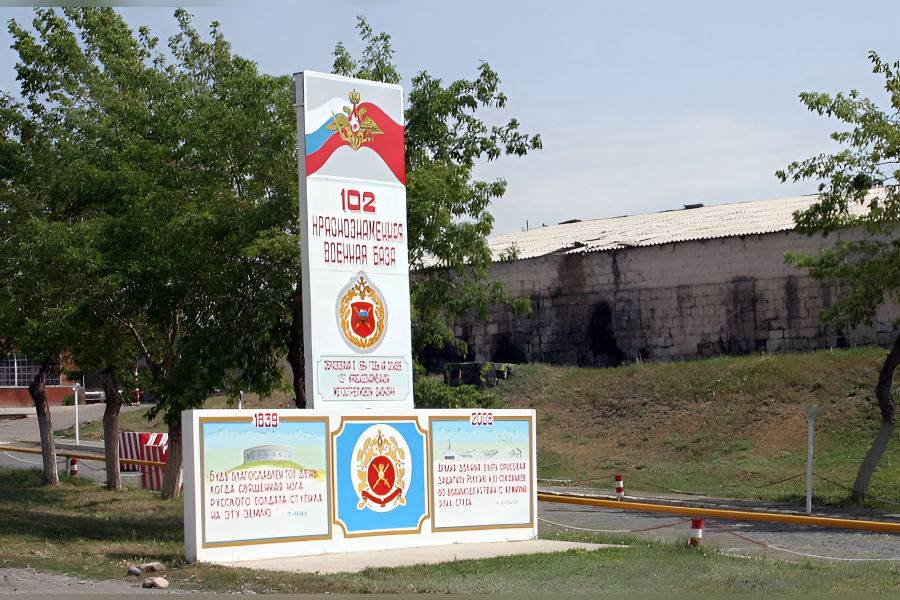
Russian-Armenian military-technical cooperation has been central to their strategic alliance since 1992, with Armenia’s security heavily reliant on Russia. The 102nd Russian military base in Armenia has played a crucial role in border security, particularly along the border with Turkey. Over the years, cooperation has included defense agreements, joint military exercises and the provision of Soviet-era and modern weaponry within frameworks such as the Collective Security Treaty Organization (CSTO) and bilateral agreements.
In recent years, Armenia has drastically reduced its military-technical cooperation with Russia. This shift is closely tied to Russia’s failure to fulfill its obligations under the 1997 bilateral agreement—first during Azerbaijan’s incursions in 2021 and 2022, and later during the 2023 takeover of Nagorno-Karabakh. A few years ago, Armenia sourced more than 90% of its military equipment from Russia; by 2025, that figure had fallen below 10%. India and, to a lesser extent, France have emerged as Armenia’s primary defense partners.
Armenia has also frozen its participation in the CSTO, citing the bloc’s failure to support Armenia in the face of Azerbaijani military aggression. Prime Minister Nikol Pashinyan later announced the withdrawal of Russian border guards from Zvartnots International Airport and from the Agarak border crossing on the Armenia-Iran border in late 2024. The departure of Russian forces highlighted the widening rift between the two countries and marked a critical moment in Armenia’s defense policy as it balances its military ties with Russia while diversifying partnerships with India, France and other global players.
Several measurable aspects of Russian-Armenian cooperation have transformed: Armenia’s refusal to align with the Russian-led military bloc, the reduction of Russian weapon imports from 90% to 10%, likely aimed at preserving the current Russian weaponry still stored in Armenia’s military depots and the gradual minimization of Russian troop presence in Armenia.
Given Armenia’s limited military capabilities, its strategic behavior aligns with small-state theory, which holds that small states often prioritize political and economic factors over military-political ones1. This is evident in Armenia’s decision to distance itself from the CSTO while continuing cooperation within the EAEU. Despite political tensions, Armenia’s economic ties with Russia have remained strong. By 2024, bilateral trade reached $12.4 billion, up from $2.5 billion in 2021. Russia remains a key destination for Armenian exports and a primary source of strategic imports such as wheat.
However, this dependence is beginning to erode. In November 2025, Armenia received its first shipment of 1,000 tons of Kazakh wheat transiting through Azerbaijan, a development President Kassym-Jomart Tokayev described as carrying “special political and economic significance.” While this new route does not yet replace Russian wheat supplies, it signals Armenia’s attempt to diversify even its most sensitive import sectors by opening channels that bypass traditional Russian-controlled corridors.
The reduction in meetings among high-ranking officials and weakened cooperation with institutions such as Rostec, the Russian Defense Ministry and Rosoboronexport further reflects a growing alienation in military-technical ties. Earlier this year, Armenian Defense Minister Suren Papikyan announced an agreement between the finance ministries of Russia and Armenia to reduce Armenia’s national debt as compensation for undelivered arms; experts estimate the value of unfulfilled contracts at $250 million to $400 million. While Papikyan confirmed the validity of these agreements and acknowledged successfully executed military-technical agreements, he declined to comment on potential new defense contracts.
To understand Armenia’s behavior toward Russia, it is essential to consider small-state theory as explored by realists such as Hans Morgenthau, Kenneth Waltz and Stephen Walt. These scholars compare small states with great powers through structural realism and the balance-of-threat theory. Small states often align with larger imperial powers for protection, but their strategy depends on factors such as proximity to threats, access to external support and the aggressiveness of adversaries.2
Small states rely on external aid — such as the EU-Armenia Resilience and Growth Plan and large-scale U.S. assistance — have limited security buffers, including the EU Monitoring Mission in Armenia and U.S. involvement in securing a strategic transport route in the Armenia-Azerbaijan peace deal, and view their vulnerability as inevitable. Armenia’s pivot toward Western involvement is thus a strategic necessity rather than an ideological shift3.
Considering the competing influences in the region — and Russia’s preoccupation with the Ukrainian front, which gave Armenia space to pivot and diversify — Western partners provided the key elements of support characteristic of small-state behavior and backed them with decisive action.
Small states perceive vulnerability as structurally unavoidable, often placing them in a dilemma between bandwagoning with great powers (a path of least resistance) or balancing against them (which requires political will and military strength4). Armenia has historically leaned toward bandwagoning with Russia. Despite Russia’s diminishing geopolitical and military presence in Armenia and the broader region, this pattern persists. A recent example is Pashinyan’s attendance at the military parade in Moscow commemorating Victory Day, followed by a working visit to Moscow, underscoring Armenia’s continued alignment within Russia’s sphere of influence even as it diversifies its alliances.
These structural constraints — sanctions on Russia, military overstretch in Ukraine and Moscow’s growing reliance on Azerbaijan as a transit route for energy flows — explain Russia’s shift toward Baku as a key regional partner. Taken together, Russia’s unwillingness and inability to support Armenia stem from these underlying systemic pressures.
Armenia is at a pivotal crossroads. It is attempting to transition from a bandwagoning strategy to a balancing one, taking concrete steps toward diversification, including Eagle Partner exercises in 2023, 2024 and 2025 with the United States, and granting Washington exclusive access to a strategic “Trump Route.” This shift has heightened Moscow’s concerns and become another irritant in Armenian-Russian relations.
Geopolitical interests are also diverging: the United States is driven primarily by economic goals in the South Caucasus, while the EU — particularly France — emphasizes political and security concerns. This dynamic places the North-South Corridor in a state of uncertainty, as Armenia may prioritize the so-called Trump Route for International Peace and Prosperity.
Based on the concept of small-state behavior, military-technical cooperation with Russia has statistically declined in recent years, while a Western trajectory has proven more efficient and stable. Given regional and global instability, Armenia is attempting to pivot toward the West. However, deepening these ties will come at a cost. Navigating this environment may require Armenia to reassess its long-term participation in the CSTO and the EAEU, carefully evaluate the implications of joining the Shanghai Cooperation Organization (SCO) and closely follow Georgia’s EU integration trajectory, which the EU increasingly views as a regional benchmark.
Ultimately, it is the tension between internal stability and external ambiguity that defines why, and how, small states like Armenia take initiative in foreign policy5. In the foreseeable future, Russia is likely to lose nearly all of its military-political influence in Armenia, remaining tethered primarily through economic ties. The upcoming 2026 parliamentary elections will be decisive: they will determine whether Armenia institutionalizes its Western-oriented diversification strategy or reverts to a more traditional, Russia-oriented security posture. The political mandate that emerges will play a critical role in shaping Armenia’s evolving security architecture and clarifying the extent to which diversification becomes a long-term structural reorientation.
1. military-political ones: Charles E., Jacovides A. & Mata’afa, F.N. A Future for Small States: Overcoming Vulnerability. London: Commonwealth Secretariat. 1997. p. 9. ↩︎
2. adversaries: Scriba, A. S. 2014. Realism and the Politics of Small States in the 21st Century. Politics and Society 3: p. 347–357. (In Russian: Скриба А. С. Реализм и Политика Малых Государств в XXI веке. Политика и общество, № 3, 2014, с. 347–357). ↩︎
3. ideological shift: Rothstein R. L. Alliances and Small Powers. New York and London: Columbia University Press. 1968. p. 29. ↩︎
4. military strength: Gunasekara S.N. Bandwagoning, Balancing, and Small State: A Case of Sri Lanka // Asian Social Science. Vol. 11. No 28. 2015. p. 217. ↩︎
5. foreign policy: Scheldrup M. Lilliputian Choice: Explaining Small State Foreign Policy Variation. University of Colorado, Boulder. 2014. p. 52-54. ↩︎