




YEREVAN—In a significant development, Armenian Prime Minister Nikol Pashinyan and Azerbaijani President Ilham Aliyev, with U.S. President Donald Trump as mediator, signed a preliminary peace agreement at the White House on August 8, 2025. The deal has stirred uncertainty and concern in Yerevan, with many Armenians viewing it as a concession imposed under intense external pressure and fearing threats to the country’s sovereignty and constitutional integrity.
Days after the trilateral agreement was signed, Special Representative of the President of Azerbaijan Elchin Amirbekov announced that Baku expects concrete legal steps from Yerevan following the Washington declaration.
“The document outlines provisions for the pre-signing of a peace agreement between Armenia and Azerbaijan and affirms the necessity of subsequent steps toward its full ratification,” Amirbekov stated. “In other words, for the peace agreement to move forward, Baku expects Armenia to amend its constitution to eliminate any remaining territorial claims toward Azerbaijan.”
Amirbekov emphasized that constitutional alignment is not only a political formality but a foundational requirement for lasting peace. He also highlighted another key clause in the trilateral declaration: the obligation to open transport and communication links between the two nations. Specifically, he stressed the importance of ensuring “unimpeded” connectivity between Azerbaijan and Nakhichevan—one of the most contentious and strategically critical aspects of the corridor agreement.
The governments of Armenia and Azerbaijan released the text of the so-called Agreement on the Establishment of Peace and Inter-State Relations. While presented as a peace agreement, the document imposes a series of binding commitments on Armenia that critics argue reflect an imbalance in favor of Azerbaijani interests.
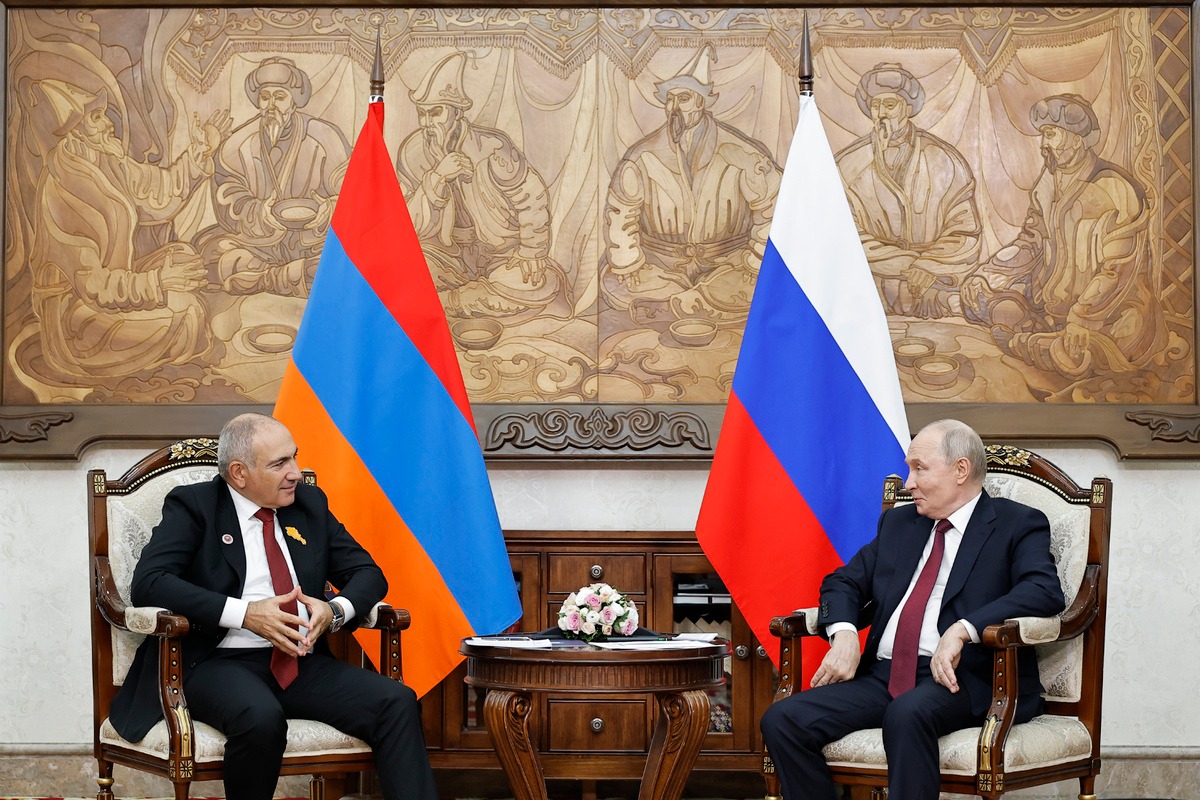

Under the terms of the agreement, Armenia is required to officially recognize Azerbaijan’s territorial integrity, including all Soviet-era borders, and renounce any current or future territorial claims. The agreement also prohibits either party from supporting movements or actions that challenge the other’s sovereignty, effectively barring Armenia from engaging on issues related to Artsakh. Diplomatic relations are to be established, and all legal disputes, international claims and pending cases between the two sides must be withdrawn within one month of ratification.
The text further obliges Armenia to prevent any third-party military presence along its border with Azerbaijan and to accept a framework for “unimpeded” regional connectivity—widely interpreted as a concession to Azerbaijani demands for a corridor to Nakhichevan. While it mandates cooperation on issues like missing persons from previous conflicts, it does not specify mechanisms for justice or accountability. Additionally, the agreement states that any internal laws conflicting with its provisions will be overridden, and that the English version of the text will take precedence in case of interpretation disputes. The agreement will take effect only after both countries complete their internal ratification processes.
At the White House on August 8, Trump hailed the gathering as a “very historic peace summit” between Pashinyan and Aliyev. Flags, handshakes and a carefully choreographed ceremony accompanied the signing of a joint declaration promising to end hostilities “forever,” open diplomatic relations, facilitate trade and tourism and mutually recognize each nation’s sovereignty and territorial integrity.
At the heart of the agreement is what Trump dubbed the “Trump Route for International Peace and Prosperity”—a transit corridor that will allow Azerbaijan direct access to Nakhichevan through sovereign Armenian territory. Trump, who referred to the project as a “corridor” three separate times during his remarks, emphasized that the route would be developed through an exclusive 99-year U.S.-Armenia partnership, with the expectation—per his words—that “after 99 years, they will extend it.”
President Trump framed the initiative as a win-win, backed by significant U.S. investment in the region’s infrastructure, along with new bilateral agreements with both Armenia and Azerbaijan in energy, trade and technology. Notably, the summit also saw the lifting of long-standing U.S. restrictions on military-technical cooperation with Azerbaijan, including the repeal of Section 907 of the Freedom Support Act, which had barred direct aid to Baku.
President Aliyev called the day “historic,” celebrating what he described as decades of war ending and the newfound freedom to connect with Nakhichevan without obstruction. Prime Minister Pashinyan, for his part, labeled the declaration a “milestone” and echoed Trump’s economic optimism, citing infrastructure and investment opportunities, though he offered little detail on how Armenia’s sovereignty would be enforced on the ground.
Despite the diplomatic smiles and economic promises, many in Armenia view the summit—and the agreement—as a capitulation under pressure.
While Azerbaijan walked away with concrete gains—including the repeal of Section 907, direct access to Nakhichevan and the final dissolution of the OSCE Minsk Group—Armenia did not secure the return of its prisoners of war, nor did it regain control over its sovereign territories currently occupied by Azerbaijan. The issue of the forced displacement of Armenians from Artsakh was notably absent from the summit, with all three leaders pointedly refusing to answer press questions on the matter.
In the aftermath, Armenian Foreign Minister Ararat Mirzoyan attempted to reassure the public by asserting that any infrastructure developed under the agreement would fall within Armenia’s sovereign jurisdiction. “There is no room for different interpretations here,” he said, referring to Article 3 of the declaration. “Everything will be implemented within the framework of our territorial integrity, sovereignty and jurisdiction.”
However, critical questions remained unanswered, such as the fate of Armenian prisoners of war, the return of the occupied territories of Armenia and the rights of forcibly displaced Armenians from Artsakh. At the same time, practical questions about the proposed transit corridor’s implementation linger: Who will regulate Azerbaijani entry and exit on Armenian soil? Will Armenian authorities have full control over passport and customs procedures? Will Armenian forces be physically present along the corridor? Who will inspect Azerbaijani cargo? These unresolved issues have left many in Armenia questioning not just the viability of the agreement, but the cost at which it was reached—and whether sovereignty, once again, has been traded for uncertain promises.
Murad Papazyan, a member of the Armenian Revolutionary Federation (ARF) Bureau and co-chairman of the Coordinating Council of Armenian Organizations of France, strongly criticized the Washington agreement, arguing it “benefits Azerbaijan and Turkey” while significantly weakening Armenia.
According to Papazyan, the agreement endorses the construction of the Zangezur corridor, which he described as “a serious encroachment on the sovereignty and security of Armenia.” He emphasized that the corridor would strip Armenia of control over part of its internationally recognized territory, compromise its southern border with Iran and be managed by Turkish forces with potential NATO involvement—posing what he called “an existential threat” to the country.
Papazyan framed the corridor as a key element of a broader “pan-Turkist strategy” long pursued by Ankara and Baku through military pressure and diplomacy. He criticized Prime Minister Nikol Pashinyan for making “unilateral concessions” without securing any reciprocal gains, such as the release of Armenian prisoners, the return of displaced Artsakh residents or a withdrawal of Azerbaijani troops from Armenian territory.
“Such passivity is part of an already familiar pattern,” Papazyan noted, accusing Pashinyan of weakening Armenia’s statehood and undermining national security. He also expressed concern over deeper geopolitical shifts, including rapprochement with Turkey, refusal to pursue international legal actions against Azerbaijan and even questioning of the Armenian Genocide. “Under the guise of regional peace, this program serves the interests of Ankara and Baku,” he warned, calling the Zangezur corridor “a strategic split opened in the heart of the country.”
Former Foreign Minister of Armenia Vartan Oskanian also condemned the U.S.-mediated agreement as a “surrender of sovereignty” disguised as diplomacy. He particularly denounced approval of the so-called Zangezur corridor, which would allow Azerbaijan unimpeded access across Armenian territory under the control of a third country, without customs checks or border inspections.
“Only in the alternate reality of Pashinyan’s subordinates can the effective handover of the Zangezur corridor be portrayed as a ‘strategic victory,’” Oskanian wrote. According to him, allowing another country to control a corridor stretching across the full width of Armenia—without any regulatory oversight—amounts to leasing part of the nation’s sovereignty “for at least two generations.” He added, “This is not diplomacy—it is the sale of national dignity.”
Oskanian dismissed government claims that the agreement does not harm Armenia’s sovereignty and that Azerbaijan “did not get what it wanted,” calling such statements “an insult to the intelligence of the Armenian people.” He argued that in any serious understanding of statehood, no nation would concede unrestricted transit through its territory on a foreign power’s terms and still claim to have preserved sovereignty. “This is not the normalization of transport links,” he warned, “but a corridor of dependence and humiliation, driven through the heart of Syunik. It is a deep wound carved into the body of Armenia.”
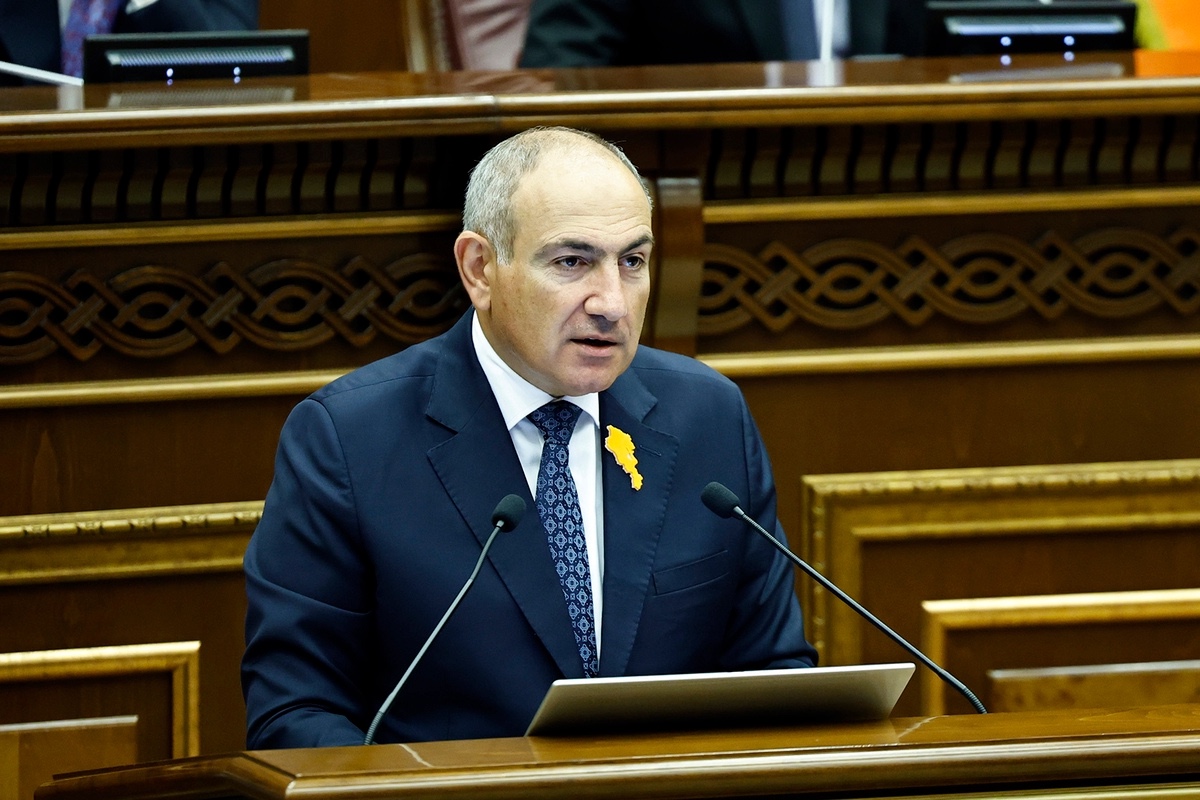
The “Armenia” faction of the Armenian parliament characterized the commitments made by Prime Minister Nikol Pashinyan and the pre-signed Armenia-Azerbaijan agreement as “bearing no relation to real peace” and introducing “existential threats” to Armenia and the Armenian people. The faction accused the government of attempting to “legitimize ethnic cleansing and genocidal policies carried out by Azerbaijan against the Armenians of Artsakh,” including forced displacement, hostage-taking and sham trials. The statement also condemned the sidelining of the OSCE Minsk Group and the removal of the Artsakh issue from the international agenda.
“The agreement does not lift the decades-long blockade or halt Azerbaijani aggression,” the faction stated, warning that it instead grants Azerbaijan “unimpeded access through Armenia’s sovereign territory,” creating new conditions for continued hostilities. The group pointed to articles within the pre-agreement—specifically Articles 8, 9 and 15—that they claim could be used to criminalize participants in the Artsakh liberation struggle and shield Azerbaijani war crimes from accountability. “Even principles such as mutual non-interference and territorial integrity, nominally included in the document, come with no international guarantees and rely entirely on Baku’s goodwill,” the statement read.
Calling Pashinyan’s approach a “false peace narrative,” the faction accused the prime minister of abusing his constitutional powers and pursuing foreign interests at the cost of Armenia’s rights. “We reject this conduct and the imposed concessions,” the statement concluded, urging a national course correction to restore dignity and secure Armenia’s sovereignty.
Meanwhile, the National Assembly of the Republic of Artsakh released a joint statement from five parliamentary factions, expressing deep concern over the international community’s failure to respond to Azerbaijan’s aggression and the collapse of the peace process. The factions praised the historical role of the U.S. as an OSCE Minsk Group co-chair but condemned the group’s effective abandonment of its mediation responsibilities following Azerbaijan’s 2020 war and the subsequent forced displacement of Armenians from Artsakh.
The statement lamented that “instead of offering solutions,” international powers chose “the easiest path” and “turned a blind eye to crimes against humanity.” It criticized the dissolution of the Minsk Group as a blow to diplomatic credibility and warned that regions like Artsakh are being used as “bargaining chips in greater geopolitical games.”
The Artsakh parliamentarians asserted that any normalization package between Armenia and Azerbaijan must include three non-negotiable points:
- The safe and dignified return of Artsakh Armenians to their historical homeland;
- Protection of Artsakh’s cultural and spiritual heritage;
- The release of Armenian prisoners, including Artsakh’s political and military leadership, currently held in Azerbaijani prisons.
“Such a course of events cannot lead to the long-awaited peace the region desperately needs,” the statement read. It concluded with a stark warning: “What appears to be a diplomatic breakthrough today will only result in deeper disappointment for genuine stakeholders of real peace.”



In the end, it is the Armenians who must fight for Armenia.
Pashinyan has capitulated to the Turks.
If Armenians do not rise up then Armenia is lost.
As if there’s an alternative?
Armenians? Do you mean all the diaspora ARF men and women fighting? Because they didn’t respond during the first NK war nor the war in 2020 (maybe a handful and only from Beriut), so do you think they are going to show up military ready now? I have some friends who bought in the 1st and 2020 wars who are training in Yerevan. It’s nice to make patriotic videos in Yerevan once a year during April 25, it’s another to put soldiers on the ground to put these patriotic chest beating to the test.
Azerbaijan has been clear that any return of Armenians would be leveraged against return of Azeris who lived in Armenian SSR. There seems to be an ignorance of this fact. Besides in such a circumstance such persons would be in a dystopia it simply won’t be the Artaskh they knew, all signs in Azeri, Alyiev cult established firmly, churches will be the spurious Caucasian church supported by Baku etc and it would surely claim need to protect any Azeris in Armenia . Sadly it’s best to formalise the de facto segregation
Pashinyan agreeing to these terms without a return of the Armenian POWs and the withdrawal of Azeri control of the territory within Armenia is bordering on a treason. Recall Trump telling Zelensky ‘you don’t have the cards’; this time Pashinyan folded like a ‘cheap suit’.
Really? I was part of a team who managed to attain the release of an Armenian journalist via the Sakharov Foundation and one of its board members. Even the US with all its power cannot always secure the release of prisoners, and it’s almost always behind the scenes. I’m not sure what the Pashinyan government is doing though Trump mentioned the prisoners without being prompted. It wasn’t demands from a powerless government that freed this journalist — it was persistence, hard work, and ‘relationship’ building internationally quietly with incredible solidarity in our mission.
PS Why is Papazyan insist on calling it a ‘corridor’? Isn’t that Azeri wording? And who is Oskanyan to make these statements. Has anyone professionally inviewed him to find out what he did for Arsakh during two administrations as Foreign Minster?
Let’s be clear: this deal was not about bending the knee — it was about making sure Armenia still has knees to stand on. For more than three decades, Armenia has been locked in a cycle of wars, blockades, and isolation that have cost lives, forced more than 1.3 million Armenians to flee the homeland, bled the economy dry, and left Armenia more vulnerable each year. Standing still was not an option. Signing this agreement was the only way to break that deadlock and open a path to actual stability.
People screaming “sellout” seem to forget Armenia lost the 2020 war and that the battlefield reality since then has been brutal. You don’t negotiate from a fantasy; you negotiate from the ground you’re standing on. And the ground was shifting against Armenia. Armenia had a choice: either secure a deal that locks in peace, brings in major U.S. investment, and opens Armenia to trade routes — or keep feeding its young people into another unwinnable war while the world moves on without us.
The so-called “Zangezur corridor” hysteria? Here’s the truth — it’s not a foreign-controlled strip carved out of Armenia. It’s infrastructure under Armenian sovereignty, regulated by Armenian law, and built with funding that will boost our economy. We’re not giving away territory; we’re monetising geography. Azerbaijan can’t just roll trucks in without our say-so, and anyone suggesting otherwise is deliberately fearmongering for political gain.
As for the constitution change — let’s stop pretending this is some unique betrayal. Every serious country in the modern world recognises internationally defined borders. Bringing the Armenian constitution into line with reality removes a constant excuse for Azerbaijan to escalate and puts Armenia on firmer legal ground internationally. That’s called statecraft, not surrender.
Yes, the deal doesn’t solve every single issue today — no peace agreement ever does. Prisoners of war, displaced persons, cultural heritage — these are ongoing negotiations, and they have a far better chance of resolution when Armenia is not under fire and when it has open channels to talk.
The loudest critics here aren’t offering an alternative beyond “fight more, lose more.” That’s not strategy — that’s emotional grandstanding dressed up as patriotism. Armenia chose a different path: one that keeps Armenia alive, opens its borders, strengthens its economy, and brings in allies we can actually rely on. It’s not perfect, but it’s a hell of a lot better than the alternative: national ruin and loss of statehood wrapped in the flag.
The peace framework is not about giving up Armenia. It is about giving Armenia a chance to have a future. It is about protecting Armenian sovereignty and territorial integrity, it is about placing Armenia on a sustainable path and chartering a trajectory to becoming a viable state.
Hagop, this is by the most intelligent comment here. My Armenian wife hates Pashinyan and so do her family. But I can’t help but feel Sarksian and Kocharyan might have sold Armenian out sooner. Pashinyan has been between a rock and a very hard place ever since the Velvet Revolution. Yes, they got nothing on prisoner return, but ‘monetizing’ the Zangezur Corridor, is the best way of viewing it. It looks to me like Artsakh is gone. That is appalling, but it is now the reality. If there were a vengeful Old Testamant God, he might smite the Azeri psychopaths and Moses-like lead the People to the Promised Land. But that’s not going to happen. Move on and keep the memory of the Armenian Genocide alive, never letting up on the descendants of the Ottoman Empire.
How would you feel about slicing up the USA by enemies in the north and south? Just wondering….
I agree with your reasoning. There’s less chance of war when healthy capitalism keeps countries busy wanting to prosper from mutual partnership. There’s much less chance of a future military conflict if Armenia serves as a “shuttle” for a successful trade route, while being a legally designated collector of proceeds in the process. It might even lead to a revolutionary uprising in the Iranian regime, and free its people. Ultimately, this strategy will permanently stabilize the region, including areas in the further South all the way to Israel. Even Russia may shift its geopolitical stance and domestic policies once Putin is gone.
I also think we should be on the path to be more secular as a nation, as too much emphasis on religion will keep our people stuck in the “1st Christian nation” mindset, which, to be honest, is not as powerful or relevant today. The world is becoming less religious and more technologically up to date. I see Armenia becoming a Western state, which will welcome the rise of business and entrepreneurship, whether it comes from Armenians or otherwise. Overall, this is good news for our people.
Soberly and accurately stated. It’s the tension between short-term survival and long-term justice that makes the conversation so painful and contentious. Thank you Hagop.
Maybe it wasn’t such a good idea to take the word of a con artist-turned-celebrity who used racism to get elected president.
In many ways it’s easier to broker from afar with no common boundary.
Highlighting how Russia has betrayed taken advantage and mislead Armenia and vis a vis it’s sanctimonious position about Armenia post 2018 and it’s own actions in Ukraine exposed it to be gross hypocrite towards it’s own legal ally and it’s failure to uphold responsibility it chose assume in 2020 with the expectation that it could keep the issue festering is plainly stating facts and not some weirdo ad hominem. Yes for the record Armenia was obstinate in many ways post 1994 and the disaster in 2020 exposed this.
I never in my life heard the word Russophobe in my life before this forum. The fact that you are so sensitive to how Russia is presented in an Armenian forum only shows that you are truly a Russian. Nothing wrong with that but don’t act like a neutral 3rd party to make what you are saying sound like it’s not slanted towards a Russian point of view. Stop hiding who you are, only people who are scared hide who they are.
Getting complex in your relationship @ montzrel
USA supporting Armenia provides some protection against Turkish and Azeri aggression, an Armenia close to Russia would be fair game otherwise.
Armenia has worked out, after the losses in 2020 and 2023 that it isn’t to Russia what Israel is to the USA , or was to the Kosovo Albanian cause in this respect it was in a fairyland when many seemingly did out of desperation regarding Turkey and Azerbaijan revere Russia.
An interesting aspect will be with Georgia which stands to lose transit between Turkey and Azerbaijan as a result of this.
@Charles
Armenia missed its opportunity to become a major transit country, because of the conflict with Azerbaijan and Turkey over Artsakh, and was deliberately blocked, sanctioned and bypassed by them for geostrategic reasons, when they built the Baku–Tbilisi–Ceyhan pipeline and the Baku–Tbilisi–Kars railway, also with Western support and also to reduce any dependence on Russia and to have access to Central Asia and its hydrocarbon resources. Since two piplines (the other one is the Baku–Supsa pipeline) and the railway are passing through Georgia, that country won’t lose its transit connections and revenue, and the BTC pipeline won’t and can’t be relocated to Armenia like that due to its very high cost.
It is Azerbaijan which desperately wants a land link to its Nakhichevan exclave and of course both it and Turkey harbor pan-Turkic dreams of having a continuous land link to each other and to the Turkic states of Central Asia. Azerbaijan of course dreams of annexing the “Zangezur Corridor” and Turkey of controlling it as well.
Economically speaking, Armenia will only receive bread crumbs from the Trump “peace treaty”, and won’t even become a “transit country” like Georgia, according to the provisions of this treaty, provided it is not violated at all before the ink is dry; and Azerbaijani rail connections will be of little use for Armenians, just because travelling by train to Meghri from Yerevan and back, via Nakhichevan is shorter and faster, as it was the case before the Artsakh conflict broke out.
Even if Armenia wholly converted to Evangelical Protestantism or to Judaism, or 50/50 to both, it would still not garner the attention and support of American Evangelical Protestants and American Jews, nor of the United States and Israel, and nor benefit Armenia. That Armenia is Christian and the first Christian nation, just doesn’t sell with these groups, especially with the Evangelical Protestant crowd, who have shown indifference and most of whom have never even heard of Armenia and Armenians. Many intolerant Evangelical Protestants, regard other Christian denominations as alien (especially the Eastern Christian Churches, like the Armenian Apostolic Church, the Coptic Church or the Eastern Orthodox Churches), even heretical and one step short of paganism. Armenian organizations and lobbies still naively entertain the idea that Armenians being Christian, will garner Armenia sympathy and support, especially from that group, when none occurred when Armenia and Artsakh were attacked, Armenians were ethnically cleansed and Armenian churches, monasteries and cemeteries in Artsakh were destroyed by Azerbaijan; and in the sympathy department, few and far between, usually by the few Armenophile U.S. politicians. As always, national interests and Machiavellian Realpolitik come first.
The Russophobes on here, some of whom are clearly paid, all suffer from the same delusion, that Armenia is a country that matters; that Armenia is in the heart of Europe, somewhere near Austria; that Armenia can, one day, be a member of the EU and Nato.
The reality :
Armenia forms Europe’s extreme south-east border with Asia; that it has two Asiatic Turkish hordes on its borders.
Armenia is mountainous and landlocked with no coastline and is very hard to access.
The whole of Armenia’s economy is based on the supply of cheap energy that is very heavily subsidised by Russia, if Armenia had to pay world market prices, it would, quite simply, collapse.
Armenia will never be a member of Nato as the Turks, who have the second largest army in Nato, will always veto Armenia’s application.
Armenia will never be a member of the EU. The Turks applied to join the EU forty years ago and are still not members, they will go apopletic if Armenia became a member whilst they’re still not. The EU will not offend Turkey so Armenia will never be a part of it.
The Turks matter more to the EU and America than Armenia does.
Russophobes deal in fantasies that Armenis must always resist.
I hope one day Armenia joins NATO and both Turkey and Armenia can look to the future together and become strategic partners. We share more in common then any other neighbour, from traditions to foods. Russia will be busy in Ukraine for the next 50 years, look to the West instead for properity.
@Turkish Friend From Australia
You are either very naive and are looking at things through rose-tinted glasses, or you are mocking. What you have posted is laughable and absurd, because not in a million years would Turkey allow Armenia to become a member of NATO, nor become “strategic partners” on an equal basis, nor share any economic benefits with Armenia.
Why on earth would Armenia subjugate itself to Turkey – of all countries – after being subjugated, plundered and persecuted for eight centuries, culminating in the Armenian Genocide, which you and more than 99% of your compatriots don’t even acknowledge? Go and post your drivel elsewhere.
Most Americans don’t know or care about Armenia having their own lives to live
Russia had some interests but sought to monopolise and let Armenia down in order to ingratiate with Azerbaijan and to entice it away from Turkey and all would be fine and dandy as it was in the USSR, who was don’t need you anymore gullible slav to Russia now it’s got what it wanted which has been tricked like the USSR was by Turkey a century ago.
I don’t have any first cousins so Tyrone must be removed somewhat.
It is not the end of the Armenian world! There is a formidable front against this deal led by Catholicos Karekin II Nersisyan, his brother the prelate of Moscow Yezras, former presidents Kocharian and Sargsyan led opposition, Archbishops Galastanyan and Achabahian, Russian Armenian oligarchs such as Samvel Karapetyan and Ara Abrahamyan This front appears to have vast financial resources. They can put a coalition together and in 10 months , on June 2026, bring about a new government in Armenia that will scrap this deal and chart a new course that will have the best interest of Armenia and will placate the Diaspora segment who opposes the American brokered peace deal and the TRIPP.
It’s been 7 years and Pashinyan is still in power. We deserve all the bloody pages in our history. Any other people with a spine and a brain would have gotten rid of this Western financed and Turkish led traitor right after the defeat in 2020.
Where is the outrage in Armenia? Where are the protests in the diaspora? Where is the ARF? Where are our “patriots”? Busy watching porn? Remember how we treated Sargayan’s protocols 15 years ago? It’s been 7 years and Pashinyan is still in power. We deserve all the bloody pages in our history. Any other people with a spine and a brain would have gotten rid of this Western financed and Turkish led traitor right after the defeat in 2020. The only hope for Armenia still resides in Russia. Pray for the day Moscow completes its task in Ukraine and returns its attention to the south Caucasus. Pray for the day Moscow annexes Armenia and puts this nightmare known as “independence” behind us. At the end of the day, Ivan will come back and Pashinyan’s “triumph” will be shortlived.
Average Russian treats YOU like a lesser human, because you are an Armenian. The same can be said of Russia regarding Armenia as a whole. Haven’t you had enough being a vassal to the Russian state, who keep consolidating their power while killing our people amid creation and maintenance of chaos in the South Caucasus. You want to be a Russian slave, go for it. Putin is a war criminal who deserves to rot in prison crafted in eternal hell.
I was heavily misguided about this man, and about Russian people. We will become a Western state, whether you like it or not. Our people have the business acumen to survive into the next phase of development of our historic homeland. Capitalism will help us part ways from Neo-Communist Russia. We will prevail. With or without Russophiles. I don’t hate the Russian people, but I want nothing to do with them while they maintain the current genocidal regime. Enough is enough.