Aren Alaverdyan: The hearing child whose native language is sign language
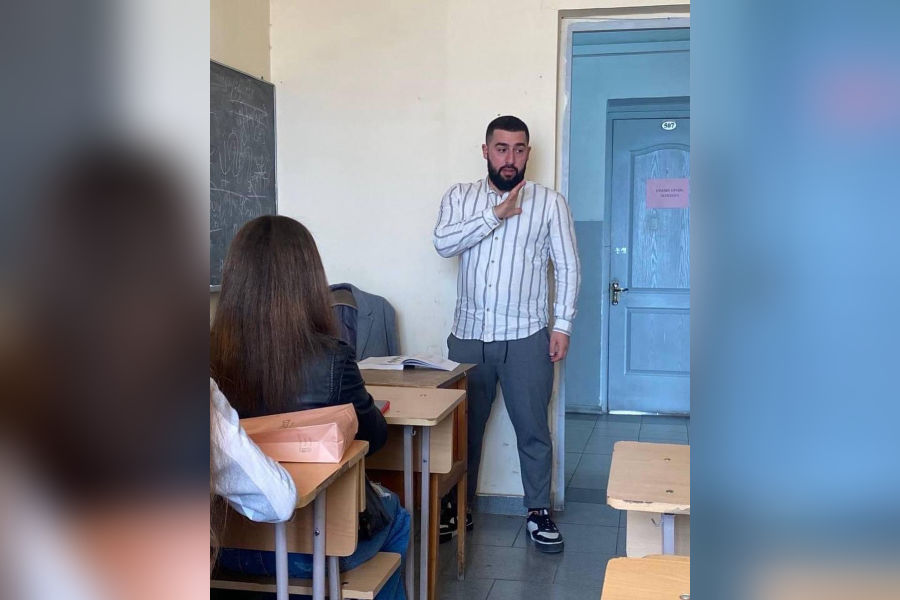
December 3 marks the International Day of Persons with Disabilities, a reminder of the global need for inclusion, accessibility and human rights. In recognition of the day, the Weekly profiled Aren Alaverdyan, who uses his lived experience to bridge the hearing and deaf communities, emphasizing that true inclusion starts with the right to communication and recognition of culture.
Alaverdyan is a hearing child of deaf parents whose native language is sign language. He is a history and social studies teacher, a surdopedagogue (a specialist in deaf education) and an active blogger. He works to raise awareness about education, accessibility and community issues, connecting the worlds of hearing and non-hearing people.
“I grew up in an environment where sign language was not only a means of communication but also my first language, my home, the main part of my identity,” Alaverdyan told the Weekly. Growing up with hearing-impaired parents taught him to perceive the world not only with his ears but also “with [his] eyes: with attentiveness, sensitivity and the ability to perceive people more deeply.”
This experience taught him to value all forms of communication, which gave him a sense of responsibility for inclusion. It also inspired his desire to make education and information accessible. As a teacher, it helps him be more understanding and patient with children.
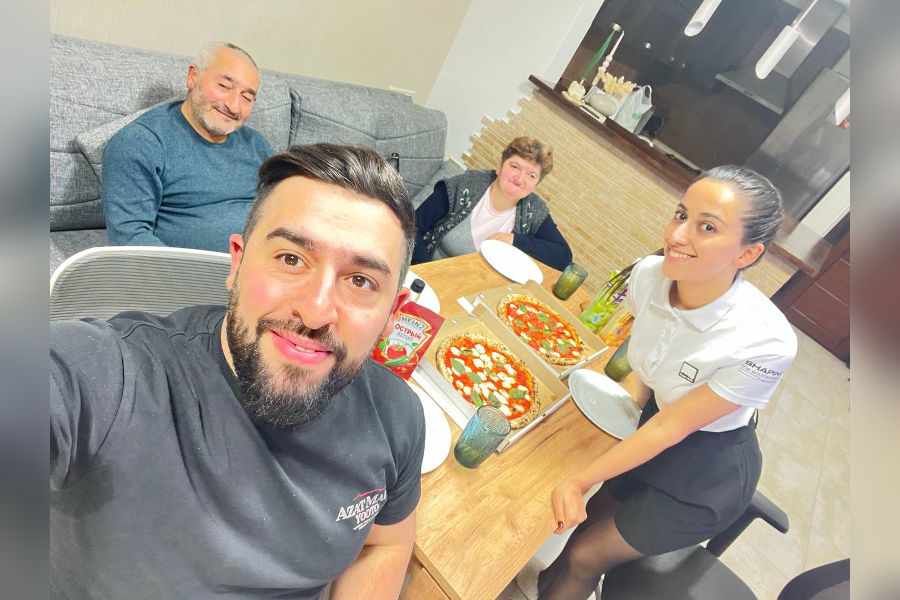
At home, communication through signs was direct and warm, instilling a belief that “communication is deeper than words.” The most important skill he acquired from his parents was the “ability to truly listen to and notice people.” He learned to speak with his hands and “to sense a person through facial expressions, gaze and body movement,” allowing him to understand what is not said aloud.
One common misconception Alaverdyan encounters is the assumption that people with hearing impairments “are closed off” or “cannot express themselves fully.” He emphasized that they actually have a full language — sign language — which conveys their own humor, culture and way of thinking. The problem, he remarked, “is not with them, but with the myth that society knows nothing about that world.”
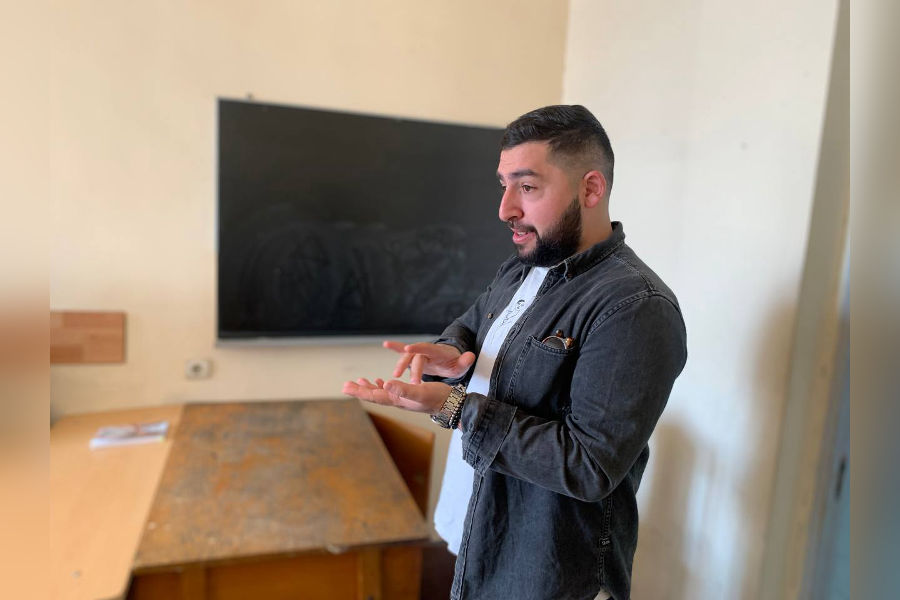
Alaverdyan said that he chose the path of a surdopedagogue because it was “a decision rooted in identity.” His personal experience was the main driving force: “I grew up with sign language; I saw both its beauty and the difficulties that often arise due to society’s lack of awareness.” He wanted to serve as a bridge between the two communities so that the children he works with have the support he sometimes sought.
Alaverdyan noted that the number of surdopedagogues in Armenia is insufficient to meet the demands of inclusive education, particularly outside Yerevan. Continuous training and proper resources are also limited.
The main challenges in educating children with hearing impairments include a shortage of qualified specialists (surdopedagogues, sign language interpreters), limited use of sign language in the educational system, a lack of accessible learning materials and minimal support for families. Alaverdyan emphasized that many hearing teachers have little knowledge of sign language, leaving lessons only partially understandable for students.
In his view, the most critical gap is the absence of full, systemic integration of sign language into the education of both hearing and non-hearing children. “As long as sign language is not viewed as the child’s native and natural means of communication, education will always be partial, and the child will always be forced to ‘adapt’ to the system, rather than the system adapting to them,” he explained.
Alaverdyan launched his Instagram blog to create a space for “open, honest and practically useful” conversations about people with hearing impairments and their families. His main goal is to educate, simplify and bring the two cultures closer, showing that communication is possible with desire and knowledge.
He advises parents who learn their child has a hearing problem to take three crucial steps: immediately undergo a professional hearing examination; start early communication with the child (both spoken and signed, to ensure a rich communicative environment from infancy); and, most importantly, to not fear sign language. He affirmed that “early communication and a comprehensible linguistic environment only aid the child’s overall development.”
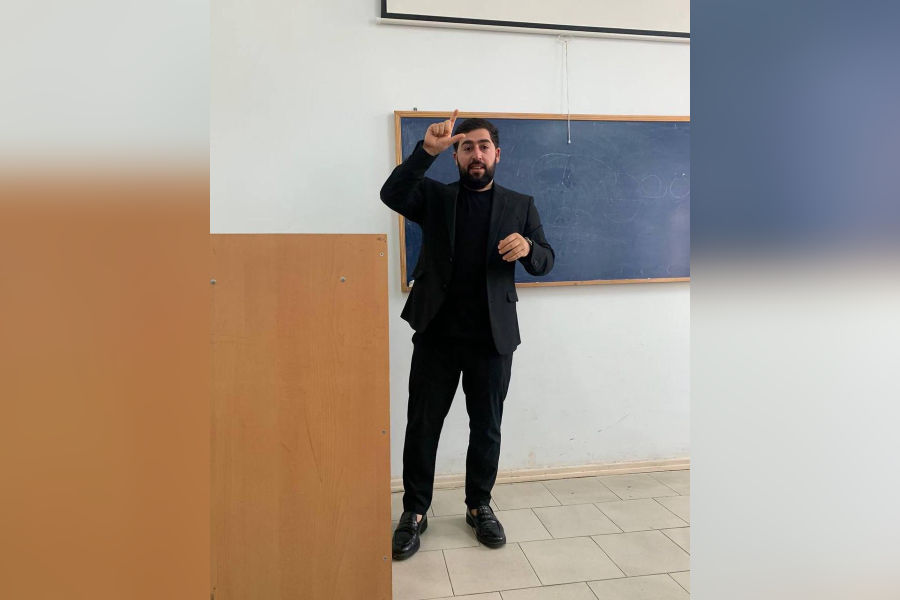
Full recognition of Armenian Sign Language requires systemic steps, including state-level recognition and regulation, as well as making sign language instruction accessible in schools, universities and the general public.
As a specialist, Alaverdyan envisions inclusive education in Armenia in the next five to 10 years as “significantly more systematic and high-quality.” He predicts more specialists, with “every school having a qualified specialist, and families not having to wait long.” He also anticipates that methodological solutions would make inclusive education more practical, moving beyond a mandatory formality.
The biggest change, he said, would be in society’s attitude: “When parents and society begin to realize that inclusive education is not a burden but a value, the environment for children will become more open and safe.”
All photos are courtesy of Aren Alaverdyan unless otherwise noted. You may follow him on Instagram.