


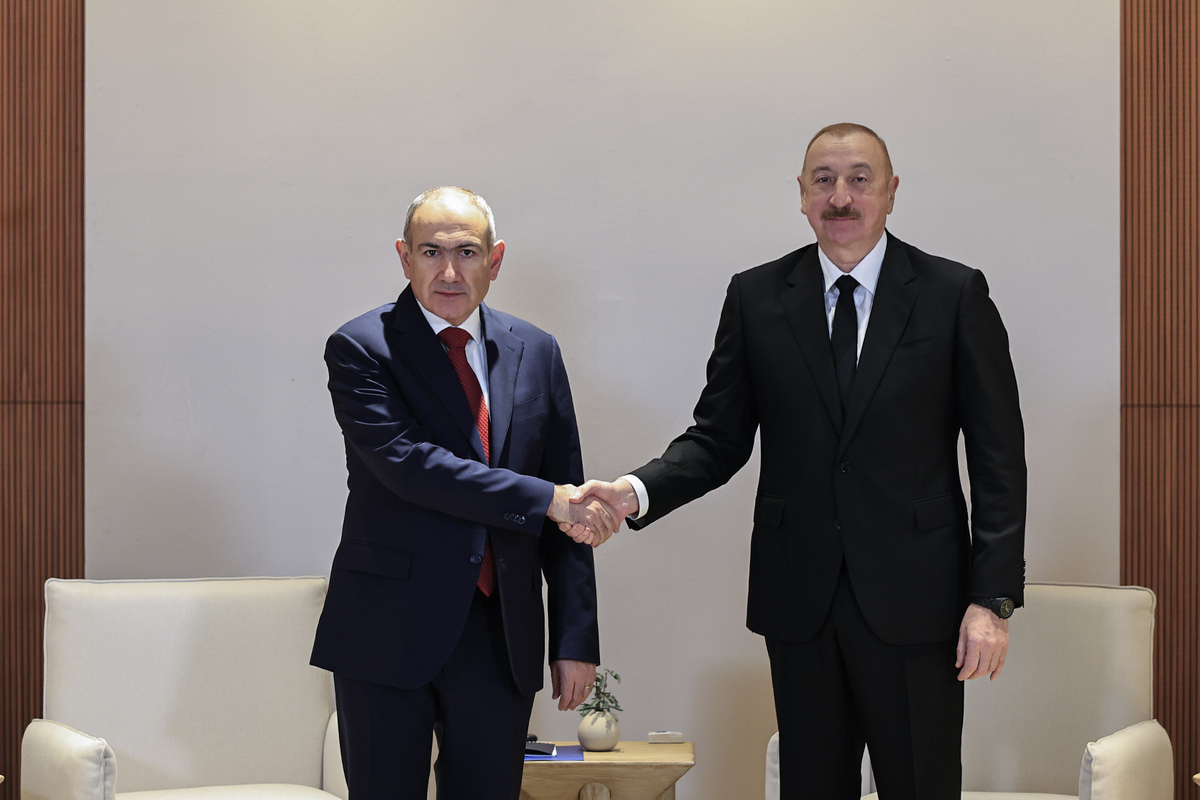
U.S. Secretary of State Marco Rubio declared, while speaking before the House Foreign Affairs Committee, that the Armenia-Azerbaijan conflict “has ended with the agreement I signed yesterday.” He was referencing the agreement signed on TRIPP, the Trump Route for International Peace, as conclusive evidence that the focus has shifted from conflict to opportunity. This is probably a true statement — from the U.S. perspective. Interested parties should always bear in mind that agreements and “deals” between nations are always about self-interest. One reason there are a variety of perspectives on multilateral agreements is that each party looks at them through the lens of their self-interest.




A true peace between states is supposed to be based on reciprocity: mutual recognition of sovereignty, territorial integrity, non-inteference in domestic affairs, no bellicosity and other threats, etc.; a peace treaty that is fair and which should be implemented article by article and not violated in any way.
But since the “peace” imposed on Armenia is not a true peace, but “victor’s justice”, with Azerbaijan as bellicose and irredentist as ever, future hostilities lie ahead, which almost certainly won’t be started by Armenia. Those who think that there is “peace” with Azerbaijan and Turkey, are deluding themselves – first and foremost, Pashinyan.
Come Monday morning, the day after vote recount, it is highly likely that PM Nikol Pashinyan/Civil Contrat, will lose constitutional majority to sign peace with Azerbaijan, unless he has the support of the opposition or elements of the opposition that has not supported Nikol Pashinyan’s cross road for peace initiative. Azerbaijan may not sign peace with a lame duck or care-taker government that has no constitutional mandate. If the opposition rejects Nikol Pashinyan’s peace initiative and conditions Armenia signing peace with Azerbaijan on the resolutions of the issues raised here – occupied land, prisoners in Baku, Hrchagakir, etc., etc. Armenia may likely face continued blockage of most of its borders, and may even have the borders in a tense state. I support PM Nikol Pashinyan’s peace initiative. I surely will not verbalize to the contrary if the opposition prevails.