




Armenia Tree Project writes a new chapter for forest governance in Armenia
The village of Fioletovo to take the lead in preserving the Hrant Dink Memorial Forest

The Hrant Dink Memorial Forest, planted in 2007 by Armenia Tree Project (ATP), honors the legacy of Hrant Dink, a Turkish-Armenian journalist known for his advocacy of justice, truth-telling and reconciliation.
ATP, one of the earliest environmental NGOs in post-Soviet Armenia, works at the intersection of environmental restoration and social healing. Its mission goes beyond tree planting to promote environmental justice and stewardship while engaging communities in reforestation and afforestation efforts that reflect local needs and conditions.
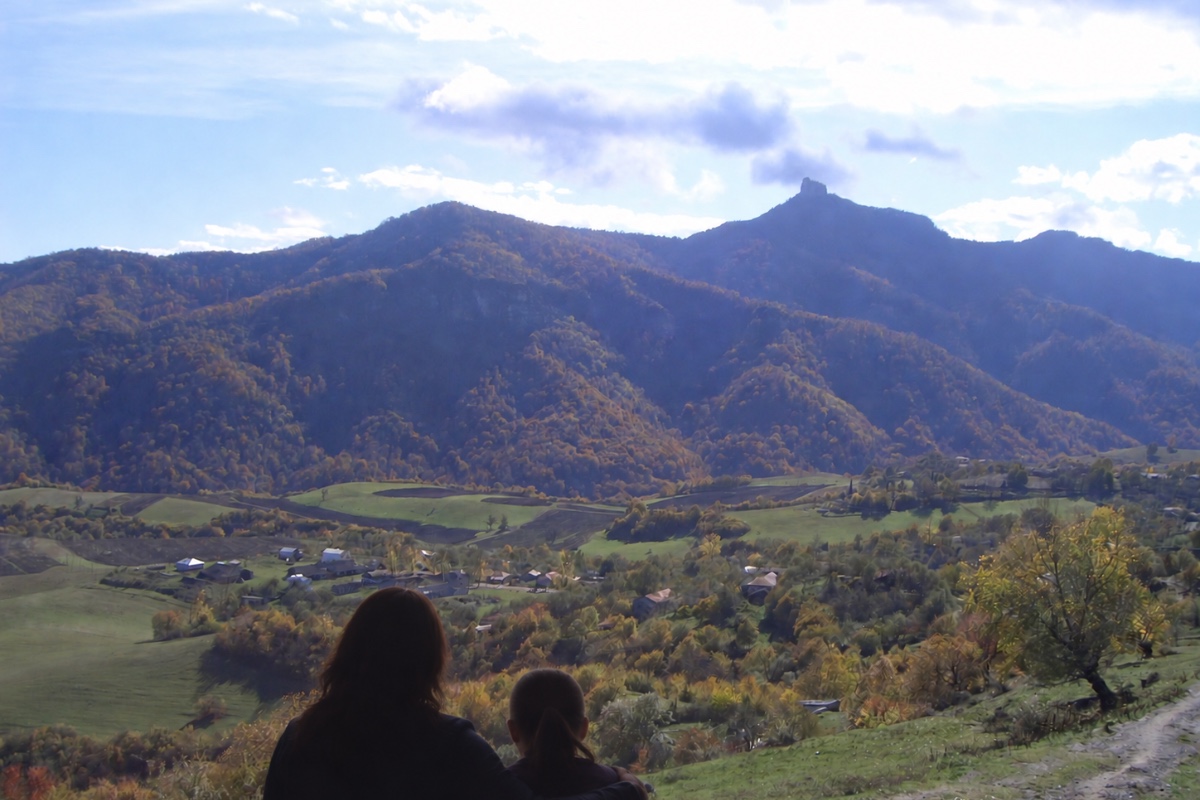
Over the past two decades, the forest, composed of native species like Pinus sylvestris, has grown into a healthy ecosystem, providing erosion control, climate regulation and biodiversity conservation. It stands as proof of what long-term environmental planning and community engagement can achieve.
Located near the village of Fioletovo, the forest’s evolution highlights the power of aligning ecological goals with sustained community involvement. In 2027, nearly 20 years after planting, ATP will transfer management of the 11-hectare forest to the municipality, marking the first time in Armenia that a community will assume long-term stewardship of a reforested area. This transition from centralized oversight to local ownership positions village residents as the forest’s future caretakers.

A forest of memory and reconciliation
Hrant Dink (1954–2007) was a Turkish-Armenian journalist and human rights advocate who promoted dialogue and understanding between Armenians and Turks. His lifelong commitment to justice resonates with the belief that access to a healthy environment, like forests, is a fundamental right essential to dignity, peace and a shared future.
The Hrant Dink Memorial Forest is both an ecological achievement and a living symbol of that vision. Just as Dink sought to heal historical wounds and build bridges between peoples, the forest embodies a commitment to remembrance, regeneration and reconciliation.
Why Fioletovo?
Fioletovo, in Lori Province, is home to the Malakans, a Russian community that fled persecution in the 19th century. Known for their pacifism, simplicity and deep respect for nature, the Malakans bring a distinctive ethic of stewardship that aligns closely with the principles of sustainable forest management.
Their values, self-reliance, communal decision-making and environmental harmony make them natural stewards of the land. The village’s role also highlights the cultural diversity and capacity of Armenia’s rural communities.
The mayor of Fioletovo expressed during recent consultations: “This forest is not just trees. It’s a part of our village.” He also expressed the municipality’s hope to expand the forested area in the future, signaling a deeper, long-term commitment to environmental stewardship.
Community ownership and stewardship: A first in Armenia
Community-led forest management is rare in Armenia. Most forests are administered by national entities. This handover represents a structural shift, recognizing that those who live closest to the land are often best equipped to manage it. Moreover, because the land is already owned by the municipality, the transition is not only symbolic but also legally and administratively sound.
Between the years of 2025 and 2026, ATP will prepare Fioletovo through capacity-building initiatives and the development of a 10-year forest management plan. This collaborative approach will ensure that the village can care for the forest independently and sustainably.
The 10-year forest management plan will aim to keep the forest ecologically healthy, socially beneficial and economically viable. It will include practical strategies for forest maintenance such as selective thinning, pruning, erosion control and protection from pests and diseases. It will also address fire prevention, climate resilience and soil conservation. Early detection of stressors and prompt response measures will be built into the management structure.
Education, training and local capacity building
A key component of the transition is building Fioletovo residents’ capacity to manage the forest. ATP will implement a series of training and educational activities to strengthen local knowledge and skills.
The ATP Ohanian Training Center in the nearby village of Margahovit will serve as a hub for education. Training modules will cover sustainable forest management, fire prevention, forest governance principles and use of non-wood forest products. Other sessions will address topics such as alternative sources of energy and heating, forest-based entrepreneurship, rural tourism and climate adaptation.
Women, youth and marginalized groups will be engaged in the training process to promote diverse perspectives. In addition, workers from the village involved in forest activities within Dilijan National Park will also be encouraged to attend the training, ensuring their experience and insights contribute to the process.
Looking ahead
For ATP, tree planting has always represented more than land restoration; it is an act of healing. Just as Hrant Dink envisioned mending fractured relationships between peoples, ATP sees reforestation as a path to regenerate ecosystems and rebuild trust between communities and across borders.
Since 2007, ATP has planted more than 35 new forests across Armenia, all of which are established on land owned by local communities. This approach ensures long-term protection and community engagement. In the coming years, the model adopted in Fioletovo will be applied in other villages as well, laying the groundwork for a national shift toward decentralized forest stewardship.
The memory of Hrant Dink lives on not only in the trees that bear his name but in the people who tend them. Fioletovo assumption of responsibility offers a hopeful model of participatory, local-led forest governance and serves as a model that can be replicated. In the face of growing environmental challenges, decentralized and inclusive governance may prove increasingly essential. This transition marks a meaningful step forward in sustainable land management in Armenia and potentially beyond.
The handover of the Hrant Dink Memorial Forest represents more than a shift in responsibility. It is a new paradigm for conservation, rooted in justice, local agency and community identity. It is a testament to the idea that forests, like peace, can be cultivated when people come together around a shared vision.


It is good that native tree species are used for the afforestation and reforestation of Armenia. But does this forest only consist of one tree species? If that is the case, it won’t increase biodiversity a lot, which is so crucial for a healthy forest, or indeed for any other habitat. Mixed-species forests have greater biodiversity and also capture more carbon dioxide. Diverse forests are also more resilient to diseases and pests, which won’t attack and kill every tree species, thus preventing a major die-off of large swathes of forests, which is the case with single-species forests. If the planted forest consists of tree species which are drought and fire resistant, it will also be able to recover naturally from these events, thus avoiding total destruction.
There are multiple species planted in this forest, as well as all of the other forests that ATP plants. Pine is the most common species in Armenian forests and while it is the most visible in the photo of this young forest, it is not the only species. ATP’s forestry team also plants native mountain ash, oak, birch, wild apple, wild pear, and more.
Thank you for the information.
The question was well-intended, but somewhat specious, as your photograph clearly shows red and yellow trees, which by definition, are always deciduous. Pine trees do not turn colors in the fall.