



The Region in Brief
Artsakh
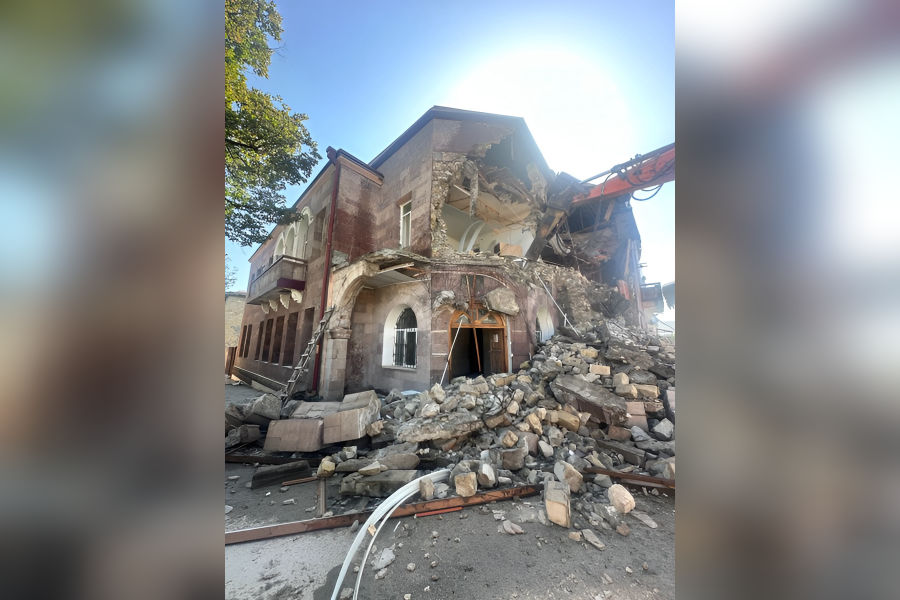
Azerbaijani authorities have begun demolishing the Ministry of Foreign Affairs building of the Republic of Artsakh in occupied Stepanakert. The timing of the demolition is seen as symbolic, coinciding with the 34th anniversary of Artsakh’s declaration of independence on September 2, 1991—a date of profound national significance for Armenians.
Meanwhile in Yerevan, a new memorial titled “The Call of Artsakh” was inaugurated at Yerablur Military Pantheon on September 2, initiated by Artsakh President Samvel Shahramanyan, Artsakh Minister of Internal Affairs Karen Sargsyan and Chairman of the “Homeland” Party Artur Vanetsyan.
The memorial is dedicated to the memory of those who lost their lives during the Artsakh wars, those buried in Artsakh, as well as the victims of the fuel depot explosion on September 25, 2023. The official groundbreaking ceremony took place on September 24, 2024. The project was fully funded by the Vanetsyan family.
“These people have no graves. This was built for the comfort of the soul—temporary, until we return to Artsakh,” Vanetsyan stated during the ceremony.

Iran
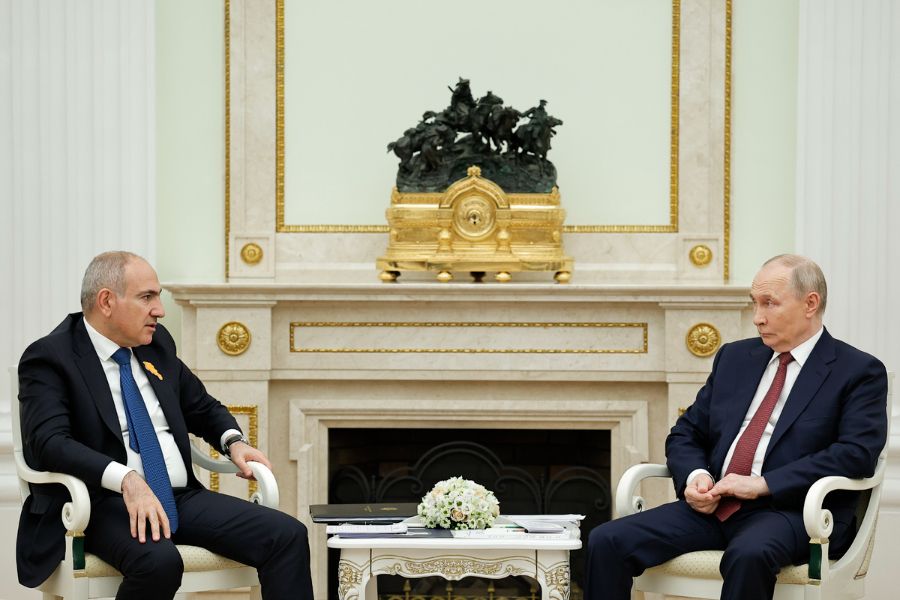
The Iranian Parliament has officially voiced its opposition to the proposed “Zangezur Corridor,” warning that the project threatens regional stability and undermines the interests of local populations.
Parliament Speaker and former Mayor of Tehran, Mohammad Bagher Ghalibaf expressed strong concern, stating that the implementation of the corridor would contradict the interests of regional nations and could endanger collective security. Ghalibaf also criticized Iranian President Masoud Pezeshkian’s position on the matter, saying his public remarks have harmed Iran’s national interests.
In a formal statement, signed by 150 of the 290 members of parliament, lawmakers described the corridor project as “contrary to the interests of the region’s peoples and a direct threat to collective security.”
Russia
Azerbaijan and Russia are experiencing growing disagreements on a range of issues, according to Konstantin Zatulin, the First Deputy Chairman of the State Duma Committee on CIS Affairs.
Zatulin stated that “Azerbaijan is pursuing its own path,” noting key divergences such as the annexation of Artsakh and Azerbaijan’s rejection of peaceful conflict resolution in 2023. “Azerbaijan took advantage of the fact that, at the time, Armenia was led by a government that did not prioritize national interests. With Turkey’s support, Baku advanced its agenda while maintaining a facade of strategic partnership with Russia to avoid direct confrontation,” Zatulin said.
He emphasized that once Azerbaijan had achieved its objectives, it no longer felt the need to coordinate closely with Moscow. Furthermore, Zatulin pointed to Azerbaijan’s continued pressure on Armenia, the push for a so-called “Zangezur Corridor” and the growing involvement of the United States and Israel in the region as actions that run counter to Russia’s strategic interests.
“The strategic alliance between Turkey and Azerbaijan is not just bilateral,” Zatulin warned. “It reflects a broader vision for the future—namely, the advancement of a pan-Turkic project, or ‘Greater Turan,’ which seeks to extend influence into Central Asia and, notably, into Turkic-populated regions of the Russian Federation. This clearly contradicts Russia’s interests and presents a tangible threat.”
Zatulin also raised concerns about Azerbaijan’s deepening ties with Washington and Tel Aviv, describing Baku as a potential launching pad for operations against Iran. He argued that this trajectory is incompatible with Russia’s plans for the North-South transport corridor, which envisions a strategic route through Azerbaijan to Iran.
Turkey
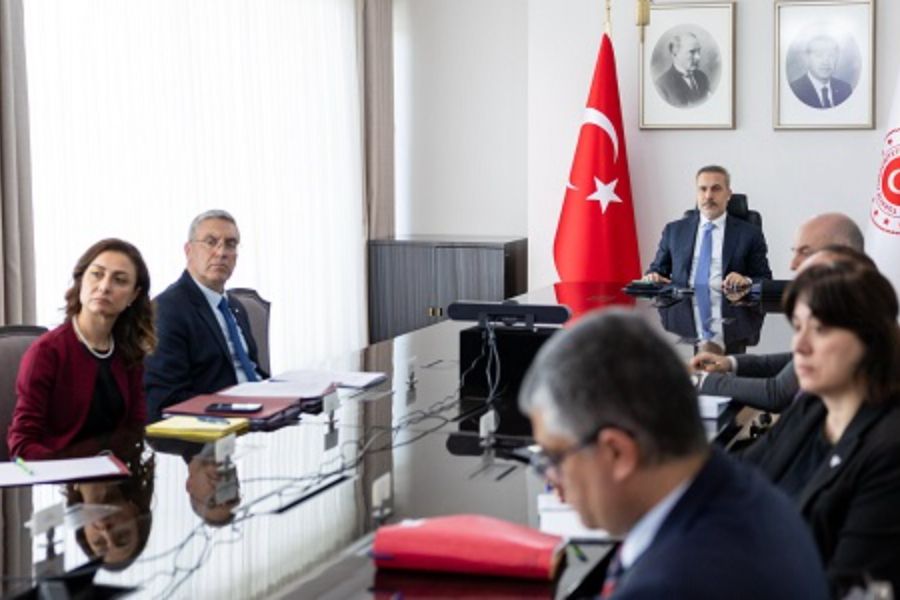
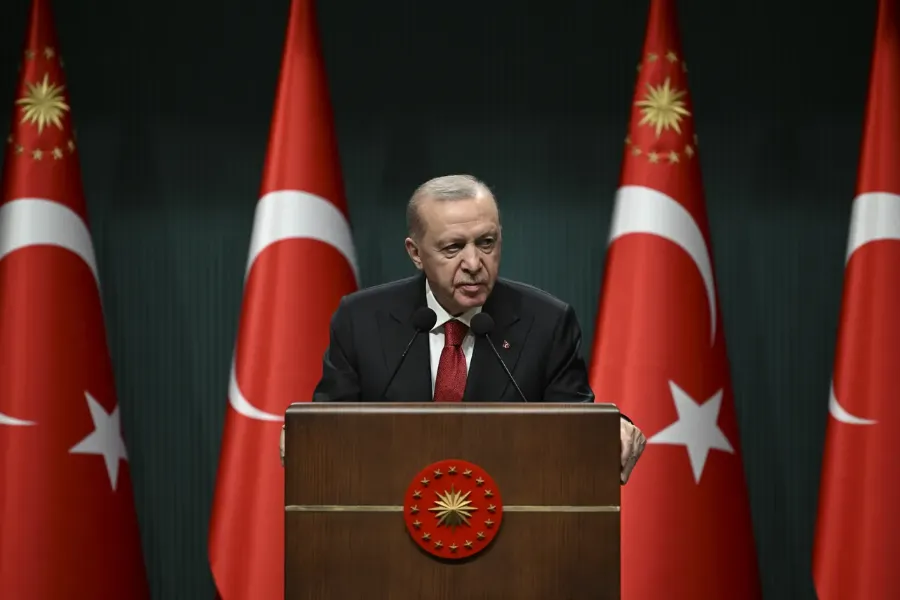
Turkish President Recep Tayyip Erdoğan expressed optimism about lasting peace in the South Caucasus following talks with Azerbaijani President Ilham Aliyev.
“I believe the South Caucasus will finally find the peace it has long awaited,” Erdoğan said, adding that his bilateral meetings with Aliyev and Armenian Prime Minister Nikol Pashinyan showed both leaders “share similar views” and are “looking in the same direction.” He credited the recent Washington agreement for accelerating normalization between Armenia and Azerbaijan, stating that the two sides have “largely overcome obstacles” and are nearing a final settlement.
On the issue of the “Zangezur Corridor,” Erdoğan said there are no disputes and that its development will restore roads, rail links and open border crossings, boosting trade in the region. “Russia and Iran will eventually understand that their concerns are unfounded,” he added.

How do the Pashinyan supporters justify this so-called “peace treaty” with Azerbaijan, Aliyev’s neverending threats, despite the signing of this modern-day Munich Agreement, the betrayal of the Artsakhis and the “writing-off” of Artsakh, and the continuous destruction of Armenian heritage in Artsakh?