


Pipelines, peace and power: The 2025 Armenia-Azerbaijan agreement in geopolitical perspective
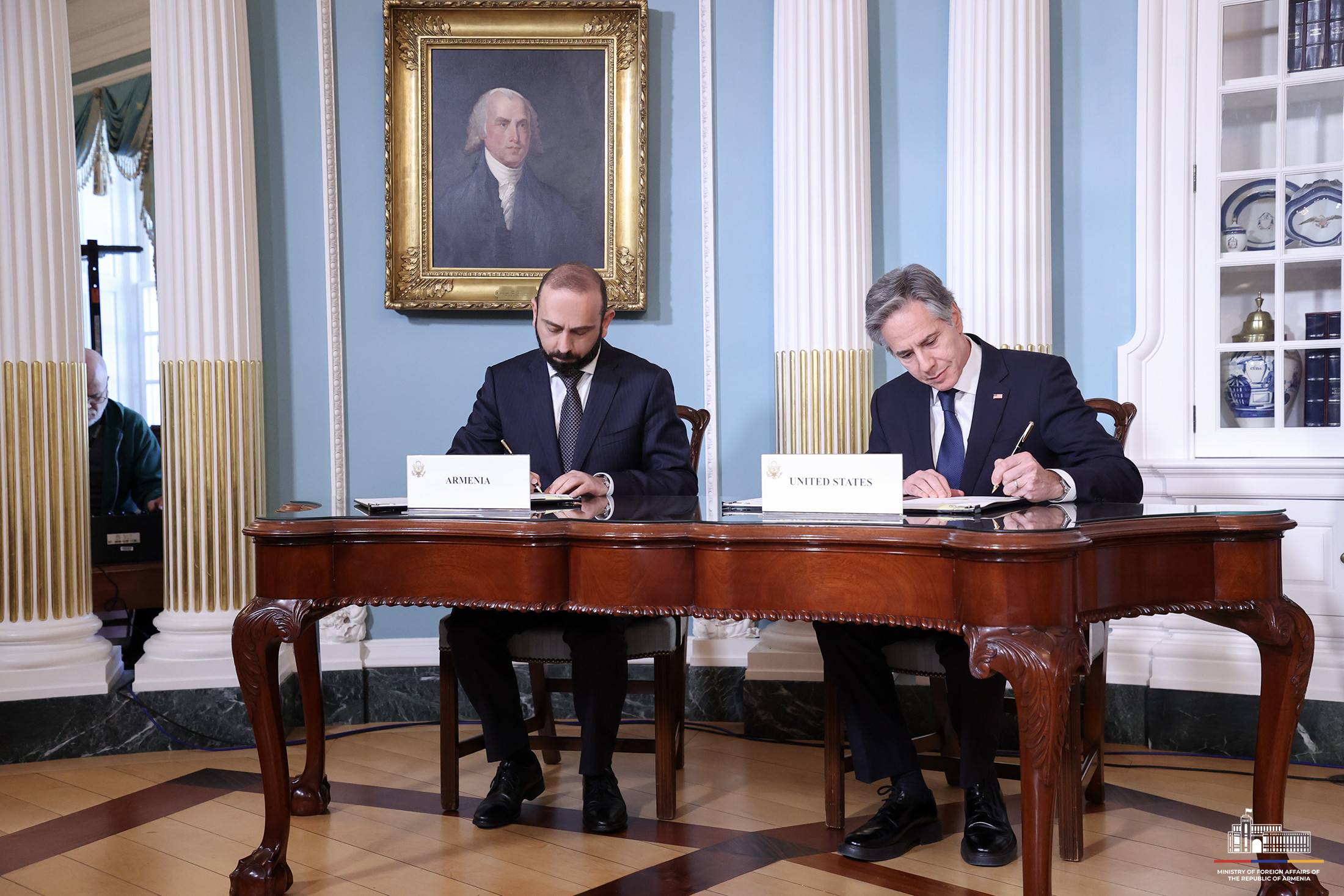
On August 8, 2025, under the white columns of the White House portico, Armenian Prime Minister Nikol Pashinyan and Azerbaijani President Ilham Aliyev stood beside U.S. President Donald Trump to announce a “historic peace accord.” Cameras captured smiles, handshakes and the ceremonial flourish of pen to paper. To the watching world, it appeared the culmination of decades of conflict over Artsakh (Nagorno-Karabakh) and the promise of a new era of stability in the South Caucasus.
To many Armenians, however, it was the codification of defeat. Azerbaijan shows no real intent for peace, citing denial of Armenia’s historic legitimacy and using “Western Azerbaijan” rhetoric to justify future pressure on Armenia. This deal served multiple purposes: a peace prize legacy for Trump; a way for Pashinyan to avoid debating concessions ahead of elections and plummeting approval ratings and a mechanism for Aliyev to advance his goals while profiting politically and financially.
If the Armenian side truly had strong negotiating positions, why was there a need for secrecy around the process? A more accurate reading suggests compellence diplomacy: achieving core objectives through coercive leverage and then codifying them in agreements.
The optics told their own story. Aliyev arrived in Washington with full fanfare, parading confidence and sealing a photo-op with ExxonMobil executives to ink a deal. Pashinyan, by contrast, slipped into D.C. quietly. His team offered no arrival photos, no choreographed handshake moments—only a tightly controlled schedule that notably excluded any gathering with the Armenian-American community. The lone cultural headline came when he presented a copy of the medieval illustrated manuscript of Gregory of Narek to the Washington Museum of the Bible, a treasure not his to part with.
Symbolically, the split screen was telling: Baku celebrated hard deals and strategic momentum; Yerevan avoided the diaspora and offered a book in place of binding guarantees. In diplomacy, staging is substance. This suggested who felt ascendant, who felt cornered and why many Armenians read the White House ceremony less as peace achieved than as leverage transferred.
Behind the pageantry were three documents:
- Armenia’s formal withdrawal from the OSCE Minsk Group—ending the longstanding mediation process.
- The creation of the Trump Route for International Peace and Prosperity (TRIPP) through Armenia’s Syunik province.
- A framework peace accord embedding a controversial 17-point arrangement reached in March 2025—and never presented to the Armenian public.
This was not the diplomatic breakthrough many imagined. It was a realignment with consequences that extend far beyond Armenia’s borders. The text is not yet in force; its obligations would attach only after ratification. Even so, it already shapes facts on the ground by structuring follow‑on “implementation” deals on transit, security and legal claims. The corridor’s exact tenure and jurisdiction remain undisclosed; reports of multi‑decade arrangements, including a floated 99-year deal, should be treated as provisional until side letters or annexes are published.
Yerevan’s official line was blunt: without the August 8 deal, Azerbaijan would have invaded Syunik. The choice was cast as capitulation or catastrophe—survival, not compromise. On inspection, that claim wobbles. Escalation was possible, but not assured—the March 2025 “show” notwithstanding.
After victories in 2020 and 2023, Baku already held leverage without firing a shot. Seizing Syunik risked alienating European energy markets, destabilizing the region and provoking Iran’s repeatedly stated red line. Other brakes existed: Russia’s CSTO ties cover Armenia proper, and the U.S. and EU would struggle to ignore an open attack. Domestically, the “sign or be destroyed” message—amplified by government PR and proxies in Armenia and the diaspora—muted debate over terms largely pre-baked in the secret March 17-point framework, shifting attention from concessions to fear of their absence.
Baku’s core aim was a land corridor to Nakhichevan—and by extension, Turkey—rather than conquest for its own sake. Negotiated access grants legitimacy without risking sanctions or energy disruption. Since 2020, Aliyev’s statements have proven grimly predictive: he has claimed Armenia is Azerbaijani territory and has boasted of “liberating” regions such as Aghdam (Akna) “without firing a single shot,” making war talk a useful smokescreen for shaping Armenian opinion. By conceding under threat, Yerevan signaled that coercion works, inviting future pressure. The August 8 agreement did not defuse an imminent fuse; it codified a political reality in which Armenia traded sovereignty for the promise, not the guarantee, of peace.
Moreover, efforts to liken the corridor to the Montreux Convention (1936) are misplaced. That agreement restored Turkey’s full sovereignty over the Bosphorus and Dardanelles, while the August 2025 Armenia-Azerbaijan deal does the opposite for Armenia. It would effectively cede control of a 30-40 kilometer-long, five-kilometer-wide strip through Syunik to another state for a multi-decade term (the signed tenure, if any, remains undisclosed).
No diplomatic framing changes the core fact: Montreux reclaimed sovereignty, while the TRIPP corridor relinquishes it, creating a foreign-controlled artery inside Armenia’s borders.
The beginning of the end
Unfortunately, the path to the August deal began with military and political collapse. The Second Artsakh War of 2020, often referred to as the 44-day war and widely seen as gravely mismanaged by Armenian authorities, left Azerbaijan in control of large swaths of territory, shattering the post-1994 status quo.
In September 2023, Azerbaijani forces launched a lightning offensive that emptied Artsakh of its Armenian population, after subjecting them to a 10-month blockade in violation of international law. Over 120,000 Armenians fled the region in a matter of days—an exodus human rights groups have described as ethnic cleansing.
Facing plummeting approval ratings, fear of upcoming elections, gross incompetence, a fragmented political landscape and eroding Russian security guarantees, Armenia entered negotiations in early 2025 with diminished leverage. In March, Pashinyan and Aliyev quietly agreed to a 17-point framework that committed Armenia to:
- Amend its constitution to remove references to Artsakh.
- Dissolve the OSCE Minsk Group, eliminating a key multilateral forum.
- Ban third-party border monitors, reducing deterrence against Azerbaijani incursions.
- Withdraw international legal cases against Azerbaijan, including genocide and war crimes claims.
- Commit to “open communications”—a term widely interpreted as a pathway to the so-called “Zangezur Corridor.”
- Accept the “return” of 300,000 Azerbaijanis under the “Western Azerbaijan” narrative, a move many Armenians fear could reshape Armenia’s demographic balance.
Notably absent were any provisions for the release of Armenian prisoners of war and other illegally held detainees, whose conditions can no longer be assessed by the Red Cross after President Aliyev closed its offices in the country in March 2025.
At the heart of the August ceremony was the Trump Route for International Peace and Prosperity (TRIPP). The U.S. secured exclusive development rights, promising investment in roads, railways, pipelines and fiber-optic networks. For Azerbaijan, TRIPP delivers its most coveted prize: an uninterrupted land link to Turkey, bypassing Iran and Russia. For the U.S., it is a strategic foothold in the South Caucasus, enabling Washington to control a key trade and energy route. For Armenia, the calculus is murkier. Proponents argue it could stimulate trade, draw U.S. investment and normalize ties with Turkey, while critics warn it erodes sovereignty, giving foreign powers leverage over a critical transport artery.
The breakdown below maps the March Framework to the August Agreement text, which uses diplomatic phrasing to provide coverage for problematic concessions. The following obligations take effect only upon entry into force; until ratification, they exert political pressure but carry no legal weight.
First, the obligation to amend Armenia’s constitution to remove references to Artsakh—Articles I-II, XII. This includes recognition of sovereignty and territorial integrity, a renunciation of territorial claims and the principle that domestic law cannot justify non-performance. By locking in mutual recognition and renouncing claims, the treaty renders any constitutional language implying claims to Artsakh incompatible. Article XII compels domestic constitutional change to align with the treaty.
Second, the obligation to dissolve the OSCE Minsk Group—preamble (sources of law) and structural omission; Article XI (treaty obligations with third states must not undermine this agreement). The text replaces prior frameworks by naming new governing instruments and barring third-party engagements that “undermine” obligations here. Functionally, this supersedes the Minsk process without naming it.
Third, the obligation to ban third-party border monitors—Article VII. “The Parties shall not deploy along their mutual border forces of any third party.” This blanket prohibition on third-party presence along the border effectively bans monitors while framing it as a sovereignty and confidence-building measure.
Fourth, the obligation to withdraw international legal cases against Azerbaijan, including genocide and war-crimes claims—Article XV. This agreement requires the withdrawal or dismissal of “any and all interstate claims… in any legal forum” within one month and bars the initiation or assistance of new claims. The sweeping language—covering claims, complaints, protests, objections and proceedings—functions as a legal “kill switch,” vacating current dockets and blocking future filings.
Fifth, the obligation to commit to “open communications” (corridor)—Article X. Cooperation in “economic, transit and transport” matters is deferred to follow-on agreements; Article VI (demarcation) can shape routing; and Article XIII (implementation commission) governs execution. Corridor terms are pushed to subsequent sectoral agreements, allowing sensitive details—rights, security, control, tenure—to be set later under the umbrella of “transit and transport cooperation.”
Sixth, the obligation to accept the “return” of 300,000 Azerbaijanis (“Western Azerbaijan”). There is no explicit clause in the main text, given the highly inflammatory nature of the issue. Instead, it is routed via Article VIII (preventing intolerance, racial hatred, discrimination and separatism), Article X (humanitarian and cultural cooperation), Article IV (non-interference) and Article XIII (implementation commission). This framework keeps the issue off the treaty’s face but leaves procedural doors open for “returns” as a bilateral humanitarian or cultural initiative, with operational details to be addressed later in follow-on protocols—avoiding public alarm.
The August agreement makes no mention of the plight and future of the Armenians of Artsakh, who were ethnically cleansed from their ancestral lands. It also provides no safeguards for the region’s religious and cultural heritage, nor any internationally secured measures to allow displaced Armenians to return home under secure conditions.
Similarly, the agreement does not require Azerbaijan to release Armenian POWs. Article IX addresses “missing persons and enforced disappearances” through information exchange and the return of remains but pointedly avoids any obligation to release prisoners—consistent with the omission in the March framework. President Trump raised the case of 23 Christians held in Azerbaijan, prompting an uneasy reaction from Prime Minister Pashinyan. Turning to his aides, he said he would not recommend including their release in the agreement—likely under the impression that Trump was referring to Armenian POWs and other illegally detained prisoners. According to Tigran Kocharyan, the 23 people discussed were different individuals, much to Pashinyan’s relief.
A review of the agreement’s provisions suggests the following:
- Supremacy over domestic law (Article XII): A classic treaty mechanism requiring constitutions and statutes to conform, creating the legal framework to erase references to Artsakh.
- Third-party exclusion (Article VII): Drafted broadly enough to block not only foreign troops but also monitors and observers.
- Total claims withdrawal (Article XV): Strikingly expansive and fast (one month), suggesting a pre-negotiated intent to terminate contentious cases.
- Blank-check cooperation (Article X): The vague “transit and transport” clause defers operational specifics to future agreements, keeping the most controversial issues out of the headline text.
Questions remain about whether problematic March details—softened in this agreement—are being withheld. The probability is high, given the political sensitivity of constitutional amendments and mass “returns.” Article VIII contains sweeping but generic language deferring specifics to later agreements or commissions. POW releases are omitted, while a narrower “missing persons” clause remains and the litigation-withdrawal mandate is fast and expansive. It is probable that the detailed March provisions may be deliberately kept from public view or embedded for later execution via implementing protocols, a common treaty tactic.
Winners, losers and the regional chessboard
Azerbaijan, the U.S. and Turkey are the winners of this game. Azerbaijan gains geopolitical depth, lifts U.S. military cooperation restrictions and opens new economic channels, including a permanent waiver of Section 907. Yet, if the two sides are to cease military action, why would there be a need to permanently waive Section 907? The United States embeds itself in a region traditionally dominated by Moscow and Tehran. Turkey benefits from enhanced east-west connectivity and a more emboldened ally in Baku.
Armenia is the clear loser, relinquishing strategic leverage for uncertain economic gains with no guarantees for security or displaced citizens. Once U.S. attention is diverted to the next shiny object—and it will—is Armenia ready to defend itself against continued Azerbaijani aggression, which is the only constant one can rely upon?
To quote President Theodore Roosevelt, “Speak softly and carry a big stick; you will go far.” The current Armenian government speaks softly while aligning with Baku’s policy preferences, and carries a stick only against unarmed Armenian citizens and clergy on the streets of Yerevan. Shortly after initialing the agreement, Aliyev demanded changes to Armenia’s constitution, while Pashinyan noted Azerbaijani territories under Armenia’s control must be returned, ignoring the issue of Azerbaijani boots on Armenian soil.
Despite the fanfare, the August accord is not a final treaty. Critical issues remain unresolved: border demarcation in Syunik, the status and rights of displaced Armenians from Artsakh, the release of POWs and mechanisms to prevent renewed hostilities. Analysts warn that without enforceable guarantees, the agreement risks becoming another fragile ceasefire rather than a lasting peace.
For Washington, TRIPP is more than an infrastructure project—it is a geopolitical wedge. It counters Russian influence, limits Iranian reach and locks Turkey into a regional framework aligned with U.S. interests. But this comes at a cost: by endorsing a deal that omits accountability for displacement and war crimes, the U.S. risks alienating human rights advocates and segments of the Armenian diaspora that once formed a reliable political constituency.
The 2025 Armenia-Azerbaijan agreements are less a resolution of conflict than a strategic reshuffling in the South Caucasus. They signal Armenia’s pivot away from Russia but also its willingness—or compulsion—to concede core sovereignty in exchange for the hope of stability.
Fundamentally, this agreement is meaningless, pending formal ratifications by both nations through parliamentary debates and constitutional court approval. By framing the corridor as outlined in the agreement, Armenian authorities appear to bypass a referendum. Many opposition figures in Armenia are under arrest at the moment, likely to expedite ratification under constrained dissent while maintaining the appearance of due process.
Whether history records this moment as the beginning of peace or the institutionalization of defeat will depend on outcomes that have yet to unfold. For now, the winners are clear, the losers wary and the stakes—for the region and beyond—remain as high as ever.


It is important to point out that there is no reference whatsoever about Artsakh (nor about the other historical Armenian lands) in the Constitution of Armenia and in its preamble. (Artsakh is mentioned in the Declaration of Independence of Armenia passed by the Supreme Council of the Armenian SSR in 1990, which is a historical document expressing the desires of the Armenian nation. It was not a law nor legally binding.) Azerbaijan and Turkey, who allege this, don’t seem to bother to look it up and read it, and they continue to parrot this lie.
Azerbaijan’s and Turkey’s issue, is simply the existence of Armenia as a state and of Armenians as a people, which they see as a nuisance and which they would like to get rid of – which Aliyev doesn’t even hide.
Pashinyan, as always, is nevertheless eager to appease and please Azerbaijan, and he could certainly also amend Armenia’s constitution to Azerbaijan’s liking and fulfill Azerbaijan’s other maximalist demands.
The narrative that the August 8, 2025 agreement was nothing more than a codification of Armenian defeat oversimplifies reality and strips away the actual context in which the deal was signed. It paints Armenia as powerless, Pashinyan as opportunistic, and the United States as manipulative — while ignoring the basic fact that Armenia had limited, painful options, and that diplomacy is not about moral victories, but survival.
Critics argue that Yerevan exaggerated the risk of invasion to justify concessions. But look at the facts: Azerbaijan had already proven in 2020 and 2023 that it would use force, quickly and ruthlessly, when it believed it had an opening. Armenian villages had been shelled; blockades had starved Artsakh’s population; and in September 2023, over 120,000 Armenians were driven from their homes within days. When your adversary has already demonstrated both capability and intent, it is reckless to assume that “escalation was possible, but not assured.” For Armenia’s leadership, gambling that Aliyev would suddenly restrain himself — despite his constant rhetoric about “Western Azerbaijan” and “restoring historical lands” — would have been a dangerous fantasy.
The claim that Azerbaijan wouldn’t attack because of Europe’s energy dependence, Iran’s red lines, or CSTO obligations sounds comforting on paper, but it has no track record in reality.
• Russia and CSTO: Russia didn’t intervene in 2020, nor in 2023, even as Armenians were being displaced en masse. The CSTO’s credibility as a deterrent is nonexistent.
• Iran: Tehran talks about red lines, but when Azerbaijani forces moved in on Artsakh, Iran did nothing. Its posture is designed for deterrence in its own interests, not Armenian sovereignty.
• The EU and U.S.: Western powers issue statements, send envoys, and apply diplomatic pressure — but they do not commit military resources to Armenia. Betting Armenia’s future on hypothetical foreign intervention would have been suicidal.
The reality is clear: Armenia stood alone militarily. To dismiss Pashinyan’s warning of “capitulation or catastrophe” as political theatre is to ignore the scars of recent history.
Much has been made about the “secret” 17-point framework and the absence of diaspora engagement in Washington. But let’s be honest: no serious negotiation over borders, sovereignty, and peace terms can be conducted in public. The Oslo Accords, the Camp David Summit, the Iran Nuclear Deal — all were negotiated in private for the same reason: publicity fuels outrage, and outrage kills compromise.
Yes, it’s painful that Armenians were not fully informed before the deal. But secrecy in this case was not about hiding weakness — it was about creating space to prevent spoilers from derailing an agreement that, while imperfect, could forestall another devastating war.
Critics describe the TRIPP corridor as the “relinquishing of sovereignty.” But this language deliberately blurs the distinction between ownership and operational arrangements. Armenia did not cede the land — it remains Armenian territory. What the deal establishes is shared access, international development rights, and security arrangements meant to stabilize a vital transit route.
Is that ideal? Of course not. But equating it to “giving away Syunik” is misleading. Armenia is still in possession of its borders, still able to exercise domestic authority, and in exchange receives U.S. investment, infrastructure development, and an anchor of American strategic interest in Armenia’s survival. That last point matters — because unlike Russia, the U.S. does not want Armenia to collapse into Azerbaijan’s orbit.
One of the criticisms is that Aliyev arrived in Washington with fanfare, while Pashinyan slipped in quietly. But diplomacy isn’t judged by photo-ops; it’s judged by outcomes. Of course Azerbaijan came in with more leverage — they won militarily in 2020 and 2023. Pretending Armenia could negotiate from equal footing is delusional. Yet despite that imbalance, Armenia managed to secure U.S. guarantees of investment and a structured peace process rather than facing unrestrained Azerbaijani expansion. That is not “leverage transferred”; that is damage control, which in geopolitics is sometimes the best you can do.
It’s easy for critics to frame this as betrayal, but ordinary Armenians don’t need rhetoric — they need security, stability, and a future where their children are not sent to die in another war. Was every Armenian happy about the deal? No. But even some who are skeptical admit they would rather live with a flawed peace than another catastrophic war with a much stronger Azerbaijan. Critics rarely propose a realistic alternative beyond “resist” — but resistance without capability is not strategy, it is self-destruction.
The August 8 agreement is not the end of Armenian sovereignty. It is a pause — a chance to buy time, reorient alliances, and rebuild capacity. The deal ties the U.S. more closely to Armenia’s survival, opens pathways for Western investment, and keeps Armenia from being boxed in solely by Russia and Iran. That is not the “end of Armenia”; it is a recalibration. Nations survive by adapting to reality, not clinging to lost battles.
To dismiss the August 8 agreement as mere “codified defeat” is to ignore context, overstate Armenia’s options, and underestimate the cost of renewed war. Was it painful? Absolutely. Was it signed under pressure? Of course. But survival under pressure is not betrayal — it is the essence of statecraft. Armenia didn’t surrender; it chose the least-worst option available. And in international politics, that is often how nations endure.
The spirits of our forefathers rise from their graves to denounce this travesty of an agreement with Azerbaijan and the United States. Our warriors did not fight to the death on the plains of Avaryr or suffer the heinous iniquities of the Ottoman Empire to capitulate to these evil forces. Where are you warriors of Armenian that we allow this victory to Satan? Push aside those in the way, gather the forces who draw strength from the sacrificed blood in our soil. Let us march to restore what is right under God’s name.
Stephen, I share from my blog, translated reflections from two of the first republic founding fathers. The sources are listed in my blog.
It is our fate
“… Whether the Turks are good or bad, it is our fate, whether we like it or not, we will have to live with them and with the Kurds. When we do not want to live with them, either we will have to drive them out of our homeland, which is beyond our power, or they will have to drive us out, which is not beyond their power…”
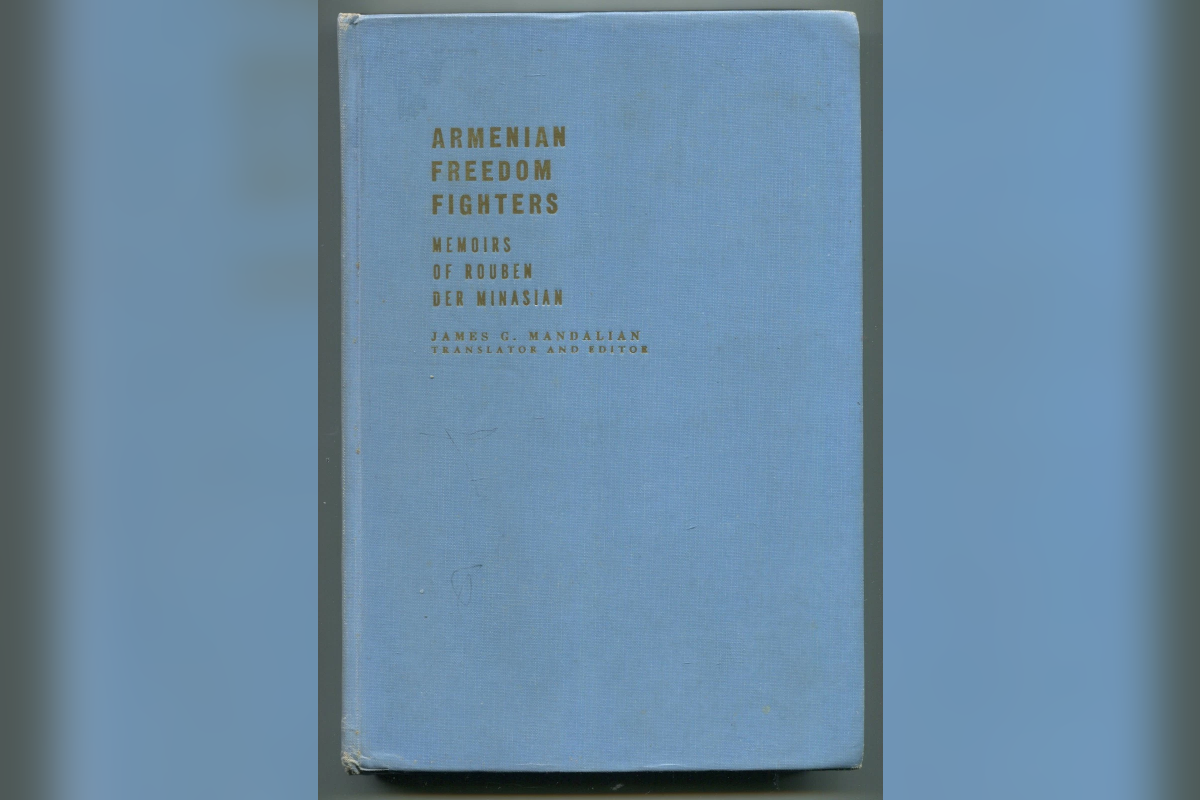
Ruben Ter Minasian (Roupen Der Minassian), defense minister
***
That day must come
“I am not carried away by illusions at all. I know what the Armenian-Turkish relationship has said. I know how deep the hostility and hatred between those two peoples are. I know, too, what sorrow there is in the heart of every Armenian.
But I also know that it is necessary for our own interests, for the very future of the Armenian people, that a tolerable way of life be created between Armenia and Turkey.
And I am convinced that that day will come. When, how – I do not know. But that day must come. And truly realistic and far-sighted figures must work to bring that day closer. Politicians must be able to overcome feelings and prejudices and “to rise above crowd logic.”
Simon Vratsian, the last prime minister
@Vahe Apelian
The intermittent persecutions, ethnic cleansings, massacres and genocides Armenians suffered under the Turks and Azeris, not only since the 1870s, but since the 11th century when the Turkoman hordes conquered and colonized Armenia, mean that Armenians, Turks and Azeris, should not, must not and will not live together again, whether it is in Armenia, Azerbaijan or Turkey (where a small and rapidly decreasing Armenian community in Istanbul and the last Armenian village of Vakifli remain). An equivalent of the Greek-Turkish population exchange of 1922 and the Greek Cypriot-Turkish Cypriot population exchange of 1975, must be made between Azerbaijan and Armenia, since practically no Armenians live in Artsakh and Azerbaijan, and practically no Azeris live in Armenia, and concluding this would be a mere formality. Since Azerbaijan does not allow Armenians to live, rent or own property in Azerbaijan (or even allow Armenians and those with Armenian ancestry from entering Azerbaijan), Armenia must reciprocate this for national security reasons. However, the irredentist Azerbaijani dictator Aliyev is not even willing for a cold peace like that between Israel, and Egypt and Jordan, with cold formal diplomatic relations, minimal economic relations and hardly any people-to-people contacts between the two sides, which is the most realistic outcome for Armenia and Azerbaijan, and nothing more than that.
Steve M., with due respect, it is to the citizens of Armenia that you should address. They have elected a government that pursues peaceful relations with the nations that border Armenia and beyod. I find their policy choice reasonable. As to myself, I have long accepted that Lebanon, where I was born and raised, and the U.S., where I have been living, have friendly state relations with Turkey.