



Zelenskyy’s visit to Yerevan: A sign of deteriorating ties with Russia?
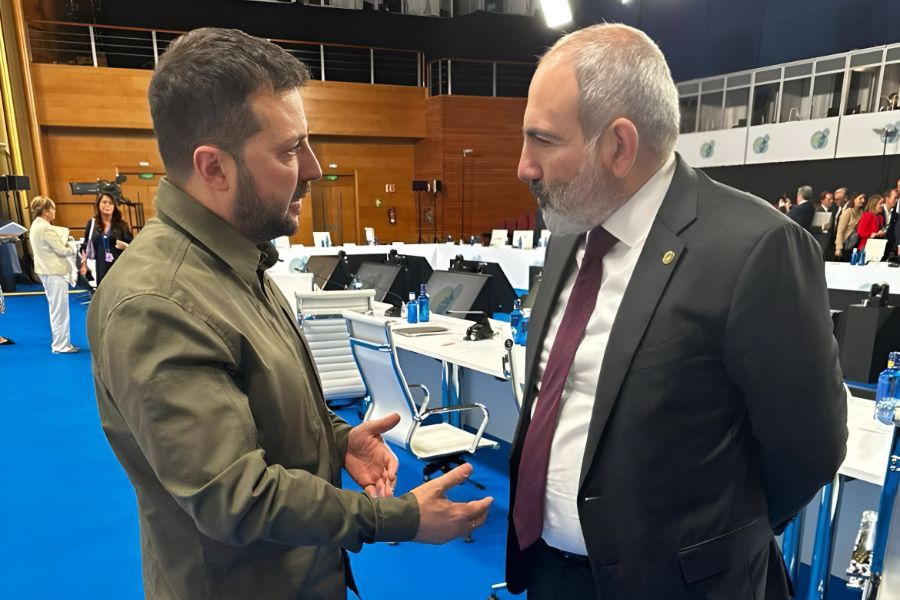
News that Ukrainian President Volodymyr Zelenskyy may visit Yerevan quickly became one of the most discussed topics across the former Soviet Union. According to several media outlets, the Ukrainian leader is expected to arrive in the Armenian capital to attend the European Political Community summit scheduled for May 4.
Information leaked to the press suggests that the Armenian Ministry of Foreign Affairs is attempting to keep details of the visit under wraps, fueling speculation about its objectives. If confirmed, the visit would go far beyond a ceremonial appearance at a multilateral forum. It could mark a symbolic convergence of two trends: Armenia’s strategic drift away from Russia and the active “drone diplomacy” being pursued by Kyiv.
A potential visit by Volodymyr Zelenskyy to Armenia, a country still formally allied with Russia through the Collective Security Treaty Organization (CSTO), would carry significant geopolitical implications. Such a move could demonstrate Yerevan’s loyalty to the West, as well as signaling a strategic shift in its foreign policy.
According to pro-Russian analysts, Zelenskyy’s visit would temporarily turn Armenia into an epicenter of anti-Russian politics, potentially provoking neighboring states, including Iran and even Turkey. Political analyst Karen Igityan told Sputnik Armenia that the visit would represent “yet another anti-Russian move by Prime Minister Nikol Pashinyan,” which he said would “bring no benefits to Yerevan but cause serious damage to the country.”
Around 50 high-level delegations are expected to attend the summit. Immediately afterward, Yerevan will host the first-ever Armenia–European Union summit on May 4-5, with European Council President António Costa and the European Commission President Ursula von der Leyen representing the EU. French President Emmanuel Macron is also expected to visit on May 5.

Thus, for a few days, Yerevan is set to host a major gathering of the European political establishment, with Zelenskyy’s possible presence adding a sharper anti-Russian dimension to this agenda.
To understand the context of Yerevan-Kyiv rapprochement, it is necessary to examine the evolution of Armenia’s foreign policy over the last few years. Following the Second Artsakh War of 2020 and the subsequent events of 2022–2023, which led to Artsakh coming under full Azerbaijani control, relations between Armenia and Russia entered a phase of deep crisis. Yerevan has de facto frozen its participation in the CSTO, although it has not officially withdrawn from it. Armenia has refused to take part in events, conduct exercises or pay its contributions, leaving the situation in limbo.
At the same time, Armenia has pursued a policy of diversification in foreign and defense partnerships, particularly with France, India and the United States. Arms contracts with France reportedly exceeded €274 million in 2023–24. India, for its part, has become the leading supplier of arms to Armenia, accounting for 43% of the country’s total arms imports.
A clear normalization has also emerged in relations with Ukraine. Prime Minister Pashinyan previously stated that Armenia “is not Russia’s ally on Ukraine,” and has expressed hope for the development of relations with Kyiv.
Behind Zelenskyy’s proposed visit lies a complex set of motivations for both Kyiv and Yerevan. For Pashinyan, who seeks to reposition Armenia closer to the West, the visit could serve as a visible signal of a decisive break with the “Russian world” and a readiness to become an outpost for Western interests in the South Caucasus. By hosting the leader of war-torn Ukraine, Pashinyan would draw a clear line under his long-standing alliance with Moscow.
Furthermore, Kyiv and Yerevan may agree to expand their economic cooperation. However, a more sensitive area is military-technical cooperation, particularly unmanned aerial vehicles. By the time of the planned visit, Ukraine had already announced the launch of the ambitious “Drone Deals” program – a new format of cooperation covering the production and supply of drones, missiles and ammunition, as well as technology exchange and integration with partners’ defense systems. This initiative is already being implemented with countries in the Middle East, Europe and the Caucasus.
Zelenskyy has effectively turned Ukraine’s unique combat experience into a commodity that can be offered to allies. The visit to Yerevan could form part of this “roadshow,” presenting Armenia and, possibly, the entire region with concrete proposals for cooperation.
Ukraine and European Union countries also have an interest in establishing a “sanitary cordon” around Russia, and involving Armenia and Azerbaijan in this process is one of the key objectives. Zelenskyy’s visit, alongside his recent visit to Azerbaijan, fits into this strategy aimed at the geopolitical reshaping of the post-Soviet space.
The most intriguing and potentially explosive part of the visit’s possible agenda is the discussion of military-technical cooperation, particularly in the field of unmanned aerial vehicles. The lessons of the war in Ukraine, where drones became a decisive factor on the battlefield, have not gone unnoticed by the Armenian leadership. The painful experience of defeat in the Second Artsakh War, where the Azerbaijani army demonstrated overwhelming superiority in unmanned aerial vehicles — largely through Turkish and Israeli UAVs — has forced Yerevan to rapidly develop this area.
In February 2026, Armenia signed a contract with the U.S. for the supply of V-BAT reconnaissance drones worth $11 million. These vertical take-off and landing aircraft, developed by Shield AI, proved their worth in the conflict in Ukraine, where they were used to locate air defense systems and adjust strikes. This acquisition was one of Yerevan’s most significant steps towards deepening military cooperation with Washington.
At the same time, the Armenian defense industry is seeking to establish its own production. Davaro is already supplying the Armenian Armed Forces with reconnaissance and strike drones capable of carrying up to 15 kilograms of payload over a range of 400–500 kilometers.
Major Trdat Kamoyan, a lecturer at the former Marshal Armenak Khanperyants Military Aviation University (now the Vazgen Sargsyan Military Academy), told the Weekly that “the development of unmanned aviation within the Armenian Armed Forces has been on the agenda for quite some time now.”
Kamoyan also noted that “last spring and summer, a group of staff from the Armenian National Security Service visited Poland and then Ukraine to exchange up-to-date experience on the use of unmanned aerial vehicles.” This demonstrates that the leadership of Armenia’s security forces is keen to keep abreast of innovations that shape modern requirements for the conduct of military operations.
“Higher education institutions are also actively working to develop this sector, producing teaching materials, textbooks and other literature. This is particularly important at the moment, as it is easier to learn from others’ mistakes than from one’s own,” he explained.
For its part, Baku reacts with extreme unease to any reports of Armenia bolstering its military capabilities, particularly in the field of unmanned aerial vehicles. Azerbaijani media and analysts view Yerevan’s procurement of drones as preparation for a rematch and a “drone war.” Zelenskyy’s visit to Yerevan and any potential military agreements will be viewed in Baku as an extremely unfriendly move by Kyiv, despite the fact that just a few days earlier, Zelenskyy visited Azerbaijan to discuss energy and defense issues.
Should the visit proceed, it would be a landmark moment with long-term implications for the entire region. For Armenia, this would mean a further slide towards the point of no return in relations with Russia. A high-profile reception for the Ukrainian leader, on the one hand, and the signing of new contracts — including in the military sphere — on the other, would be perceived by Moscow as a definitive choice in favor of the West.
For Ukraine, the visit would be a significant foreign policy victory and yet another opportunity to demonstrate that its “drone diplomacy” is working. It will show that even Russia’s nominal ally is prepared to do business with Kyiv.



Pashinyan certainly likes playing with fire!
As if the Ukraine can do anything at all for Armenia or vice versa!
This is a useless talking shop with no benefit for Armenia whatsoever, but will only serve as a PR stunt for Pashinyan, who will bask in all its “glory”. Pashinyan may think that Armenia is located in the heart of Europe and that the EU is a knight in shining armor ready and willing to “save” and to “enrich” Armenia, but the harsh geographical realities of the country’s location in Southwest Asia and Azerbaijan’s constant and unpunished aggression, have shown otherwise. However, Pashinyan, who lives in a fantasy world, loathes facing reality.
About Ukraine. When Ukraine consistently supported Azerbaijan against Armenia on the Artsakh issue, why should Armenia support Ukraine? Ukraine is not an Armenian issue and problem, and therefore Armenia should stay out of it and remain neutral. Armenia is dealing with its own gargantuan and existential problems. Why on earth should it pick sides, and side with or against Ukraine, Sudan, Somalia, etc., or in the conflicts and problems of other countries?
Zelensky had also recently visited Azerbaijan, symbolic of the now failed Russian ingratiation with Azerbaijan and it’s betrayal of Armenia in 2020 anticipating the impending conflict with Ukraine, it’s Azerbaijan way of saying to Russia don’t need you anymore, and showing how naive Russia is just like it was 100 years ago with Turkey when Russia had another session of betraying Armenians in it’s short lived ingratiations with Turkey. Ironically Armenia despite distancing from Russia in 2020 was seen as too close to them by Ukraine hence it’s support for Azerbaijan, Armenia at the time was caught between a rock and hard place. Thus hosting Ukraine leadership is also Armenia showing Russia that it no longer is with them. Perhaps if Russia looked after it’s friends better instead of taking them for granted and using them as collateral in it’s ingratiations with enemies it might keep them more but that genuinely seems beyond their comprehension. If Armenia was to source drones from Ukraine it would indeed be ironic although despite improvements would irk Azerbaijan but then can’t please everyone and balancing always fails for that reason.
As an accidental visitor of this EU spectacle (but all paid from my and other EU citizens tax money), l have only one wish. Could you just keep our “politicians”, so that we could restart our countries with honest decent people working to create peace (also with Russia) and a good life for all citizens in their countries, thus doing simply what they should do.
Hi Steve,
I would disagree with you about “South West Asia”.
Armenians are White European Christians and Armenia forms Europe’s South East border with Asia.
As for the article’s title :
“Distancing” can only happen in the imagination.
Pashinyan’s supporters all act, talk, think and behave under the same delusion, namely, that Armenia is in the heart of Europe, ie, right next to Austria.
Unfortunately, however, they haven’t got a magic wand that they can use to move Armenia.
So they’ll just have to live within reality.
Whether Armenia, Georgia and Azerbaijan are part of Europe is a moot point, the Caucasian mountains are traditionally seen the boundary, Georgia and Armenia as Christians and white and the Armenians despite sometimes being quite swarthy are indo european language users, Azerbaijan although of a white racial type aswell being Muslim and Turkish means their European credentials are less convincing. Thus whilst Armenia belongs to various pan European bodies whether it’s actually part of Europe is debatable unlike say Greece or Ukraine. It would be difficult for Armenia as it’s definitely on the periphery and landlocked to join the European union without Georgia and they are currently leaning closer to Russia. Only pro Russian provacteurs suggest that Armenia is in the centre of Europe in order to then debunk it.