

Vahan Artsruni unites Mashtots and Komitas in Yerevan concert

On July 25, 2025, an extraordinary concert program titled Mashtots–Komitas was staged at the Alexander Spendiaryan National Academic Theatre of Opera and Ballet. This performance offered a seamless dialogue between ancient and contemporary Armenian music, presenting them within a unified artistic framework.
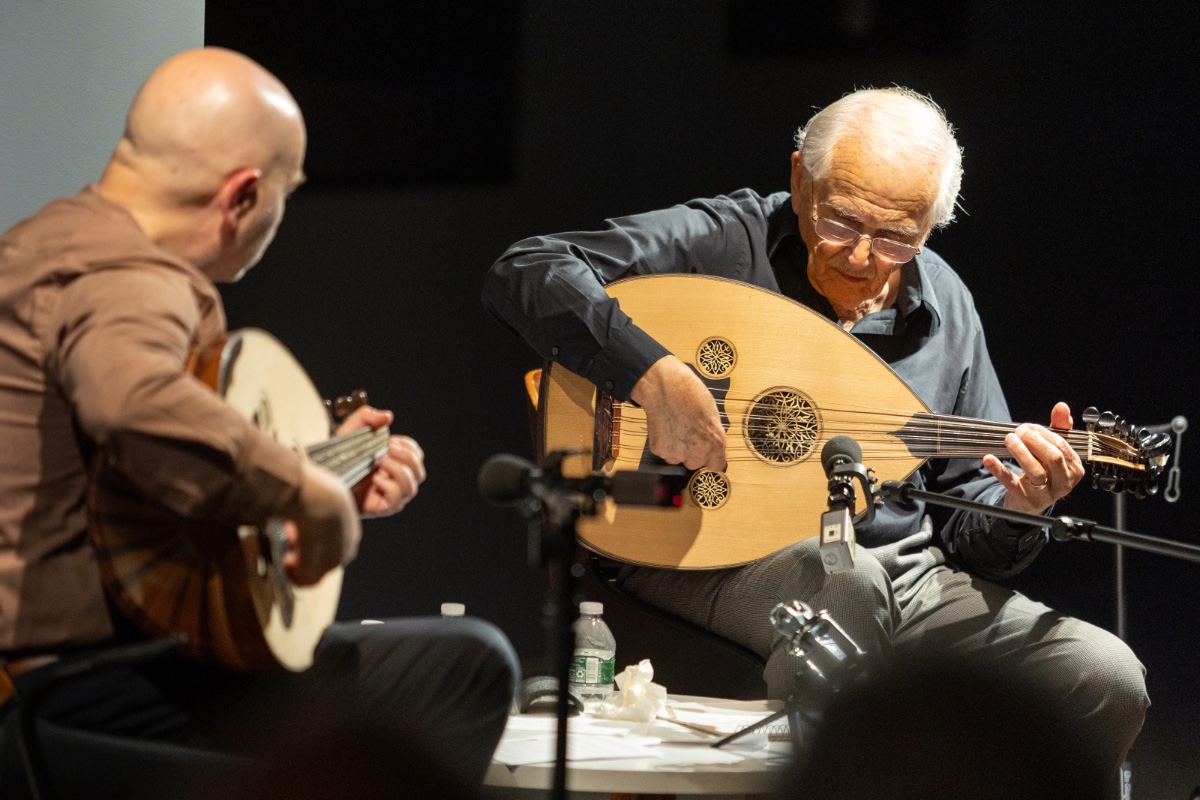
At the heart of the program were fifth-century sharakans (liturgical hymns) by Mesrop Mashtots, interpreted by composer Vahan Artsruni, alongside his song cycle Komitas: Ten Revelations, based on the poetry of Komitas. Artsruni embraced a compositional approach rooted in chamber music, fusing the monodic tradition of medieval sacred music with modern harmonic and timbral sensibilities. This synthesis offered audiences an immersive experience of the continuity of Armenian musical heritage—without compromising its authenticity.
Soprano Nelly Kalashyan, a soloist of both the Mother See of Holy Etchmiadzin and the Yerevan State Chamber Choir, performed in both parts of the program. With her deep experience in sacred music, Kalashyan delivered Mashtots’ hymns with spiritual intensity, drawing the audience into the profound and refined essence of ancient Armenian music. In the Komitas cycle, performing duets with the composer-singer himself, she conveyed the charm of Komitas’ lyrical universe, while highlighting the unique qualities of Artsruni’s musical language.
For Artsruni, this concert was more than just another milestone in his decades-long career—it was a particularly meaningful artistic statement. His collaboration with the orchestra of the National Opera Theatre, under the invitation and baton of director, Maestro Karen Durgaryan, ensured a performance of the highest caliber. Durgaryan’s conducting stood out for its exceptional professionalism and a deep inspiration, honoring the stylistic nuances of each work while achieving the expressive scale suited to a grand stage.
Stage design and lighting played a crucial role in shaping the concert’s aesthetic integrity. Soft, concentrated lighting created the impression of a sacred space—an atmosphere in which sound seemed to emanate from the spiritual realm. The attentive silence in the hall and the audience’s rapt engagement testified to the concert’s impact as not merely an artistic performance, but as a moment of spiritual communion.
The Mashtots–Komitas concert was a truly exceptional cultural event—one that built a bridge between the profound depths of fifth-century Armenian sacred music and the compositional sensibilities of the 21st century. It revealed the depth of Mashtots’ musical genius, highlighted the melodic potential of Komitas’ poetic language and affirmed the union of these two national treasures through Artsruni’s creative vision and refined artistry.