



FeaturedSpecial ReportsHeadlines
Women Deacons in the Armenian Apostolic Church Revisited
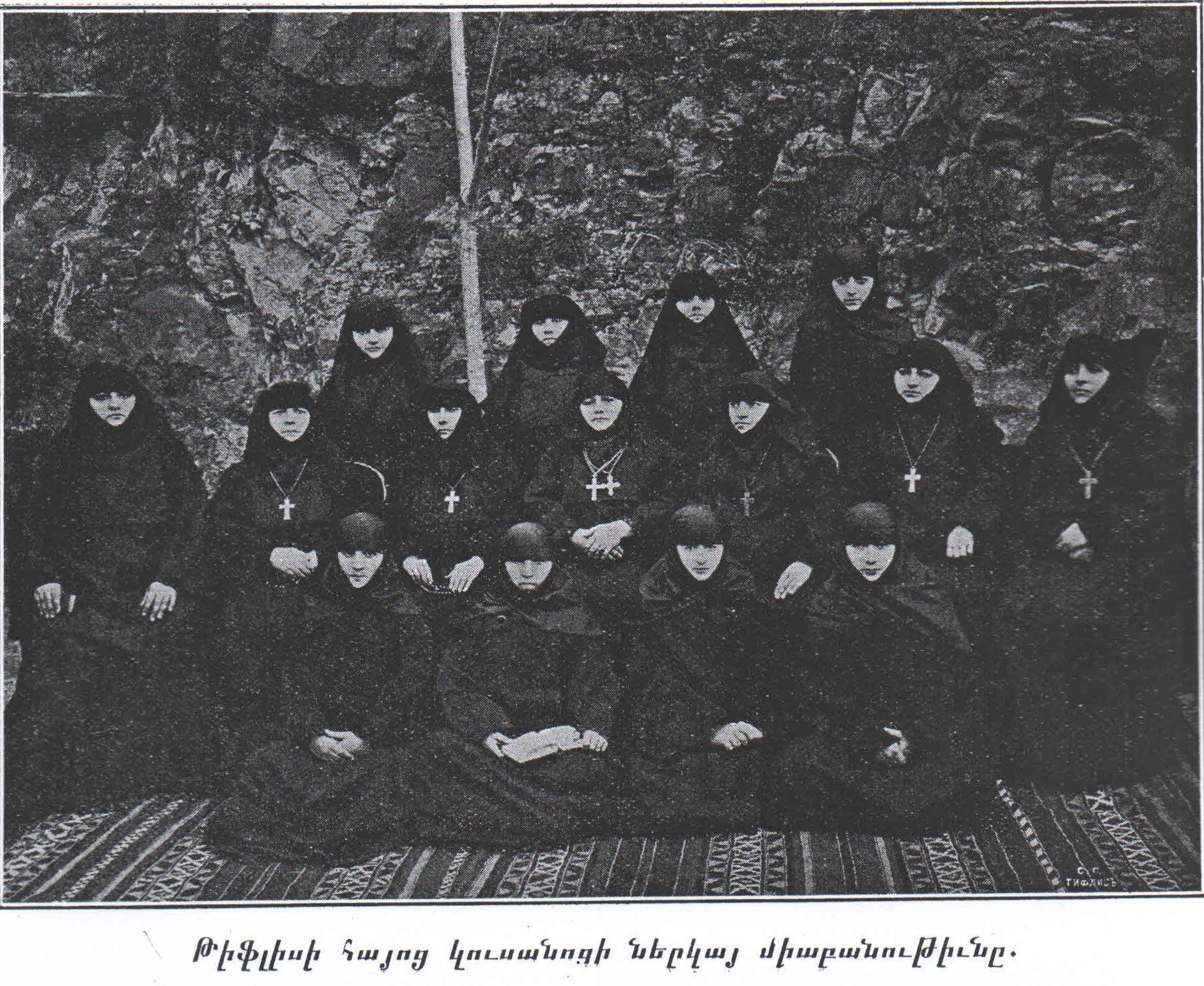
For more on the subject of Armenian women deacons and monastics in the Armenian Apostolic Church, see Shepherds of the Nation and A Nearly Forgotten History: Women Deacons in the Armenian Apostolic Church in the April 21, 2012 and July 6, 2013 issues of The Armenian Weekly.
The legacy of sublime love and humble service to God and the Armenian Nation left by the women monastics of the ArmenianApostolicChurch throughout the centuries is a priceless treasure and a source of awe and inspiration.

Very scholarly work. Enjoyed knowing the history of deaconesses in the church.
I was hoping to find something about a “Deegnatz Varjaran” (must mean “A school established for/by Women”) in Syria where my mother, Sirarpi Gerian, was temporarily placed during the 1915 Genocide.
Very interesting and thorough scholarly work. Are you planning a book on the subject?
Would be interesting to write al greater length on each of these women and their exraordinary achievements. Thank you for sharing these findings!
Dear Mrs.Knarik Meneshian,
I enjoyed reading your article. It brought back many memories. One and the most important being, my many discussions with high ranking clergy in Canada, about the ordination of women. The resistance of the Armenian Church leaders and administrators, who most of the time prefer to remain silent on this issue,sadly contribute to a status quo,which is hurting the mission of our church. I,for one, strongly believe that the ordination of women will enrich the spiritual life of our Church and her followers, make it truly inclusive, vibrant and a relevant institution, which could respond to many modern day societal issues with more urgency and attention.
At this time, I still consider a national discussion on this matter to be of paramount importance.
Talking about Kalfayan Orphange, I remember the Mother Superior of the Institution, Archdeaconess Mayr Mariam Koseyan reading the Gospel and performing Veraperoom during a Badarak, where Patriarch Shenhork Kalustyan of blessed memory, was the celebrant. The next day, it was front page news in both Armenian Dailies of Istanbul, Marmara and Jamanag.
A footnote: I was ordained by Patriarch Kalustyan in 1964 and in 1997 The Catholicos of All Armenians, H.H.Karekin I Sarkissian of blessed memory, in recognition of my service to Church and Nation has allowed me to wear the Order of St. Nerses Shenorhali with an Encyclical.
I look forward to read your articles.
Best regards,
Haig Misakyan, P.Eng.
Toronto, Canada
My dear Knarik, I am sorry to have missed meeting you in person at your recent Southern California lecture. However, I am very happy to have the above article in addition to the previous one, posted in 2012, for my Hye Culture file. This is a fitting start to Ծաղկազարդ, Աւագ Շաբաթ և Սուրբ Զատիկ:
Sylva
Thank you for this second article. It will become part of my intellectual resources file.
Best,
Sylva
Thanks for such an informative piece on such an important subject. I was wondering why there is mention at all in our history books for schools about the women scribes (krich), apart the one line mentioning their support for building churches. These women have been ignored and they deserve their place in our history.
Many have heard this story for the first time….I learned something new..thank you Knarik………..great job…