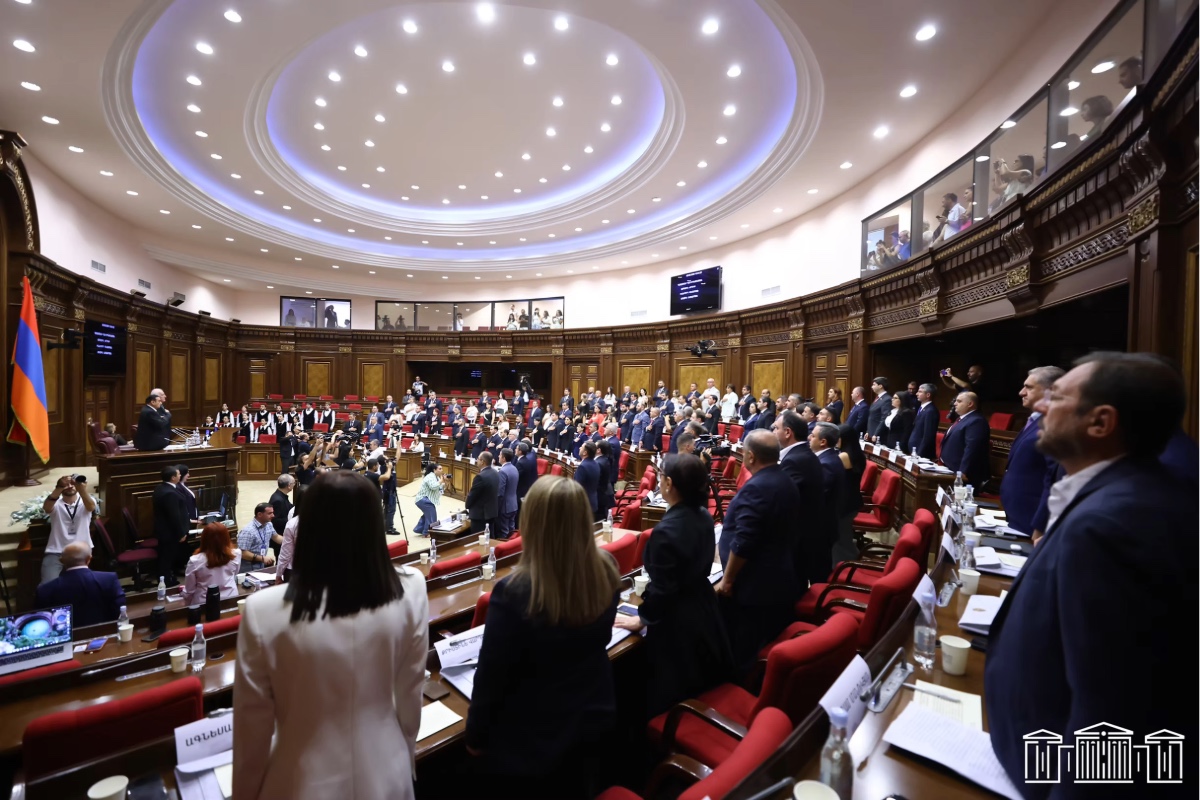




YEREVAN — A dispute inside Armenia’s parliament over the political value of the Armenian diaspora has escalated into a broader confrontation over who represents Armenian interests abroad and whether the government in Yerevan should have the final say over what those interests are.
At the center of the controversy is Civil Contract MP Arman Yeghoyan, who this week challenged one of the most familiar assumptions in Armenian political life: that Armenia carries greater political weight because it is backed by a worldwide diaspora.
Yeghoyan called the idea that “the stronger the diaspora, the stronger Armenia” a myth, arguing that the diaspora cannot be treated as though it were a unified state actor with a single center, budget, economy, permanent population or political command structure. Different communities and organizations frequently hold different — even opposing — positions, he said. There is no headquarters, no single representative and, as Yeghoyan put it, no single “telephone number” Yerevan can call to receive an answer from the diaspora in its entirety.
He also rejected the proposition, raised by opposition lawmakers, that Armenia belongs to one geopolitical “weight category” with its diaspora and a lesser one without it.
For Yeghoyan, the more important goal is repatriation. He argued that strengthening diaspora communities demographically has historically depended largely on new waves of emigration from Armenia or movement between diaspora communities — and that Armenia itself becomes stronger when Armenians abroad relocate to the republic, live there, work there and create value. But it was not only Yeghoyan’s demographic argument that provoked the opposition.
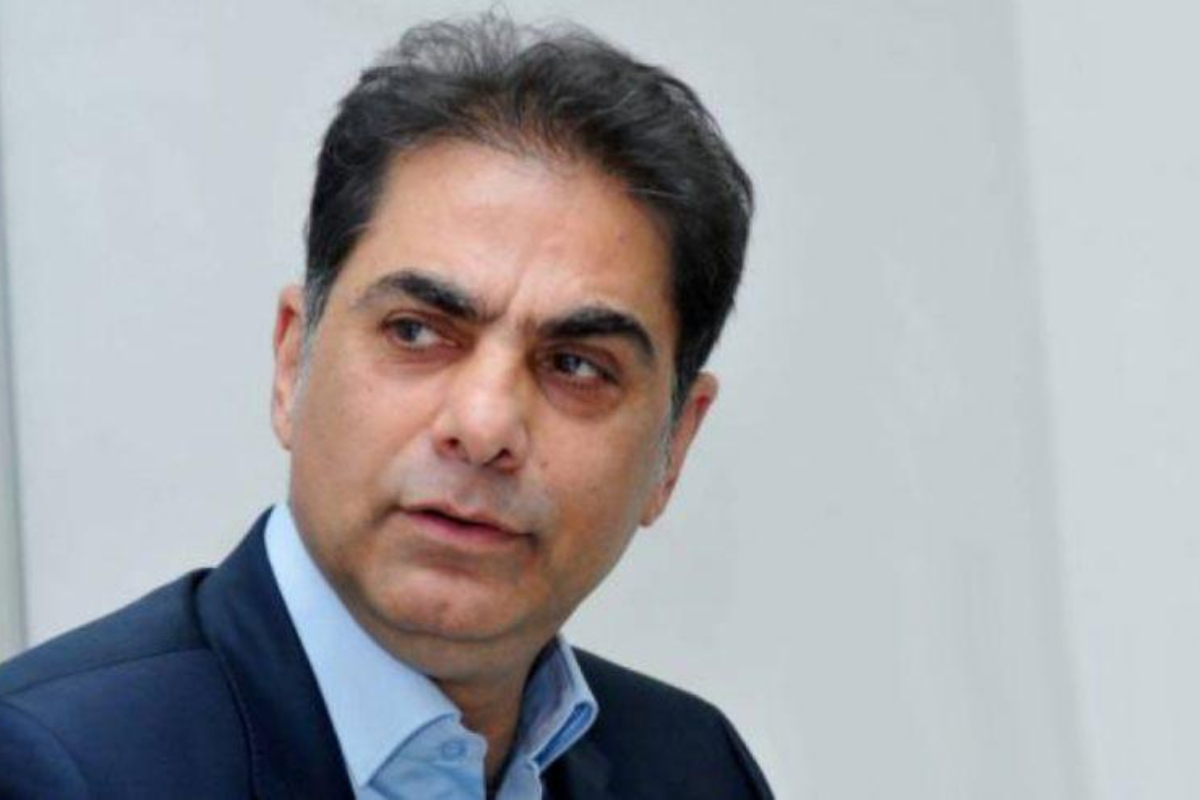

The confrontation deepened when he questioned the representative legitimacy of some of the best-known figures in organized Armenian advocacy abroad, including Armenian National Committee of America Executive Director Aram Hamparian, European Armenian advocacy leader Kaspar Karampetian and Mourad Papazian, co-president of the Coordinating Council of Armenian Organizations of France and a member of the ARF Bureau.
Yeghoyan questioned how many Armenians such figures actually represent and by what authority they speak.
Prime Minister Nikol Pashinyan’s government is already moving to reconsider how Armenians living abroad obtain citizenship, weeks after parliament adopted new residency requirements that will prevent many Armenian citizens living outside the country from voting in future national elections. For the opposition, those developments are increasingly difficult to view separately.
Vardanyan: The diaspora’s decentralization is its strength
ARF Armenia Supreme Body member and opposition lawmaker Kristine Vardanyan responded directly to Yeghoyan’s argument that the diaspora cannot possess coherent political “weight” because it lacks a single center. She agreed with the premise — and rejected the conclusion. The Armenian diaspora has multiple centers and operates through networks of influential organizations in more than 20 countries, Vardanyan said. That structure, she argued, does not reduce Armenian influence. It multiplies it.
“What is the problem?” Vardanyan asked in a video response. If an Armenian network operates across numerous political systems simultaneously, she argued, its influence becomes greater rather than smaller.
And according to Vardanyan, the government’s real dispute with that network is not organizational. It is political.
She argued that established diaspora institutions and activists continue to advance issues including international recognition of the Armenian Genocide, the rights of Armenians displaced from Artsakh, the return of Armenian prisoners held in Azerbaijan, and the security, territorial integrity and sovereignty of Armenia. Such organizations, she said, are capable of putting those issues before foreign governments and lawmakers and helping generate international political pressure or resolutions.
Pashinyan’s government has increasingly sought to close or transform parts of the traditional Armenian national agenda as it pursues “peace” with Azerbaijan and normalization with Turkey. Diaspora advocacy organizations, however, are not subordinate to Yerevan and have continued campaigning on issues that the government may no longer wish to emphasize internationally.
Vardanyan accused the government of going further: accommodating demands from Ankara and Baku to reduce international pressure over those issues, then treating Armenian organizations that refuse to do the same as political adversaries.
She also invoked Israel’s relationship with Jewish communities abroad. Would a country consider it a disadvantage when members of its diaspora have access to presidents, parliamentarians, governments and institutions around the world?
Papazian: Governments do not determine the diaspora’s legitimacy
ARF Bureau member Mourad Papazian rejected the idea that legitimacy comes only from holding elected office in Armenia. Diaspora organizations, he argued, can derive legitimacy from their members, history, public service, organizational capacity and measurable political results. “We have never claimed to speak for all Armenians,” he wrote, saying diaspora advocates speak from their convictions, responsibilities and decades of work on behalf of Armenia, Artsakh and Armenian causes.
Thus, he distinguished between government, state and nation. A government is temporary. The Armenian state is permanent. But the Armenian nation is broader still.
The Pashinyan government’s position places sovereignty firmly inside the institutions and citizenry of the Republic of Armenia. Diaspora organizations may assist the country, advocate for it or move to it, but they cannot claim democratic authority over policies determined by the people living under the Armenian state.
Papazian and Vardanyan argue that the Republic of Armenia does not own the Armenian nation, and the government of the day does not acquire the authority to determine which Armenian causes people outside the republic are permitted to advance. Papazian accused the government of attempting to bypass historic diaspora organizations in favor of interlocutors more acceptable to Yerevan.
In July 2022, Papazian was barred from entering Armenia after arriving at Zvartnots International Airport. Papazian says the measure was linked to his opposition to Pashinyan and an anti-government protest held during the prime minister’s 2021 visit to Paris. After approximately 18 months of litigation, Armenia’s Administrative Court ruled in his favor in January 2024 and required his removal from the list of foreigners barred from entering the country.
When a ruling-party MP asks who Papazian represents and by what authority he speaks, Papazian is answering not only as a diaspora political activist who was once prevented by the Armenian state from entering Armenia and later successfully challenged that decision in court.
Citizenship is now part of the debate
The parliamentary fight comes at an especially sensitive moment because, just days earlier, Armenia’s Interior Ministry publicly signaled that the government intends to reconsider the unusually liberal citizenship rules available to ethnic Armenians. On Aug. 14, acting Deputy Interior Minister Armen Ghazaryan said applications for Armenian citizenship surpassed 32,000 in 2025, the highest level recorded in independent Armenia. Applications had already exceeded 20,000 in each of the preceding two years, compared with an earlier average of roughly 7,000 to 8,000, he said. Ghazaryan linked much of the increase to ethnic Armenians who are Russian citizens.
Since travel restrictions were imposed on Russian citizens following the war in Ukraine, he said, some applicants appear to be seeking Armenian citizenship primarily to obtain Armenian travel documents.
For an ethnic Armenian, he said, Armenia essentially imposes no substantive requirements for acquiring citizenship beyond establishing Armenian origin. Ghazaryan called that situation a problem and said the government intends to introduce legislative amendments addressing it. There is an obvious state policy argument behind the proposal.
Within the space of several days, Armenians heard a senior government official question whether ethnic Armenians abroad should continue to have such an easy route to citizenship, followed by a ruling-party parliamentarian questioning the conventional wisdom that a powerful diaspora strengthens the Armenian state.
The right to vote
On July 3, Armenia’s parliament adopted amendments requiring Armenian citizens to have been physically present in the country for at least 366 days during the preceding 730 days to vote in regular parliamentary elections. The residency period is calculated 48 days before election day, with specific exceptions for diplomats and students abroad.
Civil society groups criticized the restrictions as unconstitutional and an infringement on political rights.
That is why the latest diaspora controversy is becoming more than a debate over whether Armenia is stronger with 8 million Armenians abroad or 3 million Armenians at home.
There are now practical questions attached to it. Who may vote? Who may become a citizen? Who is entitled to advocate in Armenia’s name? Who decides what constitutes an Armenian national interest?
And perhaps most consequentially: Does disagreement with the foreign policy of the government in Yerevan weaken Armenia — or can challenging that government itself constitute service to Armenia?