St. Gregory of Narek: The spiritual constitution of Armenians
A reflection on Pope Francis’ message
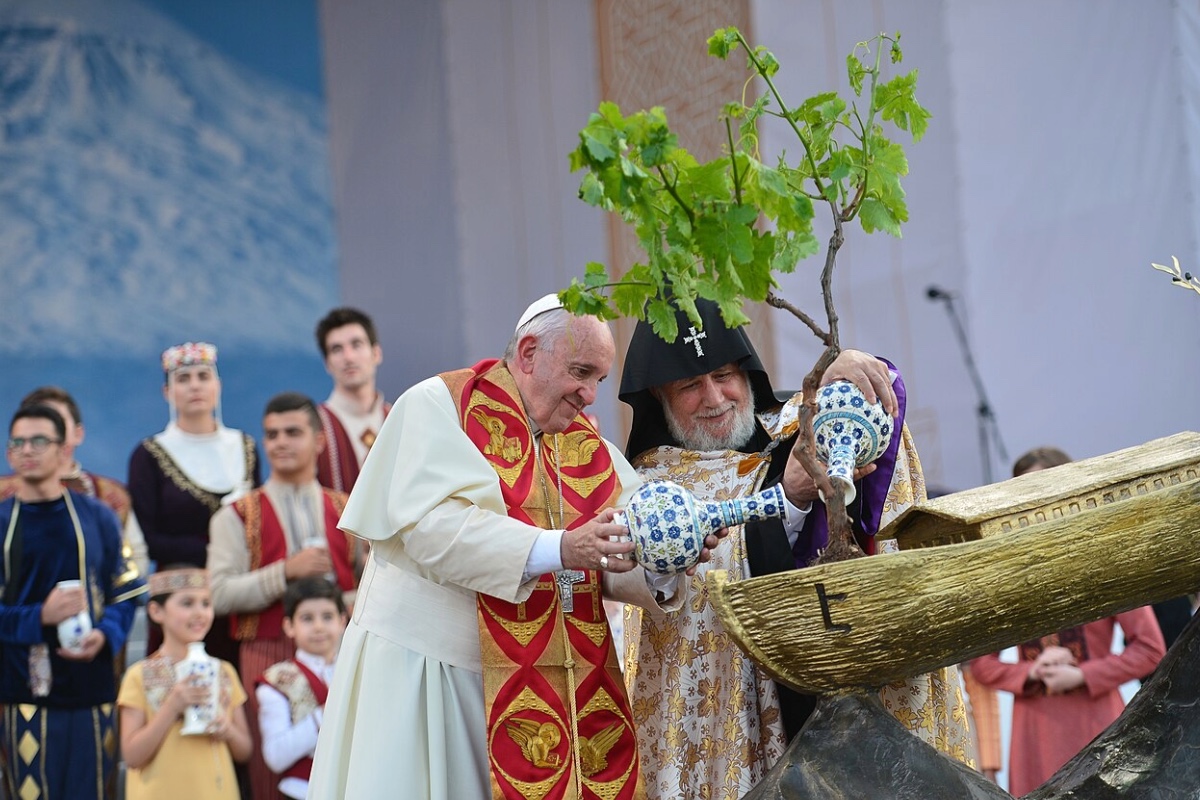
I will never forget that joyful Saturday afternoon of June 25, 2016, when, under the presidency of His Holiness Pope Francis and His Holiness Catholicos Karekin II, a deeply moving Ecumenical Prayer Service for Peace took place in Republic Square in Yerevan. The square was filled with people, with joy, reverence and expectation. It was truly an extraordinary moment in the history of Armenia: a moment of prayer, sacred song, music and hope-filled messages.
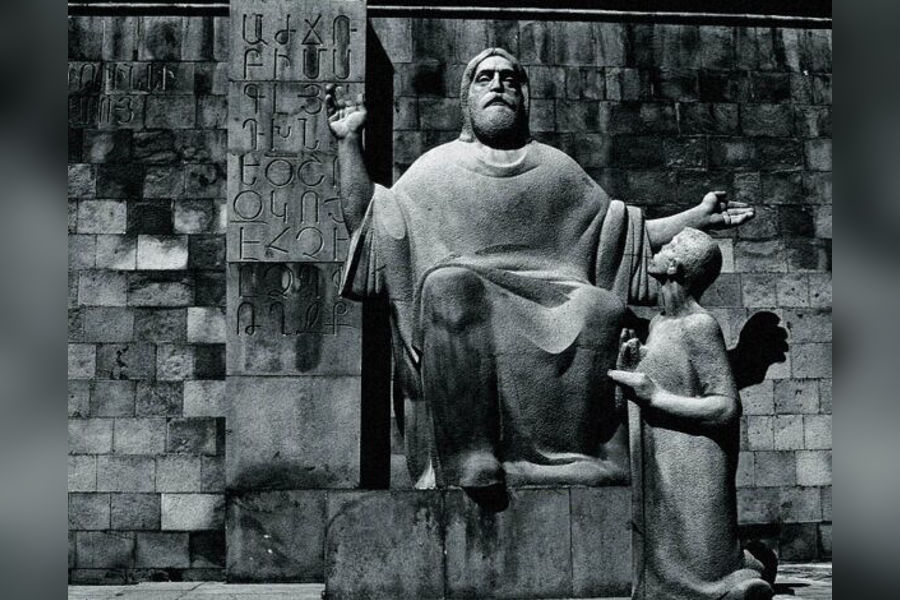
On that memorable occasion, Pope Francis delivered a profound reflection on the blessings of peace and the spiritual vocation of our people. In his message, he spoke of two great spiritual figures, not only of the Armenian Church, but of the whole Christian world: Saint Nerses the Graceful and Saint Gregory of Narek.
Speaking of Saint Gregory of Narek, the Holy Father said: “I would like to mention a great witness and builder of Christ’s peace, Saint Gregory of Narek.” In these difficult days, when the heart of our people is burdened, when anxiety weighs heavily upon many and when weariness, uncertainty and discouragement are felt in our homes, families and common life, we stand in need of light, depth and inward peace more than ever. At such times, we instinctively turn to those spiritual treasures that have sustained our people across the centuries. Among the brightest of these stands Saint Gregory of Narek, whom Pope Francis proclaimed a Doctor of the Church. He wrote the extraordinary Book of Lamentation, which the Holy Father beautifully described as “the spiritual constitution of the Armenian people.” And then Pope Francis offered Armenians a remarkable word of encouragement: “The whole world needs you.”
These words were far more than a memorable phrase. They were a word of fatherly recognition and a spiritual summons. Pope Francis reminded us that the true strength of our people lies not only in the trials we have endured or the history we remember, but in the depth of spirit we still carry within us. He reminded us that we are a people acquainted with suffering, yet also a people of prayer, endurance and inward light.
For us, Narekatsi is not only a great saint, nor only a towering figure of Christian literature. He is a voice close to the soul of our people. In reading him, we do not encounter distance, but recognition. He teaches us that the true measure of the human person is found in purity of heart, vigilance of conscience and sincerity of repentance. Yet he does not speak to condemn; he speaks to heal. He reminds us that no one who stands honestly before God is ever without hope.
Today, our people need not only external solutions, but inward consolation. We need to listen to one another with greater patience, to understand one another more deeply, and to let the heart guide the tongue. We need the return of respect in our speech, patience in our common life, honesty in our public witness, and the quiet strength of prayer within the soul. These are among the spiritual lessons Narekatsi continues to offer with rare gentleness and power.
When we say that Narekatsi is our “constitution,” we do not mean this in any narrow or literal sense. Rather, we mean that the life of a people must be rooted in conscience. Without conscience, no law can truly guide. Without love, even truth can become severe. Without inward renewal, no nation can fully recover its strength. We need not only strong institutions but good and faithful hearts. We need not only public speech, but prayer; not only claims upon others, but responsibility within ourselves.
Beloved brothers and sisters, one of the deepest needs of our time may well be this: that we learn again how to live from the soul. We must learn anew to grieve our faults, to ask forgiveness when we have wounded one another, to keep silence when words no longer serve the good, to pray when our strength is spent, and to hope when everything seems dark. Along this path, Narekatsi remains a sure, compassionate, and luminous guide.
“The world needs you” is not only a statement of dignity; it is also a word of consolation and calling. Yes, the world needs us — not only because we are an ancient people, nor only because we have suffered much, but because we still have something of lasting worth to offer. We can offer the steadfastness of faith, the depth of culture, the beauty of language, the warmth of family, the silence of prayer and the strength of perseverance. Yet these gifts shine fully only when we ourselves remain inwardly alive, when the soul does not wither and when conscience does not fall silent.
Without conscience, no law can truly guide. Without love, even truth can become severe. Without inward renewal, no nation can fully recover its strength.
Let us not leave Narekatsi only in books, ceremonies or solemn remembrance. Let us welcome him into our homes, our thoughts and our hearts. Let us allow his voice to make us gentler in spirit, clearer in mind and steadier in our steps. For when the human heart is renewed, the life around it also begins to change.
Let us pray that Saint Gregory of Narek may intercede for our people. Let us pray that God may grant us peaceful hearts, wise minds, and a more merciful spirit toward one another. Let us pray that our people, despite every wound they bear, may lose neither faith nor dignity nor hope.
May Narekatsi be the light of our hearts, the strength in our weakness and the guide of our troubled days. And may our people, by the grace of God, rediscover inward peace, renewed unity and living hope.