



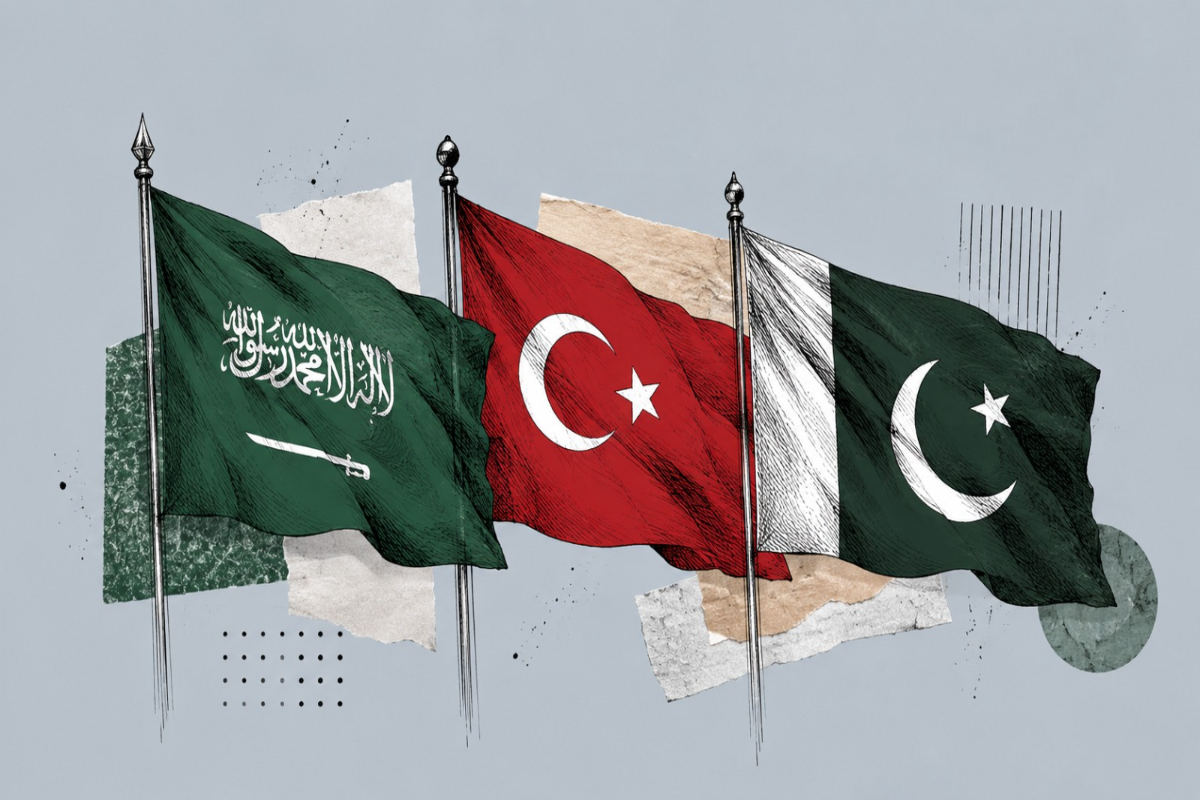
The joint defense agreement signed in Mecca on August 7 by Saudi Arabia, Turkey and Pakistan should not be read simply as another regional alliance. Its importance lies as much in its timing as in its content. States rarely seek new security commitments when they are confident that the existing order is working. They do so when they begin to doubt what comes next.
Only weeks before Mecca, the foreign ministers of the R-4 — Egypt, Saudi Arabia, Turkey and Pakistan — gathered in Cairo on Ju


The Turks have a very long history of staging red flag incidents.
They will blow up a border post and then say that Armenia attacked them.
The Mecca Pact is a threat.
What alarms me the most is that the Turks are advancing whilst Armenia is stagnating.
We are being outflanked!
A capable leadership would recognise the threat posed by the Mecca Pact and would respond by reaching out to Greece in the West and India in the East.
The Turkish moves must be matched by Armenian counter-moves.
Instead, nothing is likely to happen.
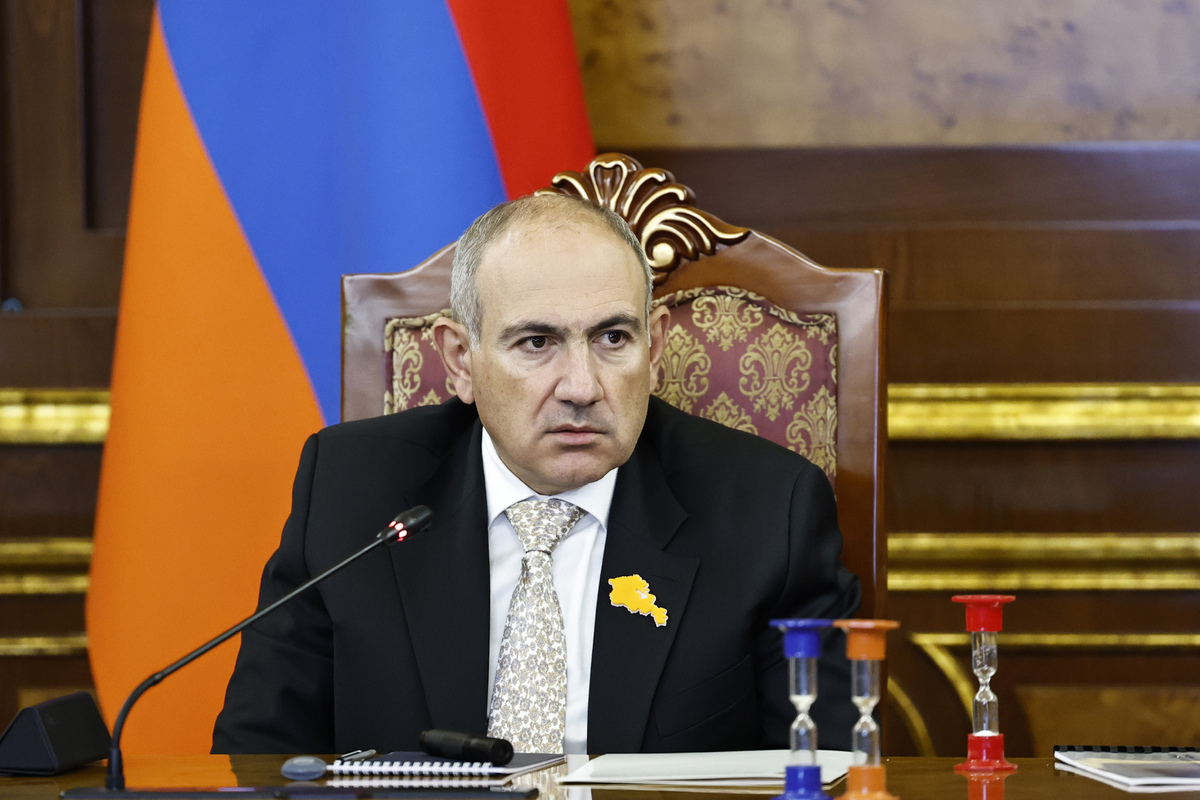
We haven’t got a capable leadership; we have Pashinyan!
If the June 2026 elections had been rigged, there would’ve been mass protests, an uprising even, in Yerevan.
There weren’t any.
This means that the Armenian People accept the June 2026 results and Pashinyan.
A mixture of lethargy and fatalism rules over Armenia.
100%
The famous quote by the French philosopher Joseph de Maistre, who said, “Every nation gets the government it deserves.” (“Toute nation a le gouvernement qu’elle mérite.”), also applies to Armenia. That the Armenian electorate voted for a traitor like Pashinyan thrice (leaving aside his vote rigging in the last election), shows that a large segment are naive, ignorant and indifferent, and they bear as much resonsibility for the plight of Armenia with their votes.
Hi Steve,
There’s no point in us trying to make Armenia great again if all that the Armenians want is to be dhimmis.
The last time Armenia disappeared, 800 years of dhimmitude followed.
Another 800 years of dhimmitude beckons.
Treason, like corruption, is contagious and ultimately infects a society and destroys a country, and not just rots it like corruption. Throughout its history, Armenia has been a victim not only of invaders, but also of traitors who collaborated with them. Vasak Syuni betrayed Armenia to Sassanid Persia, and of course, his modern-day reincarnation, Pashinyan, is busy betraying Armenia to Turkey and Azerbaijan. Their apologists shamelessly claim that they “saved” Armenia! This millennia-long vicious cycle of betrayal continues. Undermining the morale of society, breaking its spirit, destroying its will to fight, destroying its hopes for the future, forcing subservience and accept all this as their destiny, have always been the goals and tactics of invaders and their treacherous collaborators. Welcome to the joint Turkish-Azerbaijani puppet state of Ermenistan with their traitor puppet Pashinyan as vali (governor)!
Armenia has been reaching out to Greece and India since independence but the process was cautious due to legacy links to Russia and until 2018 overtly pro Russian governments. The behaviour of Russia with extensive weapons sales to Azerbaijan funded by it’s petrodollars, the same Russia which had neocolonialy frustrated Armenian prospects of being a gas transit from Iran. The defeat of 2020 especially as Russia supported Azerbaijan taking control of the area around Arktash and the aftermath led to looking elsewhere more. Nevertheless the pact led by three significant Sunni countries is clearly aimed at Iran the major Shia power which Armenia has all weather cordiality with and possibly Israel which is no friend of Armenia. Whilst it’s possible that Turkey could stage a false flag against Armenia it’s generally understood it wouldn’t be dependent on backing like Ukraine is against Russia, if it was to attack Armenia upon that basis. Nevertheless Armenia should definitely draw closer to Greece and France and India and where practical to Iran as for Israel only if if distance from Iran, currently unlikely given their confrontation which Armenia has suffered collateral damage from as it was a key attraction to Azerbaijan for Israel to partner with driven by their mutual animosity with Iran. Given the incestous style of relationship with the USA under Trump with Israel, improving relationships with the USA without improvement with Israel is doubtful.
For a Red Flag operation to be successful, the initial attack has to be plausible. The idea that Armenia would unilaterally attack a Turkish border post is absurd and nobody with more that 2 neurons in their brain would believe it. Instead of all the doom and gloom about the recent election, recognize that Pashinyan did not obtain a supermajority and overperformed among older voters. The future of the country is more nationalistic and will resist, to whatever extent possible, Turkish and Azeri domination.
You only have to look at Armenian history, especially Armenian oral folk history, to see the red flag incidents by the Turks.
The Turks would always come up with some allegations ie, an attack on an Imam; on a mosque; of a Turkish girl or, as happened in Western Armenia during the Hamidian Massacres, pages torn from a Koran.
Anything and everything that would inflame the local Turks against Armenians.
Never once have the Turks bothered with how improbable or implausible the allegations are against the Armenians.
What the Turks were like then is how they are now.
Is there a general consensus that we need the European Union ?
Isn’t Pashinyan making overtures to the west?
Would you rather see an Armenia that is absorbed by Russia?
The Turks applied to join in 1980 – 46 years later, they’re still waiting!
The EU has used every trick in the book to keep the Turks out.
Do you really think they’ll ever let Armenia join?
They can’t without letting the Turks join as well.
And they’ll never do that as they do not want 100 million Muslims in the EU.
Yeah I have doubts that Turkiye will ever join the EU, even if there are solutions and generous concessions concerning Cyprus Reunification, Kurdish Issues and justice for 1915-related issues. I don’t think it is a big loss for Ankara either and it’s no big deal. Brussels pushes mass migration and lack of soverignty for it’s member states. So in other words, it isn’t worth it for Ankara, Yerevan or other regional powers like Baku, Tblisi, or Kiev to join the bloc.
Unfortunately in June 2026 elections voters didn’t have an alternative to Pashinian. The so called opposition is well known corrupt Russian proxy! At least Pashinian trying to distance from Russia and get closer to Europe and the USA. There are smart well educated and skilled politicians, like former prime minister Armen Darbinian and some others, but they are not united and don’t have necessary resources and most important western political and financial support!
Pashinyan can try and do what he likes but you know what he can’t do?
He can’t change Geography!
So many of Pashinyan’s acolytes act, talk, think and behave as if Armenia were in the heart of Europe, ie, right next to Austria!
Unfortunately, however, neither Pashinyan nor any of his acolytes have a wand that can make that happen.
Whilst there is wishful thinking about Armenia as being in Europe, it’s rather vague and far from the heartland. Nevertheless there’s also wishful thinking about Russia, it doesn’t adjoin Armenia there’s the high Caucasus mountains and Georgia and or Azerbaijan in-between regarding landinks with Russia, there’s also the fact that Russia behaved disgracefully and hypocritically about about Armenia over Azerbaijan when it had its own occupation of parts of Georgia and Ukraine and it’s current preoccupation with Ukraine means it’s not well placed to support Armenia in addition to geographical obstructions. Yes being realistic about Russia which was very overdue shouldn’t lead to wishful thinking about Europe/ EU/ NATO either.