



Weakening the diaspora means weakening Armenia
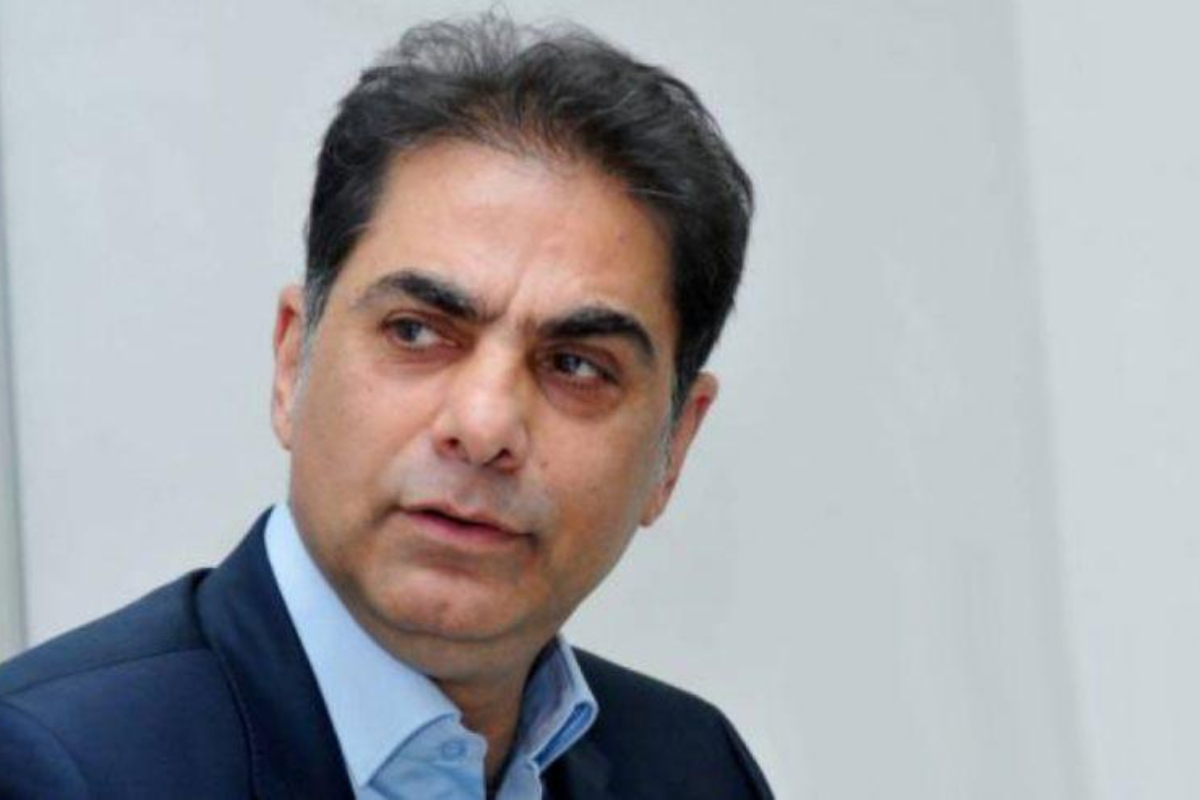
Editor’s note: Mourad Papazian, ARF Bureau member and co-president of the Coordinating Council of Armenian Organizations of France (CCAF), responds to remarks made by Civil Contract MP Arman Yeghoyan concerning him, ANCA executive director Aram Hamparian and EAFJD president Kaspar Karampetian, as well as the broader role and legitimacy of the Armenian diaspora.
From the podium of Armenia’s National Assembly, Arman Yeghoyan, an MP from the Civil Contract party, Nikol Pashinyan’s political force, asked who Aram Hamparian, executive director of the Armenian National Committee of America; Kaspar Karampetian, president of the European Armenian Federation for Justice and Democracy; and I, Mourad Papazian, co-president of CCAF and member of the ARF Bureau, are, and how many people we supposedly represent.
Throughout his remarks, Yeghoyan sought to diminish the role of the diaspora, question its usefulness, and ultimately advance the absurd notion that a stronger diaspora somehow means a weaker Armenia.
The issue, however, is not about us personally. The real issue is the vision that Yeghoyan and those who share his views have of the Armenian nation, its history, and its future.
We have never claimed to speak on behalf of every Armenian.

We speak on the basis of our convictions, the responsibilities entrusted to us, and decades of public service devoted to Armenia, Artsakh, and the Armenian Cause. Legitimacy does not derive solely from an electoral mandate. It is also earned through service, consistency, the ability to mobilize communities, and tangible results.
Governments are temporary. The state endures. And the Armenian nation is broader than either.
A century of resistance and reconstruction
The modern Armenian diaspora was not born out of convenience or choice. It is largely the consequence of genocide, exile, forced displacement, and the destruction of the Armenian communities of the Ottoman Empire.
After 1915, survivors who had been stripped of their homes, property, and often their families rebuilt collective Armenian life in Lebanon, Syria, France, the United States, Canada, Argentina, Uruguay, Greece, Cyprus, Iran, Egypt, Australia, and dozens of other countries.
They built churches, schools, cultural centers, and youth organizations. They founded newspapers, social institutions, and charitable organizations. They preserved and passed on the Armenian language, particularly Western Armenian, which is now endangered, along with our faith, culture, collective memory, and sense of belonging to one nation.
The Armenian Apostolic, Armenian Catholic, and Armenian Evangelical Churches; the Mother See of Holy Etchmiadzin and the Catholicosate of the Great House of Cilicia; the Armenian General Benevolent Union; the Armenian Revolutionary Federation; Hamazkayin; Homenetmen; the Armenian Blue Cross and Armenian Relief Society; and thousands of other educational, cultural, athletic, and charitable institutions ensured that dispersion did not become disappearance.
These institutions are not perfect. No human institution is. But denying their historic role means erasing an entire century of cultural and national resistance.
Without them, much of the diaspora would have disappeared through assimilation. Without them, millions of descendants of genocide survivors would have preserved neither their language nor their memory, nor maintained a living connection with Armenia.
The Armenian nation’s unofficial diplomacy
During the Soviet era, the Armenian Soviet Socialist Republic did not possess an independent foreign policy capable of freely defending the national rights of the Armenian people.
Under those conditions, the Armenian Revolutionary Federation and the worldwide network of Armenian Cause committees assumed the role of an unofficial Armenian diplomacy.
In Washington, Paris, Brussels, Ottawa, London, Buenos Aires, Beirut, Tehran, and many other capitals, they kept the Armenian Genocide, the rights of the Armenian people, and the very question of Armenia’s existence on the international political agenda.
That work did not end with Armenia’s independence in 1991. It continued in service of the Republic of Armenia, its security, development, and international standing.
The diaspora mobilized after the 1988 earthquake, throughout the years of blockade, during periods of war, in defense of Artsakh, in support of refugees, through humanitarian assistance, investment, and by opening the doors of foreign political institutions to representatives of Armenia.
Opposing the policies of a particular Armenian government has never meant opposing the Armenian state.
At times, opposing a government’s policies is precisely what serving the long-term interests of the state requires.
Undeniable international results
International recognition of the Armenian Genocide did not happen on its own.
It is the result of decades of work by survivors, their descendants, historians, churches, and Diaspora organizations, among which Armenian Cause committees have played a decisive role.
As of 2026, recognition of the Armenian Genocide has been recorded in various legal forms by dozens of states around the world, through legislation, parliamentary resolutions, or official government decisions.
International bodies and organizations have likewise adopted resolutions, reports, declarations, and positions addressing the Armenian Genocide and the historical rights of the Armenian people.
This is what an organized diaspora can accomplish: it can transform a memory threatened with erasure into an internationally recognized historical truth.
Turkey and the European Union
We also opposed Turkey’s accession to the European Union for as long as Ankara continued to deny the Armenian Genocide, maintain the blockade of Armenia, occupy part of Cyprus, and violate the fundamental principles on which the European project is built.
That struggle was never directed against the Turkish people. It was a defense of Europe’s credibility and of the principles of truth, justice, democracy, and respect for the rights of peoples.
In 2005, the European Parliament itself affirmed that recognition of the Armenian Genocide should be a condition of Turkey’s European accession process.
Such positions did not emerge in a vacuum. They were the result of years of sustained work by Armenian organizations throughout Europe.
The friendship between France and Armenia
The exceptional relationship between France and Armenia is not simply the product of diplomatic declarations.
It has been built over decades by the Armenian community of France, its institutions, and generations of activists working with French political leaders across party lines.
The French law of Jan. 29, 2001, recognizing the Armenian Genocide, parliamentary resolutions in support of Armenia and Artsakh, sister-city partnerships, decentralized cooperation, the official designation of April 24 as a national day of remembrance, and the sustained mobilization of French elected officials are all products of that work.
I have played my part in this struggle, often on the front lines.
Together with many others, I contributed to turning French-Armenian friendship into a political and strategic reality. We opened doors in Paris, in the National Assembly, the Senate, the European Parliament, and within the administrations of successive presidents of the French Republic.
But this is not a personal achievement.
The credit belongs to the thousands of activists who worked, organized, advocated, and sacrificed over many decades.
My expulsion and legal victory
It was precisely because I participated in this struggle, and because I refused to remain silent in my criticism of Nikol Pashinyan’s policies, that on the night of July 13-14, 2022, the Armenian authorities barred me from entering my own homeland and expelled me from Zvartnots Airport.
The alleged justification was my supposed participation in a protest against Nikol Pashinyan in Paris on June 1, 2021.
Yet during the subsequent court proceedings, Armenia’s National Security Service did not even rely on that justification before the court. No credible basis for the measure imposed against me was presented to the judiciary.
After 18 months of legal proceedings, in January 2024 the Yerevan Administrative Court ruled in my favor and ordered my removal from the list of undesirable foreigners.
That ruling demonstrated an essential principle: no government should be able to arbitrarily decide that an active Armenian who criticizes those in power can be declared unwelcome in his own homeland.
A free diaspora will never be an administrative appendage of a government
Nikol Pashinyan’s government is attempting to bypass the diaspora’s historic institutions and replace them with interlocutors and “representatives” of its own choosing.
The Armenian state, of course, has every right to organize its relations with the diaspora. But it does not have the right to decide who represents free citizens living in democratic societies.
The diaspora is neither Nikol Pashinyan’s electoral constituency nor an administrative extension of the government in Yerevan.
Dialogue with the diaspora does not mean engaging only with those who agree with the government while excluding those who criticize it.
That is not dialogue. It is an attempt at political subordination.
And it will fail.
The diaspora’s major institutions existed before the current government and will continue to exist after it. Their legitimacy comes from their history, their members, their communities, and their record of service, not from the approval of any government office.
Alignment with the objectives of Ankara and Baku
Ilham Aliyev has publicly described the global “Armenian lobby” as one of Azerbaijan’s principal adversaries. Recep Tayyip Erdoğan has similarly criticized Armenian Diaspora organizations in France and the United States for obstructing his vision of normalization.
When Armenia’s own authorities attack the diaspora’s historic institutions, attempt to delegitimize Armenian Cause activists, and replace pluralism with political obedience, the practical result aligns with what Ankara and Baku have sought for decades.
There is no need to invent a secret chain of instructions to recognize this convergence.
The political outcome is visible: weakening the institutions that defend the memory of the Armenian Genocide, the rights of Artsakh, and Armenia’s national interests directly benefits the agendas of those who have long sought to neutralize organized Armenian advocacy.
The Pan-Turkic project does not fear a silent, divided, and disorganized diaspora.
It fears a conscious, organized, influential diaspora capable of acting effectively in the world’s major democratic countries.
A strong diaspora is not built by emptying Armenia
The logic advanced by the Pashinyan government rests on a fundamental mistake: it confuses demographic strength with political strength.
The diaspora does not become stronger simply because Armenians leave Armenia.
It becomes stronger when existing communities organize themselves effectively, preserve and transmit the Armenian language, educate new generations, develop politicians, scholars, journalists, lawyers, entrepreneurs, and community leaders, build networks of expertise, and mobilize economic, cultural, and diplomatic resources.
None of this requires a single person to leave Armenia.
We can simultaneously want more Armenians to live in Armenia, encourage greater repatriation, and work for a stronger, better-organized, and more influential diaspora.
These goals are not contradictory. They reinforce one another.
Armenia and the diaspora are not two communicating vessels, one of which must empty for the other to fill.
They are two dimensions of the same nation.
Armenia is the sovereign state of its citizens, but it is also the homeland of the entire Armenian nation.
We will forget neither Artsakh nor the hostages in Baku
The Armenian nation will not forget Artsakh.
It will not forget the 120,000 Armenians forcibly displaced in 2023, their right to live safely in their homeland, or the Armenian cultural and religious heritage now under threat.
Nor will it forget the former leaders of Artsakh, military personnel, civilians, and other Armenian prisoners still being held in Baku.
Their immediate and unconditional release must remain a central, public, and non-negotiable demand in any engagement with Azerbaijan.
It is unacceptable for this issue to be pushed to the margins.
A peace built on abandoning Armenian prisoners, erasing Artsakh, and silencing the diaspora will be neither just nor sustainable.
Governments come and go; the nation remains
Mr. Yeghoyan, your mandate and those of your colleagues are temporary.
The Armenian nation is permanent.
You ask: Who is Mourad Papazian?
I am one of millions of Armenians, heir to a history no one can erase and servant of a homeland no one can take away from me.
I do not need the permission of Nikol Pashinyan’s government to be Armenian.
And I certainly do not need its permission to defend Armenia, Artsakh, the Armenians held in Baku’s prisons, or the historical truth of the Armenian Genocide.
We will continue to struggle for the independence, sovereignty, and security of the Republic of Armenia.
We will continue to defend the Armenian people, their heritage, their rights, and their interests wherever Armenians live.
A strong diaspora is not a threat to Armenia.
It is strategic depth. It is an irreplaceable source of diplomatic, cultural, economic, and political strength.
To weaken the diaspora is to weaken Armenia.
To set Armenia and the diaspora against one another is to serve the interests of those who seek to weaken the Armenian nation as a whole.
Against that effort, we will continue to place our memory, our unity, our organization, and our determination.
Governments come and go. Armenia and the Armenian nation remain.

I agree, however there is a deeper more sinister agenda at work. Which has already mostly been accomplished; to separate Armenia from Russia in order to weaken mainly Russia. Armenia will be sacrificed as well as Ukraine currently is.