



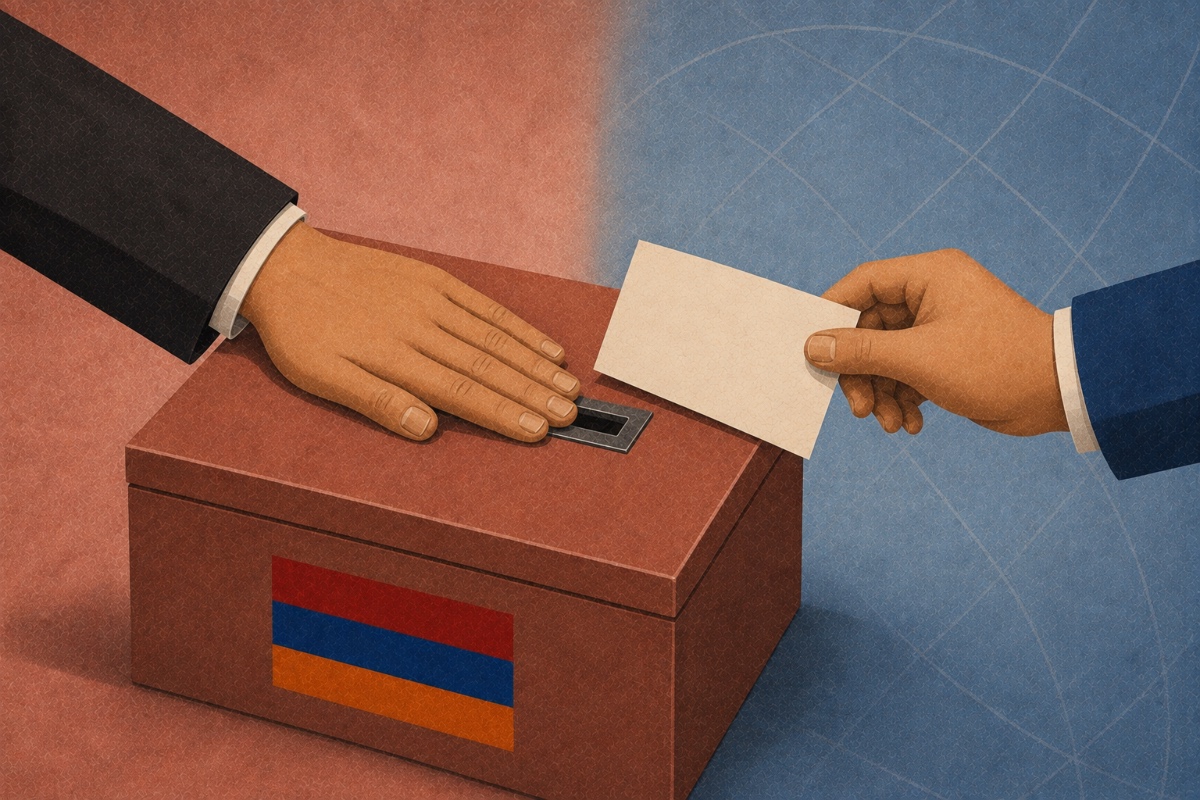
YEREVAN — A dispute inside Armenia’s parliament over the political value of the Armenian diaspora has escalated into a broader confrontation over who represents Armenian interests abroad and whether the government in Yerevan should have the final say over what those interests are.
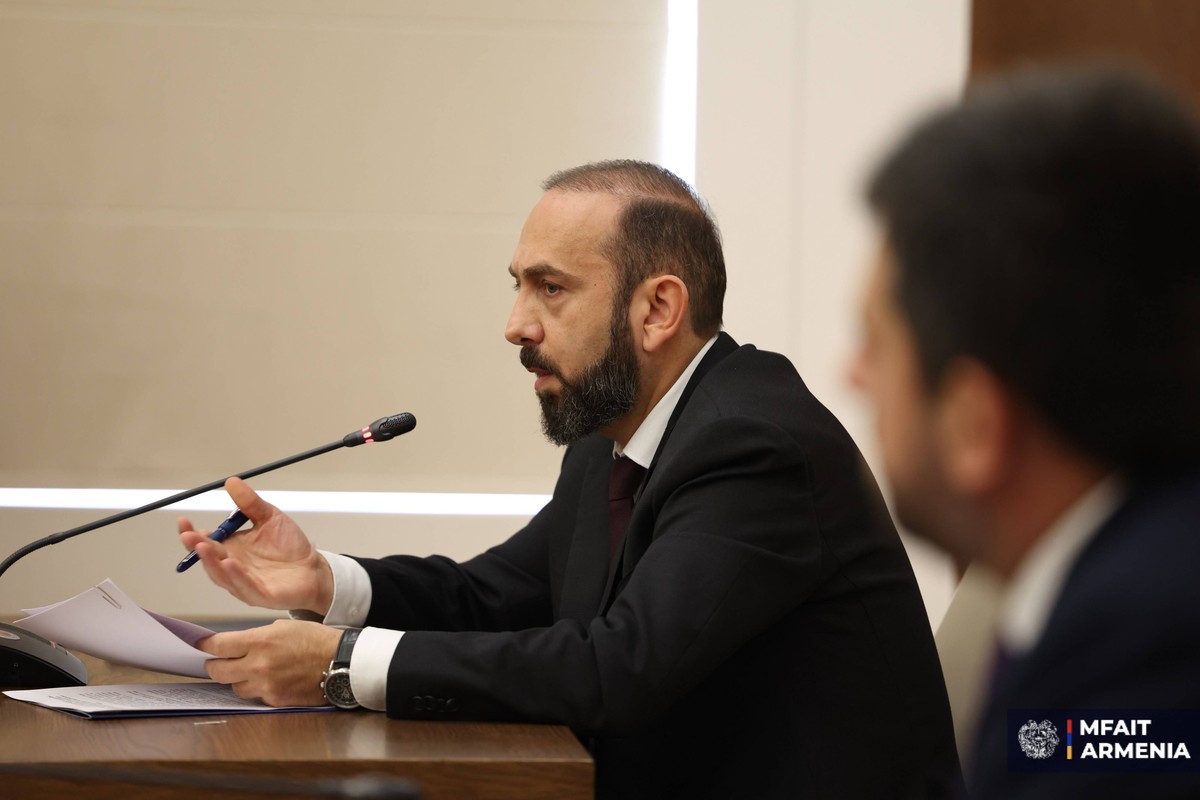
At the center of the controversy is Civil Contract MP Arman Yeghoyan, who this week challenged one of the most familiar assumptions in Armenian political life: that Armenia carries greater political weight because it is backed by a worldwide diaspora.
Yeghoyan called the idea that “the stronger the diaspora, the stronger Armenia” a myth, arguing that the diaspora cannot be treated as though it were a unified state actor with a single center, budget, economy, permanent population or political command structure. Different communities and organizations frequently hold different — even opposing — positions, he said. There is no headquarters, no single representative and, as Yeghoyan put it, no single “telephone number” Yerevan can call to receive an answer from the diaspora in its entirety.
He also rejected the proposition, raised by opposition lawmakers, that Armenia belongs to one geopolitical “weight category” with its diaspora and a lesser one without it.
For Yeghoyan, the more important goal is repatriation. He argued that strengthening diaspora communities demographically has historically depended largely on new waves of emigration from Armenia or movement between diaspora communities — and that Armenia itself becomes stronger when Armenians abroad relocate to the republic, live there, work there and create value. But it was not only Yeghoyan’s demographic argument that provoked the opposition.

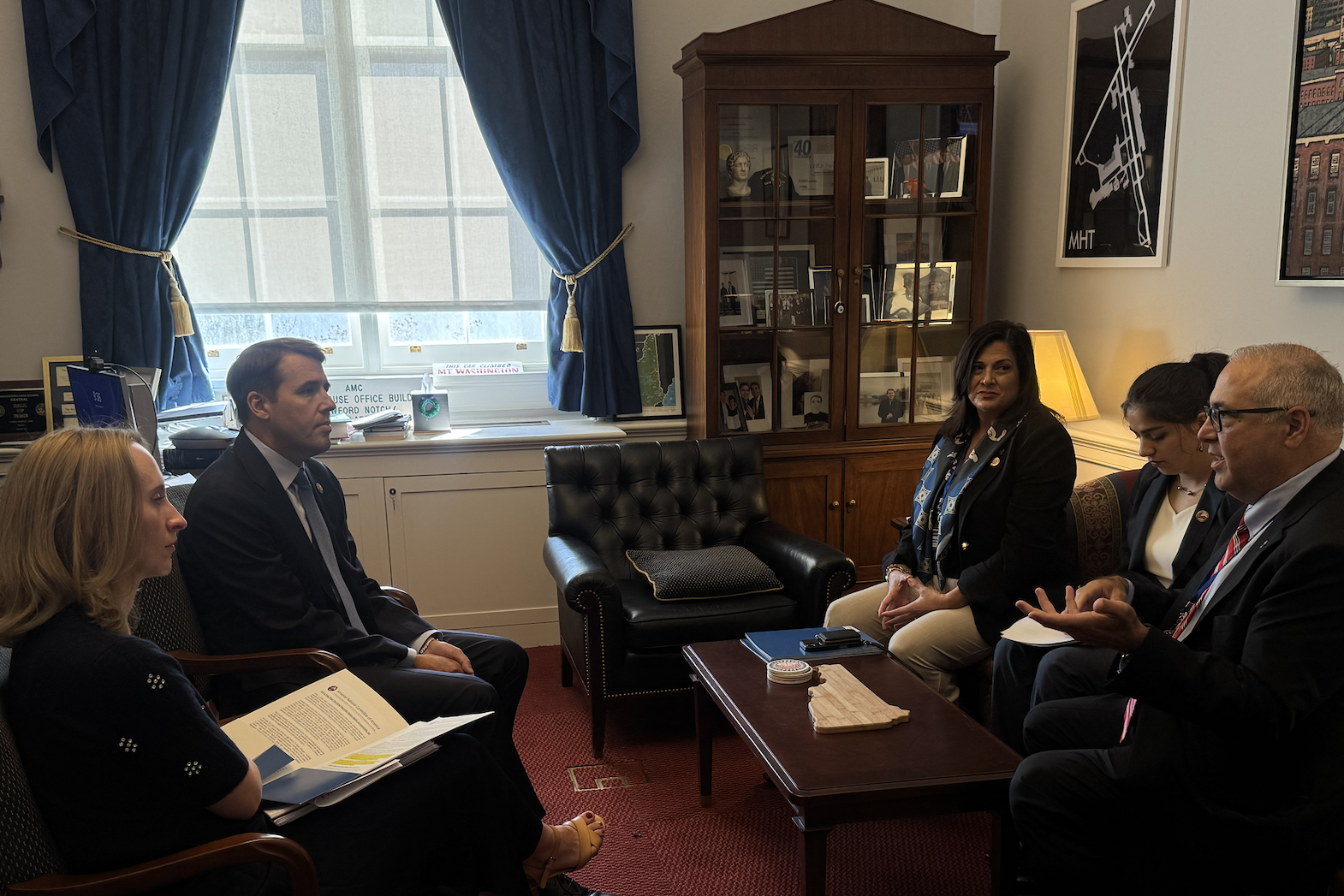
The confrontation deepened when he questioned the representative legitimacy of some of the best-known figures in organized Armenian advocacy abroad, including Armenian National Committee of America Executive Director Aram Hamparian, European Armenian advocacy leader Kaspar Karampetian and Mourad Papazian, co-president of the Coordinating Council of Armenian Organizations of France and a member of the ARF Bureau.
Yeghoyan questioned how many Armenians such figures actually represent and by what authority they speak.
Prime Minister Nikol Pashinyan’s government is already moving to reconsider how Armenians living abroad obtain citizenship, weeks after parliament adopted new residency requirements that will prevent many Armenian citizens living outside the country from voting in future national elections. For the opposition, those developments are increasingly difficult to view separately.
Vardanyan: The diaspora’s decentralization is its strength
ARF Armenia Supreme Body member and opposition lawmaker Kristine Vardanyan responded directly to Yeghoyan’s argument that the diaspora cannot possess coherent political “weight” because it lacks a single center. She agreed with the premise — and rejected the conclusion. The Armenian diaspora has multiple centers and operates through networks of influential organizations in more than 20 countries, Vardanyan said. That structure, she argued, does not reduce Armenian influence. It multiplies it.
“What is the problem?” Vardanyan asked in a video response. If an Armenian network operates across numerous political systems simultaneously, she argued, its influence becomes greater rather than smaller.
And according to Vardanyan, the government’s real dispute with that network is not organizational. It is political.
She argued that established diaspora institutions and activists continue to advance issues including international recognition of the Armenian Genocide, the rights of Armenians displaced from Artsakh, the return of Armenian prisoners held in Azerbaijan, and the security, territorial integrity and sovereignty of Armenia. Such organizations, she said, are capable of putting those issues before foreign governments and lawmakers and helping generate international political pressure or resolutions.
Pashinyan’s government has increasingly sought to close or transform parts of the traditional Armenian national agenda as it pursues “peace” with Azerbaijan and normalization with Turkey. Diaspora advocacy organizations, however, are not subordinate to Yerevan and have continued campaigning on issues that the government may no longer wish to emphasize internationally.
Vardanyan accused the government of going further: accommodating demands from Ankara and Baku to reduce international pressure over those issues, then treating Armenian organizations that refuse to do the same as political adversaries.
She also invoked Israel’s relationship with Jewish communities abroad. Would a country consider it a disadvantage when members of its diaspora have access to presidents, parliamentarians, governments and institutions around the world?
Papazian: Governments do not determine the diaspora’s legitimacy
ARF Bureau member Mourad Papazian rejected the idea that legitimacy comes only from holding elected office in Armenia. Diaspora organizations, he argued, can derive legitimacy from their members, history, public service, organizational capacity and measurable political results. “We have never claimed to speak for all Armenians,” he wrote, saying diaspora advocates speak from their convictions, responsibilities and decades of work on behalf of Armenia, Artsakh and Armenian causes.
Thus, he distinguished between government, state and nation. A government is temporary. The Armenian state is permanent. But the Armenian nation is broader still.
The Pashinyan government’s position places sovereignty firmly inside the institutions and citizenry of the Republic of Armenia. Diaspora organizations may assist the country, advocate for it or move to it, but they cannot claim democratic authority over policies determined by the people living under the Armenian state.
Papazian and Vardanyan argue that the Republic of Armenia does not own the Armenian nation, and the government of the day does not acquire the authority to determine which Armenian causes people outside the republic are permitted to advance. Papazian accused the government of attempting to bypass historic diaspora organizations in favor of interlocutors more acceptable to Yerevan.
In July 2022, Papazian was barred from entering Armenia after arriving at Zvartnots International Airport. Papazian says the measure was linked to his opposition to Pashinyan and an anti-government protest held during the prime minister’s 2021 visit to Paris. After approximately 18 months of litigation, Armenia’s Administrative Court ruled in his favor in January 2024 and required his removal from the list of foreigners barred from entering the country.
When a ruling-party MP asks who Papazian represents and by what authority he speaks, Papazian is answering not only as a diaspora political activist who was once prevented by the Armenian state from entering Armenia and later successfully challenged that decision in court.
Citizenship is now part of the debate
The parliamentary fight comes at an especially sensitive moment because, just days earlier, Armenia’s Interior Ministry publicly signaled that the government intends to reconsider the unusually liberal citizenship rules available to ethnic Armenians. On Aug. 14, acting Deputy Interior Minister Armen Ghazaryan said applications for Armenian citizenship surpassed 32,000 in 2025, the highest level recorded in independent Armenia. Applications had already exceeded 20,000 in each of the preceding two years, compared with an earlier average of roughly 7,000 to 8,000, he said. Ghazaryan linked much of the increase to ethnic Armenians who are Russian citizens.
Since travel restrictions were imposed on Russian citizens following the war in Ukraine, he said, some applicants appear to be seeking Armenian citizenship primarily to obtain Armenian travel documents.
For an ethnic Armenian, he said, Armenia essentially imposes no substantive requirements for acquiring citizenship beyond establishing Armenian origin. Ghazaryan called that situation a problem and said the government intends to introduce legislative amendments addressing it. There is an obvious state policy argument behind the proposal.
Within the space of several days, Armenians heard a senior government official question whether ethnic Armenians abroad should continue to have such an easy route to citizenship, followed by a ruling-party parliamentarian questioning the conventional wisdom that a powerful diaspora strengthens the Armenian state.
The right to vote
On July 3, Armenia’s parliament adopted amendments requiring Armenian citizens to have been physically present in the country for at least 366 days during the preceding 730 days to vote in regular parliamentary elections. The residency period is calculated 48 days before election day, with specific exceptions for diplomats and students abroad.
Civil society groups criticized the restrictions as unconstitutional and an infringement on political rights.
That is why the latest diaspora controversy is becoming more than a debate over whether Armenia is stronger with 8 million Armenians abroad or 3 million Armenians at home.
There are now practical questions attached to it. Who may vote? Who may become a citizen? Who is entitled to advocate in Armenia’s name? Who decides what constitutes an Armenian national interest?
And perhaps most consequentially: Does disagreement with the foreign policy of the government in Yerevan weaken Armenia — or can challenging that government itself constitute service to Armenia?


Someone explain to me, hajis! why the diaspora should continue to blindly support this state of affairs via money, money and more money, given this increasingly cold shoulder we are getting? Are we fools in love with a myth?
Yours will be my second reply, I am drawn to reply this morning.
I have always maintained that, if a Diasporan hinges his or her support on the policies of Armenia, then heck, do not support, if Armenia’s policies are not in line with the person’s expectations.
What if the Fuller Center shut down all operations? What if FAR closed up? What if COAF decided to stop all activities? What if the Eye Care Project packed up and went home: how could that POSSIBLY benefit Armenia? How could an uninterested, uncaring, ambivalent Diaspora make Armenia a BETTER place?
The carrot placed by the enemy before NP and his cronies seems far too delicious for them to resist….take a bite of that poison at your own risk, but do not ask for help.
This report makes me sad. The heart of an Armenian should never be doubted, and Armenians and people of Armenian origin living within the country or anywhere in the world should never entertain seriously any attempt or thoughts that cause any divisions within the Armenian community at large. Yes, let Armenia decide its policies internally, but not at the expense of the Diaspora. We are stronger together, that should be obvious. We have such a strong identity, of which all of us are proud. Just to be Armenian or have Armenian blood is inseparable from the spiritual identity Armenians have in common within themselves, it’s unique, it’s Ararat, one soul.
Ajit Rao (Indian father, Armenian mother).
Once upon not in so istant past, in 1972, but before my time in the U.S., there had come upon the U.S., an organization that was supposed to be an assembly of Armenian American organizations. Years later, I happen to collaborate with one of its founders, the late Haigaz Grigorian MD, as members of the Board of the Trustees of the Home for the Armenian Aged, in NJ. By then, that organization had morphed into the Armenian Assembly of America, and Dr. Haigaz was no longer a member of it. I do not think, in good fate, a claim can be made that the Armenian Assembly of America is a representative assembly of Armenian American organizations. I figure the situation is similar in France. There is a French organization whose president or spokesperson is Murad Papazian, but I doubt it represents French Armenian organizations. I do not think there is any assembly anywhere in the Diaspora that represents Diaspora, through which the Republic of Armenia can close the divide and strengthen Diaspora. The corollary is also true, by neglecting it, widen the divide and weaken the Diaspora
Divide and conquer.
Armenia’s external enemies have often used this tactic to conquer and subjugate Armenia by pitting Armenians against each other and weaken resistance, and so have Armenia’s traitor internal enemies, who in addition often collaborated with external enemies and did their bidding, and do to this day under the traitor Pashinyan.
Some things unfortunately never change.
Fascinating article on all points! I never believed that we would be at such a stage in Armenian History.
The national interests of Armenia should be a global priority and Diaspora Armenian organizations must follow suit. As a born and bred Diasporan, I don’t agree with the Republic of Armenia and Diaspora Armenian organizations fighting for differing interests. I’ve said in the past and will say again here: Diaspora Armenians who want to have a voice in Armenia’s national interests must live in Armenia. Period. How else can you know the struggles, challenges, finger-on-the-pulse needs of local Armenians (most importantly outside of Yerevan) when you are smoking hookah and stuffing your face with shish kabob in Glendale driving your $100K car? NO WAY! You want Armenia to go in a certain direction, move there and vote from there.
The Republic of Armenia needs to kick out that BOZO of Armenian Diaspora Affairs, Zareh BOZO-ian, and get someone with a brain and experience. The heads of all Diaspora Armenian organizations must be part of Armenia’s development of national interests. I realize that the Armenian Genocide is a huge issue outside of Armenia, but it isn’t inside Armenia. Their priorities are building a modern infrastructure, attracting foreign investments, creating jobs and the economy, providing for national security, and more. The Armenian Genocide is at the bottom of Armenia’s list right now because there are hundreds of other and pressing issues before it. It’s easy to scream NEVER AGAIN from France, New York, Los Angeles, wherever, when you’ve got your basic needs met living in the West with first world comforts. However, the Diaspora needs to shut up, listen to what Armenia needs NOW, and unite globally to achieve it.
What worries me though is Armenians in Armenia may be too stupid or distracted to realize what’s happening or what they even need. They are too busy dancing and attending wine festivals while Pashinyan makes actual, real and irreversible mistakes thinking he knows best. Turkey and Azerbaijan can crush Armenia in a second if they want to, so Armenia has no power or say to do anything. Remember: YERGATEH SHEREP/IRON LADLE, KHRIMYAN HAYRIG.
GOD PROTECT ARMENIA AND THE ARMENIAN PEOPLE!
The funny/sad part is that the Republic of Western Armenia folks are working their asses off to address the representative legitimacy and “single telephone number” problems that Yeghoyan is so concerned about, and the Pashinyanites probably hate them most of all.
@Rozalija Grace
Using the phrase “Republic of Western Armenia folks” sounds demeaning and discriminatory. Don’t use it. This “us versus them” tactic is exactly the divide and conquer tactic used by Turkey, Azerbaijan, Pashinyan, etc., to divide Armenians in Armenia and the Diaspora and pit them against each other – and unfortunately, they are succeeding.
There is much discussion of “the diaspora”. That used to be a term that described primarily the descendants of the Ottoman era dispersions of Western Armenians. I see a new worldwide diaspora of Eastern Armenians, as well as a series of older diasporas. These diasporic communities are far from unified.
The bonds and relationships with Armenia vary enormously.
I agree with you. It may time to put a distinction and have different terms.
Diaspora – Spuyrk, for the western Armenian genocide survivors and their descendants.
Abroad -Ardasahman, which is a frequently used term in Armenia, for the Armenians who settled elsewhere.
This divide-and-rule policy by incompetent and deceptive Pashinyan is part of his political agenda as dictated to him by our enemies who, by the way, are the only ones who benefited from his fake “velvet revolution” at the expense of total misery and humiliation to our nation. Years ago, terrorist Turkey’s Islamo-fascist leader Er-dog-an had stated that the Armenian Diaspora was the main obstacle in normalizing relations with Armenia. He very cunningly divided the Armenians world over into three main groups:
1. Armenians in Armenia
He considered Armenia as a “destitute neighbor” and framed the citizens of Armenia as economically vulnerable who might otherwise cooperate or normalize relations with Turkey if not for outside interference.
2. Armenians in Turkey
He considered Armenians in Turkey as the “good and valuable” Armenians highlighting the local and mostly Istanbul-based Armenian community as proof of Turkey’s tolerance and hospitality. By defining this group separately, he tried to create an expectation that local minorities should remain loyal, avoid sensitive political disputes, and refrain from discussing historical grievances or contemporary discrimination.
3. Armenians in Diaspora
He considered the global Armenian Diaspora as “hostile trouble makers” by portraying them as the primary driver of international genocide recognition campaigns. By isolating the Diaspora Armenians, he sought to drive a wedge between them and the government in Armenia, blaming external activists for poisoning diplomatic relations and urging the Republic of Armenia to “free itself” from Diaspora Armenian influence. He recently referred to the Diaspora Armenians as the “remnants of the sword” which in of itself is quite self-incriminating in my opinion. By labeling them as such he is in effect admitting to mass extermination and genocide of the Armenians while denying it at the same time!
Like an obedient sheep, Pashinyan is now trying to fulfill the wishes of our enemies by attempting to remove yet another “obstacle” and one unlike him fighting for the rights of Armenians worldwide by artificially widening the divide between the Armenian Diaspora and the homeland by way of isolation and neutralization and silencing their voices in Armenian politics and critical decision making. The uncivilized and anti-civilization “Civil Contract” Party under the leadership of traitor Pashinyan has once again shown its TRUE color!
I support Nikol Pashinyan’s – NP – policies:
1. The Crossroad for Peace initiative and his ruling out war.
2. Amending the constitution and removing the Hrchagakir-the Manifest – from the constitution.
3. Diversification of Armenia’ foreign relations.
4. I am not comfortable with NP led State and Church relations, as I am equally not comfortable with the Catholicos Karekn II led Church and State relations.
I am from Diaspora. Obviously, the majority of the citizens of Armenia support him and re-elected him for the fourth and in extraordinary times, on June 7, 2026 – the first being parliamentary on May 8, 2018.
If you consider my support of these policies, as someone who “enjoys cucked out life style”, so be it. What else may I say?
Just as people in a nation state, diasporas may actually have more divergent views based on; where they are currently living and the circumstances of their emigration from ancestoral lands including how long ago. Perhaps as the saying goes that’s where the comparisons end is relevant.
Armenia doesn’t want money from the Diasporans.
However, it does want investment.
Diasporans can take advantage of Armenia’s geography, particularly, in logistics. Armenian trucking companies, for instance, could dominate the Caucasus and the routes up north to Russia and down south to the Middle East.
In the Ottoman Empire, it was the Armenians who dominated the Empire’s trade with India and China. That success can be replicated by turning Armenia into an entrepot for India and China.
Armenia can replicate another landlocked country’s success, Switzerland, by introducing strict privacy laws in banking, insurance and finance and turning Yerevan into a major financial centre.
There are so many opportunities for Diasporans to invest in Armenia and make money!
But for any of that to happen, we need a Man of Vision, a Leader with Strategic Insight!
Instead, we have Pashinyan!
A dhimmi who has turned on the Diasporans because his Pashas are upset that the Diasporans keep the memory of the Genocide alive!
The Armenian Economic Miracle will not happen as long as Pashinyan is in power.
MY REFLECTION, THIS MINDSET: I was born in Diaspora, in Beirut and I spent a considerable of my impressionable time in our ancestral village, Keurkune/Kessab, and walked on lands that has been in our family for generations, long before the Genocide, and remain there. My paternal and maternal grandparents were orphaned survivors of Genocide. I have been living in the United States since July 1976, first as legal immigrant then as a citizen. I thus can safely claim that my perceptions of Diaspora and what ails Diaspora is as valid as anyone else’s perception.
I can claim with a great degree of assurance that the Armenian communities I experienced in Syria, in Lebanon, and in the United States are far cry from the communities they were fifty years agoand maybe since 1965, the 50th anniversary of the Genocide, the year I graduated from the Armenian Evangelical College in Beirut.
The Armenian communities I experienced, are facing existential issues and none of them is because the so-called divisive policies emanating from Armenia since the 2018 grass root revolution in Armenia, led by Nikol Pashinyan, the present PM of Armenia, the citizens of Armenia elected to office four times on May 8, 2018 (parliamentary) , in December 2018, (post parliamentary snap general election), in June 2021 (post second Artsakh war snap general election), and in June 2026 (general election).
THIS MINDSET of attributing the rapid wearing down of the Diaspora to policies emanating from Armenia, is not only furthering the wearing down and the erosion of Diaspora, but accelerating it, by “cutting” Diaspora into pieces.
Diaspora will have to solve its own problems and accept the reality of Real Armenia, which is not Pashinyan’s invention, but was a long simmering want among a good segment of the Armenians in Armenia, which Pashinyan led into governance and policy, as successful leaders do, and surely did it with the consent of the citizens of Armenia, otherwise he could not have it done.
Im going to cut to the chase. These people acting as the government leaders of Armenia represent and are owned by foreign entities, including the turks and azeris. They have their own agenda which is to quash the Armenian Genocide rememberance, destroy the Armenian Church and dismantle the remaining territory of Armenia and distance Armenia from Russia and Iran. Armenia is under foreign occupation. People need to understand this.
Sadly the genocide issue becomes a festering wound and the prospect of getting Turkey to restitute is remote and becoming a ritual self pity. As for the church there’s the issue of church and state separation although the church has been a definitive part of Armenia identity. It was Russia who sought for Armenia to withdraw from Arktash and had an abusive relationship with Armenia, and to supervise a transit across Armenia with NO peace agreement with Azerbaijan an extraordinary and undignified prospect for any nation. Iran for itself whilst sympathetic was focused on the Levant and Arab countries and was neglectful of its northern neighbours and also with Armenia being in Russia sphere of influence was in addition to its own limited interest in it’s northern neighbours wasn’t seeking competition with Russia over influence in Armenia . Also with Russia and Iran being pariahs in the western world Armenia whilst having consideration based on the issues with Turkey and Azerbaijan was facing pressure to limit it’s relationship with them especially with the pariah status of those countries worsening.
To the above by Charles: seeking Genocide recognition and reparation from turkey is not an act of self pity but a duty to our ancestors and to the world to help insure that acts of genocide come with punishment. Otherwise it will continue as we are sadly seeing.
Also it is false that Russia sought Armenian withdrawal from Artsakh. Pashoglu gave it away while the Armenian population there including the Artsakh fighters were heroically still protecting most of Artsakh proper. You are spouting a false waestern narrative that is used to keep Armenia against Russia. This serves turkic, western and israeli interests.
What realistic chance does Armenia have to get Turkey to restitute? Germany kow tow as a result of its complete defeat by allied and soviet militaries, although nowadays even Israel can’t use the holocaust legacy as it used to. Also it didn’t stop anti semitism nor stop atrocities elsewhere in the world since.
Russia sought Armenian withdrawal from internationally recognised Azerbaijan especially the areas around Arktash and became more explicit about this after Pashinyan took office. It was the betrayal by Russia driven by it’s Byzantine inability to have strong allies, they must be weak and helpless, and it’s tragic desire to restore the Soviet Union hence it’s ingratiations with Azerbaijan, driven also by the impending prospect of a war with the west over Ukraine of which it needed good relationships with Azerbaijan whom it judged to be more important than taken for granted Armenia. Azerbaijan has subsequently rewarded Russia with the wages of sin interestingly by distracting from Russia and expressing support for Ukraine internationally recognised boundaries. It was the clear failure of Armenia Russian structured military in 2020 which in addition to Russia connivance with Azerbaijan led to asking of otherwise taboo questions of what kind of friend Russia actually was, subsequent events such as it’s own shortcomings against Ukraine and the failure to protect Arktash in 2023 has furthered the process .
As for the west Russia has diplomatic relations with all Western aligned countries except Ukraine, as for Israel Russia has an amicable relationship based on its diaspora there and it’s own allowance of its former ally Syria to be repeatedly attacked by Israel and declined to provide them with weapons to ward off Israeli attacks . As for Turkey and Azerbaijan Russia sold weapons to both but has the reward of them supplying weapons to Ukraine and otherwise retains amicable relationship Turkey for example allows Russian planes to overfly, being the only NATO country to do so and has involvement in a nuclear power station project, Azerbaijan relationship cooled over the plane shootdown and it’s open support for Ukrainian territorial integrity.