The Region in Brief
Armenia
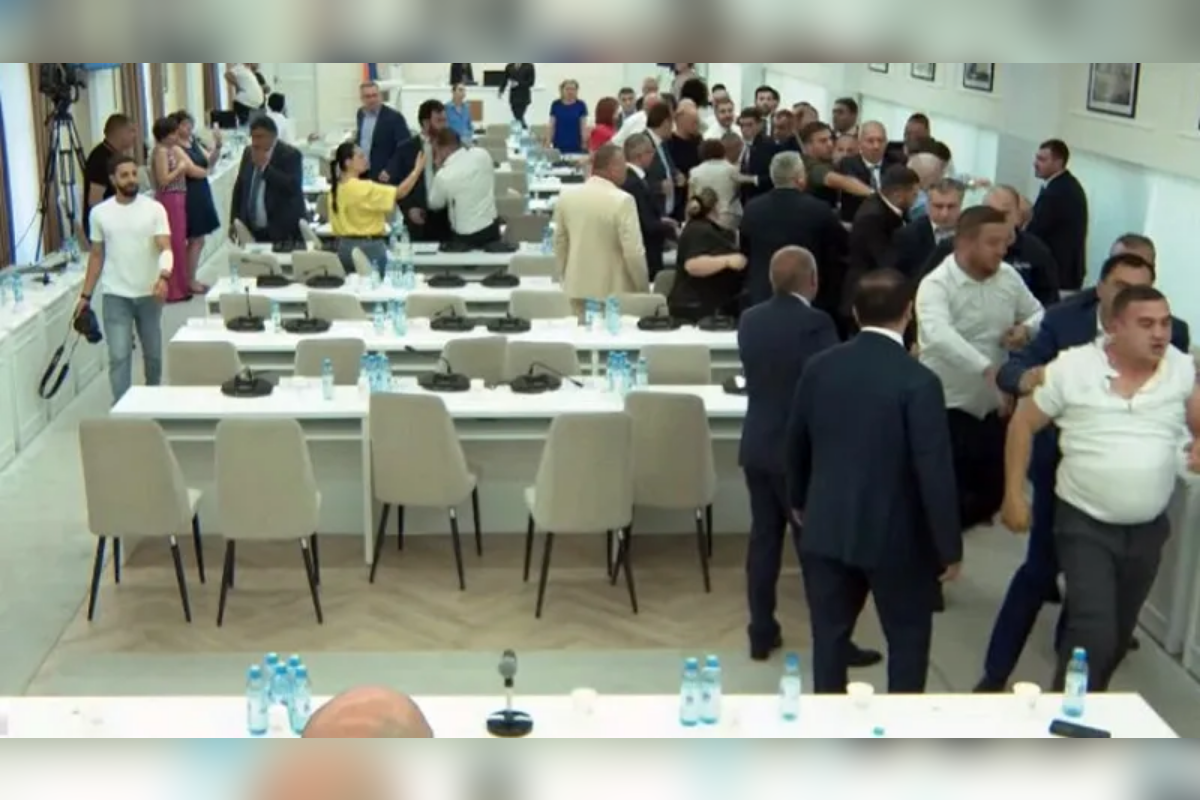
Political tensions in Armenia escalated sharply this week after a Yerevan Council of Elders session descended into violence, leaving a member of the opposition Mother Armenia bloc injured and in need of medical care.
The confrontation took place during a heated session at Yerevan City Hall, where Deputy Mayor Armen Pambukhchyan, a Civil Contract representative who was chairing the meeting, sharply addressed opposition members and accused Mother Armenia of repeated provocations. His remarks further inflamed the already tense atmosphere, after which the exchange escalated into shouting, insults and physical clashes inside the chamber.
Mother Armenia council member Sargis Ter-Yesayan was injured during the incident. He later said he had gone to Erebuni Medical Center with head and facial injuries, including a swollen eye, bleeding, a severe headache and a possible broken nose. He was waiting to undergo a CT scan and said he did not rule out filing a police report over the assault.
The fact that an opposition council member left the session with visible injuries has intensified criticism of the ruling faction’s conduct. While Civil Contract representatives have blamed the opposition for provoking the confrontation, the episode has raised questions about the ruling team’s handling of dissent inside municipal institutions and its responsibility to prevent political disputes from turning into physical violence.
Pambukhchyan later apologized for the incident. The episode reinforced the perception that political confrontation in Armenia’s local government is becoming increasingly aggressive. The incident risks normalizing the use of force in political settings.
Artsakh
On June 18, the European Court of Human Rights issued its first judgment related to cases from the April 2016 Four-Day War, finding that Azerbaijan violated the rights of an Armenian serviceman who was killed during the fighting.
According to Liparit Drmeyan, former head of Armenia’s Office of the Representative on International Legal Matters, the court found violations of the serviceman’s right to life and the prohibition of torture, including in connection with the beheading and desecration of the body. The Court ordered Azerbaijan to pay 90,000 euros in compensation to the victim’s relatives.
Drmeyan described the judgment as an important precedent for applications concerning victims of the 2020 44-Day War. He said the Armenian side was able to present substantial evidence despite Azerbaijan’s continued denial of responsibility, including materials from Azerbaijani media.
Armenia participated in the proceedings as a third party under the court’s procedures.
Azerbaijan
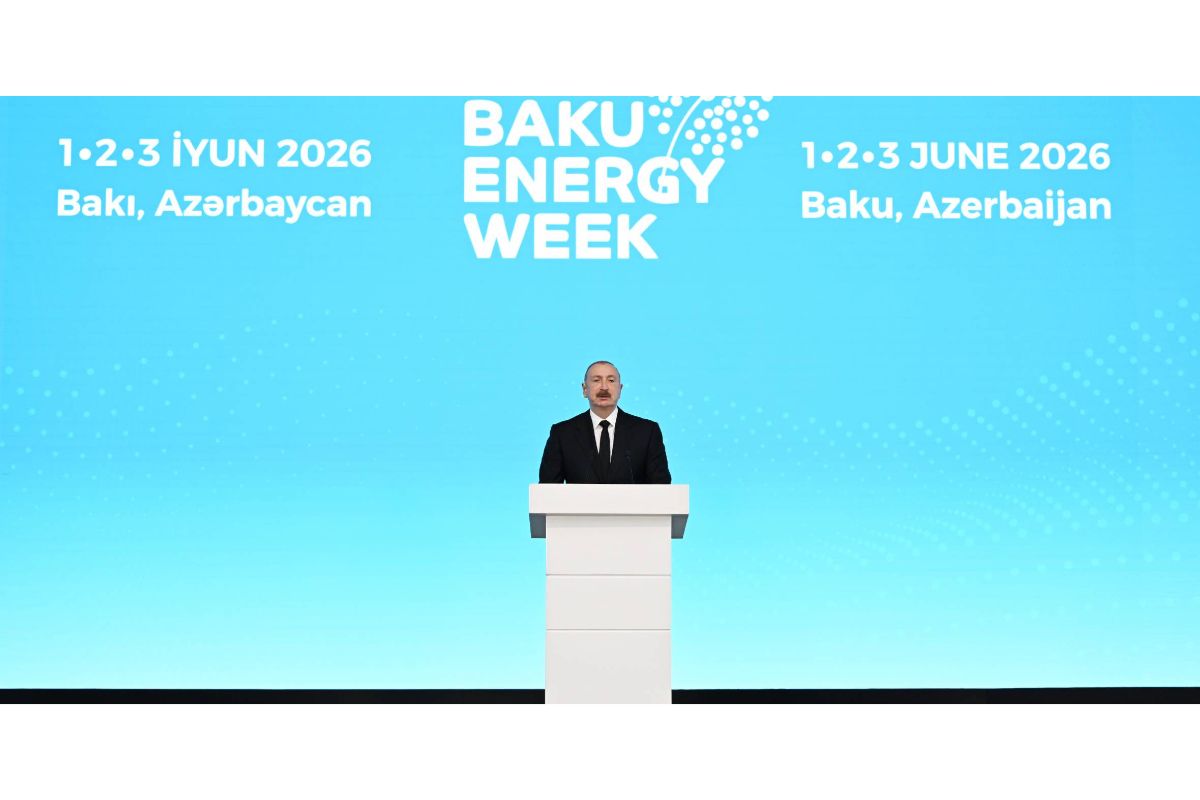
Azerbaijani President Ilham Aliyev used his address to the 20th session of the Parliamentary Union of the OIC Member States to again accuse Armenians of carrying out what he described as “cultural genocide” against Islamic heritage.
According to Azerbaijani media, Aliyev claimed that mosques and Islamic cultural monuments were destroyed during the years of Armenian control over occupied Artsakh and the areas Baku refers to as “Eastern Zangezur.” He said Azerbaijan is now carrying out restoration and reconstruction work in those territories.
Aliyev’s accusations reinforce Azerbaijan’s postwar narrative and justify its control over occupied Artsakh through claims of historical and cultural restoration.
Iran
Iran and the United States remain in a 60-day negotiation period following last week’s memorandum of understanding aimed at ending the war and moving toward a final agreement.
The memorandum sets out broad principles for de-escalation, including an end to military operations, the reopening of the Strait of Hormuz, the lifting of the U.S. blockade on Iranian ports and further negotiations on Iran’s nuclear program and U.S. sanctions.
The first round of follow-up talks was held in Switzerland, where mediators said the sides agreed on a road map toward a permanent agreement. Technical meetings are expected to continue, but Tehran has denied U.S. claims that nuclear issues were already discussed in detail. Iran has also rejected reports that it has agreed to allow IAEA inspectors access to damaged nuclear facilities.
The IAEA, however, has said inspections will take place. IAEA Director General Rafael Grossi said the agency is working on the timing, procedures, and locations for future inspections, while pointing to language in the memorandum that refers to IAEA supervision of nuclear-related activities.
The disagreement has become one of the main points of tension in the negotiations.
On sanctions, the United States has already issued a temporary waiver allowing Iran to sell oil and related products and receive payment for them during the 60-day period. The two sides remain divided over broader sanctions relief and the use of Iranian assets frozen abroad.
Iranian officials have also said the memorandum applies to regional fronts, including Lebanon. Foreign Minister Abbas Araghchi has said Israeli attacks against Lebanon must stop and that the United States is responsible for implementing that part of the understanding.
Russia
Russia has intensified its criticism of Armenia’s domestic political situation, with State Duma lawmaker Konstantin Zatulin saying Moscow should not recognize Armenia’s latest elections as democratic.
In an interview with Moskovsky Komsomolets, Zatulin, first deputy chair of the State Duma Committee on CIS Affairs, said Russia would continue working with Armenia because of existing bilateral ties and shared membership in regional structures. However, he argued that the current Armenian authorities remained in power as a result of elections he described as unfair and undemocratic.
Zatulin claimed that equal conditions were not ensured during the electoral process and said pressure against opposition forces and their leaders had continued after the vote. He called on Moscow to adopt a more “principled position” toward the Armenian government while maintaining practical engagement with Yerevan.
He also said Armenia is likely to continue moving away from Russia and toward the West while still using its relationship with Moscow when convenient. His comments reflect growing frustration in Russian political circles over Yerevan’s deepening ties with Western partners and the broader deterioration of Armenia-Russia relations.
Zatulin also addressed the future of Russia’s 102nd military base in Armenia, saying Moscow should not rush to raise the issue of withdrawal. He described the base as an important element of Russia’s security architecture but warned that if Armenia expands military-technical cooperation with the West, the question of the base’s future would naturally arise.
He added that Prime Minister Nikol Pashinyan may eventually seek to raise the issue regardless of Moscow’s current position.
Turkey
Turkey has again framed developments around occupied Artsakh as the beginning of a new phase in the South Caucasus, presenting the postwar regional environment as an opportunity for peace, stability and cooperation.
Speaking in Baku at the opening ceremony of the 20th session of the Parliamentary Union of the OIC Member States, Turkish Parliament Speaker Numan Kurtulmuş said Ankara positively assesses the ongoing peace talks between Armenia and Azerbaijan and supports efforts to reach a final agreement.
Kurtulmuş described the new situation in the Caucasus as creating conditions for deeper cooperation without addressing the humanitarian and security consequences of the conflict or the unresolved concerns that remain for Armenia.
At the same time, Turkey’s emphasis on “new realities” underscores the pressure on Armenia to accept a regional framework largely shaped by the outcome of the war and by Ankara and Baku’s strategic agenda.
Kurtulmuş also placed the South Caucasus within a broader geopolitical context, saying the world is going through a period of serious tensions, conflicts and transition toward a new international order. His comments suggest that Ankara sees the current moment as an opportunity to consolidate its influence in the region through diplomatic, economic and connectivity initiatives.
On the Middle East, Kurtulmuş stressed the need to end military operations in Lebanon and Palestine.