



Why are women in Armenia delaying having a second child?
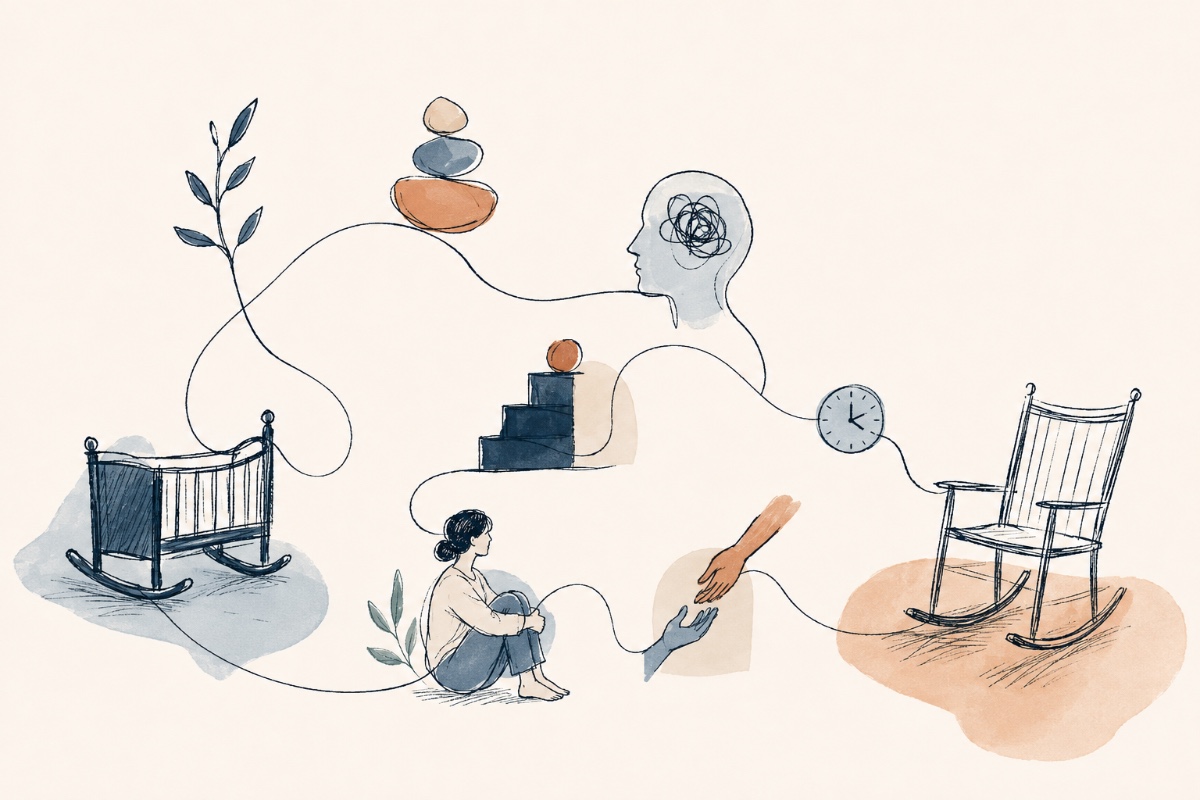
Birth rates in Armenia continue to decline. In 2025, 32,042 births were registered in the country, compared with 33,593 in 2024 and 36,590 in 2023.
Labor and Social Affairs Minister Arsen Torosyan also discussed the decline in births at a meeting of the ministry’s Public Council. According to him, some factors, such as the rising age at first marriage, are beyond the state’s immediate influence. However, if the fertility rate continues to decline, it could become a serious challenge for the country.
“We must try to change this situation through a change in mindset and government programs,” Torosyan said.
But behind these statistics are real women’s stories. For many women, the decision to have a child is no longer simply a matter of financial calculation. It is closely connected to mental health, family relationships, career, the availability of a support network, physical and emotional resources, and the readiness to become a thoughtful and prepared parent.
For some, the question is whether they have the strength, support and desire to go through motherhood again.


“I have absolutely no help.”
Araks Danielyan, the mother of an 18-month-old daughter, said even the thought of having a second child scares her.
“I have absolutely no help. My husband works two jobs, and I work remotely so I can stay in my profession. I had a very difficult postpartum period, with depressive symptoms and severe anxiety. I realize that I don’t want to go through the same experience again.”
“He is not present in our lives, physically or emotionally.”
Nelly Berberyan, the mother of a 6-month-old daughter, said she would like to have a large family, but a lack of support from her partner made her reconsider that dream.
“I’m afraid of becoming economically vulnerable.”
Mariam Sargsyan, 29, has been married for four years, but she is still postponing plans to have her first child. She works for a private company and said Armenia’s labor market remains challenging for pregnant women and new mothers.
“In our society, there is still a stereotype that once you get married, you are expected to have a baby within a year. But I see what happens to my colleagues. As soon as you become pregnant, your career progression can come to a standstill, and returning to work after maternity leave can turn into a struggle. I’m afraid of becoming economically vulnerable after having a child and losing everything I’ve studied and worked for over the years.”
“At first, we were in shock. Now we are the happiest people in the world.”
Not all stories, however, are about giving up on having another child.
Bella, the mother of 8-month-old Vache, said she and her husband had not planned to have a second child. She was undergoing treatment for health problems, and the family was unsure whether they were ready for another baby.
“When we found out I was pregnant, we were both in shock for the first week. But there were no medical reasons to end the pregnancy, so we decided to continue with it. Now that he is with us, we realize that it was one of the best surprises of our lives. We are the happiest people in the world.”
“You should have a child only when you are truly ready.”
Marine Mejlumyan had her second child 11 years after her first, after consciously choosing to wait.
“When my first child was born, it was extremely difficult, and I promised myself that if I ever had a second child, it would be only when I was truly ready. Now I have a 2-month-old baby, and I’m enjoying every moment with him. Not only have my circumstances changed, but I have changed as well. You should have a child when you are truly ready.”
The diversity of these stories shows that every family answers the same question — whether to have a second child — based on its own circumstances. For one woman, it is the lack of support; for another, her partner’s attitude; for a third, health concerns; and for yet another, simply the feeling that the right time has not yet come.
Ultimately, the decision to have another child is shaped by far more than financial considerations. It is also about whether a woman feels supported, secure, physically and emotionally prepared, and free to make the decision on her own terms.
Recovery after the first birth matters
According to obstetrician-gynecologist Astghik Melkonyan, women face a range of physical and psychological challenges when planning both their first and subsequent pregnancies, many of which often go unnoticed. Many women begin pregnancy without undergoing the necessary medical checkups, which can contribute to chronic health problems developing or persisting after childbirth.
Ultimately, the decision to have another child is shaped by far more than financial considerations.
A woman’s physical condition also plays an important role in the decision to have a second child. According to Melkonyan, health problems that arise after the first birth can be overlooked and remain untreated for a long time, eventually becoming a significant obstacle to a subsequent pregnancy.
“After pregnancy, sleepless nights and breastfeeding, a woman’s body can be completely depleted — anemia, vitamin deficiencies and chronic fatigue are common. Pelvic floor problems can also occur, as well as untreated postpartum depression or other postpartum mental health difficulties, which women often avoid talking about because of shame.”
According to Melkonyan, it is necessary to consider not only the condition of a woman’s reproductive system but also her overall health and the extent to which she has recovered from the previous pregnancy. A difficult first childbirth experience can also be a reason for postponing a second pregnancy. In such cases, a medical issue can become a psychological one as well. A woman may want another child while also being afraid of going through pregnancy and childbirth again.
The doctor also recommends an adequate interval between pregnancies, generally suggesting that women wait around 18 to 24 months after childbirth before planning another pregnancy.
Sometimes there can be a gap between a woman’s desire to have another child and her body’s readiness for another pregnancy.
Cesarean sections
The rise in cesarean sections is another factor worth considering when discussing subsequent pregnancies. According to WHO data, the global cesarean section rate reached 21.1% in 2021. In the Caucasus region and CIS countries, the rates were: Iran, 48%; Georgia, 46.6%; Armenia, 37.5%; Belarus, 29.6%; Russia, 20.8%; Kazakhstan, 18%; and Kyrgyzstan, 8.3%. Armenia’s rate is far higher than the 10% to 15% range cited in 1985 by a panel of international health care experts convened by the World Health Organization. WHO now emphasizes that there is no evidence that a specific cesarean-section rate should be targeted at the population level.
The increase in cesarean sections in Armenia has been significant over the past several decades. The rate was 3.4% in 1990, 7.2% in 2000, 18.9% in 2010 and 35.9% in 2020.
The growing rate of cesarean sections has also drawn the attention of Armenia’s Health Ministry. Under the government’s 2021-2026 action plan, research was initiated to identify the reasons behind the increase in cesarean deliveries in Armenia.
The Robson classification, proposed by the WHO in 2015, as a global standard for assessing, monitoring and comparing cesarean-section rates, classifies women admitted for delivery into 10 groups based on clinical criteria, including obstetric history, fetal presentation, gestational age, number of fetuses, and onset of labor. The classification is widely used to monitor cesarean-section rates, compare trends and inform obstetric care.
At the same time, bonuses previously paid to obstetricians and gynecologists for performing cesarean sections have been abolished, while state reimbursement for vaginal deliveries has been increased. Epidural anesthesia has also been made available free of charge, with the aim of reducing women’s fear of the pain associated with vaginal birth. Through maternity education programs and psychological support, women and their families are also encouraged to address their concerns about childbirth and make informed decisions about their preferred mode of delivery.
According to Melkonyan, several factors may contribute to the increase in cesarean sections, including fear of labor pain, the rising age of mothers and physicians’ caution.
“The uterine scar left by a previous cesarean section can affect a subsequent pregnancy and may increase certain risks, including those associated with abnormal placental implantation. However, vaginal birth after cesarean (VBAC) may be possible when the scar is considered suitable and there are no contraindications. The key is a thorough medical assessment and appropriate preparation.”
Psychological readiness

According to psychologist Tatevik Nahapetyan, the reasons women postpone or reconsider having a second child are diverse, ranging from their health and family relationships to psychological and emotional strain. “Many women are afraid that having a second — or even a first — child will mean losing their personal space, being unable to return to work or pursue a career, or no longer having time for themselves. If it is somehow possible to organize daily life with one child, these fears can become even stronger when considering a second.”
In her view, postpartum depression and difficult childbirth experiences can also have a significant impact on a woman’s decision to have another child. “Postpartum depression is not simply a bad mood; it is a serious mental health condition. If it is not addressed in time, it can have long-term effects on a woman’s well-being. For women who have experienced it, even the thought of another pregnancy can trigger anxiety, and some may consciously decide not to have another child.”
The specialist also emphasizes the importance of support within the family. “If a woman feels alone in caring for her child or does not receive enough support from her partner, it is natural for her desire to have another child to diminish. At the same time, every family’s circumstances are different, and people facing similar situations may make very different decisions.” In recent years, more couples have been choosing to have a child only when they feel psychologically ready to become parents.
“This is a positive change because a child should be born into a healthy psychological environment, not simply because having children is considered the norm. At the same time, couples should not wait until they feel completely ready, because that feeling may never come. What matters more is that the couple has a stable relationship, understands their capabilities and is prepared to face the challenges of parenthood together.”
According to Nahapetyan, increasing birth rates cannot be achieved through financial incentives alone. It is also necessary to develop a culture of psychological support.
The reasons behind declining birth rates, therefore, are more complex than economic difficulties alone. Women’s stories show that the decision to have another child is shaped by a range of factors. If the state wants to change demographic trends, it is necessary to create an environment in which a woman is not left alone after the birth of her first child.
The decision to have a second child should be a conscious choice, not something shaped by pressure to meet the expectations of the state or society.
The decision to have a second child should be a conscious choice, not something shaped by pressure to meet the expectations of the state or society.





Hello Anna,
Thank you for writing this very important article. Do you have a website or other social media where I can follow your work?
Thank you so much! I really appreciate it. You can find my published work on my Muck Rack profile: https://muckrack.com/anna-harutyunyan/articles
Thank you Anna.