


Still
Ever since I can remember, Armenians have talked — bragged — about being among the earliest people to have practiced viticulture: the art of making wine. Georgians of the Caucasus assert they’re number one. Armenians also boast of making the best double-distilled cognac, affectionately known as Armenian brandy. Others say that cognac, to be the real deal, must come from the Cognac region of France, just as real champagne comes from the French region of the same name.
Dad had a friend who may have aspired to make his own cognac to rival Armenia’s. It was probably around 1940, and Prohibition had been repealed, but Kourken wanted to try his hand anyway. Perhaps there wasn’t a liquor store — a packie, in New England parlance — or maybe Kourken didn’t have the money required. He did, however, have access to grapes. If Kourken were like my family or others I know, he nurtured Concord grape vines in his backyard. Wrong type of grape, for cognac is made from not-so-sweet white grapes. Again, it didn’t matter.
Our hero must have read up on distilling, and perhaps he asked Dad for some assistance. Besides, Dad was a machinist and knew something about working with metal, and stills are made of copper. Dad was a generous soul. Perhaps he lent Kourken a five-gallon industrial jar for which he had crafted the stainless steel stopper with a rubber gasket.
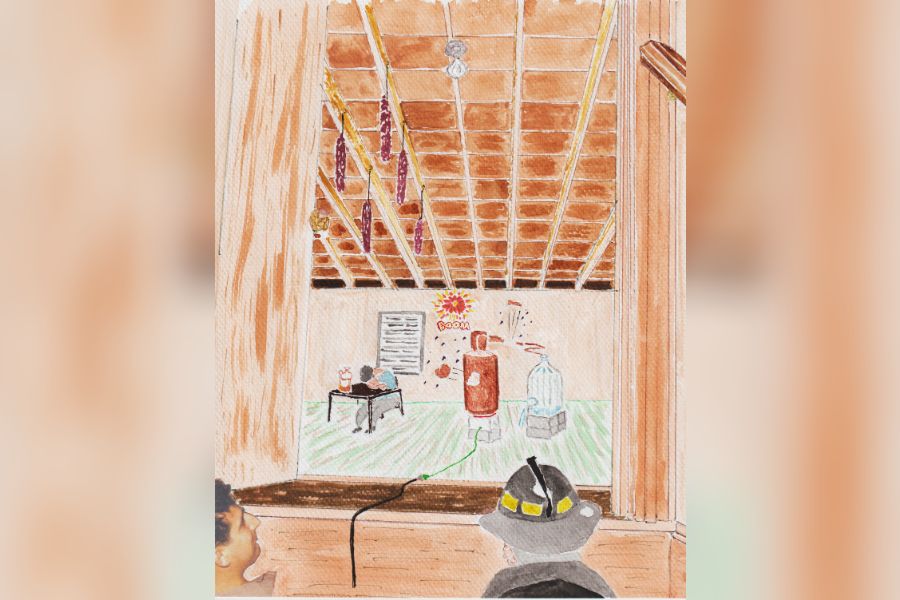
In any event, Kourken set up his small-scale still in his attic. No doubt an industrious man, he also hung his home made soujouk (Armenian salami) there to cure. He remembered to bring a small table and chair. With the copper boiler, he began distilling water, heating it with a portable electric burner, the wire of which he connected to an extension cord running down the stairs. He stored the distilled water in the glass container, possibly Dad’s.
Then, he refilled the boiler with the distilled water and Concord grapes and lit the burner. Now he was worn out and sat down, resting his arms on the table, then his head. Off he went into slumberland; bajig, as I say to my 2-year-old grandson, Bedros.
Next thing, BOOM. The boiler exploded, sending its lid into air and busting apart the copper tubing Kourken used for distillation. The grape mash dispersed outward onto wood studs, flooring, rafters, roof boards and gable vent in the attic. It covered the suspended soujouk, as well. Kourken was knocked off his seat, but thankfully was unhurt.
Next, Kourken heard a klaxon horn sounding. Oh no, he thought. His suspicion was correct. Someone, perhaps Dad, had pulled the emergency fire alarm pull box on the street. (Recently, I had the pleasure of meeting the Boston fireman who repairs these functioning but aging relics.)
Within minutes, the fire department, guided by Dad, burst into Kourken’s house, dragging hoses up to the attic level, where he had been rudely awakened a few minutes earlier by the explosion.
“Where’s the fire? What’s that putrid smell?”
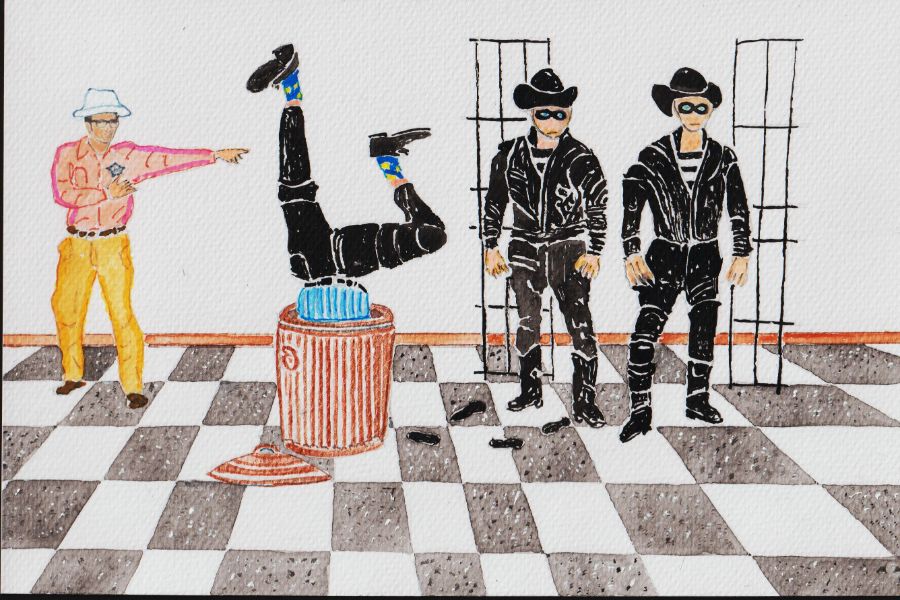
There was no fire, and the smell was the combination of exploded metal, umami — the savory, curing soujouk — and the sweet aroma of grape mash. Maybe Kourken was cited by the police, I’m not sure.
For my layman’s taste for cognac, I’d prefer to locally purchase a bottle of 10-year-old Ararat Akhtamar, middle grade and cost, as I did from the Yerevan Brandy Company 20 years ago when I visited Armenia. For the best experience, gather some lavash bread, a few kalamata olives, strands of Armenian string cheese and plain madzoon (yogurt). Mom and Grandmas always made their own. I prefer basturma (cured Armenian steak) to soujouk, which I can purchase from the Armenian food markets in East Watertown.
Voila! A takavor’s meal, fit for a king.
As for Kourken, if he were smart, he would have switched to Ararat Natural Sparkling Mineral Water.