



Ambassador warns of Goris-Kapan repeat in Tigranashen, says Baku has no legal claim
Former Armenian Foreign Ministry diplomat speaks with The Armenian Weekly, raises alarms over Tigranashen and Armenia’s foreign policy trajectory.
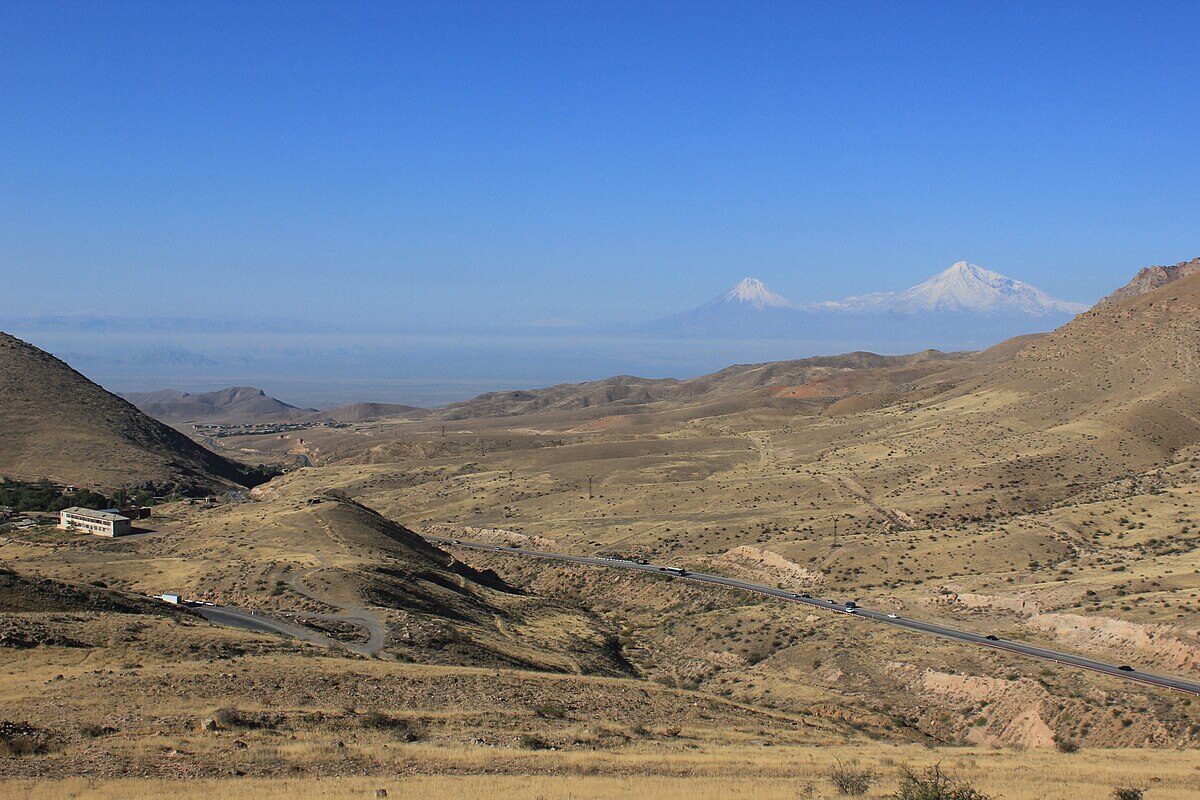
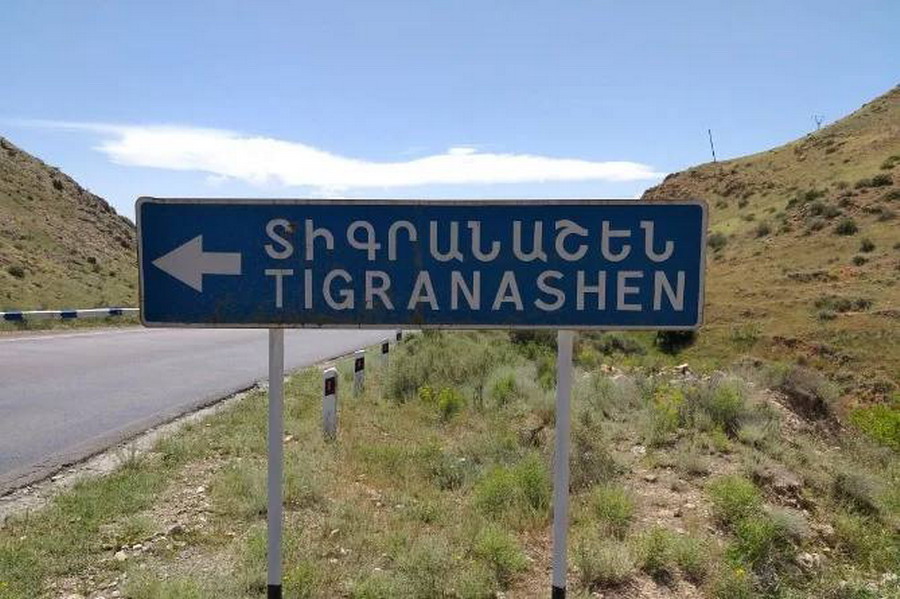
Months ago, Prime Minister Nikol Pashinyan received votes from residents of the Ararat region, including Tigranashen, with the promise of protecting Armenia’s sovereignty and territorial integrity. Today, he is introducing Azerbaijani toponyms into public discourse. Referring to Tigranashen by the Azerbaijani name “Karki” is not an accidental slip but part of a consistent policy aimed at conditioning public consciousness and preparing for another unconstitutional concession.
Public statements made years ago by representatives of the ruling Civil Contract faction stand in sharp contrast with their current actions.
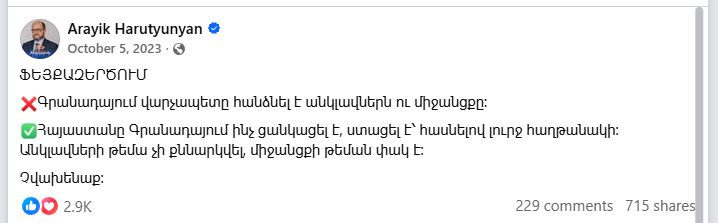
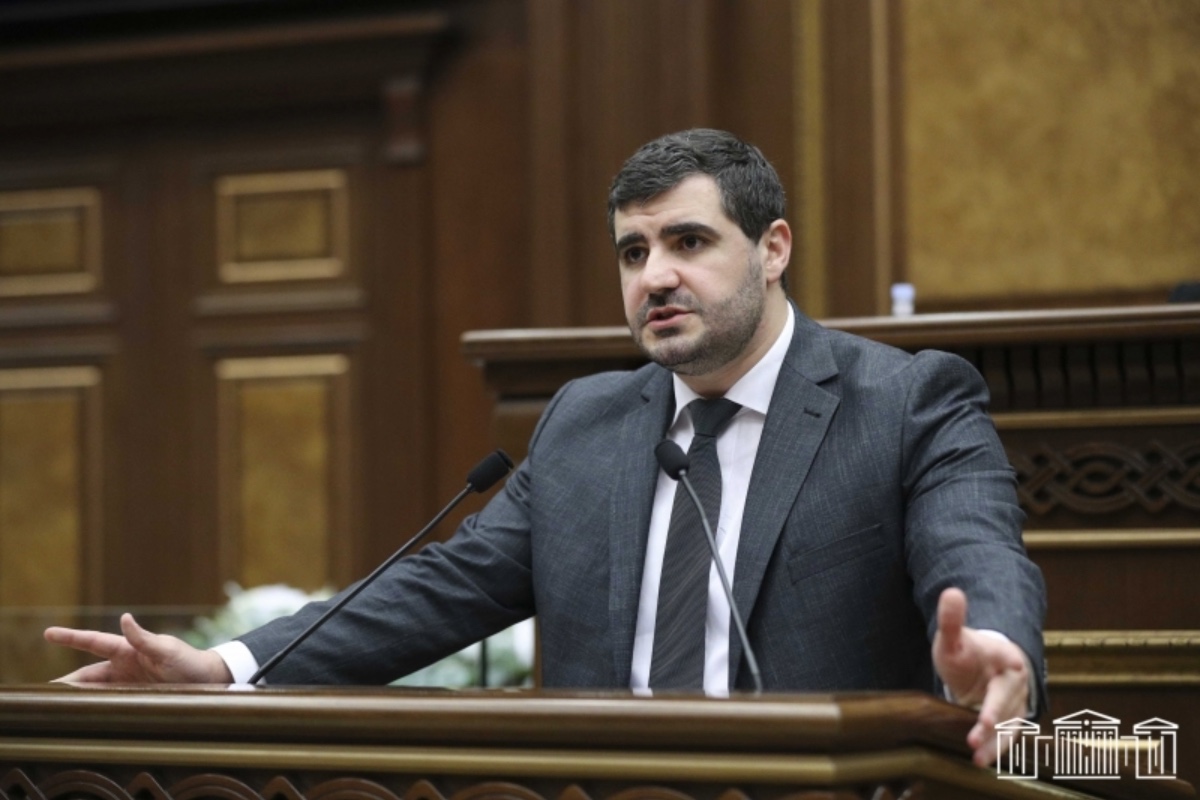
Three years ago, Civil Contract MP Arayik Harutyunyan urged citizens “not to be afraid” because “the topic of enclaves is not being discussed,” and “the topic of a corridor is completely closed.”
Today, however, senior government officials are not only making the surrender of Armenia’s sovereign territories a subject of discussion, but are also attempting to frame these as legal or “mirror-image” solutions.

Amb. Aghajanyan: Territorial concessions violate the Constitution
Speaking with The Armenian Weekly, former Armenian ambassador and 30-year career diplomat Dzyunik Aghajanyan offered her analysis of the current crisis and what she characterized as groundless legal demands and security threats.
“We are dealing not simply with grave dangers, but with a foundational crime,” said Aghajanyan, whose Foreign Ministry career began in 1992 and ended in 2021.
 “We are talking about the territory of the Republic of Armenia,” she said. “There is no legal basis whatsoever for surrendering any territory of the Republic of Armenia, regardless of the names they try to give them. We are dealing with a treasonous act, the violation of Armenia’s laws and the Constitution, and the unlawful alienation of citizens’ property. And only after [recognizing] that should we talk about all the security, economic and demographic threats.”
Aghajanyan has served as Armenia’s ambassador to the Netherlands, Malaysia, Indonesia and most recently to Singapore. She has also served as adviser and envoy with the Armenian Permanent Mission to the U.N., and has held various other roles within the MFA.
There is no legal basis whatsoever for surrendering any territory of the Republic of Armenia, regardless of the names they try to give them.
Repeat of the Goris-Kapan scenario
Ambassador Aghajanyan drew parallels between the events that unfolded in Syunik and the current developments around Tigranashen, arguing that the government is using a similar tactic to influence public perception.
“We encountered the exact same episode during the surrender of the Goris-Kapan road, when a process of public brainwashing took place by applying incomprehensible Azerbaijani names to the areas, pretending they were historically Azerbaijani,” she said. “Under that justification, the 21- to 22-kilometer stretch of the Goris-Kapan road was directly handed over to the enemy, causing heavy losses and serious security problems that remain unresolved to this day.”
Aghajanyan said that the authorities might argue that they built a bypass road. However, she said, what used to be a 10-minute drive now can take 1.5 to 2 hours along those bypass routes.
“This is not only a matter of military security, but also a problem for the security system of the entire state. The viability of border settlements is undermined; out of concern for their children’s future or well-being, people may leave these areas, depopulating the settlements and rendering them an easy target for the enemy,” said Aghajanyan.
Three dangerous aspects emerge from the government’s current direction, according to Aghajanyan’s analysis.
- The loss of strategic roads, particularly the highway connecting Armenia to Syunik and Vayots Dzor, and the resulting disruption of traffic.
- The geopolitical isolation of the southern part of Armenia and the creation of a platform for anti-Iranian land operations.
- A demographic decline brought on by the depopulation of the border zones and the collapse of infrastructure essential to local communities.
A set agenda and Pan-Turanian objectives
Aghajanyan, who has served as a diplomat under every Armenian administration since independence, assesses Pashinyan’s actions not as random steps but as the consistent implementation of an agenda undertaken from the moment he came to power.
“Let our public not be under the illusion that these are new developments,” she said. “He would have carried out these actions right after or during the 2020 war if our soldiers had not stopped enemy forces through struggle and self-sacrifice.”
 Ambassador Aghajanyan points to what she considers evidence of a premeditated plan concerning the Yeraskh section of the Nakhichevan border, where the Azerbaijani side advanced the neutral zone closer to the Armenian positions a month after Pashinyan became prime minister in 2018.
Another point of evidence for Aghajanyan is the 4-kilometer section of the Tigranashen road that she believes was deliberately left unpaved during the large-scale road work in the area.
Behind these moves, she sees two considerations. “The first is the logic of anti-Iranian land operations. The second is a consistent process of weakening our state’s resilience,” she said. “They agreed to surrender commanding heights to the enemy in order to break our resistance and establish Western hegemony here under a Pan-Turanian plan, whose tentacles will extend toward Russia and Iran.”
The distortion of the Alma-Ata Protocol
Ambassador Aghajanyan rejects the assertion that the Alma-Ata Protocol must serve as the basis for border delimitation, calling Azerbaijan’s position baseless.
“There are no legal grounds whatsoever, because these territories have never belonged to Azerbaijan,” she said. “Azerbaijan declared itself the successor to the 1918–1920 First Republic, not to the USSR. And during the period of the First Republic, Azerbaijan had no internationally recognized territory. The League of Nations explicitly rejected the recognition of Azerbaijan, reasoning that no such state existed and that they laid claim to territories that were never under their control.”
According to Aghajanyan, the same was true during the Soviet period, when the territories never legally belonged to Azerbaijan.
“Neither the maps approved in 1926 nor the documents signed between the two republics in January 1988 ever included Tigranashen as part of independent Azerbaijan,” she said.
Ambassador Aghajanyan also stressed that the Alma-Ata Protocol is being misinterpreted.
“The Alma-Ata Declaration has no attached maps. The protocols attached to it speak of the borders existing at the moment of signing. When Armenia and Azerbaijan signed those protocols, Tigranashen, Artsakh and the adjacent territories were not part of Azerbaijan,” she said.
“Neither the maps approved in 1926 nor the documents signed between the two republics in January 1988 ever included Tigranashen as part of independent Azerbaijan,”
Addressing the discourse on “exchanging” Artsvashen for Tigranashen, Aghajanyan noted: “Exchanging one part of one’s own territory for another is like swapping one’s right hand for the left. This is an illogical, treasonous step designed solely to prolong their own political and physical existence.”
The events unfolding around Tigranashen have raised concerns that Armenia faces an existential threat.
The current administration’s adoption of Azerbaijani place names, its flawed legal justifications and deliberate weakening of the security system are aimed at turning Armenia into an unviable territory stripped of the ability to resist.
The Armenian public and political forces must recognize that the surrender of Tigranashen lacks any legal, political or moral justification, and that opposing it is essential to preserving statehood.



When you prepare an important article such as this. Include maps, quite a few of them, high level to low level. A map is worth a thousand words.
Here is a Google map of the locations in question published by the Armenian Weekly itself: https://armenianweekly.com/2021/05/26/armenian-soldier-killed-by-azerbaijani-forces/map-of-armenian-and-azerbaijani-enclaves-photo-karen-harutyunyan/
Here is a link to a map of Armenia showing the extent of its territories occupied by Azerbaijan: https://euro-sd.com/2023/11/articles/34984/armenia-and-azerbaijan-what-happens-next/
‘karki’ is a fake name. Like ‘kaliningrad’.
True, but the Germans who founded the former Königsberg (today Kaliningrad) in the former East Prussia province of Germany (today Kaliningrad oblast of Russia), are not native to the region either. They, under the Teutonic Knights, conquered and violently colonized the region in the 13th century as a “crusade” against the native Baltic Old Prussians, who were pagan, and who were largely exterminated in a genocide, and the rest gradually assimilated and became extinct in the 18th century. Ironically, the Germans adopted the name “Prussia” for themselves. Armenians’ plight under Turkish conquest was of course similar, except that fortunately Armenians as a people survived eight centuries of Turkish occupation. Had the Turks decided to exterminate the Armenians in the very beginning when they conquered Armenia, Cilicia and the rest of Asia Minor which had Armenian communities, the outcome could have taken a completely different turn – much like what happened to the Old Prussians – or they could have been reduced to a small minority facing the threat of extinction, much like the Assyrians or Yazidis face today.
the Old Prussians certainly did not build cities. It was a backward, illiterate tribe living in some villages. That’s all. Not comparable to Armenians or Germans at any level. Immanuel Kant comes to mind…
Incidentally, Koenigsberg was part of Kingdom of Poland for centuries. It was called Krolewiec, and had a significant Polish-speaking population.. ‘Koenig’ is a translation of Krol
Yes, I am aware of the Polish history in that city and region. What I wanted to convey is that the Germans were also non-native, hostile invaders in that region who colonized and committed genocide against the native Old Prussians (that they were not advanced, literate, or urban, is not the issue), just like the Turks did in Armenia against the native Armenians, or against the native Assyrians in Mesopotamia, etc. Unlike the Turks, at least the Germans and Poles contributed a lot to world civilization.
It’s curious how a people can adopt the name of a locale which often is from a tribal origin, such as English people as British and the Slavs in Macedonia calling themselves Macedonian, thus Prussian became a co-opting by Germanic peoples from the Baltic inhabitants. The Lithuanian kin of the original Prussians were able to better maintain their identity. Interestingly post 1945 the Soviet Union was planning to award nothern East Prussia to Lithuanian SSR who reportedly declined the proposal, so Moscow settled Russians knowing their loyalty would be stronger. Ironically nowadays the population is more appreciative of the German past and consider themselves as more European and cultured than those in the heartland of Russia.
Whilst the relationship was often fraught and one way the fact that Turkish tribes didn’t exterminate Armenians when they arrived and why after about 800 years did the relationship violently breakdown into extermination and deportation and some forced acculturation, is perhaps something that should be observed.