



New book release: “Eternal Armenia” and the khatchkars of Noratus
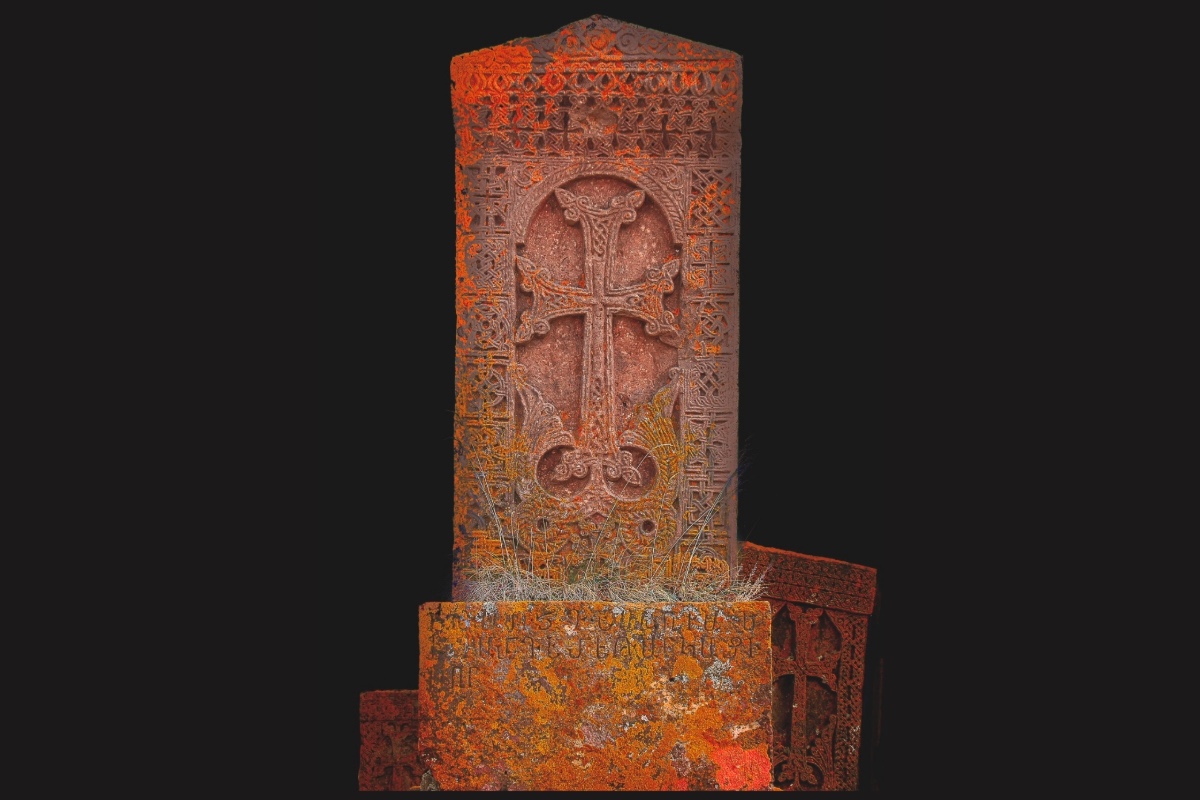
When photographer, author and publisher David Karamian released “Armenia – The Lone Stone” in 2022, khatchkars were already an important presence in his visual exploration of Armenia. The Armenian Weekly reviewed that book the same year, describing a photographer whose images conveyed the excitement of encountering Armenia through its landscapes, monasteries, museums, manuscripts, architecture and, above all, stone.
Four years later, that fascination has become the subject of an entire book. “Eternal Armenia: Khatchkars – The CrossStones of Noratus” is the culmination of nearly three years of photography, research, writing and design devoted to the historic cemetery of Noratus, near Lake Sevan.
Across 264 large-format pages and nearly 200 photographs, Karamian documents not only individual khatchkars, but also graves, inscriptions, weathered stones, groupings of monuments and the larger landscape in which they have stood for centuries.
Noratus is home to the world’s largest surviving concentration of Armenian khatchkars. Some stones stand alone. Others appear in groups — two, three, six, 10 or more — evoking generations, families and communities whose individual stories may have faded while their stones remain.


It was this sense of presence that drew Karamian back repeatedly. Rather than treating the cemetery simply as a collection of important monuments, he began to see and photograph it as a landscape of cultural memory.
Elaborately carved CrossStones stand beside modest and deeply weathered examples. Medieval artistry exists alongside later graves. Moss, lichen, changing light, grazing animals and the passage of time have become part of the visual character of the place. Together, the stones form something larger than a collection of individual objects: They become a record of generations.
“Eternal Armenia” is presented in both English and Armenian, a decision central to Karamian’s purpose for the project.
The Armenian text preserves the language and cultural voice of the heritage being documented. The English text allows the history, artistry and spiritual significance of the khatchkar to travel beyond the Armenian community — to libraries, museums, universities, churches, preservation organizations and readers who may be encountering Armenian sacred art for the first time.
Underneath the photographs lies a more urgent concern.
The destruction of the historic Armenian cemetery of Julfa profoundly changed the way Karamian thought about places such as Noratus. Thousands of Armenian khatchkars and gravestones once stood at Julfa. Their destruction demonstrated that monuments can survive for centuries and still disappear.
Over repeated visits, Karamian photographed the most elaborate or visually striking khatchkars and the weathered stones, graves, inscriptions, details, and the broader landscape.
A Continuation of “The Lone Stone”
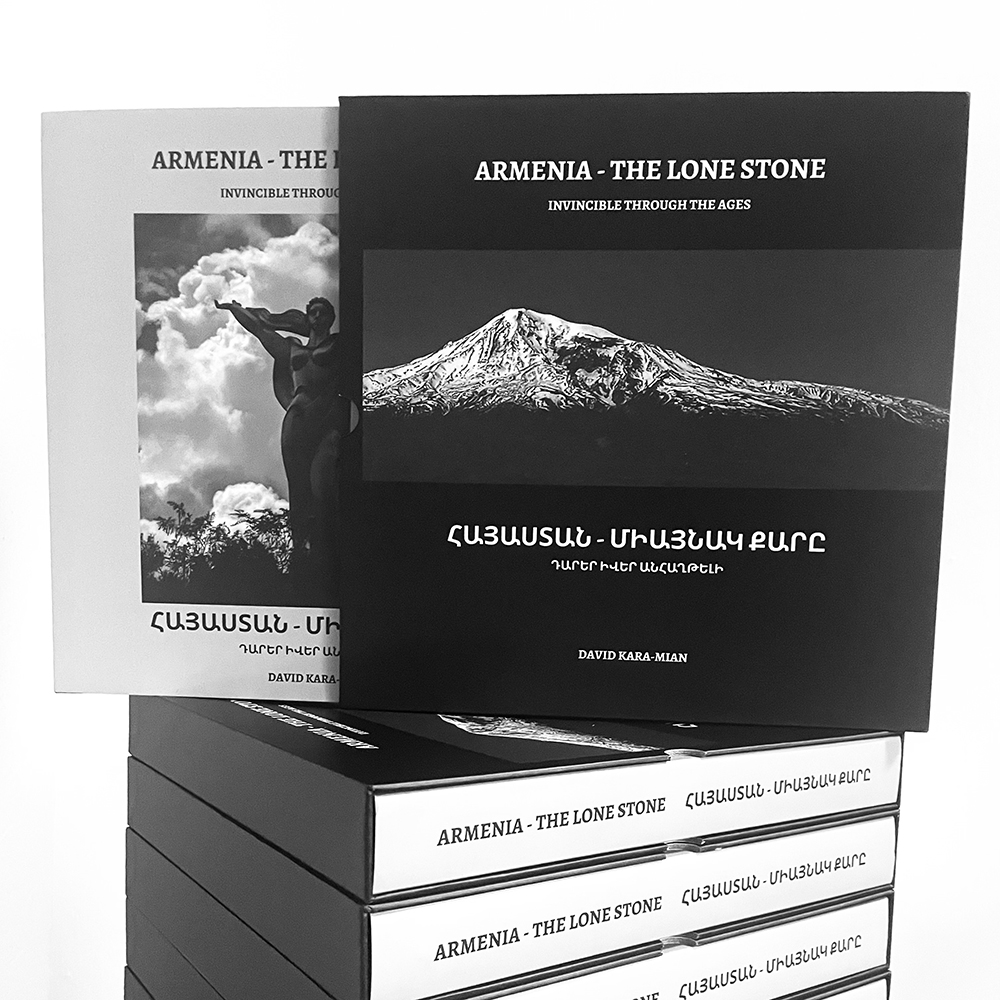 The earlier book explored Armenia broadly through landscape, history, art, architecture, manuscripts, monasteries and stone. It also included Karamian’s photographs of Armenian monuments in Artsakh, including Dadivank, Gandzasar and Ghazanchetsots Cathedral. Khatchkars appeared throughout that visual journey.
With “Eternal Armenia,” the lens narrows. One place is examined in greater depth. Karamian published “Eternal Armenia” through NorArtGallery Publishing as an independent cultural project.
Karamian believes the next task is to carry the record beyond Noratus — to Armenian and non-Armenian audiences, and into libraries, museums, universities, churches, cultural institutions and preservation organizations.