Artsakh marks 35 years of independence in exile
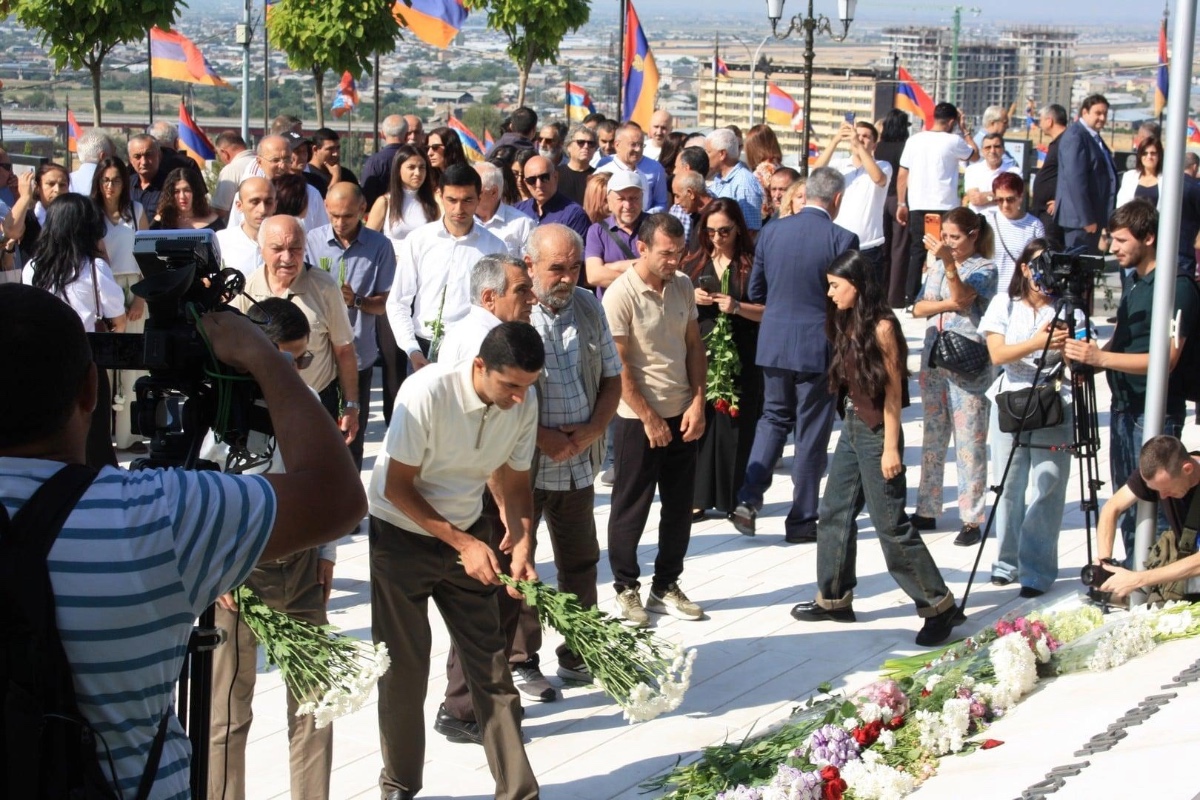
On Sept. 2, Artsakh Armenians marked 35 years since the declaration of the Nagorno-Karabakh Republic, an anniversary now observed in exile after the occupation of Artsakh and the ethnic cleansing of its Armenian population.
On that day in 1991, local deputies declared the creation of the Republic of Artsakh. Built through the mobilisation, sacrifice and support of Armenians worldwide, it developed its own democratic institutions and became the second Armenian statehood of the modern era. For a third consecutive year, the anniversary was marked not in Artsakh, but in Yerevan.
To mark the anniversary, representatives of the Artsakh authorities, opposition members of Armenia’s National Assembly, and public and political figures visited Yerablur Military Pantheon in the morning. They laid flowers at the Call of Artsakh memorial.
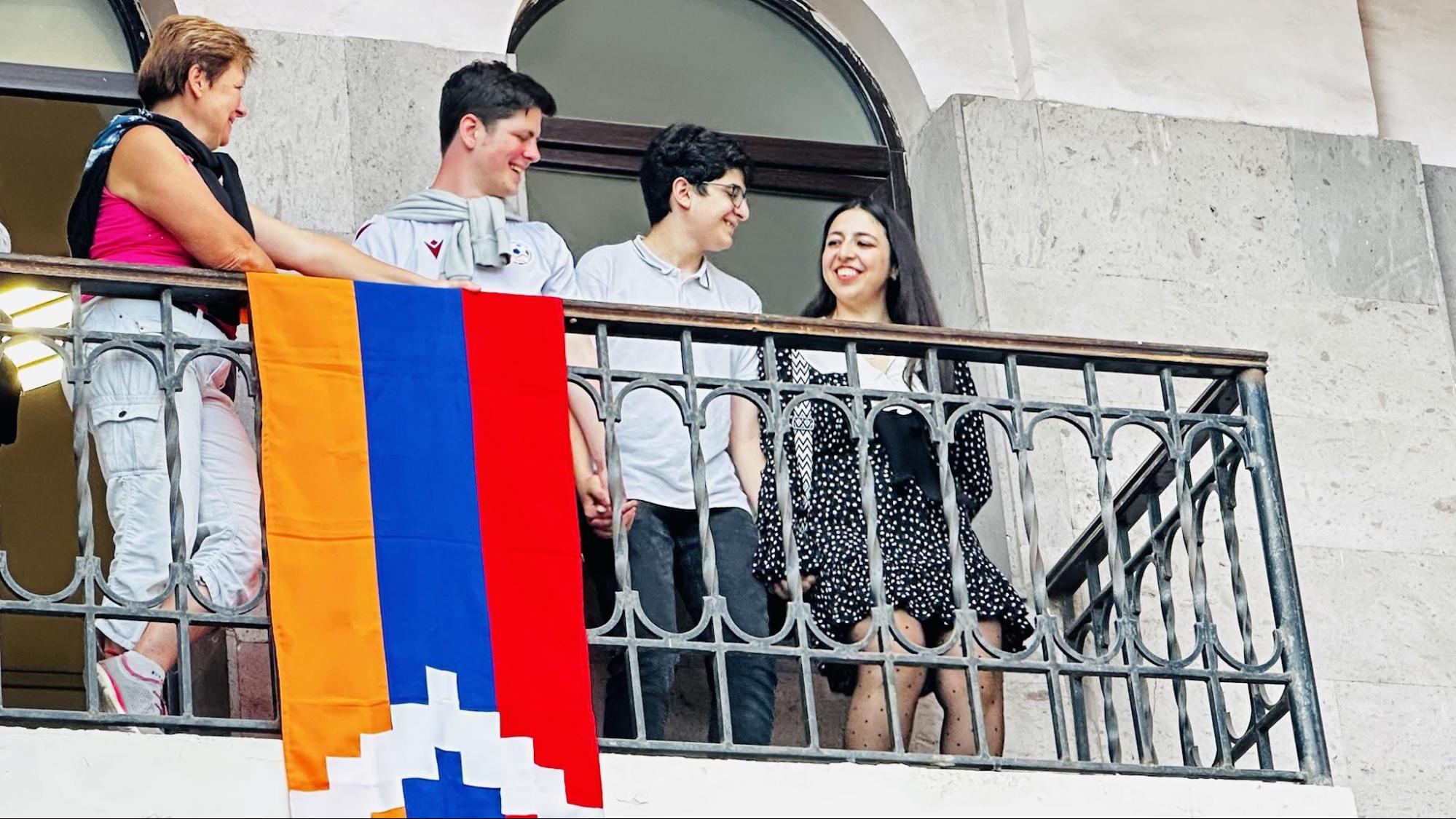
Later, a ceremonial sitting of the Artsakh National Assembly was held at the Artsakh Representation in Yerevan. The session, dedicated to the 35th anniversary of the proclamation of the Republic of Artsakh, opened with a prayer led by Fr. Hovhannes.
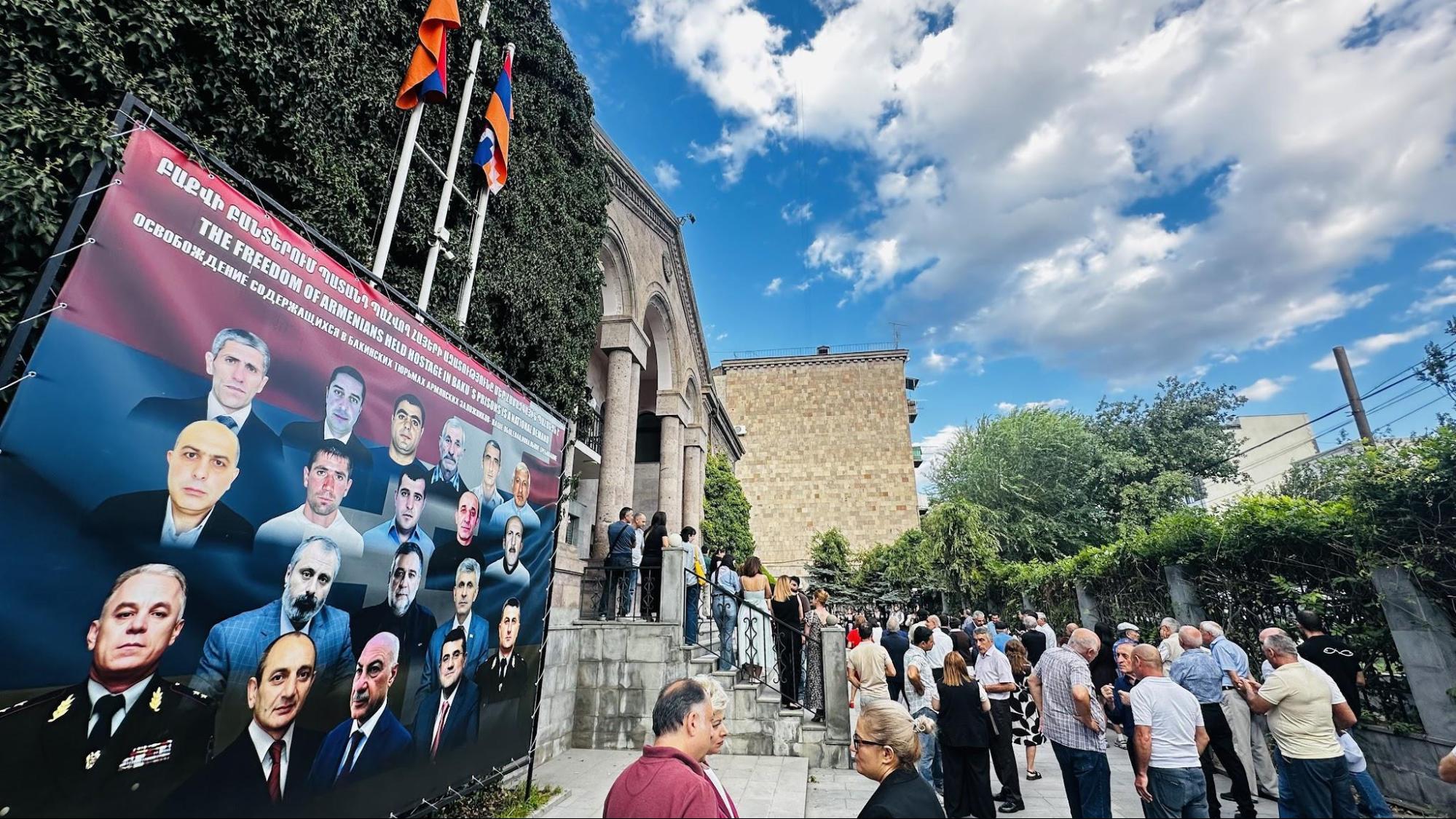
Addressing the gathering, acting Artsakh National Assembly Speaker Gagik Baghunts said the anniversary was being marked in “exceptionally difficult conditions.” He said forcibly displaced Artsakh Armenians, now scattered across Armenia and abroad, had been deprived of their homes, land, churches and cemeteries. He also warned that Armenian spiritual and cultural heritage in Artsakh remained at risk, and said Artsakh’s political and military leaders, along with other Armenians, continued to be held in Azerbaijani captivity.
Baghunts also addressed the suspension of the election of a new Assembly speaker, saying the decision reflected the difficult political and social circumstances facing displaced Artsakh Armenians, the limited capacity of Artsakh’s institutions in exile, and the wider challenges confronting Armenia. Despite those constraints, he said, the Artsakh National Assembly would continue to function as the body carrying the people of Artsakh’s primary democratic mandate and would remain committed to defending their rights.
In her address, Armine Aleksanyan, a member of the Committee for the Protection of the Rights of the People of Artsakh, said the rights of Artsakh Armenians had been consistently raised at international forums, including the United Nations, European institutions, foreign parliaments and international human rights organizations. She said the purpose of the work was not limited to draw attention to the humanitarian consequences of the displacement of Artsakh Armenians. It was intended to secure political action and practical protections for people who had been forcibly expelled from their homes, as well as for Armenians detained in Baku.
“These issues must not disappear from the international agenda simply because the people of Artsakh have been driven from their homeland,”Aleksanyan said.
Aleksanyan said a genuine peace could not rest on amnesia or the denial of the war’s consequences. Any durable settlement, she said, must address the forced displacement of Artsakh’s Armenian population, the loss of homes, churches, cemeteries and cultural heritage, and the continued detention of Armenians in Azerbaijan.
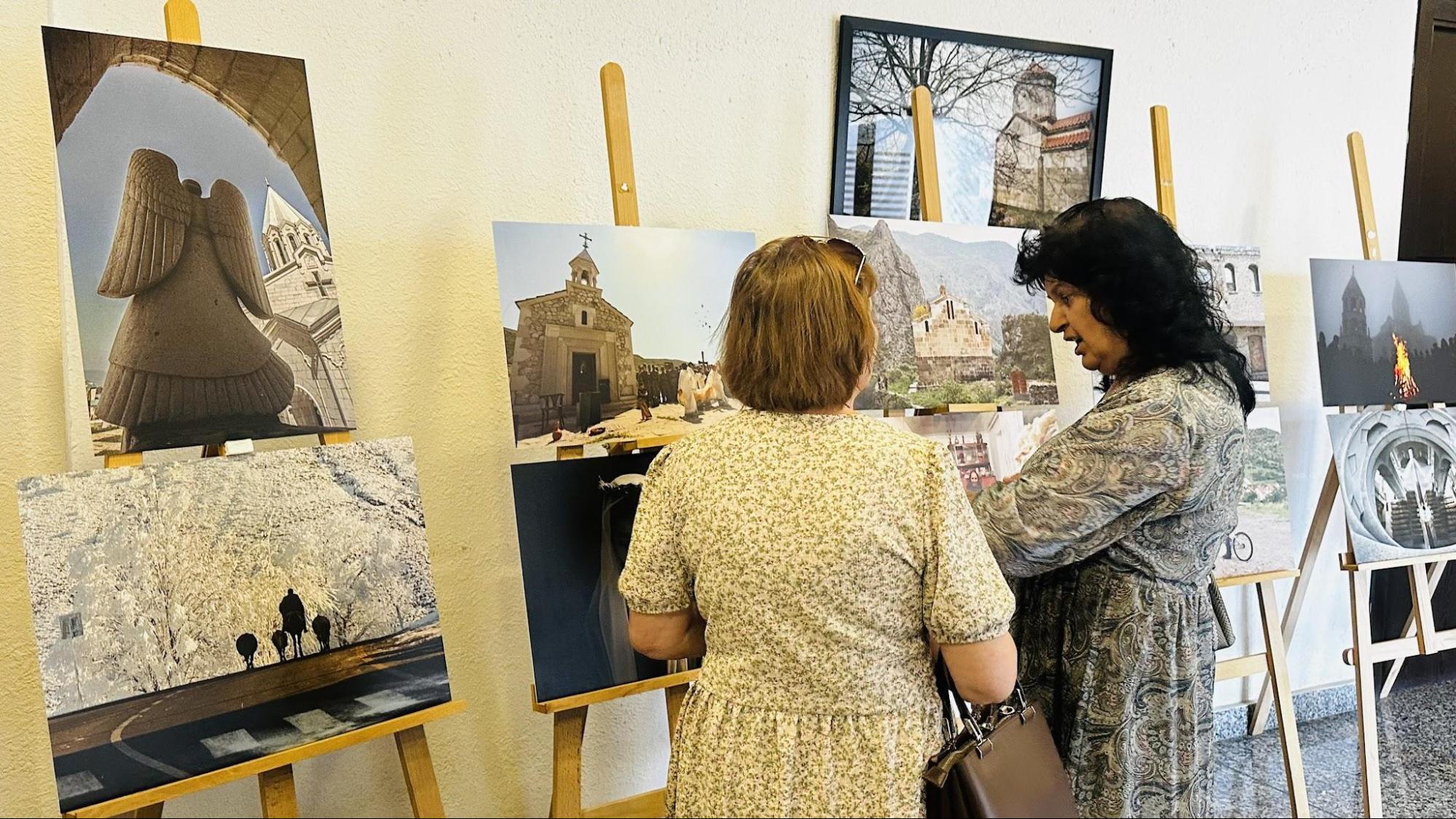
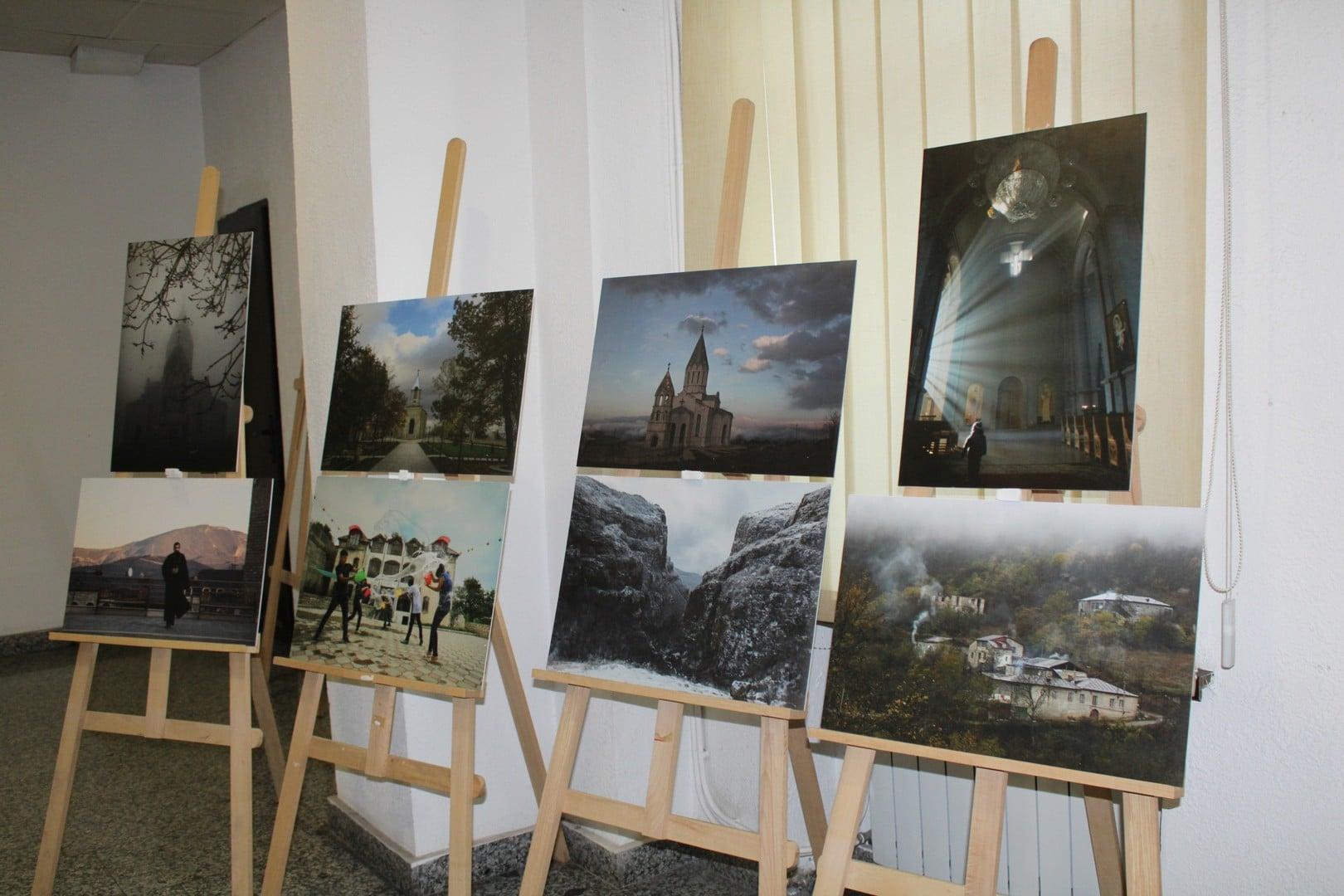
Afterward, participants and guests visited a photography exhibition at the Artsakh Representation in Yerevan. It brought together the work of Zohrab Rkoyan, a veteran photographer and former editor-in-chief of Meran, the Kashatagh district newspaper, and Shushi-born photographer Vladimir Gevorgyan.
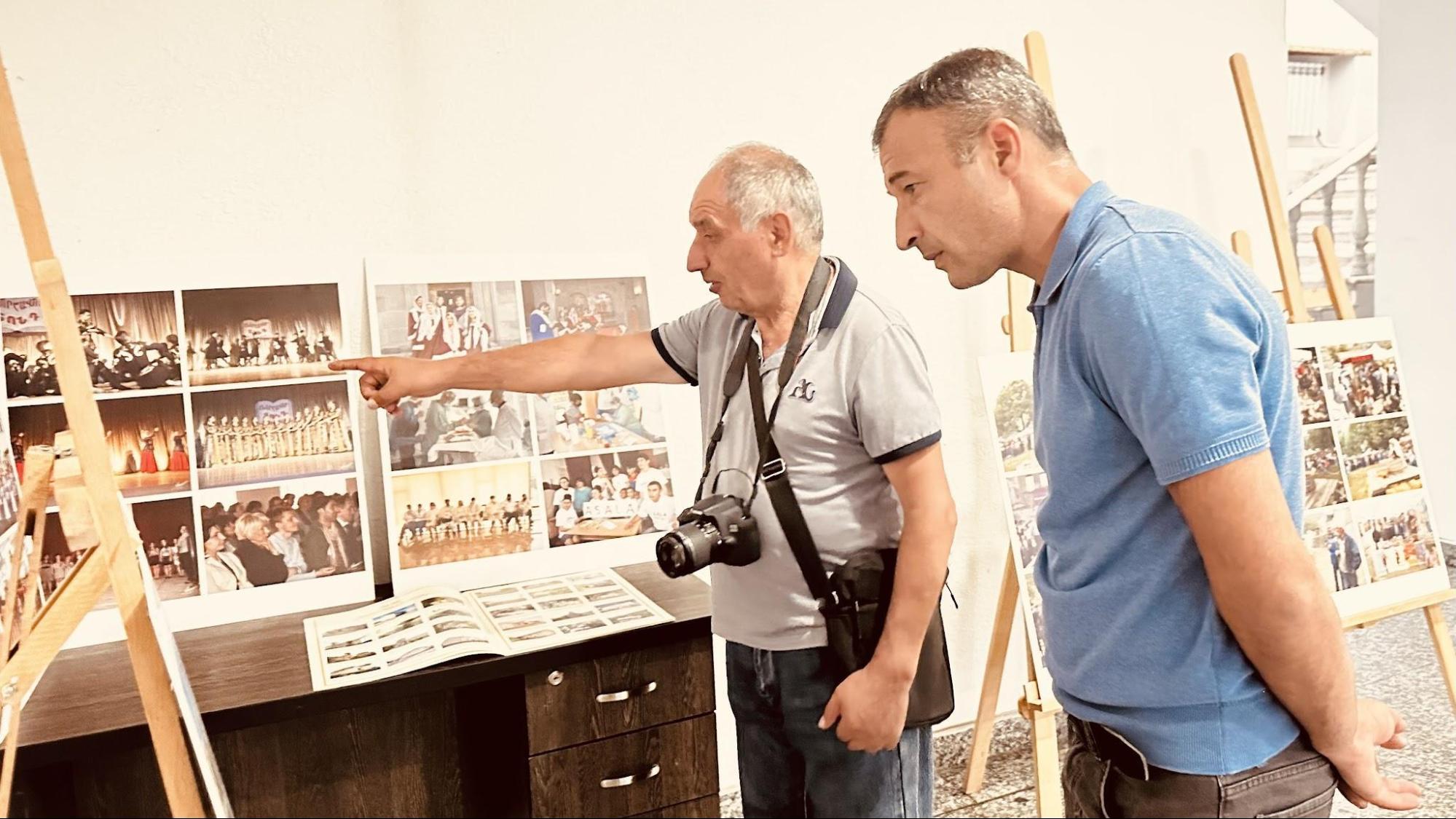
Rkoyan, who has served in the military since the 1980s, used his camera to document settlements across Artsakh, its churches, monasteries and historical sites, as well as the ordinary lives of the people who lived there. His exhibition traced the cultural and educational life of Artsakh through images of schools, local gatherings, wine festivals and other community celebrations in Kashatagh. It also included photographs of military life and those who served during the wars, including women and clergy who supported people on the front line.
“Artsakh is Armenia’s shield,” Rkoyan said, describing the conviction that had shaped his military and public service and his work as a photographer.
The exhibition also included a collection by Vladimir Gevorgyan, titled “Let Us Rise to Shushi.” His photographs of Shushi’s churches, streets, architecture and cultural landscape presented the historic city as both a physical place and a continuing presence in Artsakh Armenians’ collective memory. The title suggested a journey that is spiritual and intellectual as well as geographical: the idea that people must first return to Shushi through memory, thought and cultural life before they can hope to reach it again in person.
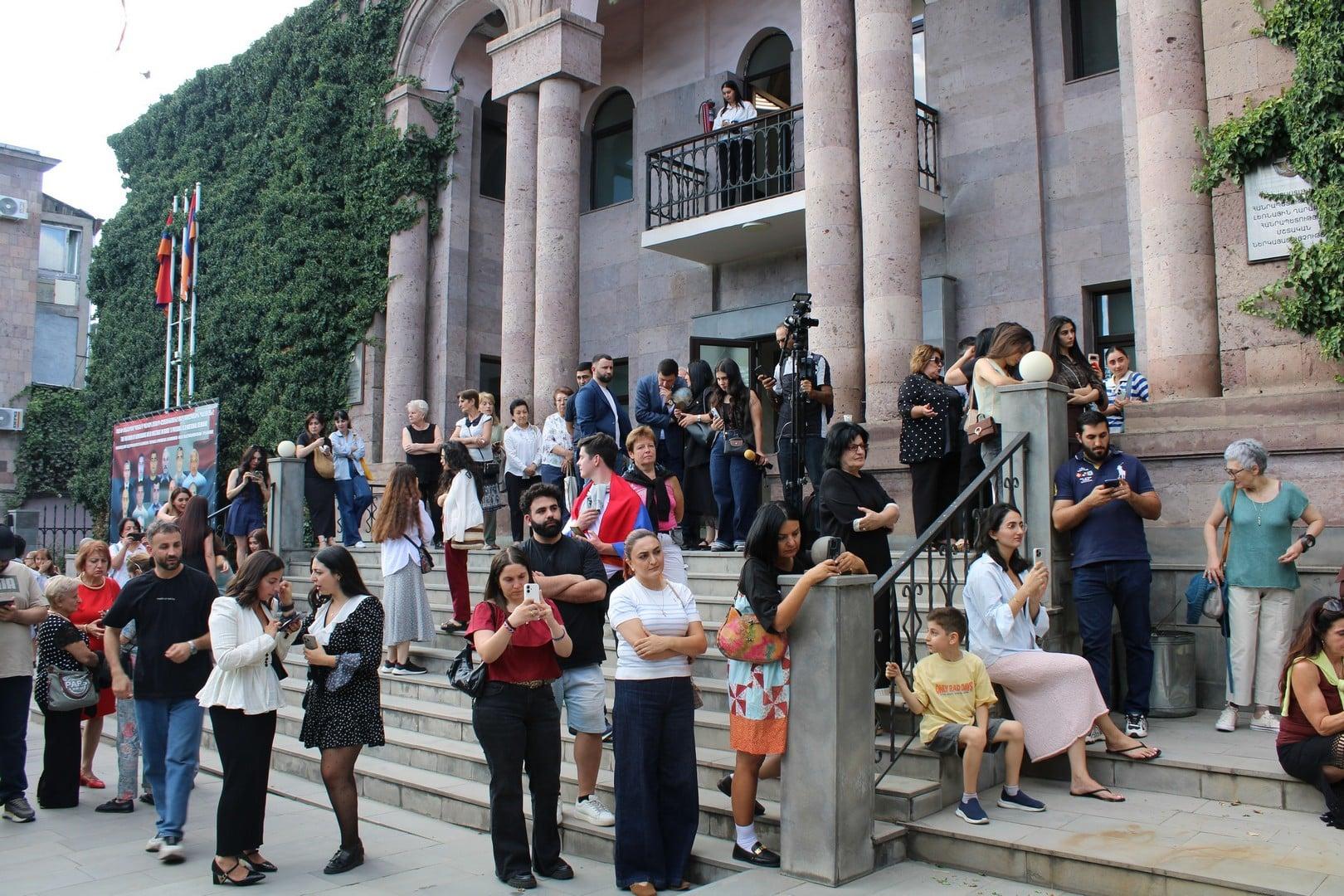
The exhibition was followed by a cultural program featuring musicians and performers from Artsakh. Singers Arthur Khachents and Marat Harutyunyan performed songs about Artsakh, including pieces in Artsakh dialect. The program also included Aya, whose performance evoked the figure of the Artsakh grandmother, and the We Are Our Mountains song-and-dance ensemble. Through music, dance and dialect, the performers recalled Artsakh’s cultural identity and the life of a community now living in exile
The anniversary was also marked by a Prayer for Peace at the Mother Cathedral of Holy Etchmiadzin, led by Catholicos Karekin II. Catholicos Aram I of the Holy See of Cilicia also issued a message to commemorate Artsakh Independence Day. Armenia’s government did not issue a public statement to mark the anniversary.