


FeaturedReflections

Reflecting on the legacy of the reopened Gulbenkian Museum
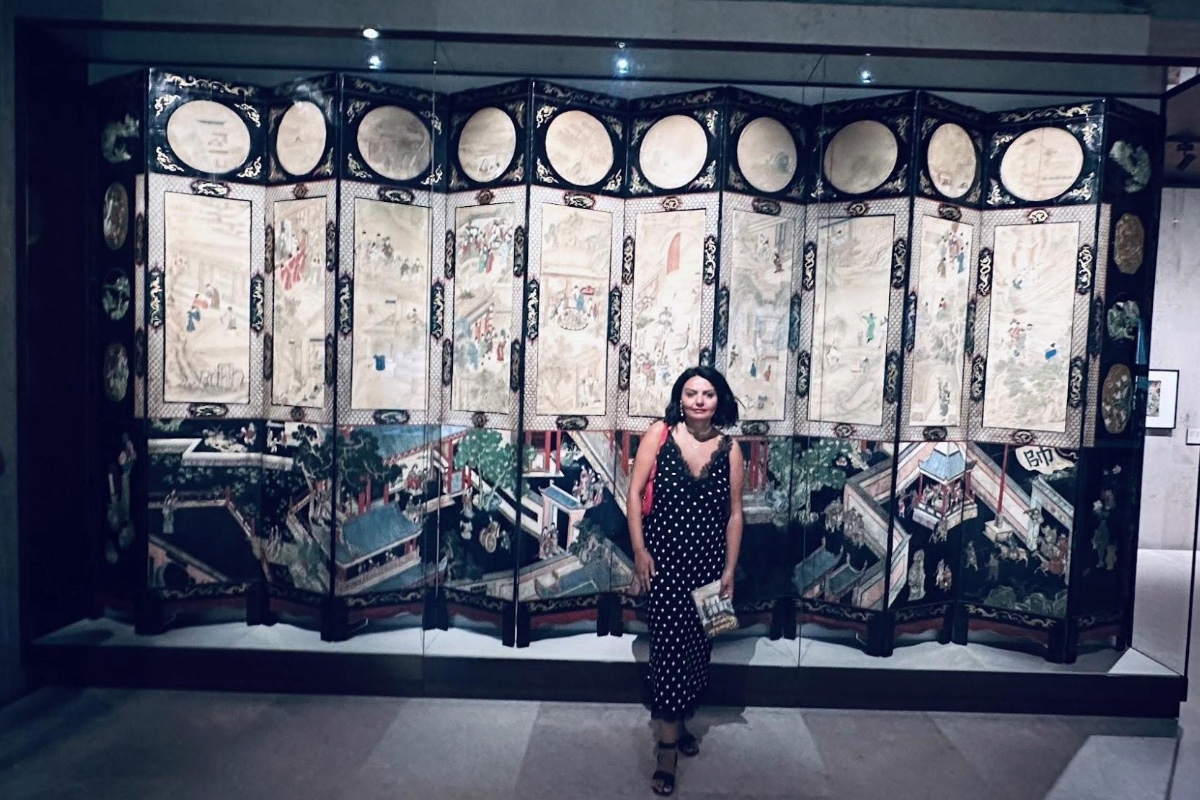
A year ago, when I arrived in Lisbon to pursue an LLM in human rights advocacy at NOVA School of Law, in partnership with the University Network for Human Rights, I was hosted during my first months by a local journalist colleague. When I thanked her, her friends brushed it off with a familiar refrain: You are Armenian, they said, and your compatriot Calouste Gulbenkian has already done more for this country than gratitude could repay. 

The same sentiment surfaced again at university. One of my young professors, upon learning that I was Armenian, spoke with admiration about Gulbenkian’s impact on Portugal’s cultural life. He recalled how, as a child, he and his siblings attended world‑class concerts and cultural events organized by the foundation, often free or accessible at symbolic prices — experiences that brought some of the most famous musicians to Lisbon and would otherwise have been out of reach.

These moments produced a sense of pride. The Calouste Gulbenkian Foundation, established in 1956, remains one of the most influential philanthropic institutions in Portugal and beyond. For me, that connection is also personal. During my studies, I benefited from the support of several individuals and institutions, among them the Gulbenkian Foundation, whose scholarship for students of Armenian origin in Portugal is one for which I am particularly grateful.

Calouste Sarkis Gulbenkian, of Armenian origin, was born in Istanbul and educated in England, later becoming a renowned oil magnate known as “Mr Five Percent.” He went on to assemble an extraordinary art collection that bridges West and East, Asia and Europe, shaped by his education, connections and experience.

The Gulbenkian Museum holds an important collection of Eastern carpets, including Safavid Persian and Caucasian pieces displayed in spacious galleries designed especially for textiles.

Over the past year, I visited the foundation several times, attending temporary exhibitions and events, particularly those focused on Armenian cultural initiatives. Its Armenian Communities Department, among many other initiatives, has also developed programs to respond to the forced displacement of Armenians from Artsakh, supporting projects that offer psychosocial assistance, monitor cultural heritage and document the losses faced by the community.

Advertisement

On July 18, 2026, after more than a year of renovation work, the Calouste Gulbenkian Museum in Lisbon reopened its doors, marking the 70th anniversary of a foundation rooted in Portugal and dedicated to art, education, science, charity and the service of humanity.

The modernist museum sits within a park where architecture and landscape seem to grow into one another. Its restrained, almost severe structure softens through its dialogue with the garden, an unusual quality for brutalist design. The greenery penetrates the building so that glass, concrete and trees feel part of the same composition. The space reflects something of Gulbenkian himself, a man drawn equally to oil, art and nature.

Gulbenkian, like many immigrants, spent his life searching for a sense of home, perhaps more for his art than for himself. He owned a beautiful house in Paris yet often lived in hotels, as if he were seeking a home for his collection rather than his body. In the end, that home became Lisbon, where he chose to root his legacy and keep his works together in one place.

Soap Bubbles by Édouard Manet

Over six decades, Gulbenkian assembled more than 6,000 artworks, spanning ancient Egypt and Greece, Indian art, Chinese and Japanese porcelain, European painting and sculpture, and the art of the Middle East and Ottoman worlds. The galleries move from French 18th‑century canvases to Rubens and Rembrandt, to Manet’s “Boy blowing bubbles,” to rooms lined with Persian and Caucasian carpets, Japanese prints, Chinese lacquerware, French furniture from the time of Louis XV and Louis XVI and, finally, the luminous jewelry of René Lalique — each space repeating the idea of “only the best” that guided his collecting.

Portrait of Camille Monet by Pierre-Auguste Renoir, created around 1874 and housed in the Calouste Gulbenkian Museum

Yet within these rooms, I was drawn to how often women appear as subjects. Among the most recognizable are Renoir’s “Madame Monet Reading,” Ghirlandaio’s “Portrait of a Young Woman” and Rubes’ “Portrait of Helena Fourment.” 

As I moved through the galleries, I found myself searching also for Armenian traces. Within this vast founder’s collection, there is a small Armenian section: illuminated parchments and manuscripts with liturgical texts and Gospels, including a Bible produced in Istanbul in 1623 and 17th‑century works from Iran with colored script. Nearby are a plate bearing the Armenian eternity symbol and liturgical objects, among them a crosier whose serpent‑shaped pinnacle evokes the story of Moses. Even their modest presence suggests that Gulbenkian’s identity was less anchored in a single nation than in a broader, cosmopolitan vision of the world. 

17th-century Armenian or Georgian episcopal staff (crozier) currently housed in the Armenian Art collection in the Gulbenkyan museum; This Iznik plate at the Gulbenkian, marked with the Armenian eternity symbol, holds a rare trace of Armenian ceramic heritage within Ottoman art; Golden Armenian pyx made in 1687 by master jeweler Sedrak in Kayseri, Turkey, crafted in gold with finely carved scenes and set with a ruby and pearls, now preserved in the Calouste Gulbenkian Museum.

As I wandered through the museum, I tried to look at these rooms through a gender lens, wondering whether I might sense his wife, Nevarte Essayan Gulbenkian. Later, reading the foundation’s own notes about her, I discovered, for example, that she hardly wore jewelry at all, which made the glittering display of ornaments feel even more like his world than hers.

And who was this seemingly absent woman? Nevarte Essayan Gulbenkian, born in Constantinople in 1875 into a prominent Armenian family, lived at the intersection of privilege and patriarchal society. Educated at home in languages and the arts, as was customary for women of her class, she developed a cosmopolitan outlook that defined her life, moving with ease between Armenian, Ottoman and European circles and becoming central to the social fabric that underpinned her husband’s success.

Dragonfly Woman” corsage ornament is one of René Lalique’s most spectacular Art Nouveau jewels, now housed in the Calouste Gulbenkian Museum’s Lalique collection

For more than 60 years, Nevarte was the only person who accompanied Calouste throughout the creation of his art collection and as he built his networks. In London and Paris, she hosted gatherings that brought together diplomats, artists and businessmen, transforming hospitality into influence. Much of her agency was exercised through socially sanctioned roles — as host, organizer and cultural mediator. As the wife of one of the world’s wealthiest men, she was known in public as “the richest woman in the world” and, in private, as “the life and soul of the party.” Her humor, energy and curiosity offered a sharp counterpoint to her husband’s more reserved nature. During the Hamidian massacres, She and her sister left for Cairo and then Europe, appearing at parties and receptions. During the “Artistic Networks of Trust” program at the Calouste Gulbenkian Museum, Talinn Grigor, in her presentation on Nevarte Essayan Gulbenkian and Armenian women’s global networks, cited a 1898 Swiss newspaper remark about two Armenian women in European society: “If all Armenians are as charming as these two, we fail to comprehend their persecution by the Turks.” 

Alongside her husband’s cosmopolitan life, Nevarte’s focus was much more clearly on Armenian culture. 

She felt responsible for keeping Armenian language and memory alive, beginning with her own family. She insisted that her children and grandchildren learn and preserve Armenian, even when those efforts met resistance at home. But Nevarte ’s concern for Armenian education did not stop at her own children and grandchildren; it extended to Armenian schools in the diaspora.

In her will, she asked that her jewelry be sold to fund Armenian schooling. Her sister later recalled that Nevarte wanted a school “in a country that is not rich, in difficult conditions,” so that Armenian children there could learn their language and grow up in a community that would otherwise be fragile. The result, realized years after her death, was the Nevart Gulbenkian Armenian School, which opened in 1967 in Tehran, followed by the Nuard Gulbenkian School in Marseille, carrying forward her wish to do in death what she could not fully do in life.

An illuminated 17th‑century Armenian Gulbenkian Bible, produced in Constantinople around 1623, opens to richly decorated pages from Genesis and Revelation that anchor the museum’s collection

During the virtual tour “Calouste: A Life, Not an Exhibition,” marking the 150th anniversary of Gulbenkian’s birth, Razmik Panossian, director of the Armenian Communities Department, described how Gulbenkian devoted himself to philanthropy, founding libraries, churches and other institutions. He also recalled Calouste’s almost obsessive concern with his grandchildren’s education: When a grandchild sent him a letter in French, he would correct the language and send it back, reinforcing both linguistic precision and the elite education that he imagined as their future. Nevarte’s attention moved in a different direction. In Armenian community life she took on real leadership, including as president of the Armenian Ladies’ Guild, organizing events and supporting projects that linked women and families across the diaspora.

I left the museum with a question I could not quite shake: What if Nevarte had not been born into an Armenian family, into a patriarchal world where her role was always already framed as supportive? Would her life have unfolded differently, more like that of, for example, Isabella Stewart Gardner in Boston, whose husband backed her in buying paintings, building a garden and founding a museum that carries her own name, not just his? Or maybe that was Nevarte’s mission as an Armenian woman: to sacrifice the possibility of a visible, individual career in order to hold together community, language and schooling, and to do so in ways that rarely place her at the center of the story.

Lisbon itself often feels like an open-air museum, alive with history. Among its many cultural landmarks, the Gulbenkian Museum stands out for the way its house, garden and collection together reflect the vision of a cosmopolitan Armenian founder who believed culture, science and education should serve all humanity. On your next visit, it is worth stepping inside and looking a little more closely at what — and who — shaped what you see.

Siranush Sargsyan

Siranush Sargsyan is a freelance journalist from Stepanakert, Nagorno-Karabakh/Artsakh, now based in Armenia. She covers human rights, politics and women in conflict zones, with work featured in outlets such as the BBC, Newsweek, Open Democracy, IWPR, The Armenian Weekly and other publications. Previously, she was Chief Specialist in Education and Political Science on the standing committee in Artsakh's parliament and taught History at Machkalashen school. Sargsyan holds degrees in History and Political Science and completed the Tavitian Scholar Program at Tufts University, as well as a journalism internship at Taz media.

Leave a Reply

Your email address will not be published. Required fields are marked *


Back to top button