



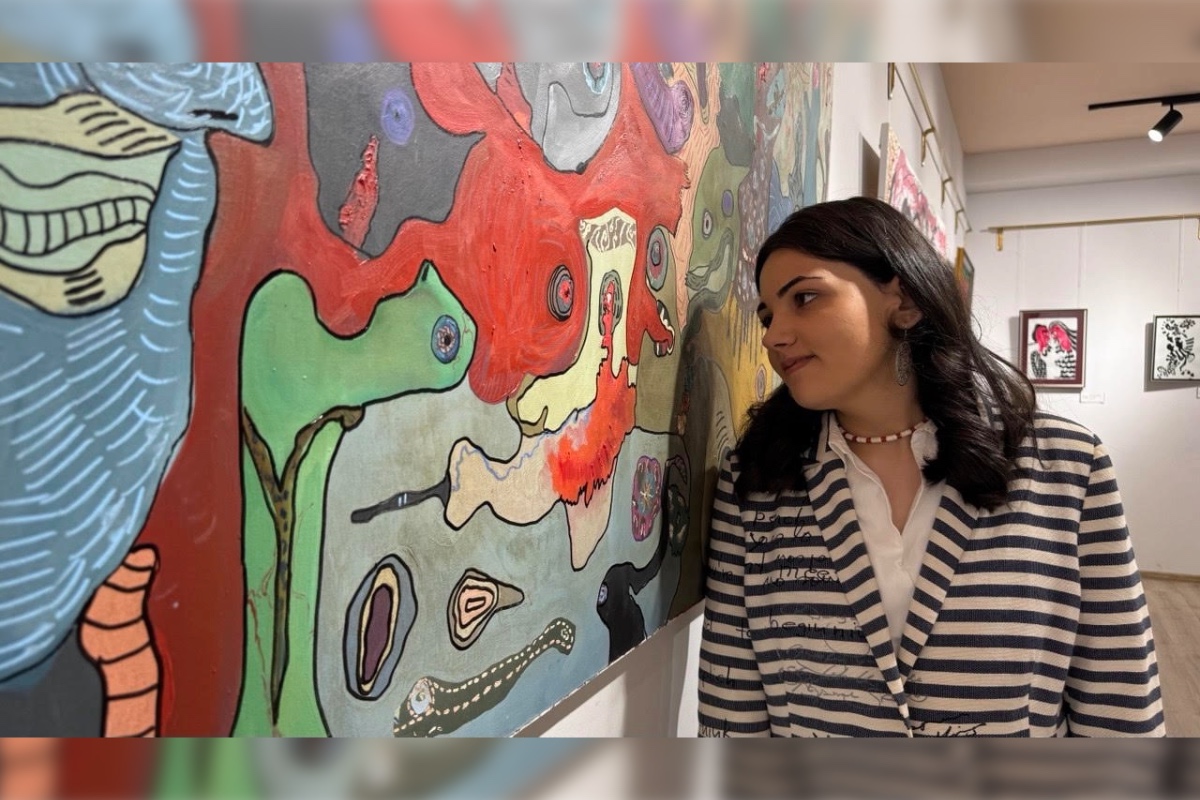
Art can become a language for expressing complex, hidden and even subconscious experiences. In the world of contemporary art, finding a unique artistic voice is no easy feat; however, painter Elen Grigoryan has succeeded in creating a world where colors and technique serve to unveil human inner transformations.
In an interview with The Armenian Weekly, Grigoryan spoke about her art, her creative journey and the major turning points that have shaped her as an artist.
From pharmacy to canvas
Grigoryan traces her roots to the town of Martuni in the Gegharkunik province. There were no artists in her family, and she is the first to venture into this field. Throughout the interview, she noted with particular warmth that being born and raised in the province played a major role in her development. Both her family and her teachers always supported her.
Interestingly, before definitively choosing painting, Grigoryan explored the field of medicine. She graduated from the pharmacy department of the college at the M. Heratsi State Medical University. At one point, she realized that art was the tool through which she could offer more to society, telling stories about issues that are taboo or simply ignored.
“Contours of Existence”: Years of creative maturation
A major milestone in Grigoryan’s career was her solo exhibition held from May 12 to 20 of this year at the Pyunic Development Center, which was titled “Contours of Existence.” This was her second solo exhibition. The first had taken place years ago, at the age of 16, at the Martuni branch of the National Gallery.
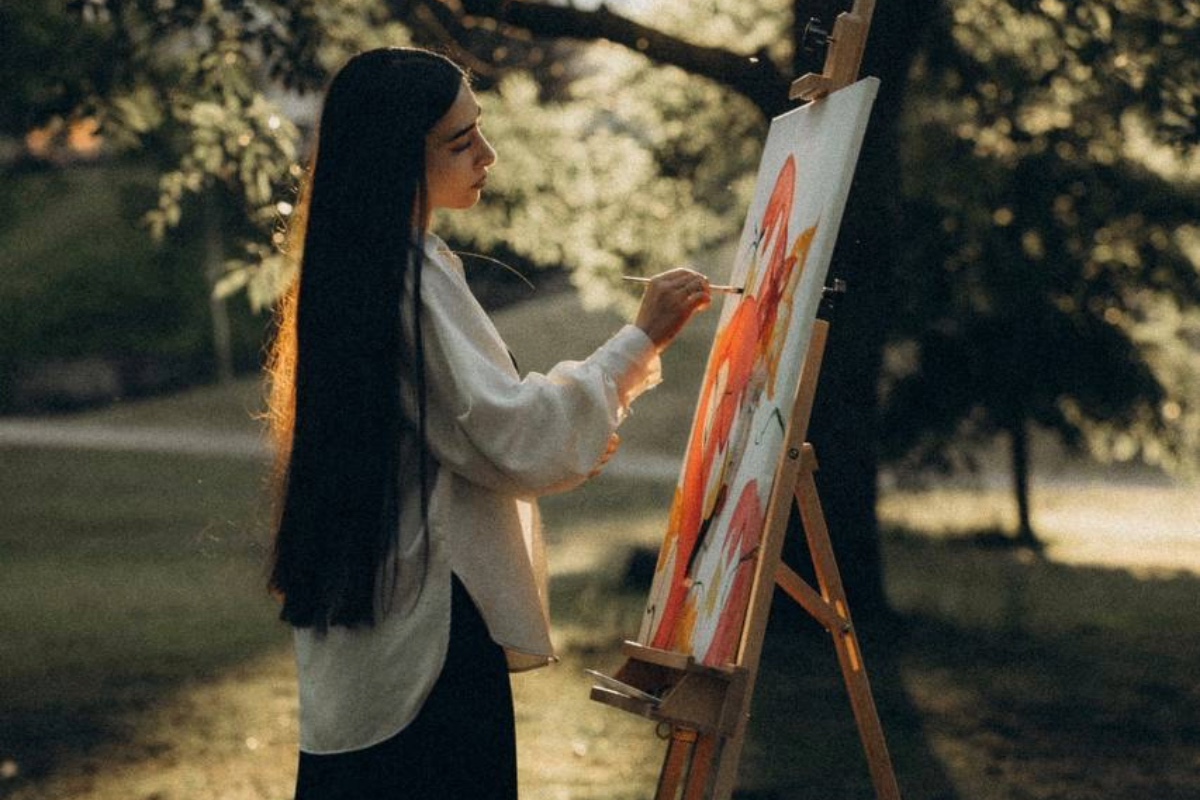

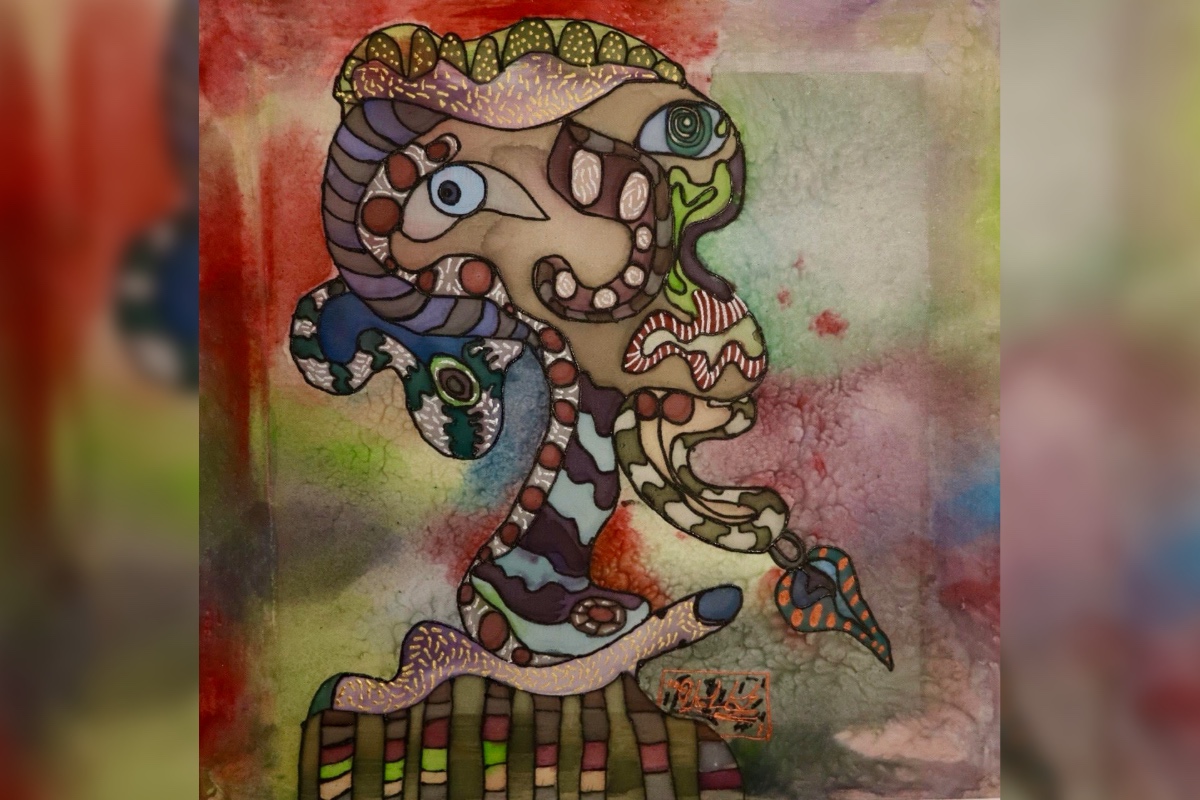
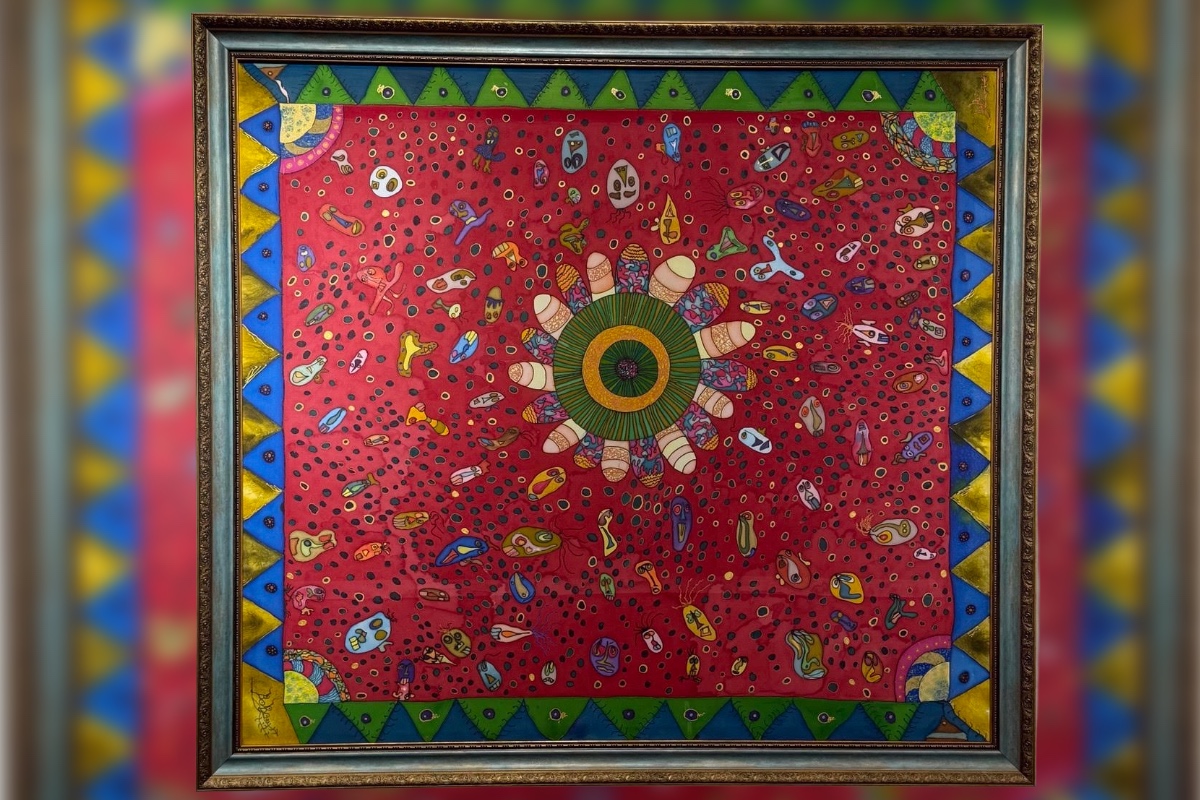
For this second exhibition, the painter presented 30 works that summarized her creative path spanning various years — from pieces done when she was 15 and 16 years old to canvases completed recently. The primary emphasis of the exhibition was placed on works executed in the batik technique (painting on silk).
“Prior to this exhibition, I also had small group exhibitions both in Armenia and abroad. The ‘Pyunic’ Development Center plays a significant role in any artist’s life, providing space and the opportunity to express oneself exactly as one is,” Grigoryan told the Weekly. “This exhibition brought about a major shift in my life and artistic direction, because following it, I began to approach certain matters more seriously, attempting to find a larger audience and new ways of presentation.”
Mapping the inner self through batik
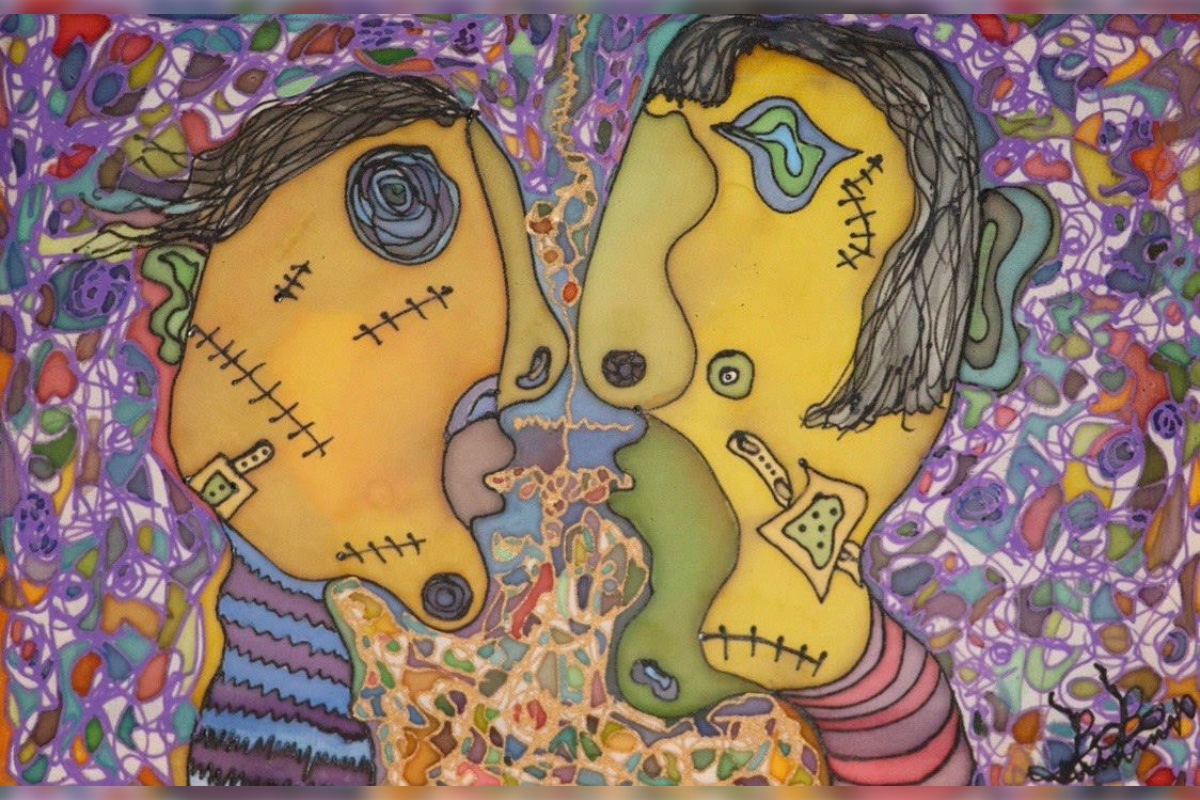
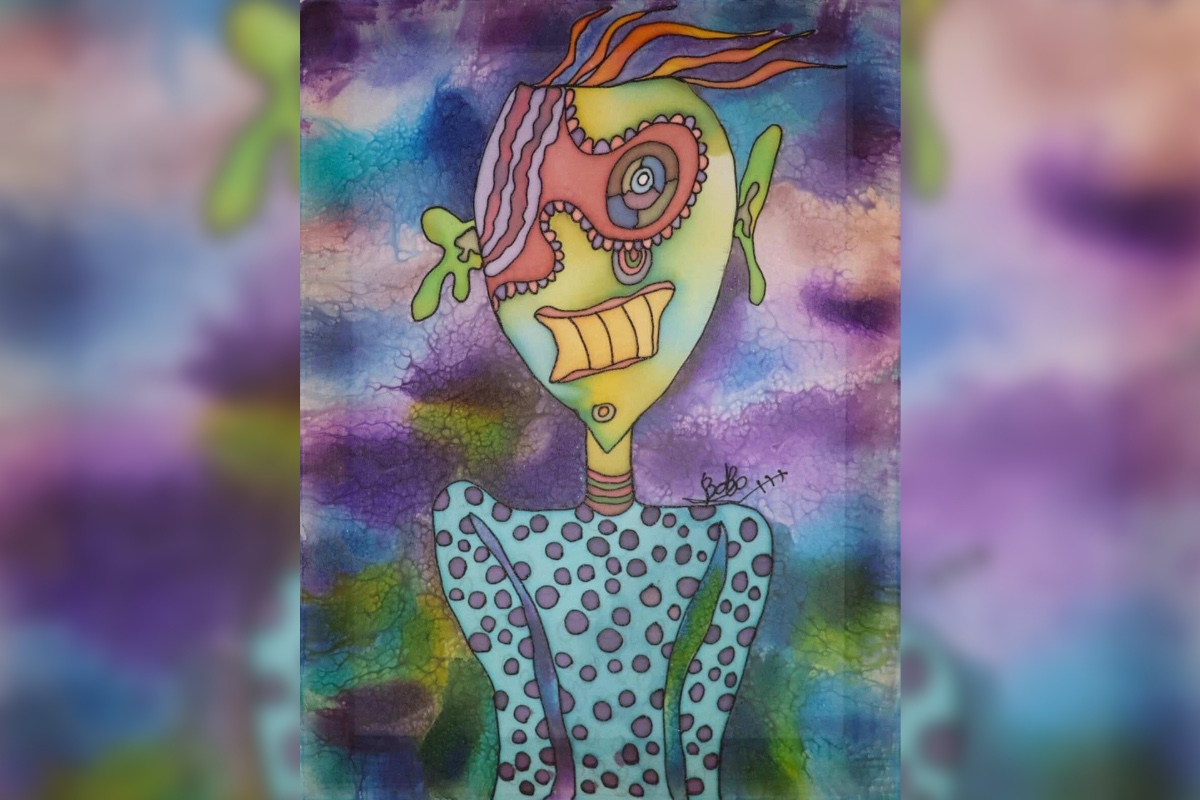
One of the most striking parts of the interview was the creation story of her work “The Inner Map of Man.” Grigoryan confesses that this piece holds special significance for her, as it was born out of a prolonged period of creative incubation and sketching lasting 5 to 6 months. For a long time, she could not decide whether the work would be more visually striking on canvas or fabric, until she realized she needed to turn to the batik technique.
Grigoryan elaborates on the philosophy of her work: “I had to present it in such a way that by rotating the painting, different faces of deformed characters, smiles, and joy would appear. Through this, I sought to express a person’s environment, which shapes their inner map. The overall philosophy was that without society, friends, family and our daily surroundings, a person can’t possess their overall inner perception, their inner map. And if we don’t possess that inner map, which is quite vast, we won’t be able to form a part of society.”
Grigoryan prefers to work with diverse materials — oil paint, acrylic, sculpture, collage — yet silk remains the closest to her heart. In her words, specialists practicing batik in Armenia are few, and she wishes to demonstrate that serious works can be created through this complex technique, creating works that rival oil paintings.
Self-criticism and faith
At the center of Grigoryan’s art is the human psyche and its subconscious layers. The color red, which she calls an “oppressive palette,” helps her create a “chaotic state that occurs within our inner world.”
Grigoryan believes faith is a cornerstone in the life of any creator, as it provides the confidence to create. She also finds that she is her own harshest critic:
“It is important to me that I approach my work critically. I believe that critical thinking is vital in art. Today, there are many artists, and it is difficult to find your distinct path and perspective among them. Approaching your work critically is half the battle in creating a masterpiece.”
Toward new horizons: Exploring eating disorders through art
At present, Grigoryan is working on a new and complex project. She has transitioned to monumental-sized works through which she presents anorexia and bulimia from a psychological perspective, illustrating the heavy toll they take on women. Grigoryan believes this issue is deeply rooted in Armenia. She plans to present this series to the public this fall, at her next solo exhibition scheduled for September and October.
Follow Grigoryan’s work on Instagram.