



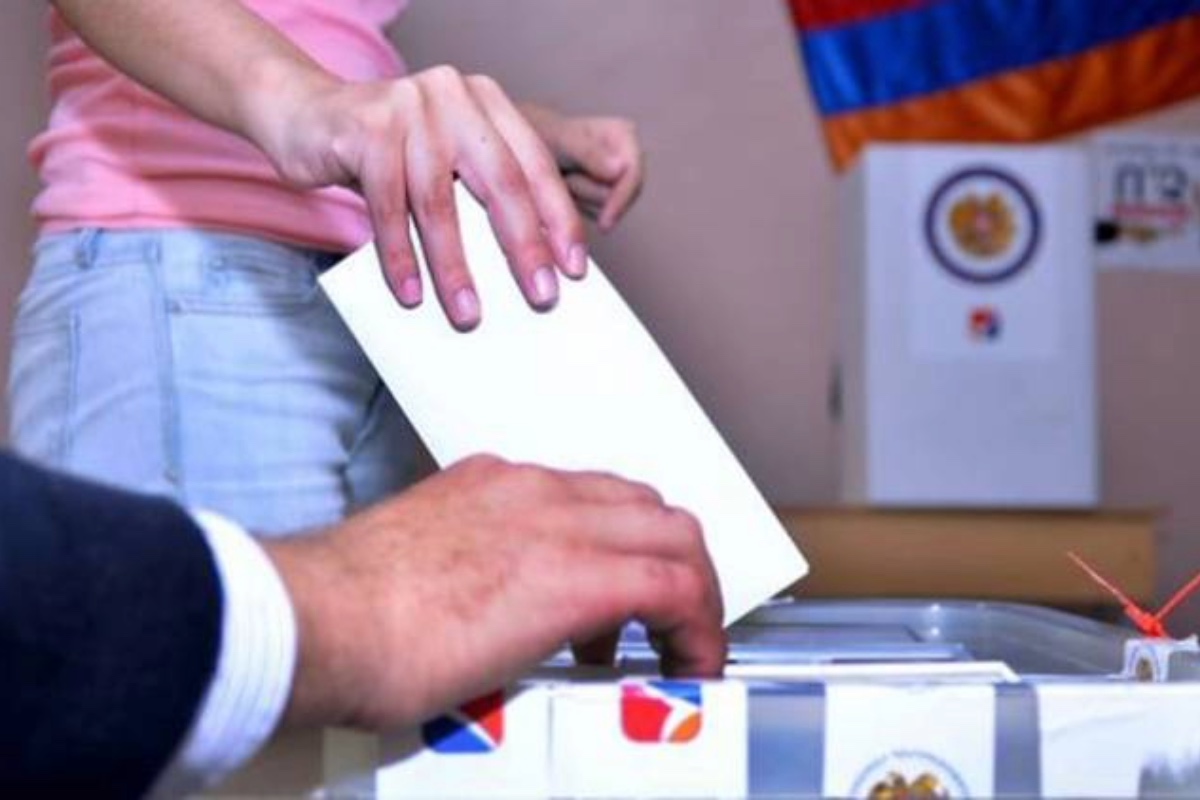
Armenia’s parliamentary elections were held on June 7 under widespread, systematic and well-documented fraudulent conditions.
These elections were not merely held to determine the representatives of the people or the future orientation of the country. Prime Minister Nikol Pashinyan was well aware that the outcome would decide whether he could continue to rule the country single-handedly for another five years or face prosecution for violating hundreds of laws and the constitution.




Thank you Harut Sassounian. I have long wondered, ever since Pashiinyan’s accession to prominence, why the Armenian electorate has continued to vote for his high-handed mismanagement even as he grovels in front of the pigs and butchers who run all the foreign states that he has been dealing with. The truth is that they probably haven’t.
Armenia’s treatment at the hands of the international community continues to be the abomination that it has been ever since the lead-up to World War I. Armenia has no friends — not NATO, nor the EU, and certainly not the U. S. State Dept.
What I am most baffled by, however, revolves around why ANCA continues to swear unswerving loyalty to the Democratic party in the face of that body’s continuing betrayal of such long standing. In so doing, does not ANCA debase itself while betraying its own interests?
Excellent article,
How can the election results be considered valid when Karapetyan was prevented from campaigning? and with all the other facts mentioned?
Is that a democracy? No.
Is that free and fair elections? No.
Are the election results valid? No.
The election results should be nullified and a new elections scheduled, giving sufficient time and freedom for the opposition to campaign.
**Allegations Are Not Proof of a Rigged Election**
To the Editor:
Harut Sassounian’s article declares Armenia’s parliamentary election “rigged,” yet the evidence he presents does not support such a sweeping conclusion.
There were legitimate concerns surrounding the campaign, including opposition arrests, possible misuse of state resources, pressure on public employees, and questions about selective law enforcement. Every credible allegation should be investigated transparently.
But irregularities are not automatically proof that the nationwide result was fabricated.
Sassounian repeatedly presents allegations as established facts. He claims that soldiers voted multiple times, absent citizens’ names were used fraudulently, opposition votes disappeared, and Prime Minister Nikol Pashinyan personally organized the election fraud to avoid imprisonment. Yet he provides no court findings, comprehensive precinct evidence, independent verification, or credible calculation showing that these alleged acts altered the final result.
His treatment of voter lists and parliamentary seat allocation is also misleading. Citizens living abroad may remain registered voters, and parties falling below the electoral threshold do not receive seats. These issues may deserve reform, but neither is proof of fraud.
Most revealing is Sassounian’s conclusion. Rather than primarily calling for recounts, independent investigations, and the public presentation of evidence, he urges mass demonstrations until Pashinyan resigns. The article therefore reads less like an impartial defense of democracy and more like a political argument designed to justify removing a government he already opposes.
A broader problem also deserves attention. A vocal segment of diaspora commentary appears ready to blame Pashinyan for nearly every national setback while giving far less scrutiny to Russia, Armenia’s former rulers, and opposition forces closely associated with Moscow.
Criticism of Pashinyan is legitimate and necessary. But opposition to one leader does not justify rehabilitating discredited former governments, overlooking foreign pressure, or declaring an election stolen without compelling evidence.
Democracy is defended through facts, due process, and respect for the votes of Armenia’s citizens – not through partisan accusations presented as proven truth.