


Universities traditionally serve as spaces where complex geopolitical questions are examined through transparent debate and rigorous scholarship. When academic institutions host discussions about international security or national development, audiences expect intellectual independence, methodological rigor, diversity of thought, and disclosure of relevant institutional affiliations.
Recent panel discussions held at major universities in the Greater Boston area and cultural organizations examining Armenia’s geopolitical trajectory, particularly about the country’s strategic “pivot” toward the West and its emerging nuclear energy partnerships, illustrate the challenges that arise when academic discourse intersects with active political narratives. The panels presented themselves as scholarly discussions of regional security and economic development. Yet, their framing, omissions, absence of diverse perspectives, and lack of clear disclosure regarding any potential institutional relationships, raise broader questions about the ethics of policy advocacy within academic environments.
These concerns are particularly significant given the timing of such discussions. Armenia is approaching a contentious parliamentary election cycle while simultaneously navigating one of the most difficult geopolitical periods in its modern history.
The narrative of strategic transformation
The central theme of the panel discussions was Armenia’s supposed geopolitical transformation following the erosion of Russia’s traditional influence in the South Caucasus. Speakers repeatedly argued that Armenia’s strategic diversification toward Western partners, particularly the United States, represents a historic opportunity for regional stabilization and economic integration.
In one presentation, the United States was described as emerging as a new geopolitical “arbiter” in the South Caucasus following Russia’s declining regional capacity.
Such arguments reflect a widely discussed perspective within policy circles. Armenia has indeed attempted to diversify its security and economic relationships since the 2020 war with Azerbaijan, expanding cooperation with the European Union, India, France, and the United States.
Yet, the panel discussion was notable for the limited attention paid to several developments that continue to shape Armenia’s political landscape.
War, displacement and political aftermath
The 2020 Artsakh (Nagorno-Karabakh) war fundamentally altered the balance of power in the South Caucasus. Azerbaijan regained significant territories during the conflict and in 2023, Azerbaijani forces took full control of Artsakh, leading to the ethnic cleansing of the entire Armenian population of the region.
The war and its aftermath remain central issues in Armenian domestic politics. Tens of thousands of Armenian soldiers were killed or wounded during the conflict, while the loss of the Armenian-inhabited enclave of Artsakh and the ethnic cleansing of the native Armenian population triggered a profound national trauma.
Peace negotiations between Armenia and Azerbaijan continue, but progress has been complicated by new conditions introduced by Azerbaijan. Among the most controversial demands is a call for Armenia to amend its constitution before a peace agreement can be finalized.
These demands have generated intense debate inside Armenia, where critics argue that constitutional changes could undermine national sovereignty. Government officials have acknowledged that drafting a new constitution is under consideration ahead of upcoming elections.
Such developments represent the central political questions currently facing Armenia. Yet they were largely treated as secondary background issues in the academic discussions, which instead emphasized optimistic narratives about geopolitical diversification and economic development.
Church-state conflict and domestic political tensions
Another issue that received limited attention in the panel discussions was the escalating conflict between Armenia’s government and the Armenian Apostolic Church.
Relations between the government of Prime Minister Nikol Pashinyan and the Church have deteriorated significantly in recent years. Church leaders have accused the government of interfering in ecclesiastical affairs and violating religious autonomy, while government officials have accused some clergy of political activism.
The dispute has escalated into arrests of archbishops and clergy, as well as public demonstrations. Security forces entered the Echmiadzin Church headquarters on multiple occasions, an unthinkable action under normal circumstances, and prevented the Catholicos of All Armenians Karekin II from attending a bishops’ meeting in Vienna.
Civil society organizations have raised concerns about what they describe as pressure on religious institutions and violations of constitutional protections.
These domestic political tensions form an important part of Armenia’s contemporary political environment, yet they were largely framed in the panel discussion as routine institutional disagreements rather than as elements of a broader political crisis.
Institutional affiliations and the ethics of disclosure
Another important issue concerns potential institutional relationships between some panel participants and Armenian policy networks aligned with the current government.
Several speakers have published analytical work for platforms closely associated with the post-2018 reform narrative in Armenia. These publications frequently advocate the government’s strategic policy of “diversification,” a shift away from reliance on Russian security structures toward closer partnerships with Western states.
While such intellectual engagement is common in policy communities, academic norms generally encourage disclosure of advisory roles, policy affiliations, or consulting relationships that may shape analytical perspectives.
Investigative reporting on Armenia’s media and NGO landscape has highlighted the complex network of organizations, research institutes, and media outlets that shape narratives about Armenia’s political reforms and geopolitical realignment. Some of these organizations receive international funding and maintain close working relationships with government ministries or reform initiatives.
The existence of such networks is not unusual; similar policy ecosystems exist in most countries. However, when participants in academic panels are connected to policy networks advocating specific government positions, transparency becomes essential for maintaining intellectual credibility.
Without such disclosure, audiences may reasonably assume that panelists represent independent academic analysis rather than viewpoints aligned with particular policy agendas.
The SMR debate: Technology, economics and policy narratives
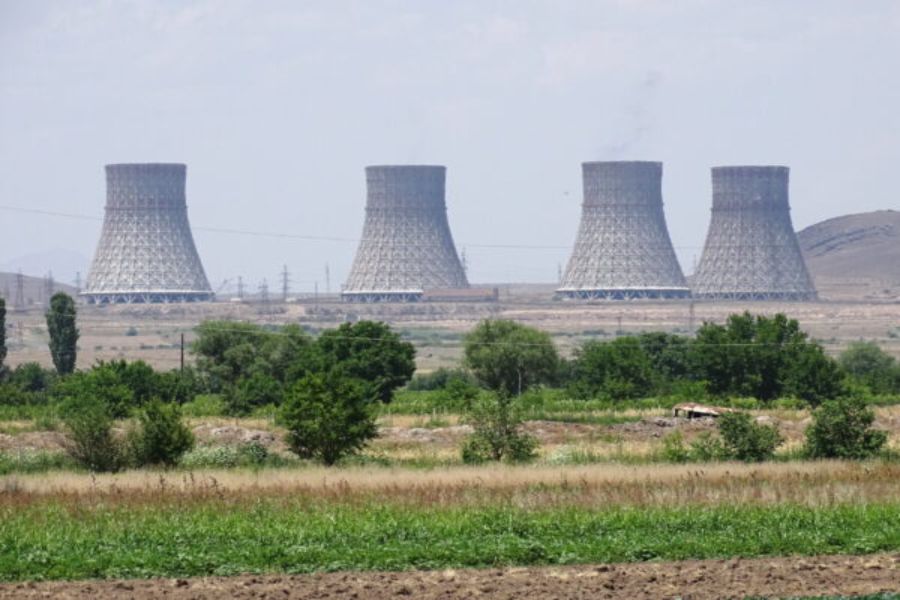
This pattern is evident in discussions of emerging technologies, such as Small Modular Reactors (SMRs). A central focus of the panel discussion was Armenia’s potential adoption of SMRs to replace the aging Metsamor nuclear power plant. Speakers suggested that SMRs could offer Armenia a pathway to energy independence and closer economic cooperation with Western partners. Yet, the panel discussion largely omitted the significant debate among energy economists, nuclear engineers, and policy analysts over the economic viability of SMRs.
SMRs are smaller nuclear reactors typically producing between 50 and 300 megawatts of electricity. Advocates argue that their modular design could reduce construction costs and allow reactors to be manufactured in factories before being transported to deployment sites.
However, the economics of SMRs remain uncertain. A number of studies have concluded that electricity produced by SMRs may actually be more expensive per megawatt-hour than power generated by conventional large reactors. This is largely due to the loss of economies of scale. Large reactors, often generating 1,000 to 1,600 megawatts, spread construction and regulatory costs across far greater electricity output. Smaller units of 50 to 300 megawatts cannot achieve the same efficiency. Similarly, the OECD Nuclear Energy Agency, or NEA, has emphasized that SMR competitiveness depends heavily on large-scale manufacturing and serial production, conditions that have not yet been achieved.
Analyses from organizations such as the Institute for Energy Economics and Financial Analysis, IEEFA, and researchers at Stanford University and the University of British Columbia suggest that SMR electricity could cost between $90 and $200 per megawatt-hour, significantly higher than many renewable energy technologies and, in some cases, even higher than conventional nuclear power.
These concerns have been reinforced by recent real-world developments. The flagship NuScale SMR project in the United States saw projected electricity costs rise dramatically, from an initial estimate of approximately $58 per megawatt-hour to nearly $90 per megawatt-hour before inflation adjustments. Several participating utilities ultimately withdrew from the project, citing concerns about cost escalation.
Academic research on nuclear megaprojects has also highlighted persistent challenges, including cost overruns and schedule delays.
Despite decades of discussion, operational SMRs remain extremely rare worldwide. The only functioning example widely cited is Russia’s floating nuclear power plant, Akademik Lomonosov, which began operating in the Arctic in 2020. China has also constructed a demonstration reactor, while Argentina’s CAREM reactor remains under development.
Most Western SMR projects are still in the design or licensing phases.
This gap between conceptual promise and operational deployment raises an important policy question for countries like Armenia: Why would a small economy like Armenia assume the unknown risks associated with first-of-a-kind nuclear technology that underpins its existence? And why would such technology be promoted to audiences as a panacea for Armenia’s future energy needs? These uncertainties have significant existential, financial and geopolitical implications for a small nation such as Armenia.
Financial risks for small states
Armenia’s entire gross domestic product is approximately $20 billion to 25 billion. Estimates for building new nuclear infrastructure in the country range from $4 billion to $7 billion, depending on the reactor design and financing structure.
For a country with a relatively small electricity grid, a single nuclear project could represent one of the largest infrastructure investments in national history.
Energy economists frequently emphasize that nuclear power plants create long-term technological dependencies that will last decades. Nuclear facilities typically operate for 60 to 80 years and require a continuous fuel supply, maintenance contracts and regulatory cooperation with vendor countries.
In other words, the choice of nuclear technology is not merely an engineering decision but also a geopolitical commitment.
Strategic motivations behind nuclear cooperation
Energy policy decisions are rarely driven purely by economic calculations. Nuclear infrastructure projects often reflect broader geopolitical alignments and strategic partnerships.
For Armenia, nuclear cooperation with Western vendors could reduce dependence on Russian energy infrastructure and deepen economic ties with Western industries. These strategic motivations are frequently cited by policymakers advocating closer energy cooperation with the United States and Europe.
However, strategic considerations do not eliminate the need for transparent public debate about economic costs and technological risks.
When emerging nuclear technologies are presented primarily as geopolitical opportunities rather than as complex infrastructure investments requiring careful financial evaluation, the result can blur the line between academic analysis and policy advocacy.
The responsibility of academic institutions
The broader issue raised by these events is not the content of any single policy argument but the role of universities in hosting discussions that may function as indirect political messaging. Universities play a critical role in shaping public discourse on international affairs. Academic panels hosted by prestigious institutions carry intellectual authority precisely because they are expected to foster independent inquiry rather than reinforce predetermined narratives. When panels present only one interpretive framework, especially on issues as complex and contested as Armenia’s recent political trajectory, the academic setting itself can lend legitimacy to narratives that might otherwise be recognized as partisan.
Patterns of repetition, particularly when the same speakers, moderators, and policy themes circulate across multiple academic venues in close succession, naturally invite questions about whether the discussion reflects independent scholarly inquiry or a coordinated effort to shape public perception.
For discussions about Armenia’s future, particularly those addressing war, peace negotiations, and national infrastructure investment, this responsibility is especially significant.
For diaspora communities, the stakes are particularly high. Many Armenian-American institutions maintain deep intellectual and emotional connections to Armenia. Discussions about the country’s future are not merely theoretical; they influence philanthropy, investment and political engagement within the diaspora.
Transparent disclosure of institutional affiliations, inclusion of diverse viewpoints, and engagement with the full range of scholarly evidence are essential for maintaining academic integrity.
Armenia’s future will ultimately be shaped by difficult decisions involving security, economic development, and geopolitical alignment. Academic institutions should remain spaces where these choices are debated openly rather than settings where political narratives are presented under the guise of neutral scholarship.
Only through pluralistic and transparent debate can academic discourse fulfill its fundamental purpose: helping societies confront complex realities rather than simplifying them into convenient narratives.
Sources:
Nerses Kopalyan, “After the Velvet …,” EVN Report, 2021.
Institute for Energy Economics and Financial Analysis, Small modular reactors: Too late, too expensive, too risky, 2023.
Nuclear Energy Agency, Small modular reactors: Nuclear energy market potential for near-term deployment, 2016.
Giorgio Locatelli, “Why are megaprojects, including nuclear power plants, delivered over budget and late?” 2018.
Muhammad R. Abdussami et al. Evaluation of nuclear microreactor cost-competitiveness in current electricity markets considering reactor cost uncertainties,” Nuclear Engineering and Design, 2025.
Azatutyun, “Armenian minister links new constitution to peace with Azerbaijan.”
Azatutyun, “Civic groups condemn government crackdown on Armenian Church.”
Reuters and Associated Press reporting on church-government tensions and peace negotiations.
Foreign money in Armenia: NGO and media funding, The Armenite, 2021.
Friederike Friess et al., “Small modular nuclear reactors for developing countries: Expectations and evidence,” PNAS Nexus 2026.
Adrian Cho, “Deal to build pint-size nuclear reactors canceled, ”Science Insider, 2023.
International Atomic Energy Agency, Advances in small modular reactor technology developments, 2022.
Lazard, Levelized cost of energy analysis, version 16.0, 2023.