



Administrative pressure to foreign interference: Threats to Armenia’s elections
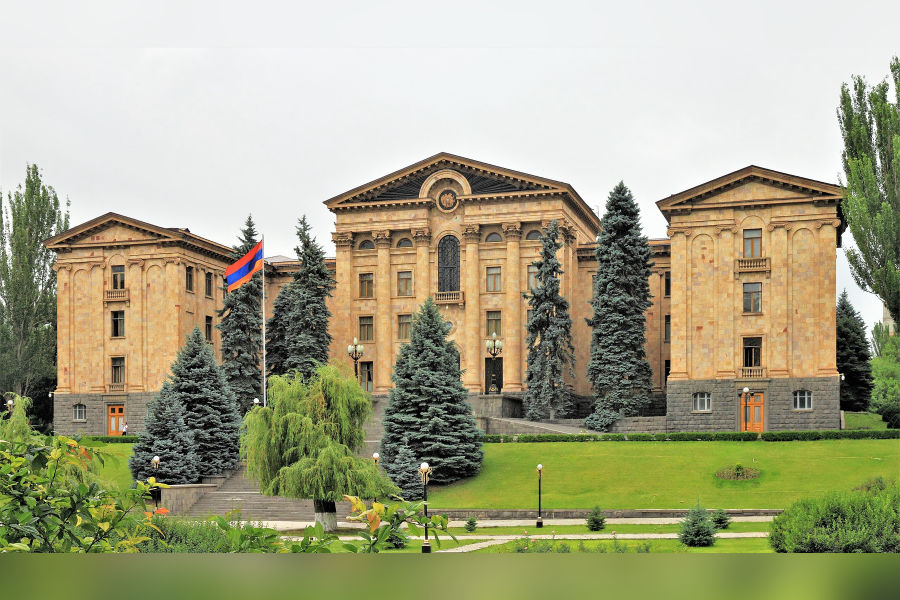
The National Assembly elections scheduled for June 7, 2026, will serve as a significant litmus test for Armenia’s democratic system. Back in 2018, while presenting his government’s program, Prime Minister Nikol Pashinyan declared that the Electoral Code would be reformed to ensure the free expression of citizens’ will, as well as the legality and transparency of the electoral process.
However, as the elections approach, independent monitoring organizations are raising alarms about new threats that could compromise the transparency and democratic integrity of the vote.
According to Sona Ayvazyan, executive director of Transparency International Anticorruption Center (TIAC), while significant reforms have been implemented in the Electoral Code and related legislation in recent years, critical gaps remain.
“To this day, the transparency of party financing remains problematic. It is not only civil society that faces limitations; even though the Corruption Prevention Commission is authorized to oversee party finances, ensuring full access and oversight immediately before elections is practically difficult,” Ayvazyan noted.
The Commission, an independent state body formed in 2019, has worked towards a “zero tolerance for corruption” policy. Its enforcement efficacy is what worries observers like Ayvazyan.

In this context, a primary concern is the transparency of political party funding and the oversight of third-party involvement. Some parties continue to utilize loopholes to artificially amplify their propaganda and advance their campaign interests.
Daniel Ioannisyan, founder of the Union of Informed Citizens (UIC), a nongovernmental organization engaged in corruption monitoring since 2014, noted that significant reforms have been made to Armenia’s Electoral Code in recent years, aimed at increasing the transparency and fairness of elections. According to him, these efforts include both the cleaning and updating of voter lists and the maintenance of order at polling stations.
“The voter lists now contain approximately 100,000 fewer names than in 2021, as the lists have been partially purged through newly applied mechanisms,” Ioannisyan said, emphasizing that this helps mitigate the impact of duplicate or inaccurate data on the electoral process.
At the same time, Ioannisyan pointed out that the potential misuse of administrative resources remains a serious challenge. He noted that the response from law enforcement agencies often appears to depend on the political interests of the authorities, which can undermine the fairness of the elections and public trust in the process.
As an example, Ioannisyan cited an incident in Vagharshapat during the municipal elections. On the first day of the campaign, municipal services were used to post campaign posters for the ruling Civil Contract party. While a court initially upheld a complaint and recorded the illicit interference, the prosecutor’s office appealed the decision in the Court of Appeals. According to Ioannisyan, this demonstrates that legislative enforcement and transparency can vary depending on the political context.
According to Secretary of the Central Electoral Commission (CEC) Armen Smbatyan, recent legislative amendments also address the requirements for neutrality and impartiality among observation missions. Smbatyan said that while this issue is currently less acute than others, clarifying relevant regulations was necessary. He noted that in the past, some political parties exploited observation missions or media credentials as a pretext to station additional proxies at polling sites.
“In National Assembly elections, each party is entitled to two proxies per polling station. We must clearly distinguish between the roles of observation missions and party proxies. Previous amendments had left these regulations out of the Electoral Code; they have now been reinstated so that the CEC can exercise ongoing oversight and, if necessary, take preventive action—up to and including the termination of an observer’s or a mission’s credentials,” Smbatyan stated.
However, Smbatyan also emphasized that a lack of political will or the biased application of existing laws could jeopardize even the most progressive legislative frameworks.
Expanding on the issue of campaign finance, Daniel Ioannisyan highlighted the role of “third parties” — legal entities that support specific political parties by renting offices, printing flyers or organizing campaign buses.
“These are realities currently unfolding across the republic. Our concern is what actions are being taken, as this contradicts the regulations set forth in the Law on Political Parties,” Ioannisyan stressed.
In response, Smbatyan assured that the CEC’s oversight during the pre-election campaign would specifically include monitoring such cases to ensure compliance with the law.
Independent observers warn that foreign hybrid interference is already present and manifesting in various forms within the country’s internal political processes. As the elections draw nearer, experts predict that this interference will intensify, potentially influencing not only public opinion but the very nature of political campaigns.
“At this stage, I do not wish to name specific forces, as the ‘Independent Observer’ alliance is launching a long-term monitoring mission to gather more detailed information,” noted Ioannisyan. He emphasized that monitoring is essential not just for the opposition, but for all political entities involved in illegal financing or non-transparent campaign activities.
Ioannisyan stressed that the scrutiny is not limited to opposition forces; any entity engaging in illicit funding or violating campaign laws will be under the microscope. This vigilance is crucial, as it challenges the common perception that electoral risks apply only to the opposition, whereas they actually impact the integrity of the entire political system.
In recent days, new debates have emerged following government announcements regarding increases in pensions and social benefits. Prime Minister Pashinyan recently announced that starting April 1, pensions and benefits would increase by 10,000 AMD.
Commenting on this, Ioannisyan explained:
“Neither raising pensions nor making a pre-election promise to do so constitutes an ‘election bribe.’ However, from a legal standpoint, a promise and an action are viewed similarly. It is vital that political entities and the authorities strictly adhere to the rules of the game.”
Civil society and independent observers continue to call for further legislative refinements to ensure that the upcoming elections are truly democratic and transparent.
“Even the most comprehensive legislation cannot guarantee democratic elections without the impartial will of the authorities and the full application of the law,” Ioannisyan said.
This underscores the reality that electoral reforms are not merely about changing the wording of the law; they must be accompanied by genuine oversight, political integrity and the active involvement of civil society.



According to Sona Ayvazyan, executive director of Transparency International Anticorruption Center (TIAC), while significant reforms have been implemented in the Electoral Code and related legislation in recent years, critical gaps remain. “To this day, the transparency of party financing remains problematic…” [ Article’s Author Anna Harutyunyan]
The most problematic party financing is the Civil Contract Party’s collection of donations to finance the campaigns of party candidates. For several years now PM Pashinyan failed to explain how his party members managed to make donations that exceed their annual salaries, and why bonuses given to bureaucrats on multiple occasions (money from Armenia’s State Treasury) ended up in the coffers of the CCP. For more details read:
Under Pashinyan’s Rule The Civil Contract Party Is Above The Law
https://artsakhtheinadequateresponse.blogspot.com/2026/01/under-pashinyans-rule-civil-contract.html