

Background
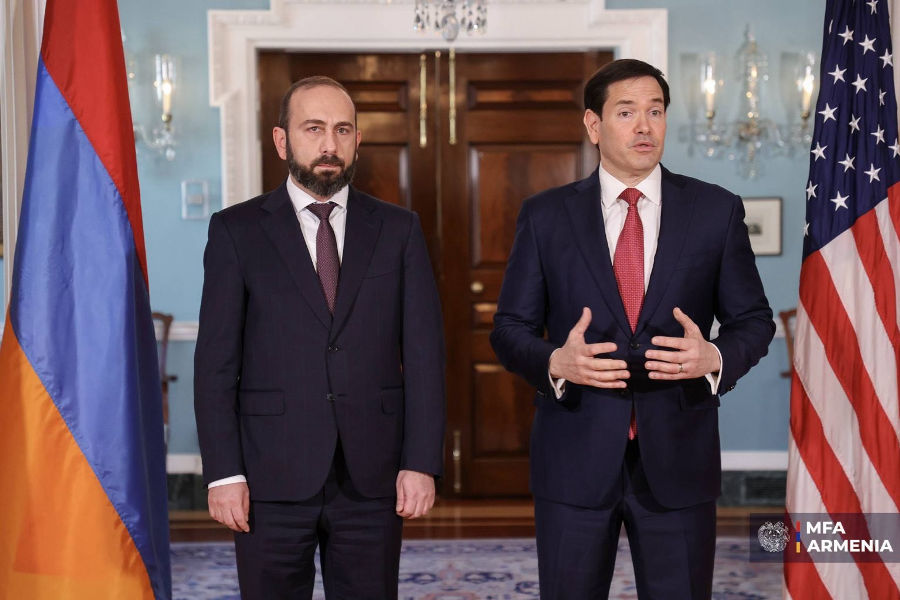
On Jan. 13, 2026, Armenian Foreign Minister Ararat Mirzoyan and U.S. Secretary of State Marco Rubio met in Washington, D.C., to announce the Trump Route for International Peace and Prosperity (TRIPP) Implementation Framework. The six-page document is the latest step toward implementing the commitments made at the White House on Aug. 8, 2025, aimed at establishing peace in the South Caucasus. According to the announcement, the “ultimate objective of TRIPP is to strengthen the prosperity and security of Armenia and Azerbaijan and further American commerce by expanding regional trade and connectivity, as well as creating new transit opportunities linking Central Asia and the Caspian to Europe.”
The TRIPP Implementation Framework outlines the roadmap, benefits and commitments of Armenia and the U.S. for implementing the TRIPP project. For Armenia, in theory, it represents a significant economic opportunity, transforming the country into a regional transit and logistics hub, broadening export capabilities, attracting foreign investment and upgrading its underdeveloped infrastructure. Beyond economic benefits, the document highlights project-related institutional reforms, including border management, customs officer training and technology sharing, which collectively aim to enhance state capacity and sustainable economic resilience. Politically, the project is portrayed as a mechanism for regional integration and normalization, integrating Armenia into regional and global trade routes and markets governed by its own laws and jurisdiction.
For the U.S. administration, however, TRIPP is viewed as a geo-economic and strategic investment, rather than merely a bilateral infrastructure initiative. This framework aims to create huge markets for U.S. companies and increase their leverage in Chinese and European markets, enhancing access to key supply chains, such as raw materials. Strategically, TRIPP strengthens U.S. clout in the South Caucasus, and even in Central Asia, by providing Washington enough influence to contain Russia in its “near abroad,” encircle Iran and compete with China on Eurasian corridors. The U.S. ownership share in the TRIPP Development Company enhances not only economic gains, but may also push for a future wider American-Armenian strategic cooperation.
TRIPP also differs from the Russian-led Nov. 10, 2020, Trilateral statement. The TRIPP Implementation Framework contains additional details and specifies the roles of Armenia and the U.S. in terms of investments, sovereignty of the route and the percentage of ownership. Compared to the Trilateral Statement, which was ambiguous in its implementation, TRIPP highlights a detailed roadmap, though certain ambiguities and gaps remain. This article reflects on the major points agreed upon, identifies gaps within the framework and analyzes regional perceptions of the Washington announcement.
Major points agreed
Armenia will seek to enhance its role as a regional transit and economic hub, normalize relations with neighbors and open transport routes. The implementation of TRIPP, as outlined in the document, will create employment opportunities, facilitate joint ventures between international and Armenian firms, promote technology transfer and investment flow and train skilled Armenian employees. In return, Armenia will support the TRIPP Development Company, maintain open communications with the U.S. and facilitate the transfer of goods, vehicles and cargo between the main part of Azerbaijan and Nakhichevan in both directions “on the basis of all Armenian laws, regulations and international agreements and in line with international standards.”
The document also highlights the conditions for success, which include the signing and full implementation of the peace treaty between Baku and Yerevan, Armenian-Turkish normalization, continued U.S. engagement in the project, regional cooperation and stability and, finally, institutional capacity building in Armenia.
Another key element is the creation of the TRIPP Development Company, authorized by the Armenian government. The company will be tasked with developing TRIPP and is expected to receive development rights for an initial period of 49 years. Under this proposed roadmap, Armenia plans to allocate a 74% ownership stake to the U.S., while retaining 26% for itself. The arrangement could be renewed for an additional 50 years, during which Armenia’s stake would increase to 49%. Most importantly, any changes to the company’s structure or ownership, including sales or mergers, would require approval from both the Armenian and the U.S. governments. The company will also contribute to building new and upgrading existing infrastructure related to roads, railways and pipelines in the TRIPP zone.
Most importantly, Armenia retains legislative, regulatory and judicial authority, exercising full sovereignty and territorial integrity over TRIPP’s areas and has the ability to enforce laws and regulations in line with domestic laws and international conventions. Yerevan has control over law enforcement, border control, customs, taxation and transit regulations. The text also mentions that “third-party operators” would provide guidance and collect fees in the transit area, while Armenian customs and border guards would engage in security screening and provide customs clearance, examinations and permits for transit cargoes. Finally, data remains under Armenian sovereign control, and sharing with foreign authorities requires legal compliance with Armenian laws.
Major gaps to be addressed
As mentioned above, the initiative’s success depends on multiple conditions; there are no guarantees. This success requires a peace treaty between Yerevan and Baku, the advancement of Armenia-Turkey normalization and opening of borders, sustained U.S. involvement and, most importantly, regional stability. Internally, Armenia must synchronize government bodies and enhance institutional capacity — particularly in customs and border management. Three major gaps stand out:
Initially, certain governance and institutional gaps exist. The system lacks a mechanism to resolve conflicts if a misunderstanding arises between Armenia and the U.S. How will disputes or differences of opinions be settled — through negotiations or power politics? Examples of the Trump administration’s negotiation techniques are clear. There are also uncertainties when it comes to transparency criteria and long-term accountability — particularly given the extended concession period — which threaten investor confidence and public trust.
Second, there are security gaps and geopolitical risks. The U.S. clearly is not providing security guarantees and may withdraw from the project at any moment. Given the complex geopolitical situation in the South Caucasus and global uncertainty, certain shifts may endanger the initiative. A question remains: what will guarantee U.S. involvement after President Trump’s term ends? Will the U.S. stay committed?
Additionally, there are financial challenges when it comes to the division of responsibilities. Although the framework specifies ownership and development rights, it is not so clear about profit-sharing arrangements, inclusive economic development and environmental sustainability. TRIPP may be viewed as a strategic route to be used by the U.S. and other regional actors, instead of a transformative development framework for Armenia.
Finally, Trump’s thirst to impose projects and score quick strategic wins against his opponents may put Armenia in a difficult position. Prime Minister Nikol Pashinyan’s inability to amend the constitution, which would postpone the signing of the peace deal with Azerbaijan, could give Azerbaijani President Ilham Aliyev a pretext to work with Trump to pressure Yerevan into taking radical steps to avoid U.S. retaliation, such as sanctions or increased tariff. As such, Pashinyan may be forced to provide additional concessions to Aliyev and amend the constitution despite popular opposition.
On the other hand, Baku and Yerevan have taken constructive steps under TRIPP. On Jan. 15, delegations from both countries conducted a joint inspection of the Sadarak-Yeraskh railway section. According to Azertag, the inspection aimed to “assess the technical suitability of the railway section” and identify measures to restore the relevant infrastructure.
Regional perception
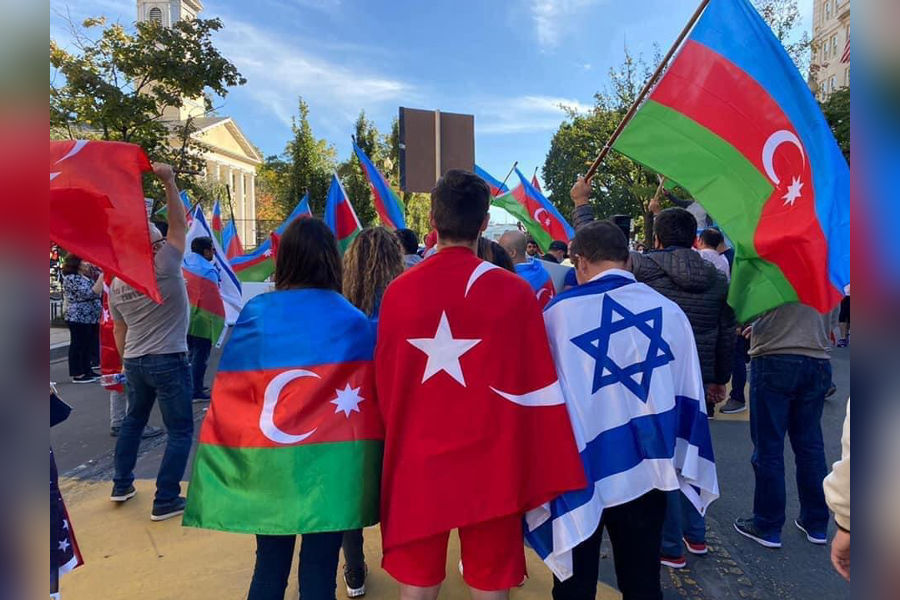
On Jan. 15, at a press conference in Istanbul, Turkish Foreign Minister Hakan Fidan said Turkey believes that the “Zangezur Corridor” will be “implemented in line with Azerbaijan’s expectations,” adding that the “corridor” will be significant, both for the ‘Middle Corridor’ and for “Turkey’s access to the Turkic world.” Fidan noted that he held a two-hour discussion with his Azerbaijani counterpart on the TRIPP Implementation Framework signed between Armenia and the U.S. He also called on Armenia to “fulfill its obligations” (that is, to agree to Azerbaijan’s additional demands, i.e., constitutional amendments) so that the peace agreement can be fully implemented. Fidan emphasized that Turkey gives importance to Armenia’s elections and “supports Pashinyan’s constructive stance.”
Meanwhile, Armenia’s Foreign Minister Ararat Mirzoyan said that Turkey’s participation depends on the opening of the Gyumri-Kars railway. If communications with Turkey remain closed, then TRIPP cannot include Turkey, as Yerevan sees its participation as part of the broader unblocking of regional transport channels passing through Armenia.
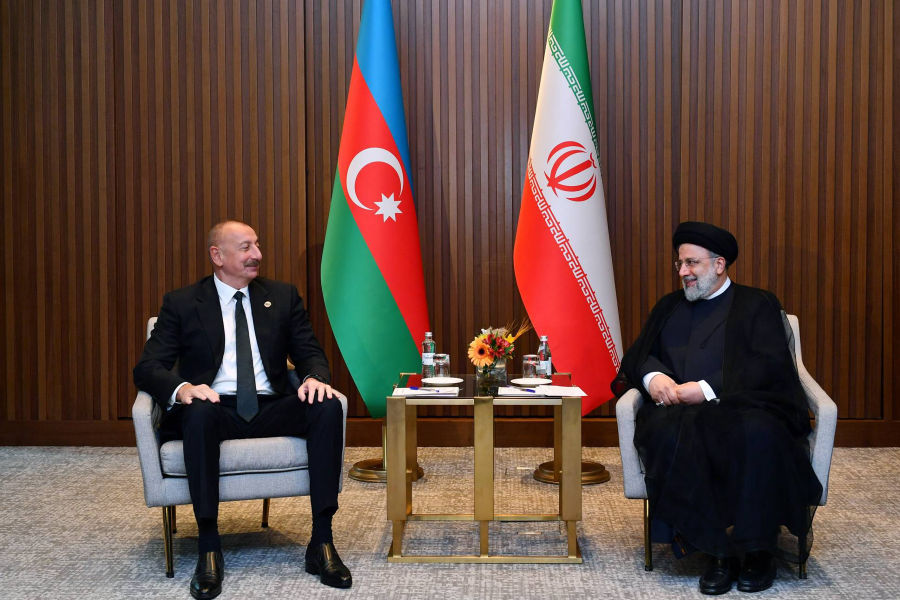
Meanwhile, Azerbaijan’s Foreign Ministry spokesperson welcomed the TRIPP Implementation Framework, calling it an “important step toward launching practical work,” adding that “ensuring unimpeded connectivity between the main part of Azerbaijan and Nakhichevan Autonomous Republic is one of the country’s main priorities.” The spokesperson once again “reminded” Armenia of its “obligations” under the peace treaty.
Most importantly, how is Russia viewing these developments?
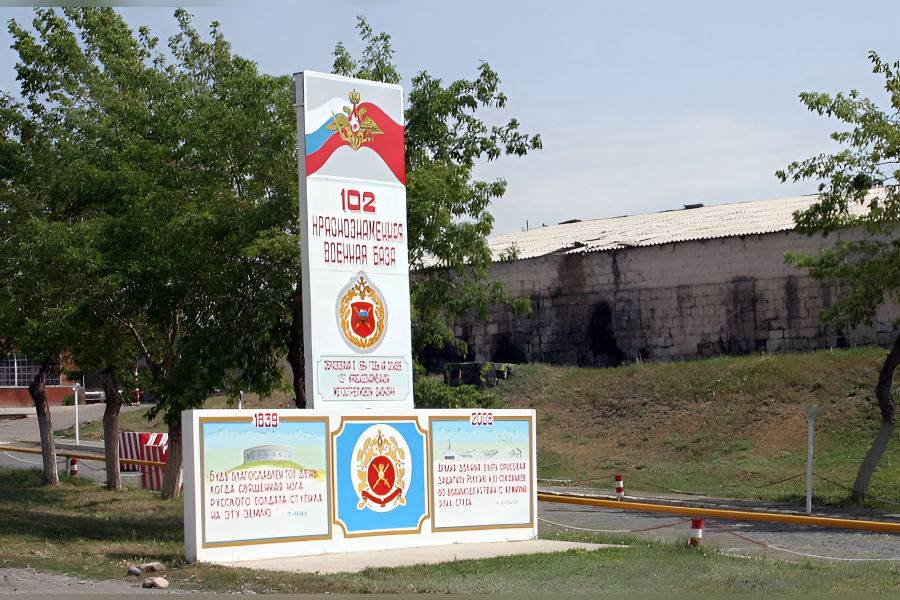
Responding to questions, Armenia’s Foreign Minister said Russia is not part of TRIPP, though Armenia can maintain connections and cooperate with Russia through the framework, since Moscow operates key infrastructure in the country, including railways. In this context, PM Pashinyan has publicly called on Russia to urgently restore key sections of Armenia’s railway networks connecting with Azerbaijan and Turkey, such as the segments connecting Akhurik (at the Turkish border) to Nakhichevan via Yeraskh, and the Tavush/Ijevan section. Armenia’s railway network is currently managed under a long-term concession by the Russian state-owned Russian Railways company. Pashinyan raised the issue during a meeting with Russian President Vladimir Putin, warning that Armenia could reclaim and finance the restoration of these sections independently if Moscow does not act.
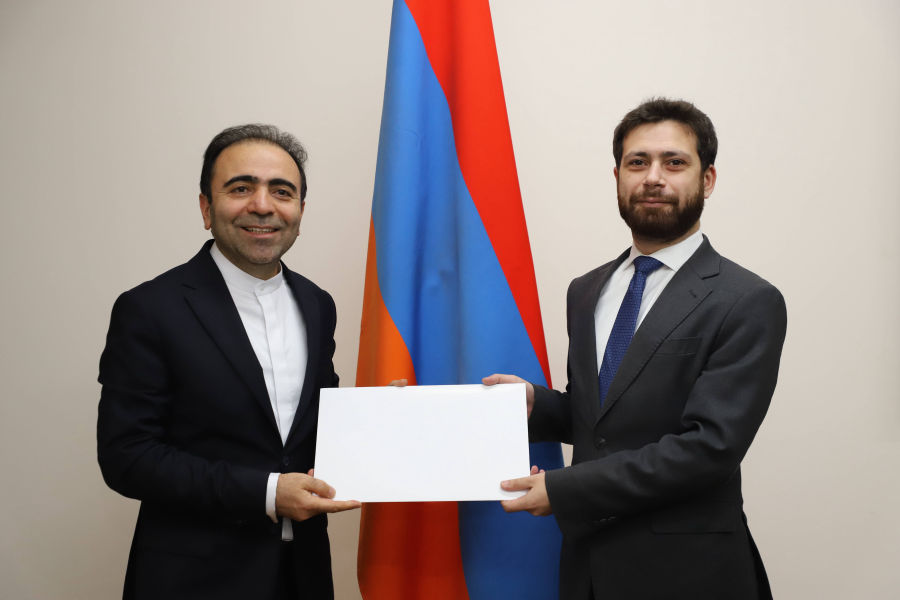
In parallel, Iran may also have concerns, though Tehran is willing to engage with the U.S. to secure access to Armenia via a railway from Nakhichevan. Diplomatic sources from Iran indicate that Tehran is already engaging in discussions with Yerevan on the issue, though progress will depend on the future of U.S.-Iran talks and domestic developments in Iran. Iranian ambassador to Armenia Khalil Shirgholami has voiced concern that the U.S. could use TRIPP as part of its security strategy and implied that Iran may perceive Armenia as a potential base for forces hostile to Tehran. In return, Armenia’s PM said that Yerevan is taking steps to address Iran’s concerns and stressed his commitment to “brotherly” relations between the two nations.
Reflections
It is no secret that the Russia-Armenia railway issue reflects a broader geopolitical and economic shift in the region. Developments in Iran will also have a major impact on TRIPP’s future. A potential regime change in Tehran may shift Iran’s foreign policy closer to Washington, which would reflect positively on TRIPP. Conversely, if Iran descends into chaos and instability spreads, jeopardizing the operation of the International North-South Transport Corridor, Russia would be forced to negotiate with the U.S. for a share of the transit routes, connecting TRIPP to Russia via Azerbaijan or George. This, of course, would require certain concessions from Moscow to Washington on issues related to Ukraine and the future of Europe.
Hence, the trajectory of TRIPP is intertwined with the geopolitical developments around the region. There is also China, which perceives U.S. presence in the South Caucasus as a direct threat to its geo-economic interests in Eurasia, spearheaded by its famous Belt and Road Initiative.
The reopening of the railways could bring economic investment to Armenia and turn the country into a potential regional transit hub. In the long-run, this would significantly decrease Armenia’s dependency on a single actor, mainly Russia, and help to diversify its economy; simultaneously, this would lead to an increase of Turkish and American influence in the South Caucasus and Central Asia.
The question is, at what cost would TRIPP bring economic development to Armenia? Could the project jeopardize Armenia’s sovereignty and territorial integrity?
Will it prevent Baku from pursuing its objective of “returning” Azerbaijanis to “western Azerbaijan?”And will economic cooperation finally bring peace to the region, or simply push Armenia to jump from one dependency to another?
So many questions remain unanswered, and only the trajectory of the project and broader regional developments may provide clues for the future.