




“Monoethnic” Armenia vs. “Multiethnic” Azerbaijan: Analysis of a baseless juxtaposition
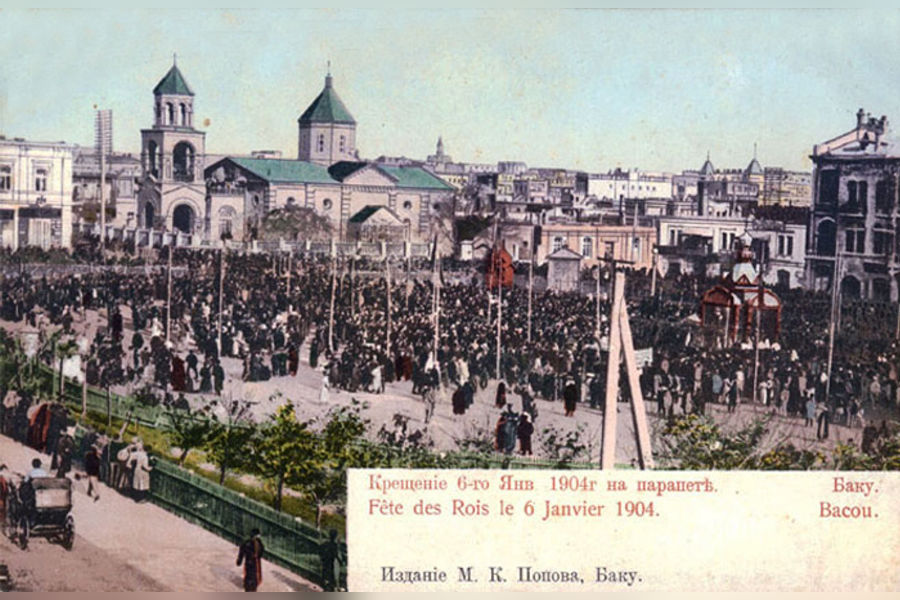
In recent years, Azerbaijani President Ilham Aliyev and his autocratic regime have sought to demonize Armenia by portraying it as “monoethnic,” “chauvinist,” “intolerant” and even “fascist,” presented in contrast to a purportedly “multicultural,” “peaceful” and “tolerant” Azerbaijan. This narrative, however, rests on a distortion of historical and demographic reality, ignoring basic and well-documented facts.
First, both Armenia and Azerbaijan are highly homogeneous from an ethnic standpoint. Ethnic Armenians make up more than 98% of Armenia’s population, while ethnic Azerbaijanis comprise over 94% of Azerbaijan’s inhabitants. Neither country, therefore, approaches the level of ethnic diversity found in other post-Soviet states such as Kazakhstan, Ukraine or Estonia.
Both countries also underwent processes of ethnic homogenization during the 20th century, resulting in a significant decline in the demographic weight of minorities. In 1926, ethnic Armenians constituted approximately 84.5% of Armenia’s population, while ethnic Azerbaijanis accounted for only 62.1% of Azerbaijan’s. Ironically, the process of homogenization has been more pronounced in Azerbaijan than in Armenia. For this reason, neither state can credibly claim to be “multiethnic” or “diverse,” as minorities today represent only a small share of the population.
At the same time, labeling either country as strictly “monoethnic” is also misleading. Both Armenia and Azerbaijan are home to minorities that do not share the same mother tongue, religion or origins with the main ethnic group. In Azerbaijan, these include Talysh, Lezgins, Udis, Russians, Jews, Ingilois and Avars — groups frequently weaponized by the regime to showcase Aliyev’s alleged commitment to multiculturalism and tolerance. Yet by the same logic, Armenia can present itself in similar terms. Yazidis, Russians, Greeks, Assyrians, Ukrainians and Jews live in Armenia, together numbering more than 45,000 people.
There is, however, an important distinction that should not be overlooked.

Armenia grants minority communities — including Yazidis, Russians and Assyrians — reserved parliamentary seats, opportunities to study heritage languages within the school system, freedom of religious practice and the legal space to maintain cultural organizations.
On the other hand, many of these guarantees lack de jure or de facto in Azerbaijan, a dictatorial state that exerts a tight control on its civil society. While Russian and Jewish communities generally report relative security, Talysh and Lezgin activists have long criticized the Azerbaijani state for censorship, repression and forced assimilation, often facing harassment or imprisonment as a result.
Yet, both Armenia and Azerbaijan have histories marked by intolerance and ethnic violence. During the First Nagorno-Karabakh War (1988–1994), approximately 200,000 Azerbaijanis and Muslim Kurds were forced to flee Armenia and Armenian-controlled territories. Entire villages — such as Tanahat, Zorakert and Shurnukh — were emptied of their native populations and later resettled by Armenians.
Azerbaijan, for its part, committed ethnic cleansing too by evicting roughly 500,000 Armenians and Udis from their hometowns and forcing them to resettle in Armenia. In Baku, Ganja and Sumgait, Armenians represented 16.5%, 17.5% and 8% of the population, respectively, according to the 1979 Soviet census. In many rural hamlets – like Chardakhlu, Madrasa and Vartashen — where Armenians constituted the overwhelming majority, were effectively erased.
Today, only a few hundred Turkic- and Kurdish-speaking Muslims remain in Armenia, while several thousand Armenians continue to live in Azerbaijan. The majority of these “leftovers” are elderly, come from mixed families or are married to a spouse with a different ethnic background. None of them are willing to express their ethnicity; on the contrary, they often conceal their backgrounds — sometimes even changing their names and surnames — out of fear.
These tragedies are exemplified by the cases of Kərkənc and Dzyunashogh, two hamlets that experienced the same vicissitudes in 1989. In 1989, both villages — one Armenian-majority, the other Azerbaijani-majority — were subjected to intimidation and pressure from chauvinistic groups and institutions. Their residents ultimately agreed to exchange homes and land, pledging to protect each other’s cemeteries. To this day, Armenian residents of Dzyunashogh tend Azerbaijani graves, while Azerbaijani settlers in Kərkənc guard Armenian tombs.
Azerbaijan did not merely expel its Armenian population; it also pursued the systematic erasure of Armenian cultural heritage. Churches, monasteries, khachkars and cemeteries were demolished, vandalized, falsified or abandoned, particularly in Nakhichevan. While Armenia has also committed acts of destruction against Muslim heritage, researchers have emphasized that the scale, coordination and intent differ substantially.
Unlike Azerbaijan’s state-led campaign of erasure since the 1990s, Armenian governments have not pursued a comparable policy.
Beyond violence, minority decline was also driven by economic migration and cultural assimilation. The former played a significant role in shaping Armenian demography. In the decades following the collapse of the Soviet Union, roughly one million Armenian citizens left their homeland, which was afflicted by economic stagnation. This phenomenon disproportionately affected rural minorities such as Greeks and Assyrians. Once numbering between 4,000 and 6,000 during the Soviet period, the Greek population today stands at fewer than 400, while the Assyrian community declined from 6,183 people in 1979 to fewer than 3,000 today. Socioeconomics difficulties led many Slavs and Jews to leave the country, as well.
In Azerbaijan, on the contrary, the situation is more nuanced. During the Soviet period, non-Turkophone Muslims — like Talysh, Lezgin, Avar and Tat people — went through a process of forced assimilation, which led many people to abandon their mother tongue and adopt an Azerbaijani identity. This process seems to continue even nowadays to a certain extent, favoring the homogenization of the country’s population. Meanwhile, Jewish and Russian communities largely emigrated after 1991 amid economic decline and political uncertainty.
In conclusion, the situation of ethnic minorities in Armenia can — and should — be improved. Nonetheless, the rhetoric promoted by Baku is based on a specious selection of historical facts, which are framed within a narrative that distorts reality. Given Azerbaijan’s documented history of ethnic cleansing, forced assimilation and authoritarian rule, it has no right to lecture the Armenian people on “tolerance” and “multiculturalism,” nor to present such values as its own.


Your stats are off- what is your source? How could it still be “98%”? Go to any part of Yerevan today and you will notice scores of Russian expats who relocated there after 2022. I don’t know how many there are, must be tens of thousands.
The Russians who recently came to Armenia are transient, because they include thousands of draft dodgers (often accompanied by their families) who fled Russia after its invasion of Ukraine in 2022. This is also the case in neighboring Georgia. They have not been send back, because of both countries’ strained relations with Russia, however, none of them have received refugee status in Armenia and Georgia either, because that would cause a huge backlash in both countries. The Russians’ preferred final destination is the West, but they are not accepted by them, hence are stuck in Armenia and Georgia. Azerbaijan, on the other hand, doesn’t accept any refugees and migrants, even ethnic Azeris. It has also deported Russian citizens living in Azerbaijan to Russia, who have ended up in prison, or worse, send to military bases to be trained and send to the front in Ukraine.
Oh I see, they had meant to live in Prague but instead are “stuck” in Armenia? For three years. Pathetic!
hey, there is always Novi Sad to consider:)
That is indeed the case. The Russians’ dream destination is actually the West, which denies them entry, and thus are stuck in Armenia and Georgia. When I meant the West, I meant the EU countries, UK, Norway, Switzerland and Iceland, where Russians are almost never let in since 2022. Many Russians have indeed fled to Serbia with their families, to escape military conscription and from being send to the front in Ukraine. Whether a Balkan country like Serbia, counts as the “West”, is another question, but with almost all of Europe practically off limits to Russians these days, that’s how far west Russians are able to go.
This pseudo-Turkish Azerbaijani terrorist cesspool would be irrelevant in the region and in the world without Armenia and their dwindling oil and gas resources. They are obsessed with Armenia and try to denigrate our nation every chance they get. Just about all of their foreign news coverage is about Armenia. This stems from the inferiority complex they have been suffering from ever since their devastating and humiliating defeat in 1994 at the hands of the victorious Armenians despite the ethnic-cleansing they recently committed against the indigenous Artsakh Armenians with direct and indirect help they received from terrorist Turkey and half dozen other terrorist states and entities. We hit and hit them hard at their cores, shattering all their Turkish and pseudo-Turkish myths drilled in their heads, and their deliberate and intentional history falsification and all their anti Armenian “dog and pony shows” as well as their many malicious attempts to portray our nation to the rest of the world as “intolerant & evil”, an exercise in futility I would say given their criminal past, is a direct manifestation of that inferiority complex they still suffer from which they have not yet recovered.
When these racist and cunning Azerbaijanis talk about multi-ethnicity and multi-culturalism, rest-assured Armenians are not included in that despite their centuries-old presence there and despite the fact that Armenian oil tycoons in centuries past have had and have played a major role in the development of that terrorist cesspool on the Caspian coast. Furthermore, in every of their “propaganda” news coverage and interviews about their fake multi-ethnicity schemes that I have read and seen, they never mention the names of the many native ethnic groups being persecuted, and their leaders behind bars or on self-exile, such as the native Talyish, Lezgis, Avars, Tats and Udis, as an example, but they never miss mentioning and talking about their small non-native Jewish population (brought over and settled there by the Armenian king Tigran the Great) and that is because they cunningly want to portray themselves as “tolerant & benevolent” in attempts to distinguish themselves from the rest of the “Muslim World” hostile to them and because Jewish leaders and politicians in the Western World, USA in particular, have power and influence they can exploit!